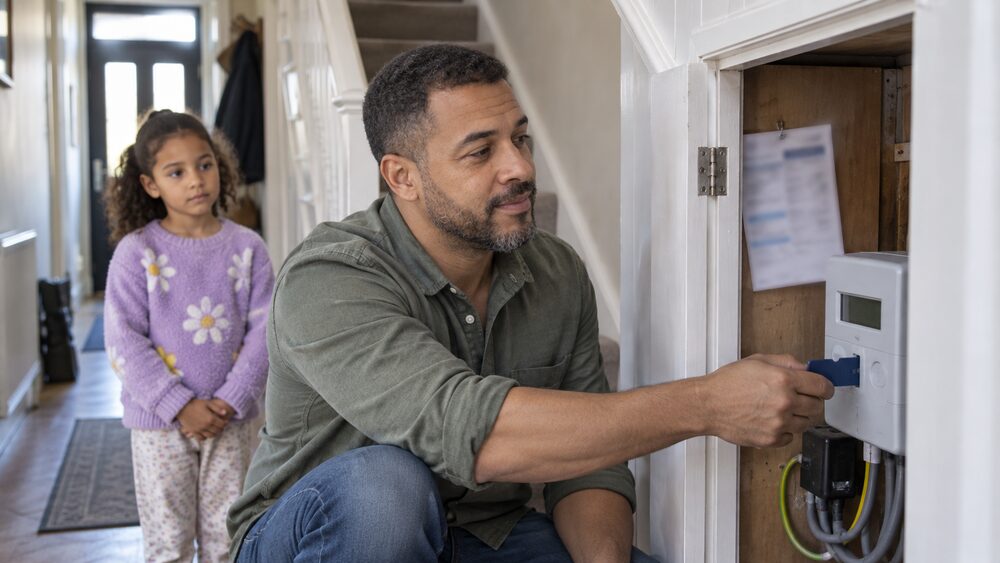
Owing money on a prepayment meter does not automatically stop you changing energy supplier. Independent guidance is consistent that a switch is allowed if you have a prepayment meter and owe £500 or less to your current supplier1. The same £500 figure appears across debt advice services and consumer organisations, and it is applied to each meter rather than to your total balance2.
Owing money on a prepayment meter does not automatically stop you changing energy supplier. Independent guidance is consistent that a switch is allowed if you have a prepayment meter and owe £500 or less to your current supplier1. The same £500 figure appears across debt advice services and consumer organisations, and it is applied to each meter rather than to your total balance2.
The debt does not vanish when you move. It transfers to the new supplier, and you repay it through the meter over an agreed period4. What changes is who you owe it to, not how much you owe.
Above £500 on a prepayment meter, a switch can be blocked2. There is also a separate 28-day rule that applies to people paying by direct debit or on receipt of a bill: you have the right to switch if you have been in debt to your current supplier for less than 28 days5.
Prepayment debt limit for switching: under £500 per meter
The £500 threshold is the single most useful number to know. Debt advice services state that if you have a prepayment meter and owe £500 or less to your current supplier, a switch is allowed1. Consumer organisations put the same rule in slightly different words: you can switch supplier and tariff as long as you have less than £500 of debt on your meter3.
The limit is applied per meter, not to your combined balance. Guidance for switchers spells this out: you can switch if you pay by topping up a prepayment meter and you have less than £500 debt for each meter, and you will repay that debt to your new supplier instead6. A household with a gas meter and an electricity meter is therefore assessed on each one separately. Owing £400 on gas and £400 on electricity is £800 in total, but neither meter is over the limit.
Two qualifications matter. First, the £500 rule is a floor, not a guarantee: smaller providers may set their own conditions3. Second, some suppliers impose extra requirements, such as holding a current account or having been debt free for at least three months7. Those conditions sit on top of the debt limit and can rule out a particular supplier even when your arrears are well under £500.
Your debt moves with you to the new supplier
Switching with prepayment debt is not a way of escaping it. The debt transfers to the new supplier, and the meter is set to recover it. Guidance for prepayment meter customers explains that the supplier will use part of your payments to pay off your debt over an agreed period8. The meter itself can be set to recover fuel debts as well as to pay for the gas or electricity you use9.
This is why the £500 limit exists. A new supplier is taking on a debt it did not create, recovered through a meter it now controls, so the rule caps how much it can be asked to absorb.
What does not transfer is your credit. If you switch to a new supplier, your credit will not usually be carried over from your old supplier, and your old supplier will refund your credit after you switch7. That refund is separate from the debt, and the two are not netted off against each other in the way people often assume.
The 28-day rule for customers in debt
The 28-day rule is the second limit, and it works differently from the £500 cap. You have the right to switch supplier if you have been in debt to your current supplier for less than 28 days5. The same right is set out in Welsh-language guidance for prepayment meter customers11.
For people paying by direct debit or when they receive a bill, the rule is expressed as a restriction rather than a right: you can still switch if you have owed your supplier money for less than 28 days, and your debt will be added to your final bill6. Once arrears on a normal meter have been outstanding for over 28 days, the supplier can object to the switch2.
The two rules overlap but are not the same. The 28-day rule is about how long the debt has existed. The £500 rule is about how much is owed on a prepayment meter. A prepayment customer with a long-standing balance under £500 falls inside the switching right; a direct debit customer whose arrears have run past 28 days does not.
When a new supplier can turn you down
The clearest statement of the risk is blunt: if you owe money to your energy supplier, you may not be accepted by a new supplier12. That is the general position, and the £500 rule is the protection that sits underneath it for prepayment customers.
There are three distinct ways a switch can fail.
- The debt is over the limit. Arrears of more than £500 on a prepayment meter are a stated reason a switch can be refused2.
- The 28-day period has passed on a normal meter. Arrears outstanding for over 28 days on a normal meter are also a stated restriction2.
- The new supplier's own conditions are not met. Some suppliers require a current account, or a period of at least three months debt free7.
It is worth separating a refused switch from the supplier's other powers. Gas and electricity debts to your current suppliers are priority debts, because suppliers can disconnect your supply and can force you to have a prepayment meter if it is safe and reasonable13. Suppliers can also collect debt through a debt collection agency or get a court warrant to fit a prepayment meter15. Those powers apply to the supplier you are already with, and they are a different matter from whether a new supplier will take you on.
Where it is safe to install a prepayment meter, your supplier must ask you if you want one before your supply is cut off, and cannot insist on one if you have not fallen behind on an arrears repayment arrangement16. In extreme cases where no payment plan has been agreed, the supplier can install a prepayment meter without your consent, but this should be a last resort17.
How to switch with prepayment debt
The process is the same as any energy switch, with one extra step: confirming the debt position before you start.
- Check the balance on each meter. The £500 limit applies per meter, so a gas balance and an electricity balance are counted separately6.
- Check how long you have owed the money. If you have been in debt to your current supplier for less than 28 days, you have the right to switch5.
- Apply to the new supplier. If you owe money, you may not be accepted, so it is worth knowing that before you commit12.
- Let the debt transfer. With a prepayment meter and less than £500 of debt for each meter, the debt moves to the new supplier and you repay it there6.
- Claim any credit back. Your old supplier will refund your credit after you switch, as it is not usually carried over7.
If you rent, there is a separate point to check. You do not need your landlord's permission to switch from a prepayment meter to a credit meter, though you may have to change back to a prepayment meter before you move out18. If you want to switch to a prepayment meter, you must let your landlord know, or your deposit could be affected19.
Moving from a prepayment meter to a credit meter is easier if you already have a smart meter, and the process depends on your supplier20. Consumer Scotland has argued that consumers should have an automatic right to switch away from prepayment meters, or smart prepayment mode, to credit once the debt on the meter has been cleared21. That is a stated position rather than a current right.
If you cannot access your prepayment meter, your supplier could move the meter to a more accessible position or change you to a smart meter, and a swipe card can automatically top up your meter when you make a payment5.
What happens if you owe more than £500
Above the limit, the practical task is to bring the balance down or agree a repayment arrangement. Non-payment can result in higher bills and affect your credit file, and your energy supplier could also look at fitting a prepayment meter or, if you have a smart meter, switching it to prepayment22.
The scale of prepayment debt is significant. Of 313 households on prepayment meters surveyed for one policy study, 50% had outstanding gas debts above £50023. That is a small sample, but it shows how common balances above the switching limit are.
There are protections around how a supplier can recover debt through a meter. If a health condition or vulnerability prevented you from dealing with your energy debt, your supplier should not charge you for fitting a prepayment meter as a way of sorting out your debt1. If a supplier fits a meter rather than disconnecting your supply, they may charge up to £1501. Where a supplier gets a warrant to enter your home and install a meter, it can charge up to £150, added to your current debt, unless you have a good reason to refuse consent, and if you are vulnerable you may not have to pay it11.
There are also timing protections. Electricity and gas suppliers will not compel customers in debt to move onto a prepayment meter over the Christmas period, unless the customer specifically requests it24. That protection covered 16 December 2022 to 20 January 202324.
Where to get free help
Free, impartial help is available and does not cost anything. National Debtline publishes guidance on gas and electricity arrears for England and Wales and for Scotland1. StepChange covers switching utility providers and common debt myths2. Citizens Advice explains what happens when an energy supplier goes bust10.
For households in Northern Ireland, the Consumer Council sets out electricity and gas consumer protections, and Advice NI publishes the Consumer Energy Charter and cost of living arrears guidance24. Shelter England and Shelter Cymru cover help with gas and electricity bills, avoiding disconnection, and prepayment meters18. Scope publishes advice on switching energy supplier and on prepayment meters, including for disabled households7. Age UK covers meters and debt31.
If a switch goes wrong, or a supplier refuses to let you move when you believe you are within the rules, a complaint can be taken to the Energy Ombudsman once the supplier's own complaints process has been used. For a wider dispute with a firm that has stalled, free consumer advice services can help.
Sources31 cited
- Gas and electricity arrears (England and Wales) National Debtline, 2026-09-25
- Switching utility providers StepChange, 2026-09-25
- Energy tariffs explained Which?, 2026-03-31
- Gas and electricity arrears (Scotland) National Debtline, 2026-09-25
- Prepayment meters Shelter Cymru, 2026-08-28
- Guide to switching supplier Which?, 2026-05-15
- Switching energy supplier Scope, 2026-08-17
- Government payments and discounts for heating bills Scope, 2026-09-01
- How to avoid gas and electricity disconnection Shelter Cymru, 2026-08-29
- Your energy supplier has gone bust Citizens Advice, 2021-11-22
- Mesuryddion rhagdalu Shelter Cymru, 2026-09-17
- Your business and household budget (Scotland) Business Debtline, 2026-09-26
- Student money and debt (Scotland) National Debtline, 2026-09-25
- Student money and debt (England and Wales) National Debtline, 2026-09-25
- Debt myths: true or false StepChange, 2026-09-25
- Your priority debts Business Debtline, 2026-09-26
- Arrears Advice NI, 2026
- Help with gas and electricity bills Shelter England, 2025-07-25
- Saving money in private rent StepChange, 2026-09-25
- Prepayment meter Scope, 2025-01-08
- Ofgem call for evidence on prepayment rules and protections Consumer Scotland, 2023-03-14
- Cost of living: making the most of your money (Scotland) National Debtline, 2026-09-25
- Extra burden of energy on disabled households Scope, 2026-09-26
- Consumer Energy Charter Advice NI, 2022
- Electricity and gas consumer protection Consumer Council, 2022
- Budgeting, saving and borrowing (England and Wales) Business Debtline, 2026-09-26
- Help with household bills Contact, 2026-08-27
- Budgeting, saving and borrowing (Scotland) Business Debtline, 2026-09-26
- How to switch energy supplier Which?, 2026-05-15
- Meters Age UK, 2026-09-10
- Your business and household budget (England and Wales) Business Debtline, 2026-09-26



 Citizens AdviceFree advice on money, consumer and legal problems in England and Wales
 MoneyHelperFree, impartial money and pensions guidance, set up by government
 Financial Ombudsman ServiceFree, independent help when a complaint about a firm is not put right
 GOV.UKOfficial information on tax, benefits and government services
 StepChangeFree debt advice and solutions from a charity