
If you want to leave a fixed energy tariff before the term ends, most suppliers charge an exit fee, and the typical figure is £100 or more. It is usually quoted per fuel, so a household taking both gas and electricity on one fixed deal can face around £200 to leave early1.
If you want to leave a fixed energy tariff before the term ends, most suppliers charge an exit fee, and the typical figure is £100 or more. It is usually quoted per fuel, so a household taking both gas and electricity on one fixed deal can face around £200 to leave early1.
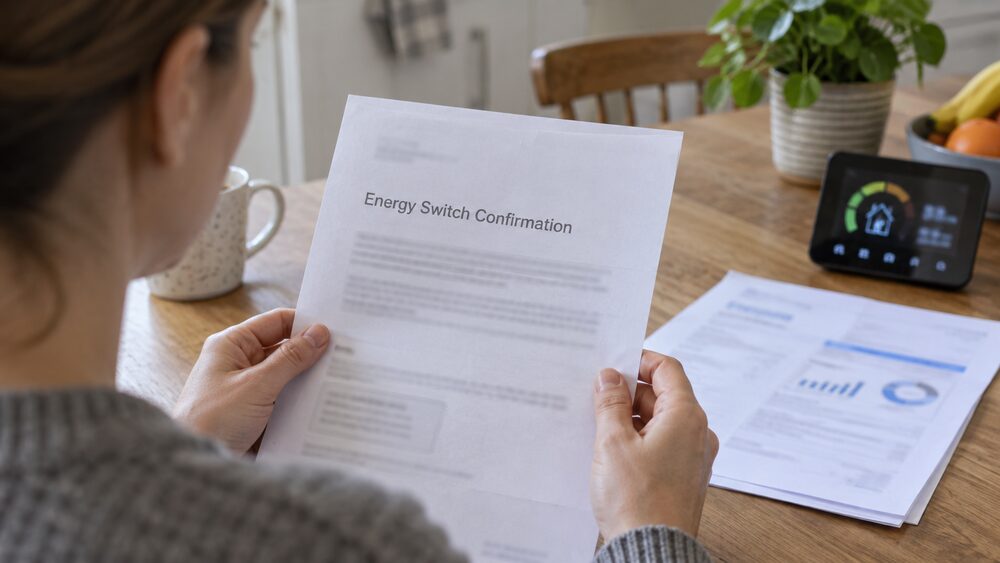
The charge does not apply at the end of the deal. You cannot be charged an exit fee in the last 49 days of a fixed-term tariff, and you can switch freely in that window without paying one2. Your supplier is also required to write to you 42 to 49 days before the end date to tell you the tariff is ending and that you can switch without a fee3.
Fixed energy tariffs usually run for 12 to 24 months and fix the amount you pay for each unit of gas and electricity you use, plus your daily standing charge1. When the term ends, your supplier moves you automatically onto its default tariff, the standard variable rate, which has no exit fee5.
Exit fees on fixed energy tariffs: often £100 per fuel
The figure a supplier quotes is a per-fuel charge, not a per-household one. Independent guidance puts the typical exit fee at £100 or more, and describes it as often £100 per fuel if you want to leave before the end of your contract1. One source gives a lower example, saying fees can be as much as £75 per fuel on a 12-month deal4.
That difference reflects the fact that the fee is set by the supplier and written into the individual tariff, so there is no single national figure. What matters for your own decision is the number in your contract, not the market average.
Because the charge is applied per fuel, the total depends on how many fuels you buy from that supplier on that deal. A dual fuel customer on one fixed contract is charged on gas and on electricity, which is how a £100 per fuel fee becomes roughly £200. A customer who takes only electricity from that supplier pays the fee once.
Some fixed-term products are advertised with no exit fee at all, so the label "fixed" does not by itself tell you whether leaving early costs anything7. The terms of the tariff do.
When an exit fee applies: leaving before the fixed term ends
The fee is triggered by leaving early, not by switching in general. Most suppliers charge an exit fee if you leave a fixed term contract early8. If you are on a fixed tariff, you may have to pay an exit charge to leave early, but you will not have to pay it in the last 49 days of your deal9.
That 49-day window is the point at which the contract stops holding you in. In the last 49 days of a fixed-term contract you do not have to pay an exit fee and have the right to switch freely without being charged3. The same rule is stated independently as a limit on when the charge can be levied at all2.
Your supplier has a matching duty to warn you. It is required to contact you 42 to 49 days before the end date of your fixed-term tariff, informing you it is ending and that you can switch without a fee3. That letter is the practical signal that the fee-free window has opened or is about to.
If a supplier tries to charge you a fee to switch supplier when your contract ends in the next 7 weeks, that is a reason to complain5. Seven weeks is 49 days, so the two figures describe the same protection from different angles.
Paying for gas and electricity: how the fee adds up per fuel
To see what leaving early actually costs, it helps to separate the exit fee from the bill itself. Gas and electricity bills are made up of 2 costs: the amount of energy you use and a fixed daily charge for supplying energy to your home, called a standing charge10. A fixed tariff fixes the amount you pay for each unit of gas and electricity you use, and your daily standing charge4.
So the amount you are charged each month is set by the amount of energy you use, the unit cost and the daily fee, and on a fixed tariff the unit cost and the daily fee are the parts that stay still5. The exit fee sits outside all of this: it is a one-off charge for ending the contract, not part of what you pay for energy.
That distinction matters when you weigh up leaving early. The saving from switching comes from a lower unit cost or standing charge over the months remaining. The cost of leaving is the exit fee, charged once per fuel. If you are on a regular payment plan for your gas and electricity, the monthly amount you pay belongs in the household outgoings section of your budget, alongside the one-off fee if you decide to leave11.
The price cap that limits what suppliers can charge on default tariffs includes all the costs associated with energy bills, such as the £28 fee levied to recover debt owed to suppliers12. That is a different charge from an exit fee and does not replace it.
Fixed-term or not: which tariffs charge you to leave
The dividing line is the contract, not the supplier. Standard tariffs do not tie you in with a contract or exit fees, so you can leave whenever you like4. Fixed-term deals, including some tracker tariffs, are the ones that can carry an exit fee, and only until the 49-day window opens2.
| Tariff type | Exit fee to leave early? | When you can leave free |
|---|---|---|
| Fixed-term deal | Yes, typically £100 or more per fuel1 | In the last 49 days of the term2 |
| Tracker tariff with a fixed term | Yes, on the same 49-day rule2 | In the last 49 days of the term2 |
| Standard variable (default) tariff | No, no contract or exit fee4 | At any time4 |
| Fixed-term deal advertised with no exit fee | No, per the tariff's own terms7 | At any time, per those terms7 |
Two practical checks tell you where you stand. If it says your contract has an end date, this means you are on a fixed tariff5. And if you are unsure whether a fee applies, the tariff terms and the end-of-tariff letter are the documents that answer it.
How much does it cost to leave a fixed energy tariff early?
The cost is the exit fee stated in your tariff, charged per fuel, and the typical figure is £100 or more1. On a dual fuel fixed deal that commonly means around £200 in total, though a 12-month deal can carry a lower figure of as much as £75 per fuel4.
The fee is not the only number in the decision. Leaving early also means giving up the fixed unit cost and standing charge you agreed, and moving to whatever the new supplier charges. If the new deal is cheaper per unit, the saving accrues month by month; the exit fee is paid once, at the point of leaving.
Where the fee is charged, it is a term of the contract you accepted, so it is enforceable in the same way as any other agreed charge. Where it is not charged, that is because the tariff does not include one, or because you are inside the 49-day window2.
If a supplier applies a fee in circumstances the rules do not allow, or you believe the charge is wrong, the route is a formal complaint to the supplier first. If that does not resolve it, the Energy Ombudsman can look at complaints about energy suppliers, and free, impartial help is available from Citizens Advice and MoneyHelper.
Is it worth paying an exit fee to switch to a cheaper deal?
There is no single answer, because it turns on two figures that are specific to you: the exit fee you would pay, and the saving you expect over the months left on the contract. If the saving over the remaining term is smaller than the fee, leaving early costs you money. If it is larger, the fee is recovered over time.
The timing changes the arithmetic more than anything else. Inside the last 49 days, the fee is zero, so any saving from switching is a straight gain2. Well before that, the fee is at its full rate and the remaining months are at their longest, which is when leaving early is most expensive.
There is also a practical limit on how quickly a switch can happen, so the saving does not start the moment you decide. If you are close to the end of the term, waiting for the window to open removes the fee entirely and costs you nothing but time.
Where to get help
If a fee has been applied that you think should not have been, or you are unsure what your tariff allows, start with your supplier's own complaints process. Free, impartial advice on energy bills and switching is available from Citizens Advice and MoneyHelper, and the Energy Ombudsman can take on a complaint once the supplier has had the chance to resolve it.
For the mechanics of changing supplier, including what happens to your supply and your final bill, see switching energy supplier. If a switch has gone wrong or a final bill has arrived late, compensation for a delayed energy switch or late final bill sets out what you can claim. And if you are switching with money owed on a prepayment meter, switching energy supplier with debt on a prepayment meter explains the conditions.
Sources12 cited
- How to switch energy supplier Which?, 2026-05-15
- Guide to switching supplier Which?, 2026-05-15
- How to complain about your electricity, gas or energy bill Which?, 2026-07-30
- Energy tariffs explained Which?, 2026-03-31
- Your gas or electricity supplier has put up its prices Citizens Advice, 2026-09-26
- Understanding energy bills StepChange, 2026-09-25
- How to avoid paying a standing charge on your energy bills Which?, 2017-11-25
- Switching utility providers StepChange, 2026-09-25
- Switching energy supplier Scope, 2026-08-17
- Energy saving tips Scope, 2026-09-01
- Your business and household budget Business Debtline, 2026-09-26
- Fuel poverty scenario modelling based on Ofgem energy price caps Scottish Government, 2026-09-02







 Citizens AdviceFree advice on money, consumer and legal problems in England and Wales
 MoneyHelperFree, impartial money and pensions guidance, set up by government
 Financial Ombudsman ServiceFree, independent help when a complaint about a firm is not put right
 GOV.UKOfficial information on tax, benefits and government services
 StepChangeFree debt advice and solutions from a charity