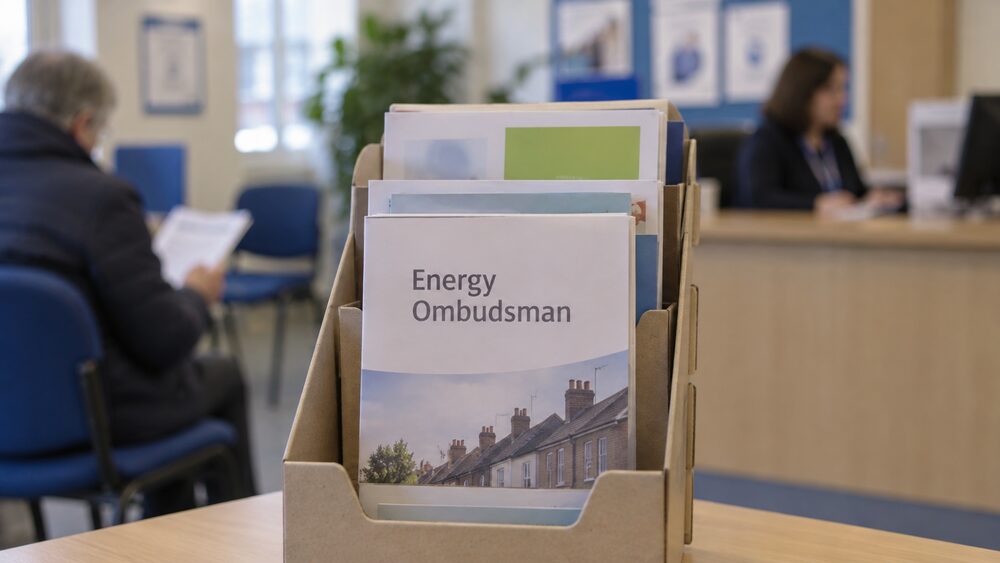
If your energy supplier has not put a billing or switching problem right, you can take the complaint to the Energy Ombudsman. You can complain about a billing or transfer problem, but you must complain to your supplier first1. After eight weeks you can send the case to the ombudsman, or immediately if the supplier sends you a deadlock letter2.
If your energy supplier has not put a billing or switching problem right, you can take the complaint to the Energy Ombudsman. You can complain about a billing or transfer problem, but you must complain to your supplier first1. After eight weeks you can send the case to the ombudsman, or immediately if the supplier sends you a deadlock letter2.
The service is free and independent, and it can force a supplier to act: practical steps, an apology or compensation3. If it takes up your case you will get a decision within 6 to 8 weeks4. You must send your complaint within 12 months of receiving the deadlock letter or final response from your supplier3.
What the Energy Ombudsman can look at
The Energy Ombudsman handles complaints about energy providers6. In practice that means billing and transfer problems: a bill you believe is wrong, a payment or credit that has not been applied properly, or a switch that went wrong1. A transfer problem covers switching, so a delayed switch, a switch that happened without your agreement, or a final bill that never arrived all fall inside the scheme.
The ombudsman is not a first port of call. It is a dispute resolution body that steps in once the supplier has had its chance, and it looks at the complaint afresh rather than simply reviewing what the supplier decided. It can investigate your complaint further and may contact the company to get it to compensate you or put the issue right5. If the complaint is upheld, it can recommend the supplier resolve your issue, apologise or offer financial compensation if appropriate2.
Some energy complaints sit outside the scheme. Complaints about heat networks have their own route: consumers have been advised of the formal complaints process and given details of the Energy Ombudsman7. If a complaint is about a financial product sold alongside your energy, such as a Green Deal plan, the route can be different: if it is not resolved within 8 weeks of contacting your provider, you contact either the Financial Ombudsman Service or the Energy Ombudsman8.
You must complain to your supplier first
Every ombudsman scheme works the same way: the firm gets the first attempt. The Energy Ombudsman's rule is that a complaint goes to the supplier first, through its own complaints procedure, before the Energy Ombudsman is considered9. The Financial Ombudsman Service, which covers most financial firms, states the same first step: before bringing a complaint to it, the complaint goes to the company involved10.
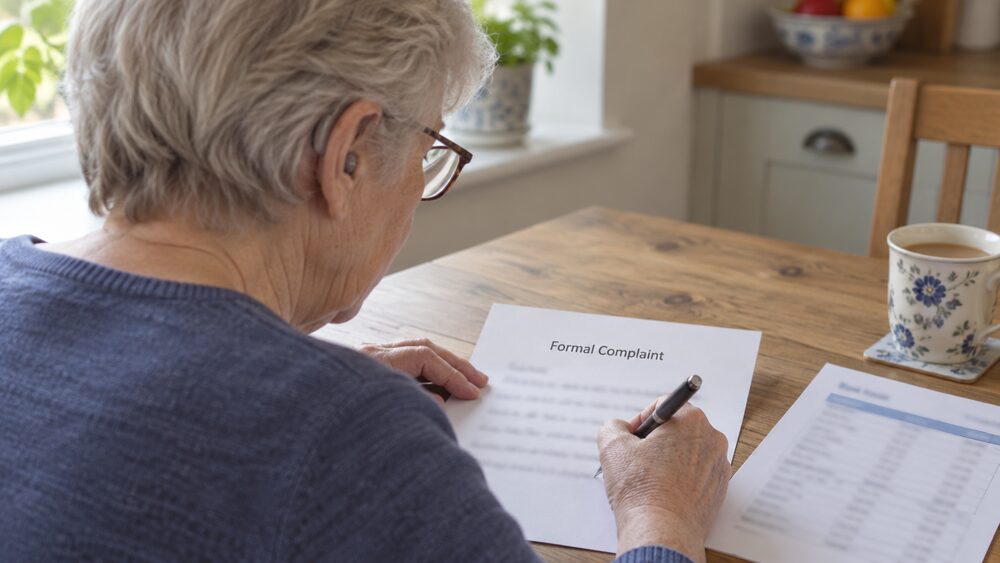
Put the complaint in writing where you can, keep a copy, and note the date you sent it. That date starts the clock on the eight-week wait. A written complaint also gives you something to send the ombudsman if the supplier does not engage. If you are unsure how to set it out, there is guidance on writing an effective complaint letter or email.
The supplier should look into the complaint and reply. If it does not reply at all, that does not block you: the eight weeks still run, and you can escalate at the end of them. If you are complaining on someone else's behalf, there are extra steps, covered in complaining on behalf of a relative or friend.
When you can escalate: after 8 weeks or a deadlock letter
Suppliers have eight weeks to respond to your complaint before you can escalate it, unless you receive a deadlock letter before this time period11. The same eight-week figure appears across the guidance: if you are not happy with the outcome of your complaint after eight weeks, you can take it to the Energy Ombudsman1. In most cases, you need to wait eight weeks12.
A deadlock letter shortens the wait to nothing. A deadlock letter is where the company has accepted it cannot resolve your dispute and so will allow you to send your case to the ombudsman prior to the eight-week period13. If the energy company sends you one, you can send your case file to the ombudsman immediately13.
If the supplier will not give you one, there is a backstop. If the company fails to respond to your request for a letter of deadlock within a reasonable period of time, say 14 days, you can take your complaint to the ombudsman14. So a supplier cannot stall indefinitely by refusing to write the letter.
| Situation | When you can escalate |
|---|---|
| Supplier has replied and you are unhappy | After eight weeks, or sooner with a deadlock letter11 |
| Supplier has not replied at all | After eight weeks1 |
| Supplier sent a deadlock letter | Immediately13 |
| Supplier ignored your request for a deadlock letter | After a reasonable period, say 14 days14 |
| You are an SSE customer | After six weeks5 |
The eight-week wait is not unique to energy. It is the standard across ombudsman schemes, and Consumer Scotland has said it considers 8 weeks is common across other ombudsman schemes such as those in the energy sector15. Consumer Scotland has also argued the energy waiting time is too long and agrees with shortening the waiting time before a consumer can refer their complaint to the Energy Ombudsman to 4 weeks16. That is a recommendation, not the rule you are working to today.
Time limit: 12 months from the deadlock letter or final response
Once you are entitled to escalate, you are not entitled forever. The service can accept a complaint within 12 months of a deadlock letter1. You must send your complaint to the ombudsman within 12 months of receiving the deadlock letter or final response from your supplier3.
That 12-month window is generous compared with some schemes. The Financial Ombudsman Service, which covers banks, insurers and lenders, usually gives six months: you must complain to the Ombudsman within six months of getting the letter of deadlock, or from the end of the eight week period if no deadlock letter17. For insurance complaints it is the same six months from the time you reach deadlock with the insurer18. If you are used to one scheme's deadline, do not assume the other matches it.
If the 12 months pass, the ombudsman will not normally take the case. What remains is a court claim, which for a modest billing dispute is rarely proportionate, or free advice from a consumer body. The practical answer is to diarise the deadline the day the deadlock letter or final response arrives, and to send the complaint well before it.
What happens once the ombudsman takes the case
The ombudsman investigates independently. The Ombudsman Service will independently investigate your case19. It is not a mediator: it reaches a decision, and it has real teeth. The Ombudsman Service is independent and free to use, and the ombudsman has the power to force an energy supplier to take action, which could be practical steps, an apology or compensation3.
You will not be left waiting indefinitely. If the Energy Ombudsman takes up your case you will get their decision within 6 to 8 weeks4. That is the decision timescale, not a guarantee about how long the whole dispute will take from your first complaint.
If the complaint is upheld, the outcome is usually one or more of three things: the supplier is told to resolve the issue, to apologise, or to pay compensation where that is appropriate2. The ombudsman decides which. It is worth knowing that other ombudsman schemes describe their powers in similar terms, and the Pensions Ombudsman has said it has similar powers to a court of law20. The energy scheme's power to require action is what makes it worth using rather than simply writing another letter.
If your complaint is about a different kind of firm
The Energy Ombudsman covers gas and electricity suppliers. If your problem is with a different kind of company, a different scheme applies, and using the wrong one wastes the deadline.
| Complaint about | Where it goes |
|---|---|
| Gas or electricity supplier | Energy Ombudsman6 |
| Bank, lender, insurer, pension provider | Financial Ombudsman Service6 |
| Council service, including council tax handling | Local Government and Social Care Ombudsman21 |
| Heat network | Formal complaints process, with details of the Energy Ombudsman7 |
The Financial Ombudsman Service can point you the right way if you have gone to the wrong place: if it cannot help, it can provide details of the service that might be able to22. That is useful when a complaint spans two areas, for example an energy debt that has been passed to a lender or a Green Deal plan attached to your supply.
If your energy problem has left you behind on bills, the complaint and the debt are separate matters. There is free help on debt and your rights, and the ombudsman route does not pause a supplier's normal collection process while a case is open.
Where to get free help
None of this costs you anything. The Energy Ombudsman is a free and independent organisation that may be able to help4. The Financial Ombudsman Service says the same of its own service: bringing a complaint to us is straightforward and won't cost you anything23. The Local Government and Social Care Ombudsman also states that complaining to the Ombudsman is free21.
Free, impartial advice on the complaint itself is available before you escalate. If a company has not replied to your complaint, there is a step-by-step route in what to do if a company hasn't replied to your complaint, and if a dispute has stalled altogether, free consumer advice when a dispute with a firm stalls sets out who can help. In Northern Ireland, the Consumer Council handles energy complaint help, covered in the Consumer Council: complaint help in Northern Ireland.
Sources23 cited
- Gas and electricity arrears National Debtline
- Complaining to the Energy Ombudsman Resolver, 2026-09-26
- How to complain about your electricity, gas or energy bill Which?, 2026-07-30
- Check if a previous energy supplier owes you money Citizens Advice, 2026-09-25
- Energy complaints Age UK, 2026-08-26
- Which ombudsman do I complain to Resolver, 2026-09-26
- Heat networks: issues and complaints briefing Consumer Scotland, 2026-03-18
- Green Deal GOV.UK, 2026-09-26
- How to complain about an energy supplier Resolver, 2026-09-26
- Sending money abroad Financial Ombudsman Service, 2026-09-26
- Energy bills: the back billing rules Which?, 2025-09-29
- Making a complaint about a creditor StepChange, 2026-09-25
- Energy supply debt related problem complaints Resolver, 2026-09-26
- How to complain to the ombudsman about a mobile phone provider Which?, 2026-07-30
- Response to FCA consultation on modernising the redress system Consumer Scotland, 2025-10-02
- Consultation on the role and powers of the Energy Ombudsman Consumer Scotland, 2025-12-09
- Getting a bank account Citizens Advice, 2026-09-25
- Personal accident insurance Financial Ombudsman Service, 2025-12-04
- Energy supply unwanted marketing communications complaints Resolver, 2026-09-26
- Pensions law: internal dispute resolution procedure The Pensions Regulator, 2026-06
- Council tax complaints Shelter England, 2026-09-26
- How to complain: video transcript Financial Ombudsman Service, 2026-09-26
- Unaffordable lending Financial Ombudsman Service, 2026-09-26




 Citizens AdviceFree advice on money, consumer and legal problems in England and Wales
 MoneyHelperFree, impartial money and pensions guidance, set up by government
 Financial Ombudsman ServiceFree, independent help when a complaint about a firm is not put right
 GOV.UKOfficial information on tax, benefits and government services
 StepChangeFree debt advice and solutions from a charity