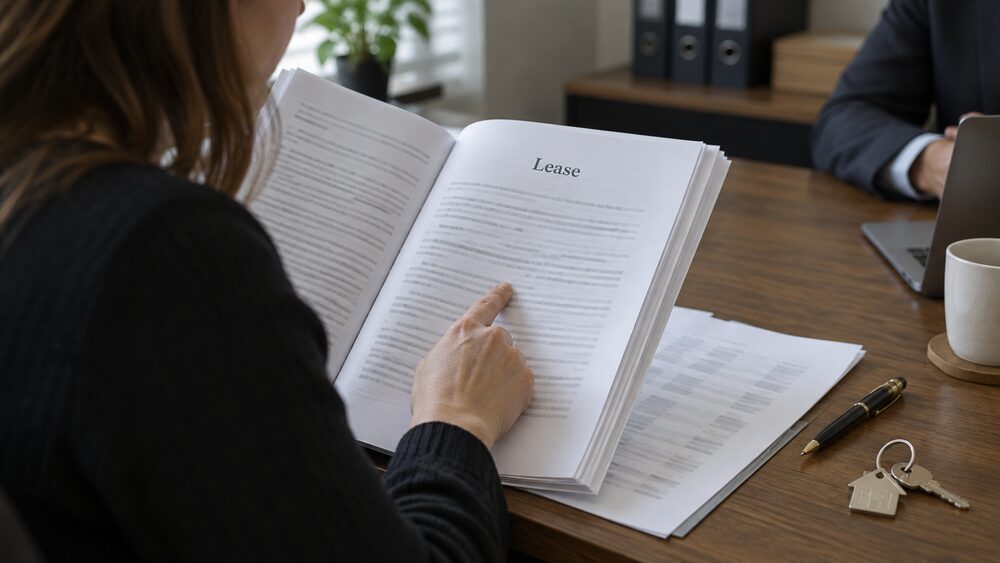
Buying a leasehold property means you buy the right to live in a home for a fixed number of years, set out in a contract called the lease, but you do not own the land the building stands on. The land and building are owned by a freeholder (sometimes called the landlord), and when the lease ends, ownership of the property returns to them unless the lease is extended1. Flats in England, Wales and Northern Ireland are most commonly sold on this basis, while houses are normally sold freehold, where the buyer owns both the building and the land outright1.
The practical consequences are ones of contract and cost. The lease sets how long you own the home, what annual ground rent you pay to the freeholder, what service charges you pay towards the building's upkeep, and what you may or may not do in the property. Leases are normally granted for 99 or 125 years, sometimes up to 999, and the length left on the lease affects both the price of extending it and whether a mortgage lender will lend at all2. Recent reforms have changed the picture considerably: ground rent was banned on most new leases from 30 June 2022, and the Leasehold and Freehold Reform Act 2024 and further planned legislation give leaseholders longer standard extensions and easier routes to buying the freehold4.
What leasehold means: you own the home, not the land
A freehold purchase makes you the sole owner of both the building and the land it stands on1. A leasehold purchase is different: you have the right to live in the home for a set number of years, specified in the lease, but the land belongs to someone else. In law, a residential leasehold is treated as an ownership interest in property: legislation defines a residential property owner as someone holding a leasehold originally granted for a term exceeding 21 years, alongside freehold and commonhold6. So a leaseholder is an owner, not a tenant in the ordinary renting sense, but an owner whose rights are bounded by a contract with a fixed end date.
Leasehold is the standard way to own a flat, because a building containing several homes needs one party to own the structure and the land, and the individual flat owners hold leases within it1. Some flat owners instead hold a "share of freehold": they own their flat leasehold plus a share of the freehold for the building, which removes the external landlord from the picture for most day-to-day purposes1.
Shared ownership properties are usually leasehold too. A shared owner buys the full leasehold title to their home and enters into a lease contract with the landlord, paying rent on the share they have not bought7. The lease is what stipulates how costs for the building are shared among owners, which is the case with all leasehold properties7. If you are weighing the two tenures side by side, the freehold vs leasehold comparison sets out the differences in full.
Lease length: typically 99 to 125 years, and up to 999
Leases are normally granted for 99 years, according to independent home buying guidance, while official guidance on buying a home through Right to Buy describes the fixed term as usually 125 years2. When first drawn up, residential leases usually last for up to 125 years, although it is possible to have a lease for up to 999 years1. The figure that matters to a buyer, though, is not the original term but the years remaining, because the clock runs continuously from the original grant, whoever owns the flat in the meantime.
The effect is straightforward. If you buy your home on a 125-year lease and sell it after 15 years, the buyer gets a 110-year lease3. Each sale passes on a shorter interest, and the shorter the lease, the less the property is worth and the more expensive it becomes to extend. Some schemes now set much longer terms at the outset: the minimum shared ownership lease term has been extended from 99 to 990 years8, and the HOLD shared ownership scheme for people with a long-term disability requires leasehold homes to have at least 990 years remaining, falling back to a minimum of 125 years only where no such homes are available9.
Ground rent: what older leases can charge
Ground rent is the annual fee received by a freeholder where the property is leasehold2. On leases granted before the 2022 ban it is a real financial obligation, written into the lease, and it can be substantial where leases include escalating rent review clauses. The government has consulted on restricting ground rent for existing leases, because the ban on new leases left older ones untouched11. Planned leasehold reform legislation would cap the treatment of ground rents at 0.1% of the freehold value and prescribe rates for the calculations at market value5.
The size of the annual rent matters beyond its cash cost. All long leases with an annual rent above £250 per year, or £1,000 in Greater London, are classed as assured shorthold tenancies12. That classification can matter to lenders and to the security of the leaseholder's position, which is one reason rising ground rent clauses attract such scrutiny.
Shared ownership leases illustrate how rent and ground rent interact. Under the Right to Shared Ownership scheme, a buyer takes a share as a leaseholder, pays rent to the landlord on the rest, and usually pays monthly service charges13. In the scheme's own worked example, rent for the first year of the lease, set at 2.75% on a £400,000 home with a 40% stake, is £6,600, or £550 a month13. That is rent on the unsold share rather than ground rent, but it shows how the lease's financial terms are fixed by formula at the outset.
New leases usually carry no ground rent
From 30 June 2022, the Leasehold Reform (Ground Rent) Act 2022 prohibited the charging of a financial ground rent for most new regulated leases in England and Wales4. Ground rent on those leases is a "peppercorn" rent, effectively restricting it to zero financial value, and new leaseholders should not be charged any ground rent3. The Act limits ground rent on new leases to one peppercorn per year11.
If you are buying a newly built leasehold house or flat, or a lease newly granted by a landlord, this is the position the rules create. The ban applies to the lease, not the building, so a flat in an older block sold on a new 999-year lease after June 2022 also carries no financial ground rent. Wales goes further in its own schemes: home builders can only charge a peppercorn ground rent for leasehold homes included in the Help to Buy Wales scheme14. The dedicated page on ground rent on new leases covers the 2022 Act in detail.
Service charges and other ongoing costs
When you own a leasehold flat, you will usually pay a service charge to your landlord or management company to maintain the common areas of the building1. Service charges are not unique to leasehold, but owner occupiers may have service charges if their home was purchased on a leasehold basis, and the amounts can be significant15. Official guidance for flat owners sets out how service charges work and what leaseholders can challenge15.
The service charge typically covers the upkeep of shared parts: the structure, roof, hallways, lifts, gardens and the building's insurance. What it covers, and how costs are split between flats, is stipulated in the lease7. Before buying, ask for estimates of the service charges or improvement costs you will have to pay during the first 5 years after you buy: official Right to Buy guidance requires a section 125 notice to give exactly those estimates for flats and leasehold houses3. Northern Ireland's House Sales Scheme similarly requires the buyer or leaseholder of a flat or maisonette to pay an annual service charge16.
Beyond service charges, the ongoing costs of owning any home include the mortgage, rates, repairs and utilities17. Buying brings one-off costs too: a solicitor, an independent surveyor, a mortgage arrangement fee, a Land Registry fee and Stamp Duty19. For leasehold specifically, budget for the possibility of major works: the sharing of costs for structural works is stipulated in the lease, and shared ownership customers have faced bills for major structural works within their homes on that basis7.
Cladding and fire safety works have been the sharpest example of this risk. Government guidance sets out leaseholder contribution caps, which limit what qualifying leaseholders in buildings covered by the protections can be asked to pay towards remediation20. Where the property was not your main home on 14 February 2022 because you had to move or sublet, your property will still be covered if you owned 3 or fewer UK properties in total on that date, including the leasehold property20. The pages on EWS1 forms and cladding costs for shared owners cover this area in detail.
Short leases and getting a mortgage
The length left on the lease is one of the first things a mortgage lender looks at. Guidance on leasehold purchases differs on the exact threshold: one set of buyer guidance says you may find it hard to get a mortgage if fewer than 80 years are left on the lease, while another says a mortgage may be hard to get if fewer than 70 years remain1.
The reason is economic as well as practical. A lease is a wasting asset: its value falls as the years run down, and the premium needed to extend it rises, because the extension cost depends on the value of the property, the number of years left on the lease and the annual ground rent10. A lender taking the flat as security wants to know the asset will hold its value over the mortgage term.
If you are considering a flat with a short lease, the options are to negotiate the price to reflect the cost of extending, to ask the seller to extend before the sale completes, or to extend immediately after purchase. Each route has costs: on top of the premium for the extra years, you must pay for legal advice from a solicitor, a lease extension valuation report from a surveyor, the freeholder's reasonable legal and own valuation costs (which you are required by law to pay), and Land Registry fees10.
What the lease lets you do, and what it does not
The lease is a contract, and its covenants govern what you may do in the property. Depending on its wording, a lease can restrict or forbid keeping pets, subletting, running a business from the home, making alterations, or even hanging items on the outside of the building. Nothing in the general law of leasehold overrides these terms: they are the deal you are buying into, and breaching them can lead to enforcement action by the freeholder.
Subletting is a common flashpoint. A lease may permit it, permit it with conditions, or forbid it. Lending rules add a further layer: a consumer buy-to-let mortgage contract provides that the land subject to the mortgage cannot at any time be occupied as a dwelling by the borrower or a related person, and is to be occupied as a dwelling on the basis of a rental agreement21. If you plan to let the flat out, both the lease and the mortgage terms need to allow it. General guidance on buying a home notes that if you are buying a property to let out to tenants, you will need a buy-to-let mortgage2.
Do not rely on summaries or marketing material in place of the lease itself. Even official guidance documents attached to a lease can be excluded from its legal effect: the standard shared ownership lease guidance note states that it "does not form part of the Lease and is not to be taken into account in the interpretation of any provision in the Lease"22. The government's own guide to buying or owning a leasehold property likewise states that it "is not a comprehensive guide to leasehold property issues"23. Your solicitor's job is to read the actual lease and tell you what it permits.
When the lease runs out
Once the lease runs out, ownership of the entire property reverts to the freeholder1. When the lease ends, ownership returns to the freeholder unless the lease is extended2. This is not a technicality: a leaseholder who lets a lease run down loses the home, however long their family has owned it, and the property passes back to the landlord with the flat effectively surrendered.
In practice leases very rarely expire, because owners extend them long before the end. But the reversion is what drives everything else on this page: the falling years, the rising extension premium, the lender thresholds, and the price discount a buyer should expect on a short lease. For leases purchased in the period used in the leaseholder protections, the price paid at the point of sale on the open market, to the nearest pound, is the value of the lease20, which shows how the lease itself, not just the bricks, is the thing being valued.
Extending the lease or buying the freehold
Leaseholders have statutory rights to extend their lease or, collectively with neighbours, to buy the freehold, and recent reforms have strengthened them. Under the Leasehold and Freehold Reform Act 2024, leaseholders extending their lease, buying their freehold or exercising their right to manage will no longer generally have to pay the freeholder's costs: each party will generally bear their own costs4. The Act also allows leaseholders in buildings with up to 50 per cent non-residential floorspace to buy their freehold or take over management, up from 25 per cent, and creates a new right for leaseholders who already have very long leases, with over 150 years remaining, to buy out their ground rent4.
The standard lease extension term is being increased to 990 years, from 50 years for houses and 90 years for flats1. Parliament's research on the planned legislation describes the same right: leaseholders of flats and houses will be able to extend their leases "as often as they wish, at zero ground rent, for a term of 990 years"5. On extension, ground rent is reduced to a peppercorn, zero financial value, upon payment of a premium24. The two-year qualifying period is also going: leaseholders will no longer need to live in a property for two years before they can extend their lease or buy the freehold1. Reforms also aim to make buying or selling a leasehold property quicker and easier by setting a maximum time and fee for the provision of information required to make a sale24.
The premium you pay depends on the value of the property, the number of years left on the lease, the annual ground rent, the value of improvements paid by the leaseholder, and the expected rate of returns on investments10. On top of the premium you must pay for legal advice, a valuation report, the freeholder's reasonable legal and own valuation costs, and Land Registry fees10. Independent guidance is blunt that approaching a valuation surveyor with experience of lease extensions will be worth the investment and stop you paying over the odds10.
Leasehold in Scotland, Wales and Northern Ireland
Leasehold is overwhelmingly an English, Welsh and Northern Irish tenure. In Scotland, very few properties are sold as leaseholds1, and Scottish home buying works on a different basis, so lease extensions and ground rent are rarely relevant there. Rent to Buy is not available in Scotland25. The Financial Ombudsman Service notes a particular Scottish point on buildings insurance complaints: if you live in Scotland and own a share of the freehold, it can look at your complaint if all the freehold owners bring it, otherwise it assesses the complaint as if the complainant were a leaseholder26.
In Wales, leasehold flats are common but new leases carry no financial ground rent, and builders in the Help to Buy Wales scheme can only charge a peppercorn ground rent for leasehold homes14. The scheme is not available on the purchase of houses sold on a leasehold basis27. Leasehold purchases under the Welsh shared equity loan scheme are rare: between 1 July and 30 September 2025 there were 2 completed purchases of leasehold properties, both of them flats28.
In Northern Ireland, flats are commonly held leasehold, and legislation defines residential property ownership there as freehold or an equivalent interest in land6. The House Sales Scheme for housing executive homes requires the buyer or leaseholder of a flat or maisonette to pay an annual service charge16, and official advice for Northern Ireland buyers covers the costs and steps of buying, including solicitors, surveyors and Stamp Duty19. Nation-specific guides: buying a home in Scotland, buying a home in Wales and buying a home in Northern Ireland.
Where to get help
The government publishes a guide to buying or owning a leasehold property, which explains the rights and obligations involved, though it is not a comprehensive guide to leasehold property issues23. For service charges, official guidance for flat owners sets out what charges must cover, how they are calculated and what a leaseholder can challenge15. For lease extensions, a valuation surveyor with experience of lease extensions is worth the investment, and a solicitor handles the legal notice and paperwork10.
If something goes wrong with buildings insurance arranged through your freeholder or management company, the Financial Ombudsman Service can consider complaints about multiple occupancy buildings insurance, including from leaseholders who pay the premium through their service charge26. Northern Ireland has its own advice routes, including guidance on avoiding losing your home29. For the purchase itself, the step-by-step guides to how to buy a house, conveyancing and the costs of buying cover the process this page sits within.
Sources29 cited
- Leasehold vs freehold Which?, 2026
- Home buying and selling jargon HomeOwners Alliance, 2026
- Your right to buy your home: a guide GOV.UK, 2026
- Leasehold and Freehold Reform Act 2024 legislation.gov.uk, 2024
- Leasehold reform (Commons Library briefing CBP-8047) House of Commons Library, 2026
- Paragraph 7, Schedule, SI 1998/1870 legislation.gov.uk, 2026
- Why are shared ownership customers responsible for paying for major structural works within their home? National Housing Federation, 2026
- Leasehold reform (Commons Library briefing CBP-8828) House of Commons Library, 2026
- Home Ownership for people with a Long-term Disability (HOLD) GOV.UK, 2025
- Leasehold extension calculator HomeOwners Alliance, 2025
- Modern leasehold: restricting ground rent for existing leases GOV.UK, 2023
- A shared ownership lease is an assured shorthold tenancy: is this just another form of renting? National Housing Federation, 2026
- The Right to Shared Ownership: a guide for tenants GOV.UK, 2025
- Help to Buy Wales buyers guide, phase 3 extension Welsh Government, 2024
- Service charges: guidance UK Parliament deposited paper, 2025
- Equity sharing nidirect, 2026
- Low cost home ownership schemes nidirect, 2026
- Buying a home: step by step guide nidirect, 2025
- Buying a home: things to consider nidirect, 2026
- Leaseholder contribution caps GOV.UK, 2024
- SI 2015/9780111130810, Part 3 legislation.gov.uk, 2015
- Key information for shared owners of flats in England GOV.UK, 2015
- Buying or owning a leasehold property GOV.UK, 2020
- Guide to the Leasehold and Freehold Reform Bill GOV.UK, 2023
- Rent to Buy GOV.UK, 2026
- Multiple occupancy buildings insurance Financial Ombudsman Service, 2026
- Help to Buy Wales frequently asked questions Welsh Government, 2021
- Help to Buy Wales shared equity loan scheme, July to September 2025 Welsh Government, 2025
- Advice to avoid losing your home nidirect, 2025



 MoneyHelperFree, impartial money and pensions guidance, set up by government
 Citizens AdviceFree advice on money, consumer and legal problems in England and Wales
 ShelterFree housing advice from a charity
 GOV.UKOfficial information on tax, benefits and government services
 Financial Ombudsman ServiceFree, independent help when a complaint about a firm is not put right