
If you buy a leasehold home on a lease granted on or after 30 June 2022, the ground rent is a peppercorn: effectively zero. The Leasehold Reform (Ground Rent) Act 2022 limits ground rent on new leases to one peppercorn per year, which the government describes as setting the rate to zero, and official guidance is blunt that new leaseholders should not be charged any ground rent at all1.
If you buy a leasehold home on a lease granted on or after 30 June 2022, the ground rent is a peppercorn: effectively zero. The Leasehold Reform (Ground Rent) Act 2022 limits ground rent on new leases to one peppercorn per year, which the government describes as setting the rate to zero, and official guidance is blunt that new leaseholders should not be charged any ground rent at all1.
That is the headline, and it is a real change. Ground rent was traditionally a token annual fee paid to the freeholder in exchange for renting the land the building sits on, and on older leases it can be a substantial annual bill that grows over time3. The ban applies to most new qualifying long residential leases in England and Wales, and it formed the first part of the government's programme of leasehold reform4.
What it does not do is abolish leasehold, or the other costs that come with it. Service charges continue, lease length still matters to lenders, and the millions of people already holding leases granted before June 2022 are outside the ban. The government has consulted on capping ground rents on existing leases, but nothing is in force2.
Ground rent on new leases is now a peppercorn
A peppercorn rent is a token or nominal rent, often £1, charged to keep an agreement legally alive rather than to raise money9. Under the Act, ground rent on a new lease is limited to one peppercorn per year, which is effectively zero2. Government guidance for Right to Buy leaseholders puts it the same way: ground rent is a peppercorn rent, effectively restricting it to zero financial value, and new leaseholders should therefore not be charged any ground rent1.
The practical effect is that a developer or freeholder cannot build a rising annual charge into a new lease. On older leases, ground rent can double every ten or twenty-five years, and that pattern is what made some flats hard to sell and expensive to remortgage. On a qualifying new lease, that income stream is gone.
Lenders have adjusted their criteria to match. Principality Building Society states that where a new lease has been granted after 30 June 2022 and the ground rent proposed is greater than a peppercorn, its valuer will place a zero value on the property until conveyancers investigate and confirm the ground rent terms are acceptable10. In other words, a lease that ignores the rule can stall a mortgage rather than simply costing the buyer a small annual sum.
Which leases the Act covers, and when it started
The Leasehold Reform (Ground Rent) Act 2022 came into force on 30 June 2022 and applies to new lease agreements created on or after that date11. Most new leases granted from 30 June 2022, or from 1 April 2023 for new leasehold retirement flats and houses, carry a peppercorn ground rent6.
The Act put an end to ground rents for most new qualifying long residential leases in England and Wales4. Two limits follow from that wording. First, it is about new leases, not existing ones. Second, it is about qualifying long residential leases, so short lets and some other arrangements sit outside it.
| Question | Position |
|---|---|
| Which leases? | New qualifying long residential leases4 |
| From when? | Lease agreements created on or after 30 June 202211 |
| Retirement housing | New leasehold retirement flats and houses from 1 April 20236 |
| Where? | England and Wales4 |
| Existing leases | Not covered; a £250 a year cap has been announced but is not in force5 |
Northern Ireland has its own property law and the Act does not extend there. Leasehold itself is far more common in England and Wales, where ground rent is traditionally a token annual fee paid to the freeholder3.
What leaseholders still pay: service charges and other costs
Ground rent and service charges are different things, and only one of them has been dealt with. When you own a leasehold flat you will usually pay a service charge to your landlord or management company to maintain the common areas of the building3. Leaseholders may also pay other charges depending on what the lease says12.
The two extra charges on a leasehold are usually ground rent, which is rent for the ground the property sits on, and the service charge, which covers maintaining the building and grounds, paid monthly or every year13. On a new lease the first of those is now a peppercorn. The second is not affected at all, and it is typically the larger and less predictable of the two.
Some leases carry protections on how service charges can rise. Government guidance for Right to Buy leaseholders says you are protected from unexpected costs for the first five years: the landlord must give an estimate for that period and increases are limited to inflation, after which the service charge can rise to reflect actual costs1. For flats or maisonettes bought under Northern Ireland's House Sales Scheme, the buyer or leaseholder must also pay an annual service charge14.
If you extend a lease, the costs go beyond the price of the extra years. Leaseholders also pay for legal advice from a solicitor, a lease extension valuation report from a surveyor, the freeholder's reasonable legal and own valuation costs, and Land Registry fees15.
Lease length, mortgages and what happens when a lease ends
A lease is a right to occupy for a fixed number of years, not ownership of the land. When the lease ends, ownership returns to the freeholder unless the lease is extended16. Leases are normally granted for 99 years, and the remaining term shortens every year: buy on a 125-year lease and sell 15 years later and the buyer gets a 110-year lease1.
That shrinking term is what lenders react to. Guidance for buyers notes that a short lease can make a mortgage hard to get, and two reported thresholds are given for where that line falls: fewer than 80 years remaining, and fewer than 7012. Both are reported thresholds rather than a rule, and individual lenders set their own criteria.
Reform has already changed the extension rules. The Leasehold and Freehold Reform Act 2024 increased the standard lease extension term from 90 years to 990 years for both houses and flats, with ground rent reduced to a peppercorn7. Planned legislation would go further, giving leaseholders of flats and houses the same right to extend their lease agreements as often as they wish, at zero ground rent, for a term of 990 years11. The 2024 Act also created a new right for leaseholders who already have very long leases, with over 150 years remaining, to buy out their ground rent7.
For shared ownership leaseholders claiming a lease extension, the position is narrower: only the rent payable in respect of the tenant's share becomes a peppercorn on the grant of the extended lease7.
Where the ground rent ban does not help existing leaseholders
The ban is forward-looking. If your lease was granted before 30 June 2022, nothing in the Act changes what you pay, and the government's consultation on restricting ground rent for existing leases has not produced a cap in force2. The government has announced plans to cap ground rents at £250 a year, and Leaseholder Action welcomed the announcement while saying some would be disappointed that ground rents are not being eliminated immediately5.
There is a practical limit on how far back a freeholder can chase you. A freeholder cannot ask you to pay more than six years' worth of backdated ground rent, and ground rent is only payable on demand8. If arrears do build up, you normally have four weeks to pay before legal action stops and the lease continues as normal8.
Where a freeholder does not follow the correct process, the thresholds matter. A freeholder does not have to follow that process if the ground rent is more than £250 a year, or more than £1,000 a year in Greater London8. Those figures also describe a large part of the general leasehold market, covering leasehold properties with ground rents over £1,000 a year in London and £250 a year outside London17.
What is a peppercorn rent?
A peppercorn rent is a token or nominal rent, often £19. It exists so that a legal relationship continues rather than to raise income, which is why the Act's limit of one peppercorn per year is described as effectively setting the rate to zero2.
The same idea now applies to lease extensions. If you extend your lease, your ground rent is reduced to zero, or what is known as a peppercorn rent3. Under the Leasehold and Freehold Reform Bill, ground rent on extension is reduced to a peppercorn, meaning zero financial value, on payment of a premium4.
The government has also consulted on going further for existing leases. In its current form, the Bill would ban the use of leasehold for most new flats to make commonhold the default tenure, and would cap ground rents at £250 a year, changing to a peppercorn after 40 years3. That cap is a proposal, not a rule you can rely on today.
Does the ground rent ban apply to Right to Buy leases?
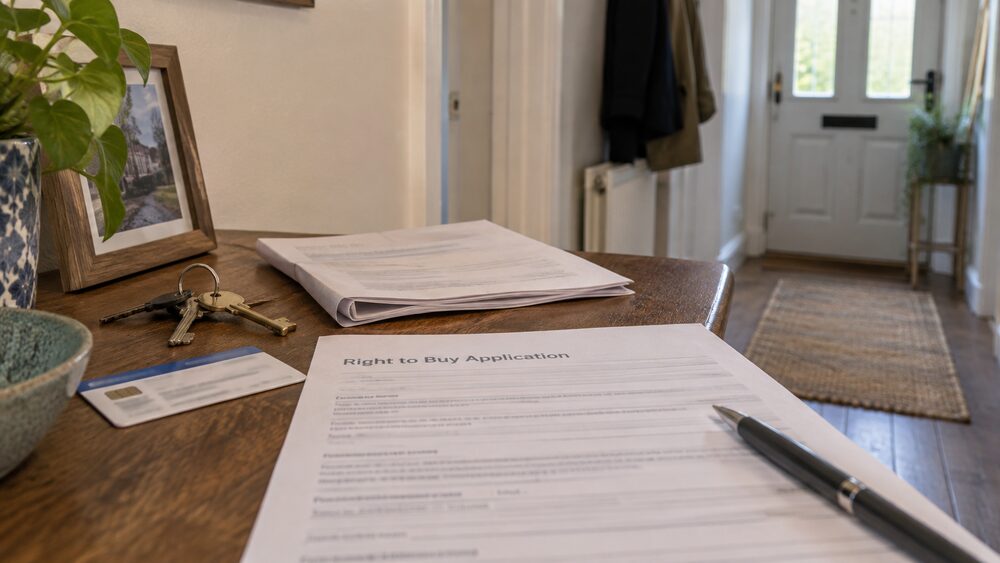
Yes, where the lease granted is a new qualifying long residential lease. Government guidance on the Right to Buy states that following the Leasehold Reform (Ground Rent) Act 2022 ground rent is a peppercorn rent, effectively restricting it to zero financial value, and that new leaseholders should therefore not be charged any ground rent1.
The Right to Buy has its own rules that sit alongside this. A landlord can apply to the court for a suspension order on grounds of anti-social behaviour, and applications received by social landlords before 21 November 2024 from eligible tenants are eligible for the current discounts1. A rule called the cost floor may also apply, reducing your discount to reflect what your landlord has spent on building, buying, repairing or improving your home over a specific period before you apply to buy1.
If you are weighing up the Right to Buy, the Right to Buy page sets out the discounts and process, and Right to Buy or Right to Shared Ownership? compares the two routes.
Does the Ground Rent Act apply in Wales and Northern Ireland?
The Act put an end to ground rents for most new qualifying long residential leases in England and Wales4. Wales therefore sits inside the ground rent ban for new leases, and leasehold is common there, as it is in England, where ground rent is traditionally a token annual fee paid to the freeholder3.
Northern Ireland is different. The Act does not extend there, and property law in Northern Ireland has its own arrangements, including the House Sales Scheme, under which a buyer or leaseholder of a flat or maisonette must also pay an annual service charge14. The House Sales Scheme in Northern Ireland explains how that scheme works.
For a wider view of how property rules differ across the UK, see Money in Scotland, Wales and Northern Ireland.
Why might a lender refuse a mortgage on a leasehold flat?
Two things drive most refusals: how much lease is left, and what the lease obliges you to pay. Guidance for buyers notes that a short lease can make a mortgage hard to get, with one source putting the threshold at fewer than 80 years remaining and another at fewer than 7012.
Ground rent with real financial value on a post-June 2022 lease is the second problem. Principality Building Society states that where a new lease has been granted after 30 June 2022 and the ground rent proposed is greater than a peppercorn, its valuer will place a zero value on the property until conveyancers investigate and confirm the terms are acceptable10.
Lenders can also refuse for reasons unrelated to the lease. The Financial Ombudsman Service notes that a lender can refuse a porting application on other grounds, for example if the value of the new property would take the ported balance outside the loan-to-value range for the interest rate the customer wants to port18. If a mortgage application goes wrong, the complaints when buying a home page explains where to take it.
Will I still pay service charges on a new lease?
Yes. The ground rent ban does not touch service charges, and a leaseholder will usually pay a service charge to the landlord or management company to maintain the common areas of the building3. The two charges are separate: ground rent is rent for the ground the property sits on, and the service charge covers maintaining the building and grounds, paid monthly or every year13.
Some leases limit how fast service charges can rise. Government guidance for Right to Buy leaseholders says you are protected from unexpected costs for the first five years, with the landlord required to give an estimate for that period and increases limited to inflation, after which the service charge can rise to reflect actual costs1. For flats or maisonettes under Northern Ireland's House Sales Scheme, the buyer or leaseholder must also pay an annual service charge14.
If you fall behind on a service charge, the consequences are more serious than a late bill. Freehold and leasehold charges can lead to action against the lease itself, and StepChange publishes guidance on service and ground charge arrears8. The Buying a leasehold property page covers what to check before you exchange, and Freehold vs leasehold sets out how the two tenures differ.
Sources18 cited
- Your Right to Buy your home: a guide GOV.UK, 2026-04-08
- Modern leasehold: restricting ground rent for existing leases GOV.UK, 2023-11-09
- Leasehold vs freehold Which?, 2026-06-08
- Guide to the Leasehold and Freehold Reform Bill GOV.UK, 2023-11-27
- Leasehold rent to be capped at £250 Which?, 2026-01-28
- Ground rent Leasehold Advisory Service, 2026-08-10
- Leasehold and Freehold Reform Act 2024 legislation.gov.uk, 2024-05-24
- Service and ground charge arrears StepChange, 2026-09-25
- Mortgage jargon buster StepChange, 2026-09-25
- Our full lending criteria Principality Building Society, 2026-09-26
- Leasehold Reform (Ground Rent) Act 2022 House of Commons Library, 2022-06-30
- Freehold, leasehold and commonhold explained TSB, 2026
- The difference between leasehold and freehold Yorkshire Building Society, 2026-09-26
- Equity sharing nidirect, 2026-02-25
- Leasehold extension calculator HomeOwners Alliance, 2025-08-21
- Home buying and selling jargon HomeOwners Alliance, 2026-07-31
- Can shared owners lose all of their investment in their home if they don't pay their rent? National Housing Federation, 2026-09-26
- Early repayment charges Financial Ombudsman Service, 2026-09-26











 MoneyHelperFree, impartial money and pensions guidance, set up by government
 Citizens AdviceFree advice on money, consumer and legal problems in England and Wales
 ShelterFree housing advice from a charity
 GOV.UKOfficial information on tax, benefits and government services
 Financial Ombudsman ServiceFree, independent help when a complaint about a firm is not put right