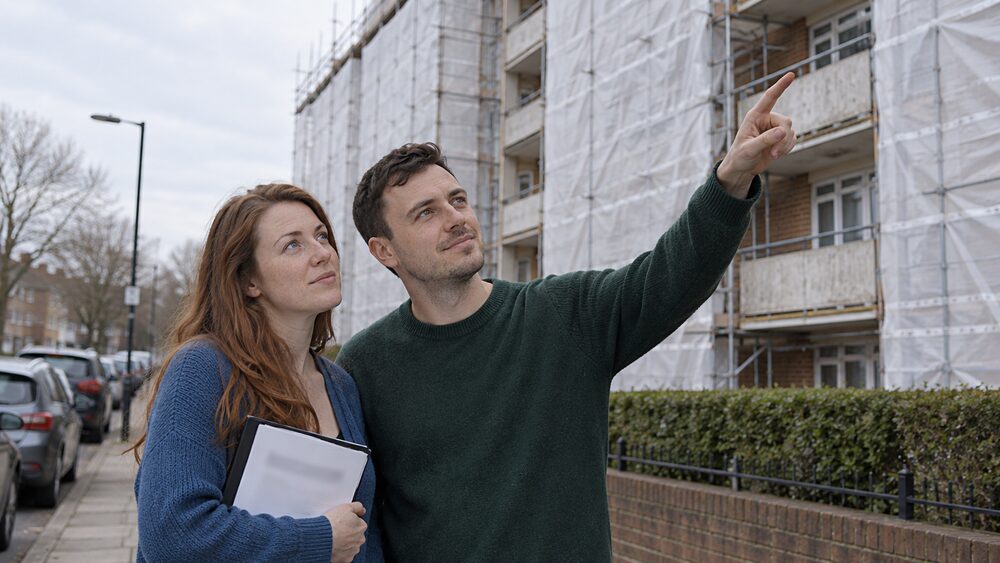
An EWS1 form is evidence that a building with potentially combustible cladding has had a fire safety assessment1. It records what is on the outside of a block of flats, whether that material may be a fire risk, and what a qualified professional concluded about it. Lenders, valuers and buyers ask for it because the answer changes whether a flat is acceptable as mortgage security.
An EWS1 form is evidence that a building with potentially combustible cladding has had a fire safety assessment1. It records what is on the outside of a block of flats, whether that material may be a fire risk, and what a qualified professional concluded about it. Lenders, valuers and buyers ask for it because the answer changes whether a flat is acceptable as mortgage security.
The form was introduced in 2018, and when first introduced it was only required for buildings over 18m or six storeys in height2. That scope has narrowed sharply since. Many lenders have implemented later guidance, which has resulted in an EWS1 not being required for 92% of mortgage valuations on flats3. In other words, only around 8% of flat valuations now need one.
If you are buying or remortgaging a flat and have been asked for an EWS1, the request is about the building, not about you or your flat's interior. The building's management company is responsible for obtaining the form and carrying out the necessary repair work, not the individual leaseholder4.
What an EWS1 form shows about a building's cladding
The form is a record of an external wall survey. It shows if the building has any kind of external cladding that may be a fire risk4, and it sets out what a fire professional found when they assessed the materials, the construction and how a fire would behave on that wall.
The output is a rating. Lenders that accept the form generally want to see A1, A2 or B1, once the valuer has confirmed the EWS1 has been satisfactorily completed by a suitably qualified professional and confirms the property is suitable security2. Those ratings mean the wall system is not expected to support the spread of fire, or that any risk is low enough for the building to be normal lending security.
The form is not a repair schedule and it is not a guarantee. It is a snapshot of a professional's judgement on a particular date, and it can be superseded if the building changes or if further defects come to light. Some lenders also want a current Fire Risk Assessment alongside it: Together, for example, asks to see an up to date Fire Risk Assessment and, if the building has cladding, an External Wall System Fire Review certificate5.
Which flats need an EWS1 form and which do not
The starting point is the building, not the flat. Generally, buildings which have neither cladding nor a combustible timber balcony do not, and have never, required an EWS13. If there is no external wall material in question, there is nothing for the form to assess.
Where cladding is present, the position depends on height, on what the material is, and on the lender. The government has recommended that EWS1 checks do not need to be carried out on buildings below 18m6. Some lenders go further and do not require the form at all where the developer has agreed to identify and remediate life-critical fire safety defects, including cladding, on buildings 11 metres and higher that they built or refurbished over the past 30 years7.
Newer buildings are treated differently again. There is no EWS1 required for properties constructed after 1 January 2020, because it can be assumed the building has been built to the current standards2. Some lenders will also accept a developer's letter in place of a form for new builds, confirming the property is being built in accordance with the Building (Amendment) Regulations SI 2018/1230, or that there are no materials included in the building of the flats that would cause an EWS1 form to be unsuitable8.
| Situation | Is an EWS1 usually needed? |
|---|---|
| No cladding and no combustible timber balcony | No, and never has been3 |
| Building below 18m | Government recommends checks are not needed6 |
| Developer has agreed to remediate life-critical defects on a building 11m or higher | Some lenders do not require one7 |
| Property constructed after 1 January 2020 | No2 |
| Cladding present, lender asks for evidence | Yes, unless the lender accepts an alternative9 |
Only 8% of flat mortgage valuations now need one
The 92% figure is the clearest signal of how much the market has moved. When the form was introduced in 2018 it was aimed at buildings over 18m or six storeys2, and in the years that followed it was requested far more widely than that. EWS1 forms had previously been requested to support the vast majority of mortgage applications on flats in multi-storey buildings10.
Lenders have since narrowed their criteria. HSBC UK, for example, will consider lending on flats in England and Wales which have suitable remediation schemes, and those where leaseholders are protected under the Building Safety Act, and in such cases an EWS1 report is not required11. That pattern, where a documented remediation plan or a statutory protection replaces the form, is what has driven the fall in requests.
The practical effect for a buyer or remortgager is that being asked for an EWS1 is now the exception rather than the rule. It is most likely to come up on an older, taller block with visible cladding, or where the valuer cannot establish what the external wall is made of from the information available.
Who arranges and pays for the form: the building owner, not the leaseholder
This is the point most leaseholders get wrong. The building's management company is responsible for obtaining the form and carrying out the necessary repair work4. It is not the individual flat owner's job to commission it, and a leaseholder cannot simply order one for their own flat.
The building owner or manager must appoint a suitably qualified member of one of the appropriate professional bodies to complete and sign the form12. Lenders typically want more than a signature: Accord Mortgages, for example, requires a completed EWS1 form from a member of a relevant professional body, along with a covering letter on headed paper which will confirm they are suitably qualified9. Bath Building Society sets out a similar standard, requiring the form to be the current (December 2019) RICS published version, complete and unaltered, covering the whole building, addressed to the assessor's client, with a covering letter confirming the form is genuine13.
Because the form covers the whole building, it cannot be produced flat by flat. That is why a single leaseholder cannot resolve a lender's request on their own, and why the timescale usually depends on the freeholder or managing agent acting.
What the fire risk assessment can find, and what happens next
Once a qualified professional carries out the assessment, there are two broad outcomes. The fire professional will carry out a risk assessment of the building and if the risk is low, they may recommend no remedial works. However, higher risk buildings are likely to need to have the cladding replaced3.
Where remediation is needed, the work sits with the building owner, and the cost questions that follow are a separate matter from the form itself. For shared owners and leaseholders in buildings with historic fire safety defects, there are support routes: the Welsh Government has funded interim alarm systems for leaseholders in eligible buildings facing waking watch costs from 1 October 2026, as part of the Welsh Building Safety Fund7. In England, the Leasehold and Freehold Reform Bill set out to ban the sale of new leasehold houses so that, other than in exceptional circumstances, every new house in England and Wales will be freehold from the outset14, which changes the shape of the market over time but not the position of an existing flat owner.
The insurance market has also adapted. The Fire Safety Reinsurance Facility covered 703 risks in its first year, and reported an increase on that figure in its second15. That matters to leaseholders because buildings insurance is arranged at building level, and a leasehold flat may be insured by the freehold landlord rather than by the flat owner16.
Selling or remortgaging a leasehold flat without an EWS1 form
A missing form does not automatically end a sale or a remortgage, but it changes what the lender will accept. Some lenders will proceed where there is a suitable remediation scheme in place or where leaseholders are protected under the Building Safety Act, and in those cases an EWS1 report is not required11. Others will accept a developer's letter for a new build8, or evidence that the form is not available from your freeholder or management company17.
If you are selling, the buyer's lender sets the terms, so the practical question is what that lender will take. If you are remortgaging, your own lender's criteria apply, and these vary: some will not normally accept a flat in a block over four storeys without satisfactory lift access or a satisfactory EWS1 report where required18.
Leasehold itself is the underlying structure here. In England, Northern Ireland and Wales, flats are most commonly owned on a leasehold basis, while houses are normally sold as freehold properties19. A lease is a legal contract that states how long the lease is for, what the costs and fees are and the responsibilities of the homeowner20, and leases are normally granted for 99 years1. When the lease ends, ownership returns to the freeholder unless the lease is extended1. None of that changes because of an EWS1, but it is why the building-level questions matter so much to a flat owner.
If you are stuck, free and impartial help is available. The Leasehold Advisory Service advises leaseholders on fire safety issues affecting a sale or remortgage7, and Citizens Advice can help with the consumer and housing side. For mortgage-specific questions, your lender's own criteria are the deciding factor.
Sources20 cited
- Home buying and selling jargon HomeOwners Alliance, 2026
- Flats with cladding Coventry Building Society, 2026
- Cladding consumer Q&A Building Societies Association, 2022
- Check if your home has cladding that may need a specialist valuation GOV.UK, 2021
- Application checklist Together, 2026
- Will existing shared owners have to pay for cladding replacement and what are EWS1 forms? National Housing Federation, 2026
- Selling or remortgaging a flat with fire safety issues Leasehold Advisory Service, 2025
- Cladding criteria Accord Mortgages, 2026
- Property specifics Accord Mortgages, 2026
- Mortgages on flats affected by the building safety crisis National Housing Federation, 2026
- How to apply for a mortgage HSBC UK, 2026
- Unsafe cladding Virgin Money, 2026
- FAQs for new customers Bath Building Society, 2026
- Guide to the Leasehold and Freehold Reform Bill GOV.UK, 2023
- Second successful year for fire safety reinsurance facility Association of British Insurers, 2026
- Mortgage jargon buster StepChange, 2026
- How to sublet your Help to Buy home GOV.UK, 2021
- Owner occupier lending criteria guide Family Building Society, 2026
- Leasehold vs freehold Which?, 2026
- The Grenfell Assisted Home Ownership Scheme GOV.UK, 2024












 MoneyHelperFree, impartial money and pensions guidance, set up by government
 Citizens AdviceFree advice on money, consumer and legal problems in England and Wales
 ShelterFree housing advice from a charity
 GOV.UKOfficial information on tax, benefits and government services
 Financial Ombudsman ServiceFree, independent help when a complaint about a firm is not put right