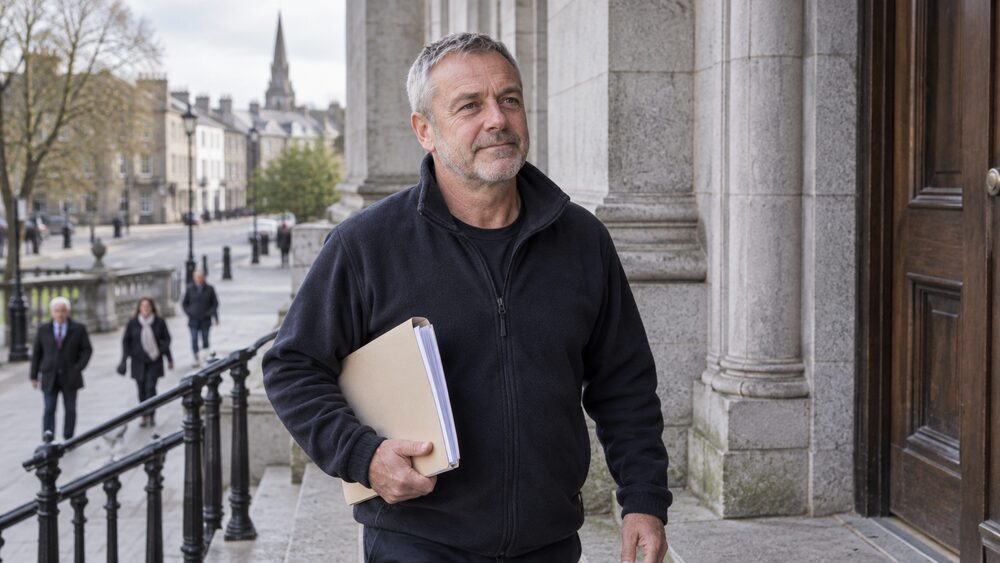
Bankruptcy is a formal insolvency option available to people resident in Northern Ireland who cannot repay their debts1. It writes off most unsecured debts, stops creditors taking action against you, and is administered through the courts in Belfast rather than through the online process used in England and Wales2. A bankruptcy order gives protection against action by creditors for a one year period, after which you are usually discharged3.
The process in Northern Ireland is different from the rest of the UK. The UK Government confirms that the process to become bankrupt is different if you live in Scotland or Northern Ireland4, and in Northern Ireland it involves a court hearing rather than an online application. It costs more too: the fee is up to £683 and has to be paid in full5, compared with a £130 application fee in England and Wales6.
Bankruptcy is a serious step with lasting consequences: your home, car and valuables can be sold, your bankruptcy is advertised publicly, and dishonesty before or during the bankruptcy can extend restrictions for many years. But for someone with debts they genuinely cannot repay, it also offers a definite end point and a fresh start. This page explains how bankruptcy works in Northern Ireland, what it costs, what you may lose and keep, and where to get free advice first.
What bankruptcy in Northern Ireland means for your debts
When a bankruptcy order is made, your unsecured debts, such as credit cards, personal loans, overdrafts and catalogues, become part of the bankruptcy and your creditors can no longer pursue you directly for them. The order gives protection against action by creditors for a one year period3, and at the end of that period you are normally discharged, which releases you from most of the debts included.
The money and assets gathered in the bankruptcy are distributed in a fixed order. The costs of the bankruptcy proceedings are paid first from the money that is available, then preferential debts including employee claims, then other creditors with interest, and any surplus is returned to you10. Secured creditors, such as those with a mortgage or charge on your home, are different: they may be paid direct, because their debt is secured on property rather than included in the bankruptcy10.
Some household bills get special treatment. Suppliers of gas, electricity and telephone services to your home may not demand payment of bills that were in your name at the date of the bankruptcy order, but they may ask for a deposit or transfer the accounts to a spouse or partner10. An overdraft is simply a debt in the bankruptcy, and you must not make payments direct to the bank unless it has a charge on your home10.
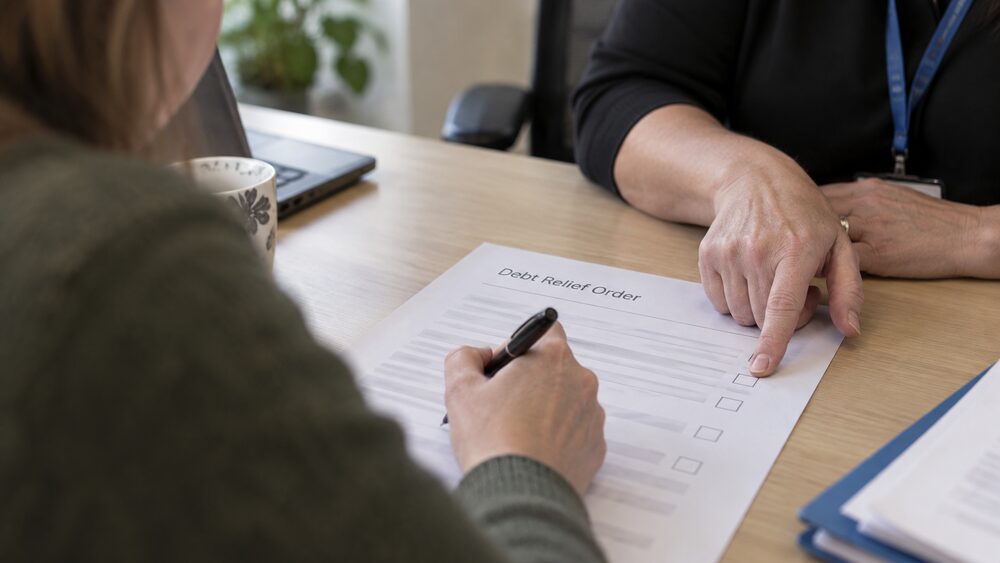
Bankruptcy is not the only option, and it is not always the right one. If your debts are smaller and you have little of value, a debt relief order may be cheaper: in Northern Ireland the DRO debt limit was raised to £50,000 in 2024, with a vehicle exemption of £4,000 and a monthly surplus income limit of £7511. If you have a regular income and want to avoid losing assets, an individual voluntary arrangement may be possible. Free advice, described at the end of this page, will help you weigh them up. The wider options are compared in debt solutions across the UK.
Applying for bankruptcy: fees of up to £683
In Northern Ireland you make yourself bankrupt by going to a court hearing, rather than applying online as in England and Wales12. The petition is heard by the High Court in Belfast, and the fees must be paid before the order can be made.
The costs break down into three parts:
| Item | Amount | Notes |
|---|---|---|
| Court fee | £151 | May be waived if you have a low income or receive certain benefits8 |
| Bankruptcy deposit | £525 | Always has to be paid8 |
| Solicitor's fees | around £7 | Can differ depending on your solicitor13 |
Independent guidance gives slightly different totals: StepChange puts the total cost at £6767, while its fee page says up to £683 and that it has to be paid in full5. The difference is in the solicitor's fee, which can vary. Either way, this is far more than the £130 application fee in England and Wales6, and the full amount has to be paid up front, which is one reason some people in Northern Ireland cannot go bankrupt when they most need to.
If a creditor is making you bankrupt rather than you petitioning yourself, you do not pay these fees. A creditor who wants to bankrupt you will normally first serve a statutory demand, which is a formal demand for payment and a warning of intended action. How that works is covered in statutory demands and creditor bankruptcy petitions.
The Official Receiver's role and your interview
Once the court makes the bankruptcy order, administration passes to the Official Receiver. The Official Receiver is a civil servant in The Insolvency Service and an officer of the court, responsible for administering your bankruptcy and protecting your assets from the date of the bankruptcy order14. In some cases the Official Receiver also acts as trustee of the bankruptcy15.
The first contact comes quickly. A case examiner will contact you either on the day of the bankruptcy hearing or within two days16. The interview itself normally takes place over the phone unless your case is complicated, and an interview may not be needed at all if you complete the forms thoroughly and your case is simple16. If it was your creditors who made you bankrupt, rather than you petitioning yourself, you will be given a questionnaire to fill out16.
The Official Receiver's work includes taking control of some of your property, assessing whether you can afford to make any payments towards your debts, investigating your conduct and financial affairs before and during the bankruptcy, and informing your creditors15. The Official Receiver and their case examiners contact anyone who needs to know about the bankruptcy, including the people you owe17.
The Official Receiver's own costs come out of the bankruptcy estate, not from your pocket on top of the petition fees. The Official Receiver has fixed fees: a £6,000 general fee applied in every case, plus an additional 15% of the assets realised, and the £6,000 fee must be paid even in a case which is later passed to an insolvency practitioner18. Creditors do not have a say on fees in cases handled by the Official Receiver18. In practice this means that where there are few or no assets, there may be little or nothing to distribute to creditors, and the bankruptcy still proceeds.
Your home, car and belongings
Your home is usually the biggest concern for anyone considering bankruptcy. If you own a home with equity, that interest belongs to your bankruptcy estate and the trustee can realise it to pay creditors. Where a sale is needed, the trustee may obtain a charging order on your interest in the property, but only if that interest is worth more than £1,00010. Whether your home actually has to be sold, and the timescales involved, are explained in does bankruptcy mean selling your home?.
Your car is treated on an "essential or not" test. The Official Receiver will only let you keep a vehicle if it is of a low value and they decide you really do need it19. A vehicle may be classed as essential if you could not do your job without it, if you or someone in your household needs it because of a health condition or disability, or if there is no possible way you could get to work or school without it19. The Official Receiver will look into whether you could use a taxi, train or bus instead; if you can, your vehicle would not be seen as essential19.
There are some middle routes between keeping and losing a car:
- A partner, friend or family member may be able to pay the Official Receiver the money they would have raised from a sale, letting you keep the vehicle19.
- The Official Receiver may order you to sell the vehicle, buy a cheaper one to use, and pay the difference to the Official Receiver19.
- If the vehicle is on hire purchase or conditional sale, the agreement may include a clause ending it if you go bankrupt, in which case the lender can repossess and sell the car, though some lenders may allow you to keep it19.
- If there is a logbook loan on the car, the Official Receiver will check whether the agreement was drawn up correctly. If it was not, the logbook loan company has no security over the vehicle and it is treated as if you owned it outright19.
StepChange notes that if you live in Northern Ireland, different vehicle value limits may apply than in England and Wales19. Other belongings are dealt with on the same principle: the Official Receiver may arrange for valuable items to be sold, such as property, a vehicle, expensive jewellery and savings, with the money used to pay back some of your debts8. Ordinary household goods, clothing and tools you need for your work are not sold.
Bank accounts and money in them
All your bank accounts are usually frozen by the bank when it becomes aware of the bankruptcy order10. Any money in your account at the date of the bankruptcy order is an asset in the bankruptcy, claimed by the Official Receiver or the trustee10. This is why advisers tell people not to leave money sitting in an account on the day of the order.
Because your account is frozen, you will likely have to open a new bank account for your wages, benefits and day-to-day spending1. Not every bank offers accounts to undischarged bankrupts, so which basic accounts are available matters before the order is made. The options are explained in current accounts.
An overdraft on your old account is treated as a debt in the bankruptcy, and you must not make payments direct to the bank unless it has a charge on your home10. After bankruptcy you must also tell your trustee about any money you have that is more than you need for your reasonable living expenses, because the trustee can claim the surplus amounts to pay your creditors20.
Paying from your income: income payments orders
Being bankrupt does not necessarily mean your income is untouched. Your money and income might be used to pay for your bankruptcy and to make payments towards your debts if you do not need it all to live on4. In Northern Ireland this is done through an income payments order (IPO) made by the court, or through an income payments agreement, which is a voluntary version of the same thing.
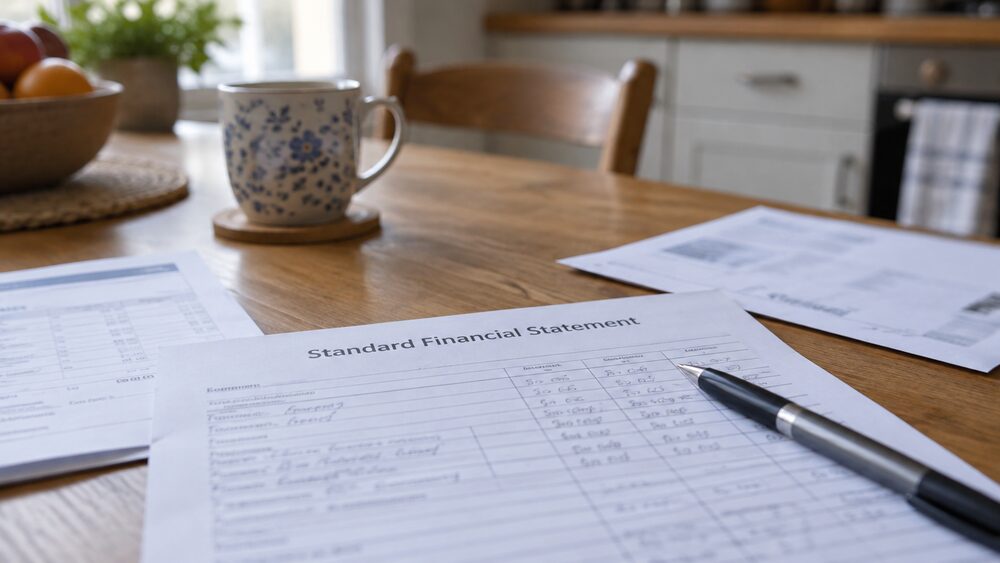
There is an important safeguard. The court will not make an IPO if it would leave you without enough income to meet the reasonable domestic needs of you and your family10. In other words, the starting point is what you genuinely need to live on, and only surplus income above that can be directed to creditors. What counts as reasonable is based on standard guidelines for living costs, which is why advisers help clients prepare a budget and financial statement before the interview.
If your circumstances change during the bankruptcy, tell the Official Receiver or trustee. Surplus income that appears later can be claimed, and concealing it is one of the forms of misconduct covered in the next section. If instead your income falls, the order or agreement may need to be varied, and a free adviser can help you ask.
Debts bankruptcy does not clear
Bankruptcy clears most unsecured debts, but not all of them. Criminal fines, child maintenance arrears and TV Licence non-payment must still be paid after bankruptcy21. Secured debts such as your mortgage continue too, because the lender has a charge on the property: bankruptcy deals with your personal liability, but the lender can still take steps over the security.
Student loans and some other statutory debts are also outside bankruptcy, and money owed through fraud may not be discharged. If a specific debt is one a creditor obtained through court action, the position can be more complicated, and the general rules on county court judgments and their Northern Ireland equivalents explain how judgment debts are treated.
One point that catches people out: a debt does not disappear just because it is old. In England, Wales and Northern Ireland, a statute barred debt still exists and is recoverable22. Limitation rules affect whether a creditor can enforce through the courts, not whether the debt exists, and bankruptcy includes debts whether or not they are statute barred. The details are in when a debt becomes statute-barred.
Dishonesty, restrictions and when bankruptcy ends
The Official Receiver investigates your conduct and financial affairs before and during the bankruptcy15. Where that investigation finds dishonest or reckless behaviour, the consequences extend well beyond the usual one year. A bankruptcy restrictions order or undertaking lasts for two to 15 years21. The sort of conduct that gets reported includes hiding assets, obtaining credit knowing it could not be repaid, favouring family members over other creditors, and not paying tax23.
Similar principles apply to benefits. Where fraud is committed against benefits in Northern Ireland, the outcomes can include prosecution resulting in a fine or prison sentence, an administrative penalty as an alternative to prosecution, a formal caution, having the benefit reduced or withdrawn, and confiscation of assets24. Benefit debts and penalties sit awkwardly with bankruptcy, and dishonesty of this kind can affect both the discharge and any restrictions.
Bankruptcy also brings restrictions during the one year period itself. If you live in Northern Ireland, you cannot leave the country without permission while bankrupt21, and you cannot change the name of your business if you are self-employed21. You must also disclose your bankruptcy when borrowing, and failing to do so is treated seriously: in Scotland, not telling a lender about your bankruptcy when borrowing £2,000 or more is a criminal offence25, and equivalent disclosure duties apply across the UK.
Bankruptcy can also be cancelled in some cases. If there is a surplus after creditors are paid, it will be returned to you, and you would then be able to apply to the court to have your bankruptcy annulled, which cancels it10. You can also apply for annulment where your debts and fees have been paid or secured, under Article 256(1)(b) of the Insolvency (Northern Ireland) Order 1989, or where creditors have agreed an individual voluntary arrangement, under Article 235 of the same Order27. The process is covered in appealing or annulling a bankruptcy order, and proving the bankruptcy has ended is covered in bankruptcy discharge.
Car finance compensation claims belong to the Official Receiver
If you took out a motor vehicle finance agreement before your bankruptcy or discharge, any claim for redress, for example for a mis-sold agreement, belongs to the Official Receiver rather than to you28. The Official Receiver will submit a claim and any monies received in redress will go to your creditors28. Following the completion of a pilot exercise, the Official Receiver is now exploring the options available for a wider redress exercise28.
This matters because many people going bankrupt have old car finance agreements that might otherwise have produced a payout. The payout is not lost, but it is not yours either: it goes into the bankruptcy estate. If you are discharged and a claim later succeeds, the money can still be claimed for the benefit of your creditors if the claim arose before your discharge.
There is a time limit to be aware of. The limitation period for a claim under section 140A of the Consumer Credit Act 1974 seeking a monetary remedy, an unfair relationship claim, in Northern Ireland is six years from the end of the motor finance agreement29. The background to these claims is explained in challenging a credit agreement as an unfair relationship.
If you are self-employed or run a business
Bankruptcy has a particular impact on the self-employed. If you are self-employed, your business is normally closed down and any employees are dismissed, business assets are claimed by the trustee unless exempt, and you must give the Official Receiver all your accounting records10. You also cannot change the name of your business while bankrupt21.
Any registration, licence or permission held in connection with your work or trade might be affected by the bankruptcy, and the issuer has to be informed; any value attaching to these items may belong to the trustee10. Some professional bodies restrict undischarged bankrupts, so the terms of any membership set out the position early on. The wider employment consequences, including being a company director, are covered in bankruptcy, jobs and being a company director.
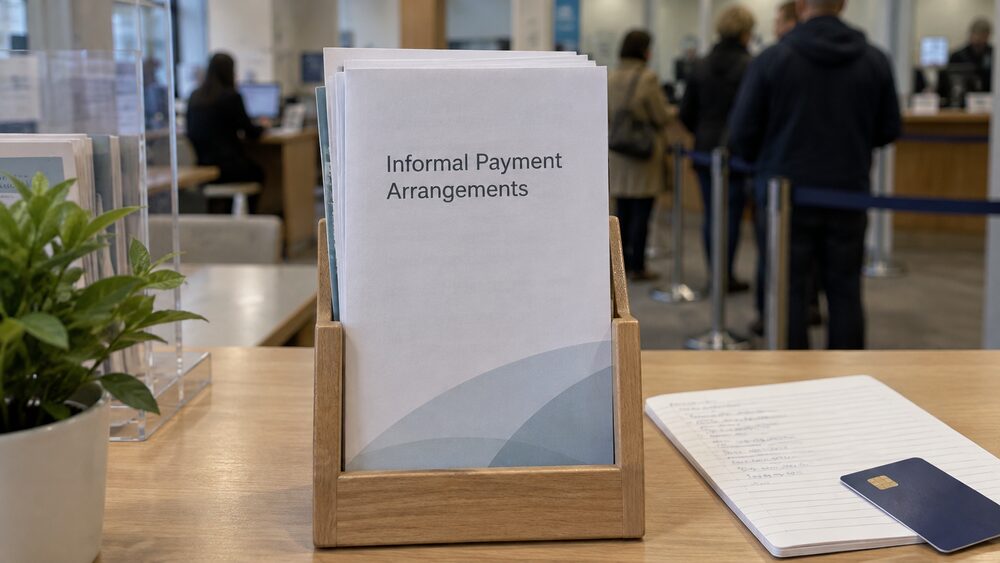
Being self-employed does not rule bankruptcy out, and for a sole trader with unpayable personal debts it may still be the most realistic option. The Official Receiver will want a full picture of the business: accounts, records, and details of any money owed to or by the business. If the business could be saved and the problem is time rather than the size of the debt, other options such as an informal payment arrangement or a debt management plan may be worth exploring first, and a free adviser can help you judge which fits.
Where to get free debt advice in Northern Ireland
Free, confidential and impartial advice is available before you take any step towards bankruptcy. Advice NI offers free, confidential and impartial advice and information to help you manage your money30, runs a free and confidential debt helpline1, and has offices throughout Northern Ireland which you can visit or telephone for advice31. The nidirect website recommends getting advice before setting up any plan with a provider, and points to organisations like Advice NI for free and independent advice on debt management plans or any kind of debt problem26.
The scale of the need is clear from Advice NI's own figures: last year its network dealt with over 288,000 enquiries, and its debt service dealt with approximately £46m in debt, with an average debt per client of just over £11,00029. People running small businesses are also helped, with average debt in the small business caseload amounting to just over £53,00029.
Other sources of help include the Insolvency Service, which provides guidance for people dealing with insolvency30, and the Department for the Economy, which publishes the official guide to bankruptcy in Northern Ireland31. A debt relief order is an alternative for those with smaller debts: to qualify you must either be currently living in Northern Ireland, or have been living or carrying on business there at some time within the last three years11. Whatever your situation, speak to a free adviser before paying anyone: the differences between free and fee-charging services are set out in free debt advice and free debt charities or fee-charging companies.
Sources31 cited
- Options for dealing with debt, Advice NI Advice NI, 2026
- Becoming bankrupt, GOV.UK UK Government, 2026-09-26
- Insolvency Act (Northern Ireland) 2010 explanatory notes, Legislation.gov.uk Legislation.gov.uk, 2026
- Bankruptcy: how we help, StepChange StepChange, 2026-09-25
- Bankruptcy costs and fees, StepChange StepChange, 2026-09-25
- Debt solution costs, StepChange StepChange, 2026-09-25
- Personal bankruptcy, StepChange StepChange, 2026-09-25
- Bankruptcy register, StepChange StepChange, 2026-09-25
- After bankruptcy, StepChange StepChange, 2026-09-25
- The effect of bankruptcy, Department for the Economy Department for the Economy, 2016-05-06
- Debt relief orders, Department for the Economy Department for the Economy, 2026-08-06
- How to go bankrupt, StepChange StepChange, 2026-09-25
- Making yourself bankrupt, Department for the Economy Department for the Economy, 2023-04-18
- Bankruptcy court hearing, StepChange StepChange, 2026-09-25
- What happens after bankruptcy, Citizens Advice Citizens Advice, 2026-09-25
- Bankruptcy and my car, StepChange StepChange, 2026-09-25
- Bankruptcy restrictions, Department for the Economy Department for the Economy, 2019-05-02
- Insolvency fees, R3 R3, 2026-07-20
- Bankruptcy information document, Accountant in Bankruptcy Accountant in Bankruptcy, 2026
- CONC 7.15, FCA Handbook Financial Conduct Authority, 2014-04-01
- Complain about someone bankrupt, GOV.UK UK Government, 2026-09-27
- Benefit fraud, nidirect nidirect, 2026-08-20
- Cancelling a bankruptcy order, Department for the Economy Department for the Economy, 2019-05-02
- Motor vehicle finance mis-selling: the position of the Official Receiver, GOV.UK UK Government, 2026-07-08
- CONRED 6.1, FCA Handbook Financial Conduct Authority, 2026-03-31
- How long will bankruptcy affect me? StepChange, 2026-09-25
- Debt management plans, nidirect nidirect, 2025-11-06
- Getting information and help: pensions, nidirect nidirect, 2026-06-26
- Advice NI response to Universal Credit Bill LCM, Northern Ireland Assembly Northern Ireland Assembly, 2026-01
- Get help from the Insolvency Service, GOV.UK UK Government, 2026-09-27
- A guide to bankruptcy, Department for the Economy Department for the Economy, 2025-10-01



 StepChangeFree debt advice and solutions from a charity
 National DebtlineFree debt advice by phone, webchat and online
 MoneyHelperFree, impartial money and pensions guidance, set up by government
 Citizens AdviceFree advice on money, consumer and legal problems in England and Wales
 Citizens Advice ScotlandFree advice across Scotland