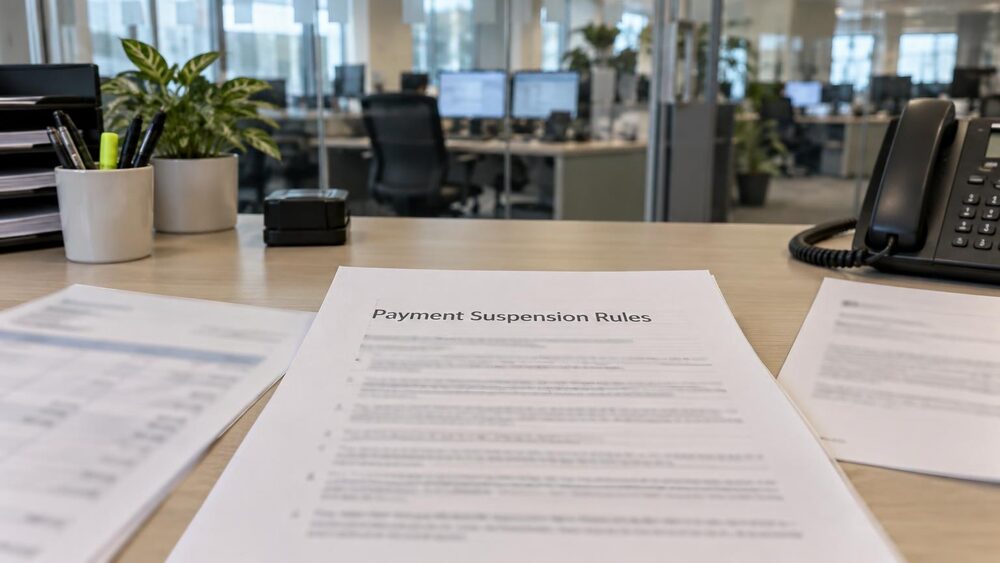
If you are about to send money to someone you have not paid before, you may want your bank to hold the payment for a day so you can check. You cannot set a standing 24-hour hold yourself, but your bank can pause a payment when it suspects fraud. Under the Payment Services Regulations, a bank may delay crediting a payment to make enquiries, but the delay must be no longer than necessary and in any event no longer than the end of the fourth business day after it received your order1.
If you are about to send money to someone you have not paid before, you may want your bank to hold the payment for a day so you can check. You cannot set a standing 24-hour hold yourself, but your bank can pause a payment when it suspects fraud. Under the Payment Services Regulations, a bank may delay crediting a payment to make enquiries, but the delay must be no longer than necessary and in any event no longer than the end of the fourth business day after it received your order1.
That power exists because a bank transfer to a fraudster is hard to reverse once the money has moved. The rules let a bank slow things down when it has reasonable grounds to suspect the payment order was placed because of fraud or dishonesty by someone other than you, established by the end of the next business day, and it needs more time for enquiries2. One bank states it will only delay a payment for as long as necessary to make its checks, and never for more than four business days3.
The delay is not a substitute for your own checks. Most of the protection comes from what you do before you press send: confirming the payee on a number you already hold, sending a small test payment first, and answering your bank's security questions honestly. This page sets out how the delay works, how to check a new payee, and what to do if someone tries to talk you into misleading your bank.
Why a delay on payments to a new payee helps against scams
A bank transfer leaves your account and arrives in the payee's account quickly, and once it is there the money is usually gone. That is why the law gives banks a narrow power to slow a payment down when something looks wrong. The Payment Services (Amendment) Regulations 2024 allow a payment service provider to delay crediting the payee's provider's account where it has reasonable grounds to suspect the payment order was placed subsequent to fraud or dishonesty by someone other than the payer, established by the end of the next business day, and where more time is needed for enquiries2.
The delay is capped. It must be no longer than necessary to achieve that purpose, and in any event no longer than the end of the fourth business day following the time of receipt of the payment order1. The bank also has to keep you informed: it must notify you of the fact of the delay, the reasons for it, and any information or action required of you, as soon as possible and by no later than the end of the business day following receipt of your payment order1.
In practice, a delay gives you a window to check whether the request is genuine. It also gives the bank time to ask you questions. One bank describes the same approach in its own terms, saying it will only delay a payment for as long as necessary to make its checks, and never for more than four business days3. If a payment is delayed, that is a signal to stop and verify, not to find another way to send the money faster.
Check a new payee before you send: phone them on a number you already know
The single most useful check is to confirm the payee's details using contact information you already hold, not details supplied in the request. If an email or message asks you to pay a new account, treat the change of details as a warning sign and call the organisation on a number you have used before. Confirmation of Payee is designed to help here: it works by checking the account name and account details to make sure there is a match, and alerts notify the payer whether there has been a match or not before the payment is made6.
If the request came by phone, a callback on a number you know is still worth doing. If someone claims to be your bank and you are unsure whether the call is genuine, you can call 159 if your bank is signed up to the 159 service, and wait at least 15 minutes before calling back or use another phone7. Independent guidance suggests waiting at least 20 minutes before you call an organisation or company that has called you unexpectedly, possibly on a different phone line5.
Be aware that a brand new account may not yet appear in name checking. New accounts can take up to 48 hours to appear within the Confirmation of Payee name checking system8. If a payee's details do not match, or the account is too new to check, that is a reason to slow down and confirm by another route.
Send a small test payment first
A test payment is a small amount sent first so you can confirm it reaches the right account before sending the rest. It is a practical habit rather than a rule, and the amount depends on what you are paying for. One provider builds the step into its process: when sending more than £110.00 to a new payee, it requires you to send a small test payment4. That shows how banks use the idea, but it is not a figure you have to follow.
The logic is simple. If the first payment goes astray, you have lost only a small sum, and you have learned that the details are wrong before committing the full amount. If it arrives as expected, you can send the balance with more confidence. Keep the test small enough that losing it would not be serious, and confirm with the payee that it has arrived before sending more.
A test payment also buys time. If the payee is a fraudster, a small payment that you then question may prompt the bank to look more closely at the next one. It is not a guarantee, and it does not replace checking the payee's identity, but it limits the damage if the details turn out to be false.
Never give false answers to your bank's security questions
When your bank asks why you are making a transfer, answer honestly. Those questions exist so the bank can spot scams and meet its duties. If a bank suspects a payment order was placed because of fraud or dishonesty by someone other than you, it can delay the payment to make enquiries, and it must then tell you about the delay, the reasons for it, and anything it needs from you1.
Giving false answers undermines your own position. If a payment later turns out to be a scam, the bank's ability to help you depends on what it knew and what you told it. A bank can refuse a refund if it can prove you authorised the payments, if it can prove you were at fault because you acted fraudulently or negligently, or if you told them about the fraud 13 months or more after the payment was taken9. Misleading the bank about the purpose of a payment can look like fault.
There is also a timing rule that works in your favour if you act quickly. Under Regulation 74 of the Payment Services Regulations, a payment service user must notify the provider without undue delay, and in any event no later than 13 months after the debit date, to be entitled to a correction for an unauthorised or incorrectly executed transaction10. Reporting promptly, and truthfully, is what keeps your options open.
No genuine police officer will tell you to lie to your bank
If someone claiming to be a police officer, a bank official or a regulator tells you to mislead your bank about a payment, that is a scam. The rule is consistent across the guidance. Your bank or the police will never ask for your PIN or password or ask you to transfer funds for fraud reasons5. Your bank, the police and regulators will never ask you to move money to a safe account12. Your bank or the police will never send a courier to your home to collect your card, PIN, cash or valuables13.
Other versions of the same fraud follow the same pattern. Your bank will never phone you out of the blue, ask you for your PIN number or password, or ask you to transfer money into a different account14. Banks or the police will never ask for your PIN or send someone to your house to pick up your bank card15. And genuine law enforcement agencies will never ask you to pay them to get back the money you have lost16.
If someone tells you to lie to your bank, the instruction itself is the proof that the request is false. Stop the payment, end the call, and contact your bank on a number you know. You can read more about how to check your bank is really contacting you and about safe account scams.
What to do if a payment is delayed or refused
If your bank delays a payment, it must tell you why and what it needs from you1. Cooperate with the checks. If the payment is refused or you believe the bank has got it wrong, you can complain. For complaints about a payment service, such as a direct debit or bank transfer, the firm should give its final response within 15 days17. The Financial Ombudsman Service can look at a complaint if you are unhappy with the outcome.
If you have already sent money to a fraudster, act quickly. Report it to your bank and to the police. If your bank cannot reclaim funds straight away, for instance if the recipient disputes its return, the bank will investigate, and the misdirected payments code of best practice sets a 15 business day deadline for that investigation18. For more on what to do next, see claiming a refund from your bank after a push payment loss and paid a fraudster? What to do straight away.
Free, impartial help is available. MoneyHelper offers guidance on current accounts and on scams19, and National Debtline has guides on dealing with fraud in England and Wales and in Scotland7. If you are unsure whether a payment is genuine, the safest step is to stop and check before you send.
Sources20 cited
- The Payment Services (Amendment) Regulations 2024, regulation 2 legislation.gov.uk, 2024
- Explanatory Memorandum to The Payment Services (Amendment) Regulations 2024 legislation.gov.uk, 2024
- Bank of Ireland UK terms and conditions Bank of Ireland UK, 2026
- Fraud protection iFAST Global Bank, 2026
- How to avoid a scam Independent Age, 2026
- Consultation on general directions for the implementation of Confirmation of Payee Payment Systems Regulator, 2026
- Dealing with fraud in England and Wales National Debtline, 2026
- Mortgage overpayments: what, why, how Cambridge Building Society, 2026
- Dealing with fraud in Scotland National Debtline, 2026
- The Payment Services Regulations 2017, regulation 74 legislation.gov.uk, 2026
- The Payment Services Regulations 2017, regulation 74 (made) legislation.gov.uk, 2026
- Types of scam MoneyHelper, 2026
- Courier fraud Take Five, 2026
- Online banking Age UK, 2026
- Scams quiz Independent Age, 2026
- What to do if you've been a victim of a scam Independent Age, 2026
- Bank accounts: right of set-off Financial Ombudsman Service, 2026
- How do I get money back that I've sent to the wrong account Which?, 2026
- Current accounts MoneyHelper, 2026
- Check if a financial service has followed the rules Citizens Advice, 2026







 FCA Warning ListCheck whether a firm is authorised before you deal with it
 Financial Ombudsman ServiceFree, independent help when a complaint about a firm is not put right
 Citizens AdviceFree advice on money, consumer and legal problems in England and Wales
 MoneyHelperFree, impartial money and pensions guidance, set up by government