
No. Your bank, the police and regulators will never ask you to move money to a "safe" account1. Neither will any other genuine company, and none of them will ask for your PIN, password or passcode either2. The call is a scam, however convincing the number on your screen looks and however much detail the caller has about you.
No. Your bank, the police and regulators will never ask you to move money to a "safe" account1. Neither will any other genuine company, and none of them will ask for your PIN, password or passcode either2. The call is a scam, however convincing the number on your screen looks and however much detail the caller has about you.
The trick works because it borrows the authority of the one institution people trust with their money. A criminal manipulates the caller ID so it appears they are calling from the genuine bank, then tells you your account is compromised and the money must be moved somewhere safe3. The "safe account" belongs to the criminal4. Banks and police will never ask you to move money to a safe account because your "money is at risk"5.
The sums involved are not small. Lloyds Bank data shows average impersonation scam losses of £3,516 for the year to 30 June 2026, up from £3,200 a year earlier, even as overall reported case volumes fell 3%6. UK Finance recorded £55.5 million lost to bank and police impersonation scams in 2025, its lowest since 2020, and £36.9 million to other impersonation scams across 18,435 cases7.
How a safe account scam works
A safe account scam is where a criminal gets you to move money into their account. Scammers lie to you and make you believe your money is at risk, then present the "safe account" as the solution11. The caller usually claims to be from your bank's fraud team, sometimes alongside a claim to be from the police, and says your account has been compromised12.
The story has a shape. The person is told there is a problem: a fraudulent transaction, a compromised account, an investigation. They are told not to discuss it, which keeps them isolated and unable to check the story with anyone. Then comes the instruction: move the money, quickly, to an account the criminal controls. Zempler Bank describes a safe account scam as one where a criminal gets you to move money into their account, with scammers claiming your account is at risk and asking you to move money to a safe account9.
Impersonation is not confined to banks. The Pensions Regulator emailed an alert on impersonation fraud to around 35,000 pension industry professionals in March 2026, warning trustees and administrators to tighten identity checks, data security and member online security13. Its analysis identifies identity theft and account takeover, fraudulent duplicate accounts, weak credential exploitation and fraudulent death claims13. Pension Wise is blunt about the consumer end of this: do not withdraw or transfer your pension because of a cold call, visit, email or text, because it is likely a scam14.
The same pattern appears in computer software service fraud, where the victim is contacted, told there is a problem with their computer, and told that for a fee it can be resolved. The fraudster seeks remote access to the computer and the online banking account, and no fix ever happens15. Some fraudsters return to previous victims asking for payment for a fake malware protection service or a new subscription fee15.
Spoofed numbers, cloned websites and other tactics
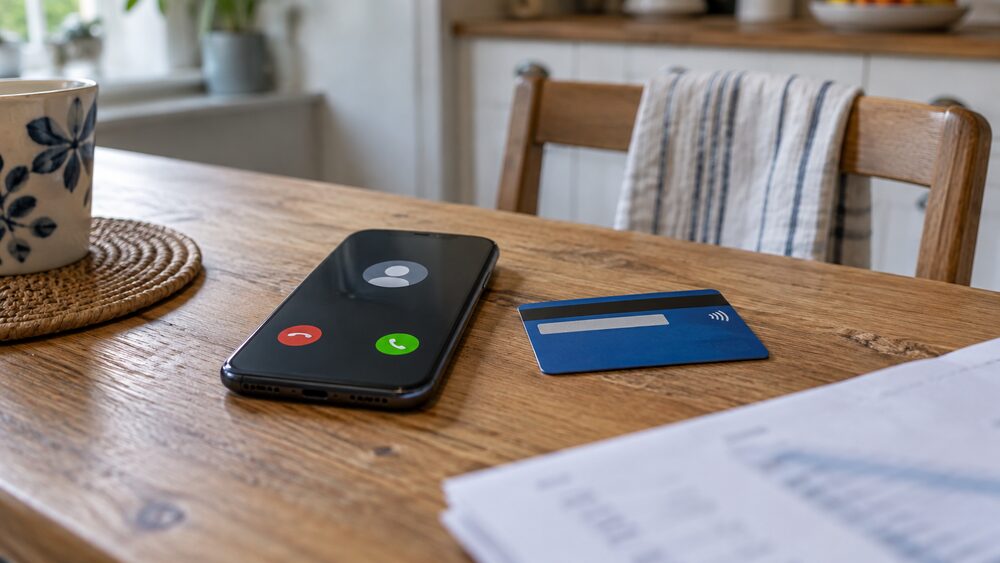
Scammers can mimic an official telephone number, which can trick you into thinking the caller is from a legitimate organisation3. MoneyHelper notes that scammers often use number spoofing, where the caller ID appears genuine, to make the call seem more trustworthy1. Bank of Ireland describes the same technique from the other side: criminals manipulate the phone number that appears on your caller ID so it appears they are calling from the genuine bank, then ask customers to transfer funds to a "safe account" they control3.
The approach does not always arrive by phone. Impersonation scams can begin through a phone call, text, email, or even on social media16. Online scams use phishing emails, cloned websites and fake social media or dating profiles to get your information17. Ticket scams use social media, messaging apps, online marketplaces, fake websites and cloned ticketing pages18. Digital wallet scams use phishing emails or texts asking you to open a link, fake competitions on social media, rogue adverts on search engines and QR code scams in high-traffic areas such as car parks or restaurants19.
Some of the most convincing versions come from inside a real email thread. Conveyancing scams usually involve criminals gaining access to genuine legal email accounts, making fake messages seem real11. Scam emails may also contain information such as account numbers and IDs designed to trick you into thinking the email is genuine, so it is worth checking those against your own records20.
Warning signs of an impersonation call or message
The common warning signs are inaccurate spelling and wording, a sense of urgency to act quickly, being asked for bank details or passwords, being told not to tell anyone, and an unfamiliar email address21. Monzo lists extreme urgency, the safe account myth, generic emails, a phone trap and requests for secrecy among the red flags of impersonation4.
Urgency is the engine of the whole thing. The Student Loans Company warns that scammers send convincing text messages, emails or phone calls claiming a payment is at risk, has been blocked, that bank details need updating, or that an account will be closed unless the recipient acts immediately22. The pressure exists to stop you pausing, and pausing is what defeats it.
Secrecy is the second engine. A genuine fraud team has no reason to ask you to keep the call from your family or from another member of staff at the bank. If a caller asks you to stay on the line, to keep the call confidential, or to avoid discussing it with anyone, that is the scam protecting itself.
Impersonation scam losses: average of £3,516 per case
The published figures give a sense of scale, and of how the losses are distributed. UK Finance recorded £55.5 million lost to bank and police impersonation scams in 2025, the lowest since 2020, and £36.9 million to other impersonation scams, also the lowest since 20207. The "other" category covered 18,435 cases, down 7% on the year before7.
Lloyds Bank's own data, covering the year to 30 June 2026, shows average impersonation scam losses of £3,516, up from £3,200, with HMRC, broadband and mobile provider, solicitor, Amazon and police or bank impersonation cases all rising6. That is the figure to hold on to: an average case costs a victim more than three thousand pounds.
| Measure | Figure | Period |
|---|---|---|
| Bank and police impersonation losses | £55.5m | 20257 |
| Other impersonation scam losses | £36.9m | 20257 |
| Other impersonation scam cases | 18,435 | 20257 |
| Average impersonation scam loss | £3,516 | Year to 30 June 20266 |
The direction of travel is mixed. Overall reported case volumes fell 3% in Lloyds' data, but the average loss rose, and reports of bank, police, HMRC and broadband and mobile provider impersonation scams increased6. Fewer people are being caught, and those who are lose more.
What to do if you are asked to move money
The first move is to end the call. Do not confirm anything, do not move anything, and do not stay on the line to argue. If you want to check whether the call was genuine, hang up and call back on a number you have looked up yourself, such as the one printed on the back of your bank card.
If your bank is signed up to the 159 service, call 159 and you will be put through to your bank's genuine customer service line23. Wait at least 15 minutes before calling back, or use another phone, because a fraudster can keep the line open at your end so that your next call goes straight back to them24.
If a message appears to come from a friend or family member asking you to transfer money urgently, speak to them directly first to check it is them16. If someone calls saying your money is not safe and tells you to move it into a "safe" bank account, it is a scam25. Never transfer money into a "safe account" or take money out of your bank to aid a fraud investigation, because your bank or the police will never ask you to do this19.
If you have already moved the money
Act immediately, because speed is what gives your bank a chance to stop or recover the payment. Contact your bank or payment services provider immediately, contact the police on 101, report the scam to Report Fraud, and keep records of all contact and correspondence between you and the scammer10. As soon as you realise you have fallen victim to a scam, contact your bank to report it26.
Check your bank statements regularly and report any unrecognised transactions to your bank immediately27. If you think someone else has accessed an online account, change the password straight away and contact the organisation28.
If the money has gone and your bank refuses a refund, there is a route beyond the bank. The Financial Ombudsman Service handles complaints about scams involving unauthorised payments and identity theft9. The Payment Systems Regulator sets out what to do if you have fallen victim to a scam26. There is more on claiming a refund from your bank after a push payment loss and on taking a refused scam refund to the Financial Ombudsman.
Is a safe account scam the same as authorised push payment fraud?
It is one form of it. An authorised push payment is where a person is persuaded to transfer money by a scammer pretending to be from their financial institution or a legitimate organisation29. In the glossary definition, it is where the victim is tricked into transferring money to a scammer30. Parliament's briefing describes authorised push payment frauds as cases where fraudsters trick victims into making payments or sharing information like account details31.
The word "authorised" is the important one. Because you pressed the button and approved the payment, it is not an unauthorised transaction in the way a cloned card payment is, and the refund rules that apply are the ones built for authorised push payment fraud rather than the ones for payments a fraudster made without your permission. The two routes differ, and the site explains them side by side in authorised and unauthorised payments: how refund rights differ.
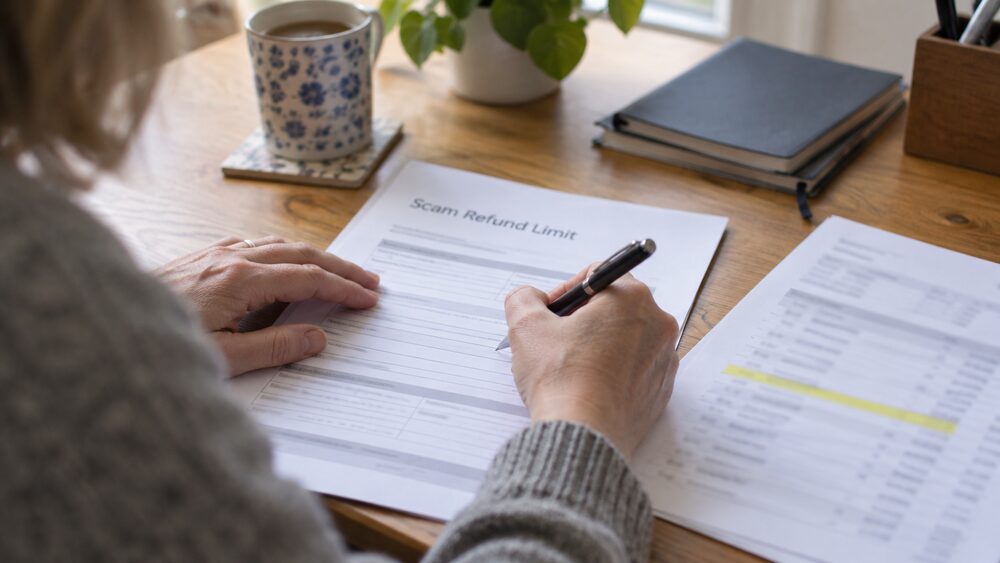
The practical consequence is that a safe account scam sits inside the authorised push payment reimbursement framework, which has its own limit, its own excess and its own rules on when a refund can be refused. Those are set out in authorised push payment reimbursement: how bank transfer refunds work and in the consumer standard of caution: when a refund can be refused.
Will my bank ever ask for my full PIN or password?
No, and this is one of the cleanest tests available. A bank will never ask for your PIN, or for a whole security number or password, either over the phone or by email9. Your bank will never ask you for your PIN or your online account password, and neither will any trustworthy online retailer32. Banks will never contact you to ask for your personal identification number or for a whole security number or password33.
What a genuine bank does instead is ask for specific characters. Banks will never ask for your full PIN or password, instead asking for specific numbers or letters, for example the first and third character34. That partial request is the normal pattern, and a caller who wants the whole thing is not your bank.
The same rule applies to organisations that hold your money in other ways. The Financial Services Compensation Scheme will never ask for bank details, account passwords or PIN numbers21. A bank will never ask you for your PIN or password, full stop35. If a caller asks for any of these, the call is over.
Can a scammer send a courier to collect my card or cash?
Yes, and this is a variant worth knowing because it moves the scam off the phone and onto your doorstep. Courier fraud often involves arranging for a courier to collect items from your home, asking you to post them, or telling you to move money to a so-called safe account23. The items demanded can include your card, cash, jewellery, gold, foreign currency or other valuables23.
Scammers might ask you for your PIN and tell you to give your bank card to a courier3. No bank or police force collects cards, cash or valuables from a customer's home, and no fraud investigation is conducted by asking a member of the public to hand over their bank card. If someone arrives at your door claiming to be collecting on behalf of your bank, the police or a court, the answer is no.
Where the protection stops
The rules that protect you here are mostly rules about what a bank may ask of you, and they are firm. No genuine company will ever ask you to transfer money to a safe account or ask for your PIN, password or passcode2. Banks will never ask you to move money to a "safe account"36. Your bank will never ask you to move money to a safe account37. These are consistent across the industry and they do not have exceptions.
What is less firm is what happens after a payment has gone. Because a safe account scam is an authorised push payment, the refund question turns on the reimbursement rules for that kind of fraud, including the consumer standard of caution and the circumstances in which a bank can refuse. The protection is real but conditional, and it is not the same as the near-automatic cover that applies to a payment a fraudster made without your knowledge.
There is also a limit to what any rule can do once money has left your account and reached a criminal's. Recovery depends on how quickly the payment is reported and whether the receiving bank can freeze the funds. That is why the advice to contact your bank immediately is not a formality.
If you are unsure whether a contact is genuine, the site has a step-by-step guide to how to check your bank is really contacting you, a page on 159: the number to call your bank about a scam, and a wider guide to how to spot a scam: the warning signs. For the full picture across every type of fraud, start at scams and fraud: a complete guide.
Sources37 cited
- Types of scam MoneyHelper, 2026-09-25
- Common scams HSBC UK, 2026
- Vishing Bank of Ireland UK, 2026-09-25
- Understanding impersonation scams Monzo, 2026-09-25
- Purchase scams Metro Bank, 2026-09-25
- Seven words reveal you're talking to a scammer Lloyds Bank, 2026-08-25
- UK Finance Fraud Report 2026 UK Finance, 2026-06
- UK Finance Annual Fraud Report 2026 UK Finance, 2026-06
- What is identity theft Which?, 2026-01-06
- Scams involving unauthorised payments and identity theft Financial Ombudsman Service, 2026-09-26
- Safe account scams Zempler Bank, 2026-09-26
- Impersonation scams Metro Bank, 2026-09-25
- TPR urges vigilance after rise in impersonation fraud against pension savers The Pensions Regulator, 2026-03-11
- Take your whole pot Pension Wise, 2026-09-28
- Computer software service fraud: follow-up calls nidirect, 2026-07-27
- Impersonation fraud Take Five, 2026-09-26
- Online scams Take Five, 2026-09-26
- Ticket scams Take Five, 2026-09-26
- Impersonation fraud and cloned firms Arbuthnot Latham, 2026
- How to spot an email scam Which?, 2026-08-11
- Scams: what to look for FSCS, 2026-05-05
- Students urged to stop and think before you click GOV.UK, 2026-09-01
- Courier fraud Take Five, 2026-09-26
- Dealing with fraud National Debtline, 2026-09-25
- How to recognise fraud TSB, 2026
- If you've fallen victim to a scam Payment Systems Regulator, 2026-09-25
- Cheque scam Take Five, 2026-09-26
- Manage your Universal Credit claim after you apply GOV.UK, 2025-09-03
- How to stop, avoid and report scams Consumer Council, 2026
- Scams glossary Which?, 2026-07-22
- Fraud and the criminal justice system POST, 2026-06-07
- Protect your identity nidirect, 2025-10-28
- Identity theft Finance & Leasing Association, 2026-09-25
- Online banking Age UK, 2026-03-23
- Borrowing and keeping money safe Mencap, 2026
- Types of fraud Experian, 2026
- Phone scams first direct, 2026




 FCA Warning ListCheck whether a firm is authorised before you deal with it
 Financial Ombudsman ServiceFree, independent help when a complaint about a firm is not put right
 Citizens AdviceFree advice on money, consumer and legal problems in England and Wales
 MoneyHelperFree, impartial money and pensions guidance, set up by government