
Yes. A card provider can raise your credit limit without you asking, and the rules do not require your permission first. What they do require is a warning: lenders must warn you before raising your limit, and you get the chance to say no. Lenders also cannot increase your limit if you have said you are not interested, or if you are showing signs of financial difficulty1.
Yes. A card provider can raise your credit limit without you asking, and the rules do not require your permission first. What they do require is a warning: lenders must warn you before raising your limit, and you get the chance to say no. Lenders also cannot increase your limit if you have said you are not interested, or if you are showing signs of financial difficulty1.
The practice has a name. An unsolicited credit limit increase is an offer to increase your credit limit, and depending on the preference you have chosen with the provider it may be applied automatically or only when you give permission2. Creditors might increase your credit limit without asking3.
The reason it happens so often is the way many cards are designed. Limits start small and are increased as customers borrow more, a model the debt charity StepChange calls "low and grow"4. On credit-builder cards the first limit is often very low, say £100 to £200, and rises as you prove you can manage it responsibly5.
Why card limits often rise: the 'low and grow' model
The "low and grow" model is a deliberate design choice, not an accident. Credit limits start small and are increased as customers borrow more4. On a credit-builder card the initial limit is very low, say £100 to £200, and increases as you prove you can manage it responsibly5. One foundation card says you may be considered for regular credit limit increases if you make your minimum payments on time, stay within your credit limit and similarly manage any other credit cards or loans you have with the same provider10.
That gives a clear picture of what triggers an increase: on-time minimum payments, staying inside the limit, and managing other borrowing. It also explains why the offer often arrives when you least expect it, because it follows your behaviour rather than your request.
Not everyone gets one. One card issuer says you cannot directly request a credit limit increase, and it will get in touch with you if you qualify for an increase11. Another says an increase may not be granted if you are using more than 95% of your credit limit12. And the regulator has pushed in the other direction: the FCA expected its rules on persistent credit card debt to result in approximately 1.4 million accounts per year not being eligible for offers of credit limit increases13.
Some cards also impose a waiting period. One card will not accept an application for a credit limit increase for the first 6 months after the card is opened14. Another card applies the same 6-month rule15.
What a higher limit can cost you
A higher limit is not free money, and it is not neutral. The drawbacks are straightforward: more debt and interest, and it may make approval for other loans harder, because the amount of credit you already have is part of what lenders look at. Asking too often may also negatively affect your credit score16.
The benefits are real too, and worth stating plainly. You are less likely to go over your credit limit, so you avoid additional fees and charges, and it can maintain or improve your credit score16. That is the trade-off in one line: a bigger limit reduces the chance of an over-limit fee but increases what you could borrow and owe.
The cost of carrying a balance is where the damage usually happens. If you do not pay off the full amount every month on a credit card, you are charged interest on the whole lot, not just the unpaid amount17. All credit card companies have to quote an APR, and the interest rate of any credit card should be clearly displayed on any application form and promotional material17.
There is also a practical risk that has nothing to do with interest. If the card company is suspicious about sudden unusual spending, it may freeze your card7. A larger limit makes larger spending possible, and larger spending is exactly what fraud systems watch for.
Rejecting changes to your card: 60 days for a rate increase
A limit increase and an interest rate increase are different events with different rights attached, and it is worth keeping them apart.
For a rate rise, the protection is firm. If your credit card company increases the interest rate on your card, you are given 60 days to reject the increase and pay off your balance at the existing interest rate7. Put another way, you are given 60 days to reject the hike, cancel the card and pay back what you owe at the old rate19. The company must also contact you at least 30 days beforehand to give you the chance to do something about it19. One card issuer sets this out in its own terms: if you do not want to accept an interest rate increase, you can close the account and pay off the amount you owe at the unchanged rate20.
For a limit increase, the right is weaker but still useful. Lenders must warn you before raising your limit and you will have the chance to say no, and they cannot increase your limit if you have said you are not interested or are showing signs of financial difficulty1. One issuer gives 30 days' notice before a credit limit increase, unless the customer asked for the increase6.
If you want the opposite of an increase, you can ask for your credit limit to be reduced so you are not tempted to spend more than you can budget for21. Some lenders let you request a higher or lower limit through online banking or a mobile banking app, while others need a phone call or a branch visit22.
Going over your limit: fees and fair charges
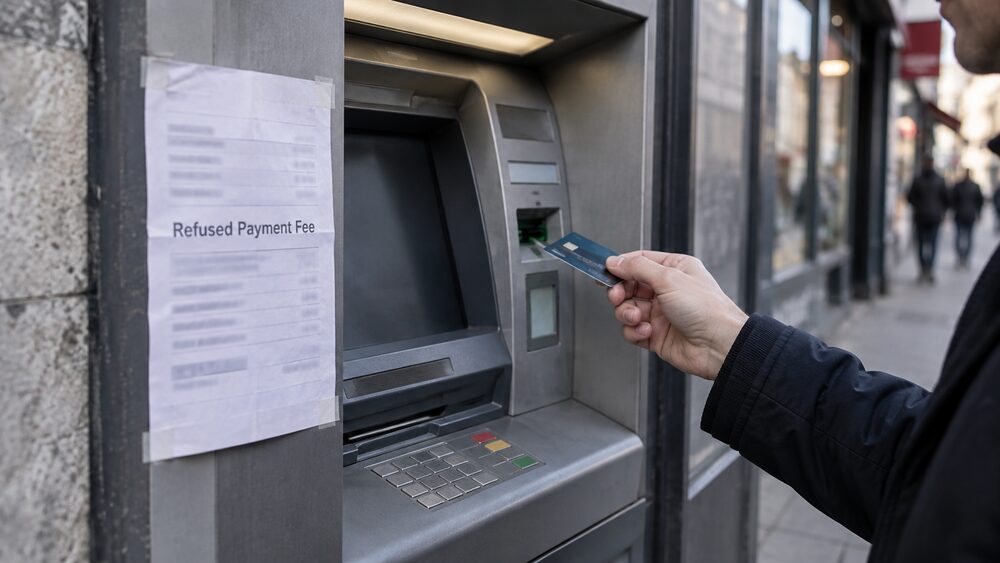
Some credit cards have a credit limit, meaning you will be charged if you go over it23. If you go over your credit limit the provider may charge you a fee24. On one card, exceeding the agreed credit limit will likely incur a fee and may result in a penalty fee plus a higher APR on the exceeded amount, depending on the provider's terms8. Another provider simply warns that some providers may charge a fee for going over the limit25.
The knock-on effect matters more than the fee itself. Charges and interest can be added if you go over the limit, which makes it harder to get further credit in future26.
There is a limit to what a lender can fairly charge. Independent guidance says charges of more than £12 for missing a credit card repayment may be seen as unfair24. The same threshold appears in separate guidance: charges of more than £12 for missing a credit card repayment may be seen as unfair7.
Other practices can also be classed as unfair, including increasing the rate of interest because you have missed payments, continuing to add interest and charges if you are in financial difficulties, adding charges for actions the creditor has not done, and adding charges which are more than the actual cost to the creditor27. Creditors also cannot call you at unreasonable times, take payments without your permission, or add unreasonable charges28.
If you are struggling, free and impartial help exists. Age UK offers debt advice information for older people28, and Shelter Cymru covers credit card debt for people in Wales21. StepChange, a debt charity, also publishes guidance on persistent credit card debt29.
Complaints: 25% of credit card complaints upheld
If a limit increase, a charge or a term causes a problem you cannot resolve with the lender, the Financial Ombudsman Service is the next step. Its published figures show how often complaints succeed.
In the first quarter of 2025/26 the ombudsman recorded 6,591 credit card complaints with a 25% uphold rate9. Credit cards generated 6,600 new complaints in the same quarter9. For context, overdraft complaints had a 50% uphold rate in the fourth quarter of 2024/2530, and debit card complaints had a 28% uphold rate in the first quarter of 2026/2731.
The volume of lending complaints is significant. The ombudsman received 49,400 new credit card complaints on irresponsible or unaffordable lending in 2024/2532.
A 25% uphold rate means roughly one in four credit card complaints results in the customer getting something. That is not a reason to skip the firm's own complaints process first, but it does mean a complaint is worth making if a charge or a term looks wrong.
The FCA has its own, narrower route. It can apply to court for restitution, or require restitution, where the use of an unfair or insufficiently transparent term also amounts to a breach of its rules causing loss to consumers33. The regulator has also proposed making it easier for people to reject catalogue credit and store card credit limit increases, and requiring clear information about buy now, pay later offers with prompts to repay within the offer period34.
Where the protection stops
The rules around limit increases protect you in specific ways and stop short in others. Lenders must warn you before raising your limit and cannot do it if you have opted out or are showing signs of financial difficulty1. But a limit increase itself is not something you have an automatic right to refuse after the fact, the way you can reject a rate increase within 60 days7.
An additional cardholder has no legal responsibility to pay towards the debt, but shares the credit limit and gets their own card35. If you add someone to your card, you are responsible for paying off whatever they spend on your card36. That holds even if they are an additional cardholder who helped build up the debt37. A higher limit raises the ceiling on what the main account holder could end up owing.
Minimum payments are a trap worth naming. Your credit card company should contact you to warn you of what might happen if you only make minimum payments7, and you must make minimum payments to avoid breaching the terms of your agreement29. The typical minimum is around 3% of the balance due or £5, whichever is higher36. One card sets it at the greater of 5% of the account balance plus any over-limit amount, interest, late repayment fees and cash transactions, or £108. Paying more than the minimum reduces the amount of interest you pay38.
If you want to change how your card works, you can ask for your limit to be reduced21, and you can ask your lender to increase it if you need extra flexibility and know you can afford it38. You can also stop automatic increases18.
Sources38 cited
- Should you increase your credit card limit? Experian, 2026
- Credit card glossary Virgin Money, 2026
- Debt management PayPlan, 2026
- Credit card persistent debt StepChange, 2026
- Should I get a credit card? Which?, 2026
- Chase credit card additional terms Chase, 2026
- The costs and charges of credit cards Citizens Advice Scotland, 2026
- Credit card charges 118 118 Money, 2026
- Quarterly complaints data Q1 2025/26 Financial Ombudsman Service, 2025
- Foundation credit card Tesco Bank, 2026
- Mastercard matched credit card Bank of Ireland UK, 2026
- Zempler credit card Zempler Bank, 2026
- FCA high cost credit review response FCA, 2018
- Premier credit card HSBC UK, 2026
- Rewards credit cards HSBC UK, 2026
- Should you increase your credit card limit? HSBC UK, 2026
- Credit cards and debt nidirect, 2025
- Help from someone you trust Halifax, 2026
- Credit card interest explained Which?, 2026
- Chase credit card adequate explanation Chase, 2026
- Credit card debt Shelter Cymru, 2026
- What is a credit limit? HSBC UK, 2026
- Making the most of your bank account Independent Age, 2026
- The costs and charges of credit cards Citizens Advice, 2026
- 0% interest credit card Nationwide, 2026
- Credit cards and bad credit scores StepChange, 2026
- Freezing interest and charges StepChange, 2026
- Debt advice Age UK, 2026
- Persistent credit card debt StepChange, 2026
- Quarterly complaints data Q4 2024/25 Financial Ombudsman Service, 2024
- Quarterly complaints data Q1 2026/27 Financial Ombudsman Service, 2026
- Annual complaints data and insight 2025/26 Financial Ombudsman Service, 2026
- Unfair contract terms FCA Handbook, 2019
- FCA high cost credit review response StepChange, 2026
- How joint debts affect me StepChange, 2026
- Choosing and applying for a credit card Citizens Advice, 2026
- Dyled pwy yw hi? Shelter Cymru, 2026
- Tips for using your credit card HSBC UK, 2026










 Financial Ombudsman ServiceFree, independent help when a complaint about a firm is not put right
 FSCSProtects your money if a bank, insurer or investment firm fails
 FCA Warning ListCheck whether a firm is authorised before you deal with it
 MoneyHelperFree, impartial money and pensions guidance, set up by government
 Citizens AdviceFree advice on money, consumer and legal problems in England and Wales