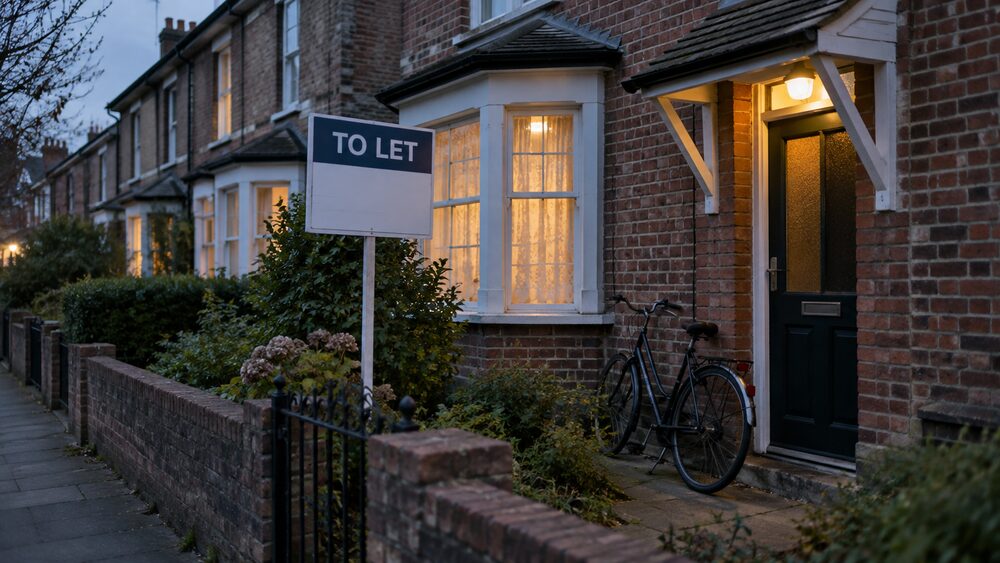
A sale and rent back scheme lets you sell your home to a private firm or individual, typically at a reduced price, and carry on living there as a tenant1. The appeal is obvious: debts get cleared and you stay put. The catch is that you become a renter in the home you used to own, and the tenancy that keeps you there has an end date and conditions attached.
A sale and rent back scheme lets you sell your home to a private firm or individual, typically at a reduced price, and carry on living there as a tenant1. The appeal is obvious: debts get cleared and you stay put. The catch is that you become a renter in the home you used to own, and the tenancy that keeps you there has an end date and conditions attached.
The rules changed in 2009. Companies providing private sale and rent back schemes now have to be authorised by the Financial Conduct Authority, and the FCA regulates the conduct of these schemes2. Offering a sale and rent back scheme without authorisation is a criminal offence4. FCA-regulated agreements involve a fixed-term tenancy agreement of at least five years5, and you will usually rent your home back on the basis of an assured tenancy6.
That protection is real but limited. You could still be evicted if you breach the terms of your tenancy agreement, for example if you fall badly behind with the rent3. Your new landlord may stop your tenancy at the end of a fixed term7. And the market has largely dried up: almost all of these firms have now stopped offering sale and rent back schemes3.
What sale and rent back is and how it works
In a sale and rent back arrangement you sell your home to a private firm or individual, typically at a reduced price, and continue living in it by renting it as a tenant1. The schemes are operated by private, profit-making companies2, and they usually buy homes below the market rate3.
The mechanics are straightforward. The company buys the property, you sign a tenancy agreement, and you pay rent from then on. Because the sale price is typically below market value, you may clear less debt than you expected, and the rent you pay is a new ongoing cost. Independent guidance on mortgage rescue schemes describes the risks in similar terms: eviction when the tenancy ends, paying less than the property is worth with high rent, and losing help with housing costs8.
It is worth being clear about what a sale and rent back is not. It is not a mortgage rescue by a council or housing association, and it is not one of the government-backed home ownership schemes. It is a private commercial transaction in which you trade ownership for a tenancy.
Who regulates sale and rent back firms and what they must do
The Financial Conduct Authority regulates sale and rent back schemes3. Companies that offer them must be regulated by the FCA3, and if a company offers a sale and rent back scheme without being authorised it is committing a criminal offence4. The FCA regulates the conduct of these schemes2.
Authorisation brings duties. Firms must carry out an affordability check, looking at whether you can afford to make an agreement with them and how that might affect your entitlement to benefits3. They must arrange an independent valuation of your home if you have not already got one3. And they must give you a 14 day cooling-off period to give you time to get advice on the scheme2.
There is also a warning requirement. FCA rules state that a regulated sale and rent back agreement is a complex legal arrangement and that expert independent legal advice should be obtained before entering into any such agreement10.
"a regulated sale and rent back agreement is a complex legal arrangement and that expert independent legal advice should be obtained before entering into any such agreement"
The regulatory perimeter has a boundary worth knowing. The activity of administering a regulated sale and rent back agreement arises if a firm takes necessary steps to make payments to the agreement seller, collect or recover payments due from the agreement seller, or notify the agreement seller of changes in payments due, for an agreement originally entered into on or after 1 July 200911.
The market itself has contracted sharply. Almost all of these firms have now stopped offering sale and rent back schemes3, which means anyone considering one today may find very few authorised providers still operating.
Your tenancy after the sale: how long you can stay and when it can end
For FCA-regulated agreements, the tenancy is a fixed-term tenancy agreement of at least five years5. You will usually rent your home back on the basis of an assured tenancy6. That gives you a defined period of security rather than an open-ended right to stay.
The tenancy can still end. You could be evicted if you breach the terms of your tenancy agreement, for example if you fall badly behind with the rent3. Your new landlord may stop your tenancy at the end of a fixed term7. Independent guidance is firm on how eviction should be approached: eviction should always be the last resort, and all other options should be considered first2.
If you leave without formally ending the tenancy, the rent can keep running. You might be responsible for rent until new tenants move in, the tenancy ends by agreement with the landlord, or a rolling tenancy is ended with a notice to quit12.
There is one narrow situation in which a court may allow a former owner to stay on. In very rare situations, the court may agree to let you stay in the property until your lender sells it, likely only if the lender does not need the property until after the completion date and you are willing to co-operate with the sale13.
Firms also have record-keeping duties that indirectly protect you: records must be kept for one year after the end of the fixed term of the tenancy under the agreement, or five years from the date of the disclosures and warnings, whichever is the longer10.
Ending a sale and rent back tenancy in Northern Ireland
Northern Ireland has its own rules, and the FCA has added specific guidance for firms operating there. Guidance dated 26 June 2026 states that firms should not prevent Northern Ireland tenants from ending the tenancy on less than the agreed notice period in the first six months of the tenancy14.
Notice periods in Northern Ireland differ from the rest of the UK. Landlords must give tenants either 4, 8 or 12 weeks' notice to quit a rental property15. For a social tenancy, a notice seeking possession gives 28 days to leave the property before court action16.
If you are a Northern Ireland Housing Executive tenant, there are separate routes to staying or buying. If your tenancy has not run for five full years, you might still be able to buy your home if your partner or parent was previously the tenant17. And where you buy part of the property, you become the leaseholder and are no longer a tenant18.
Northern Ireland also has a Rent to Own scheme, which works differently from sale and rent back: tenants pay a fixed market rent for a three-year period, with the ability to buy their home any time after the first year, and at the end of the tenancy the tenant gets 20% of the rent they have paid to use towards a deposit to buy the property19.
What a firm must tell you before you sign
Before agreeing to anything, the FCA rules set out what a customer must be told. The most important is the warning that a regulated sale and rent back agreement is a complex legal arrangement and that expert independent legal advice should be obtained before entering into any such agreement10. A 14 day cooling-off period also applies, giving time to get advice on the scheme2.
Firms must check that you can afford to make an agreement with them and how that might affect your entitlement to benefits3, and must arrange an independent valuation of your home if you have not already got one3.
Some ordinary tenancy rules also apply once you are a tenant. Landlords and agents cannot ask for rent in advance before you sign a tenancy agreement and cannot accept it even if offered21. The rent must not be more than the advertised amount, and your landlord must clearly explain to you what is included when agreeing to rent the property22.
If you are weighing up whether to sell, it is worth comparing what a sale and rent back would leave you with against the alternatives. Free, impartial guidance on mortgage problems and arrears is available from Citizens Advice and Shelter, and the Mortgages section covers the wider options.
Complaints, redress and where to get help
Because sale and rent back is regulated, you can complain if things go wrong1. If you think a company is not following these rules, you can complain to the FCA2.
There are other routes too. Where an agreement amounts to an unfair relationship under the Consumer Credit Act 2006 rules, the court can change the terms of the agreement or order the lender to pay money back to you23. The FCA can apply to court for restitution, or require restitution, where an unfair term also amounts to a rule breach causing loss to consumers24. The FCA can also use its powers under section 404 of the Act to make rules requiring authorised persons, electronic money issuers and payment service providers to establish and operate consumer redress schemes24, and can impose a requirement on a firm to establish and operate a scheme corresponding to, or similar to, a consumer redress scheme24.
The FCA is also a designated public enforcer under Part 3 of the DMCCA, allowing it to act through seeking court orders which may include redress for breaches of consumer protection legislation including the Consumer Rights Act24. Where a term or notice is unfair or insufficiently transparent, the FCA does not have the power to grant redress to consumers who have suffered loss because of it24.
If a letting agent asked for a prohibited payment, you can report them to the letting agent redress schemes22. If a landlord or agent charges more than the cap, you can complain to trading standards through the Citizens Advice consumer helpline, or to a letting agent redress scheme if the agent is a member25. Where a banned fee has been charged, a landlord or agent found guilty of an offence could face a fine and/or have to repay any banned fee to you26.
For misleading offers, remedies can include rescission of contract, to restore you back to the position you were in prior to entering into the contract, and discount and/or damages27.
Free, impartial help is available. Citizens Advice and Shelter both publish guidance on sale and rent back and on mortgage problems, and National Debtline and Business Debtline cover mortgage arrears and complaints about lenders23. The Debt section covers the wider options for dealing with arrears, and Complaining about the FCA, PRA or Bank of England explains what to do if your complaint is about the regulator itself.
Sources29 cited
- Problems with selling your home, delayed completion and lease options contracts Citizens Advice
- Private sale and rent back schemes Shelter Cymru, 2026-08-28
- Sale and rent back schemes run by private firms Citizens Advice Scotland, 2026-09-25
- Help with mortgage payments Business Debtline, 2026-09-26
- Help with your mortgage payments National Debtline, 2026-09-25
- Sale and rent back schemes Citizens Advice, 2023-06-26
- Advice to avoid losing your home nidirect, 2025-12-03
- Sorting out mortgage problems Housing Rights, 2026
- Mortgage arrears Business Debtline, 2026-09-26
- MCOB 5.10: Sale and rent back FCA Handbook, 2026-06-26
- PERG 14.10: Sale and rent back FCA Handbook, 2014-04-01
- Unpaid rent and bills Shelter England, 2026-05-01
- Ordered to leave Shelter Cymru, 2026-08-28
- MCOB 2.9: Guidance on sale and rent back tenancy termination FCA Handbook, 2026-06-26
- Cost of living: arrears Advice NI, 2026
- Eviction for rent arrears StepChange, 2026-09-25
- House Sales Scheme nidirect, 2026-02-18
- Equity sharing nidirect, 2026-02-25
- 7 first time buyer schemes that are available now Which?, 2026-03-26
- Shared ownership Which?, 2026-03-26
- Rent in advance Shelter England, 2026-09-25
- Tenant Fees Act 2019: guidance for tenants GOV.UK, 2026-04-07
- Complaining about your lender National Debtline, 2026-09-25
- UNFCOG 1.6: Redress FCA Handbook, 2026-07-31
- Paying your tenancy deposit Shelter England, 2026-05-01
- Charged a banned letting fee Shelter Cymru, 2026-08-28
- How to complain if you've been misled by a sale or special offer Which?, 2026-08-20
- Mortgage arrears or payment difficulties nidirect, 2026
- Mortgage arrears (England and Wales) Business Debtline, 2026











 Financial Ombudsman ServiceFree, independent help when a complaint about a firm is not put right
 FSCSProtects your money if a bank, insurer or investment firm fails
 FCA Warning ListCheck whether a firm is authorised before you deal with it
 MoneyHelperFree, impartial money and pensions guidance, set up by government
 Citizens AdviceFree advice on money, consumer and legal problems in England and Wales