
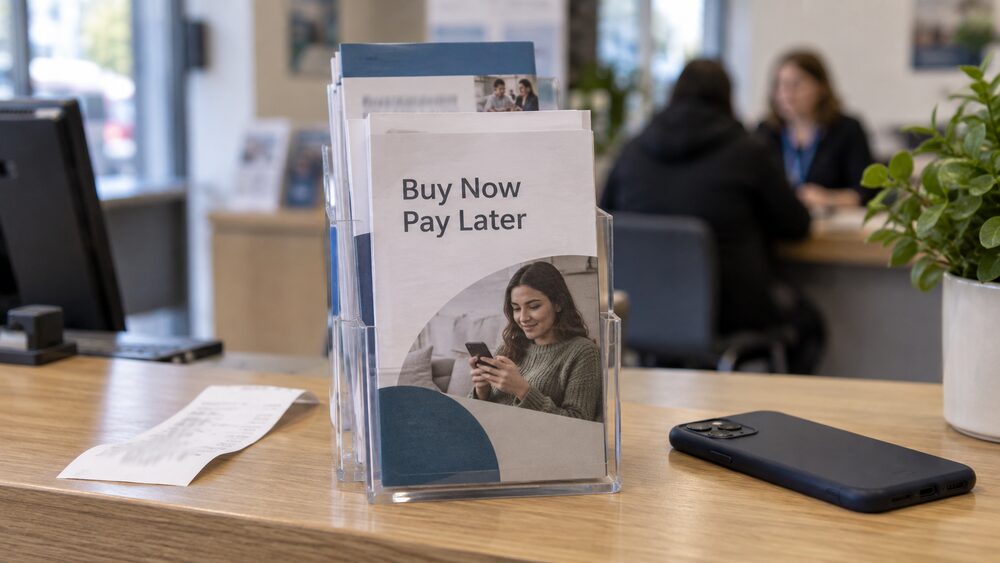
Buy now pay later (BNPL) complaints now have a formal route. Since 15 July 2026 most BNPL agreements have been regulated by the Financial Conduct Authority, and for agreements taken out on or after that date you can escalate a complaint to the free Financial Ombudsman Service if the provider does not put things right1.
Buy now pay later (BNPL) complaints now have a formal route. Since 15 July 2026 most BNPL agreements have been regulated by the Financial Conduct Authority, and for agreements taken out on or after that date you can escalate a complaint to the free Financial Ombudsman Service if the provider does not put things right1.
The order matters. You complain to the BNPL provider first, and it has eight weeks to give you a final response. If eight weeks pass with no final response, or you are unhappy with the answer, you have six months from the date of that final response to take the complaint to the Ombudsman3.
The Ombudsman looks at whether the firm treated you fairly, not just whether it followed its own terms. It can tell a firm to put things right and to pay compensation for distress or inconvenience, and its decisions are binding on the firm once you accept them5.
BNPL complaints since the FCA began regulating it
Before 15 July 2026, buy now pay later sat largely outside the FCA's direct remit. The regulator could intervene under the Consumer Rights Act and did so where it judged BNPL firms were causing harm, but the firms themselves were not authorised and supervised in the way lenders are9. That changed when the new regime took effect: from 15 July 2026, interest-free BNPL products became subject to a regulatory regime overseen by the FCA, and BNPL firms moved under the FCA's direct remit6.
For a consumer, the practical change is the complaints route. Since 15 July 2026, all BNPL providers must be authorised and regulated by the FCA, and providers must carry out affordability checks to make sure you can afford the item you are buying1. Information about your rights to withdraw from or cancel the agreement, pay it off early and complain to the Financial Ombudsman must be provided or made available before you sign up10.
That last point is the one to hold on to. The right to escalate a complaint is not something you have to ask for or discover: it should be put in front of you at the point of sale. If it was not, that is itself something you can raise.
The rules are UK-wide, so the same complaints route applies whether you live in England, Scotland, Wales or Northern Ireland. The Deferred Payment Credit rules explain what the regime covers, and what the FCA does and does not cover sets out where regulation begins and ends.
Complain to the BNPL provider first: the eight-week rule
Every BNPL complaint starts with the provider. The Ombudsman will not take a case until you have made a formal complaint to the company involved and either received a final response or waited eight weeks without one2.
Eight weeks is the legal deadline for the lender's reply, not a target. By law, your lender has eight weeks to respond to your complaint3. If a final response letter arrives before then, you do not have to wait out the full period: you can go to the Ombudsman as soon as you are unhappy with the answer12.
Some providers aim to respond much faster. One debt charity notes that providers should aim to respond to you within three to five working days, with a final response four weeks from the date of the complaint14. That is a service standard, not a legal limit, and it does not shorten the eight weeks you are entitled to before escalating.
Keep a copy of everything: the agreement, the complaint, the date you sent it and the response. If the provider never replies, the date you complained is what proves the eight weeks have passed.
Taking your complaint to the Ombudsman: free, within 6 months
The Financial Ombudsman Service is free to use, and it is designed to be used directly by consumers rather than through a professional4. You have six months from the date of the final response from your lender to take your complaint to the Ombudsman16. The Ombudsman's own guidance puts it the same way: you need to make a complaint within six months from the date on your final response4.
There is a wrinkle worth knowing. The Ombudsman also describes the deadline as six months from getting the final response from the business, and elsewhere as six months from the date of the final response letter, or eight weeks after the complaint was received17. If you are near a deadline, treat the earliest of those dates as the one that matters and get the complaint in.
Before you fill anything in, the Ombudsman offers an online complaint checker: answer a few questions on its website and it will tell you whether it thinks it can help and what you need to do next17. That is worth doing first, because it screens out cases the service cannot take.
You do not need a claims management company. The service is free, and a paid intermediary would typically take a share of any award for work you can do yourself. Free, impartial help with the wording and with your wider finances is available from MoneyHelper and the debt advice charities.
How the Ombudsman decides a BNPL complaint
The Ombudsman is not a court and does not apply the letter of the contract alone. It looks at what happened and asks whether the firm acted fairly, and it can reach a different view from the firm even where the firm followed its own terms.
The clearest example is affordability. Since 15 July 2026 BNPL providers have had to carry out affordability checks to make sure you can afford the item you purchase8. A complaint that a provider lent to you without properly checking is exactly the kind of case the Ombudsman can consider, and it is the reason the complaints route exists at all.
The service can help if you have made a complaint to the financial business and you are not happy with their answer18. It can usually help individual or joint consumers of a financial business that provides services or products in the UK, regardless of nationality or where they live19.
Volume is still modest. The government's own impact assessment assumed the Ombudsman would receive 1,069 complaints annually about BNPL products, 2.7% of 39,60720. In the first quarter of 2026/27 the Ombudsman opened 130 complaints about BNPL loans and 29 about BNPL payment services7. Those figures are early, and they cover a period that began only days before the regime started.
What you can get: putting things right, up to £455,000
The Ombudsman's main job is to put you back where you would have been. Where it finds a firm got something wrong, it can tell the firm to correct the account, refund what was wrongly taken and pay compensation for distress or inconvenience5.
The headline limit on awards is high. Where the adviser or company is still operating and gave poor advice, compensation can reach a maximum of £455,000 for complaints referred on or after 1 April 2026, plus interest21. In a published case study the Ombudsman told a firm to pay compensation up to the applicable maximum of £160,00023. The two figures are not in conflict: the maximum that applies depends on when the complaint arose and the rules in force at the time, and the Ombudsman applies the maximum applicable to the complaint in front of it.
For most BNPL complaints the sums involved are far smaller than either figure. A disputed £80 purchase, a late fee or an incorrectly applied payment is the ordinary shape of these cases, and the value of the route is that it costs nothing to use and the firm is bound by the outcome if you accept it.
Accepting or rejecting a final decision
When the Ombudsman reaches a final decision, you choose whether to accept it. If you accept, the firm is bound by it and must do what the decision says. If you do not accept it, the decision does not bind the firm either, and the case ends there.
What you can do next is go to court. The Ombudsman is explicit: if you are not happy with its final answer, it cannot help you any further, but you can take your complaint to court if you want18. The service confirms that consumers can still go to court if they do not want to accept the Ombudsman's decision24. Court is a different process with fees, timescales and the risk of paying the other side's costs if you lose, so the comparison is worth making carefully. The Ombudsman or court page sets the two routes side by side.
One limit to be aware of: the Ombudsman may refuse to escalate a complaint that only relates to the outcome of a decision it has already made25. Disagreeing with the result is not, by itself, a fresh complaint.
If the firm you are complaining about has failed, the Ombudsman route may not be available and the Financial Services Compensation Scheme may be the relevant one instead. The FSCS or Financial Ombudsman page explains which applies when.
Sources25 cited
- Buy now pay later Consumer Council
- Buy now pay later (BNPL) Financial Ombudsman Service
- Complaining about your lender (England and Wales) Business Debtline
- How to complain Financial Ombudsman Service
- Scams you've been tricked into making payment for Financial Ombudsman Service
- The Deferred Payment Credit Regulations 2025 legislation.gov.uk
- Quarterly complaints data, Q1 2026/27 Financial Ombudsman Service
- Buy now pay later (Scotland) Business Debtline
- Buy Now Pay Later trends in the UK UK Finance
- 7 things you need to know about new buy now pay later rules Which?
- Fraud markers Financial Ombudsman Service
- Unregulated collective investment schemes Financial Ombudsman Service
- Complaining about your lender (Scotland) Business Debtline
- Buy now pay later StepChange
- Complaints about the FSCS Financial Services Compensation Scheme
- Buy now pay later (Scotland) National Debtline
- How to complain: video transcript Financial Ombudsman Service
- Consumer leaflet, easy read Financial Ombudsman Service
- Who we can help Financial Ombudsman Service
- Buy Now Pay Later impact assessment legislation.gov.uk
- Case study: advice given by an independent financial adviser Financial Ombudsman Service
- Compensation Financial Ombudsman Service, 2026-10-01
- FSCS: are my savings safe? Which?
- Alternative dispute resolution Financial Ombudsman Service
- Complaints about the decision outcome Financial Ombudsman Service




 Financial Ombudsman ServiceFree, independent help when a complaint about a firm is not put right
 FSCSProtects your money if a bank, insurer or investment firm fails
 FCA Warning ListCheck whether a firm is authorised before you deal with it
 MoneyHelperFree, impartial money and pensions guidance, set up by government
 Citizens AdviceFree advice on money, consumer and legal problems in England and Wales