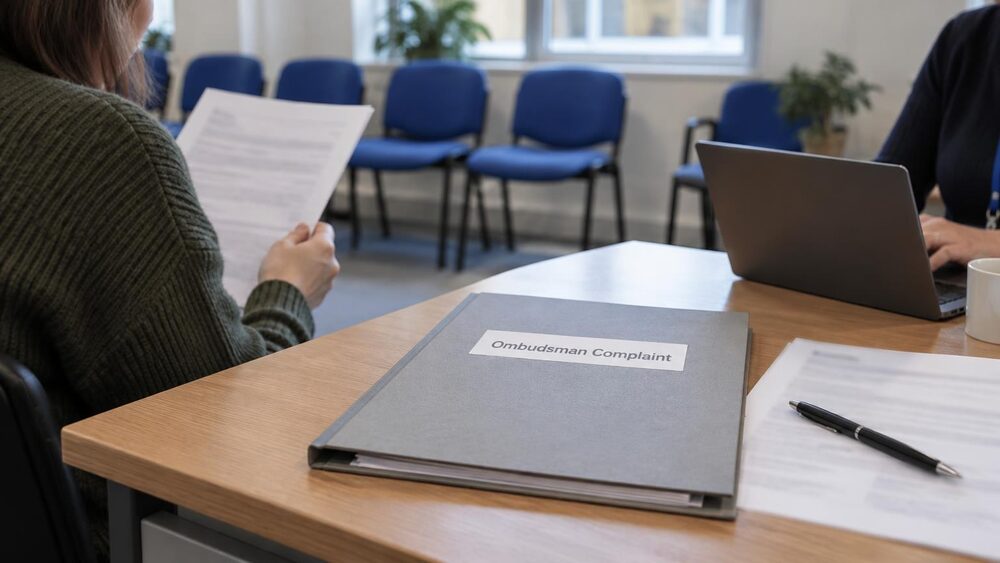
Buy now pay later agreements taken out on or after 15 July 2026 are now within the scope of the Financial Ombudsman Service (FOS), according to guidance published by Business Debtline and National Debtline1. The change means complaints about these agreements can be escalated to the ombudsman once a lender's own complaints procedure has been exhausted2.
The FOS can help with most complaints about UK consumer credit products and services, including banking, credit cards and store cards, loans and hire purchase, payday loans and pawn broking, and debt collectors collecting debt owed under a credit agreement2. Buy now pay later agreements taken out on or after 15 July 2026 are listed alongside these1.
"Buy now pay later agreements taken out on or after 15 July 2026"
The ombudsman does not have the power to fine or punish businesses, but it can help settle disputes between businesses and consumers, and it can award compensation1. It costs nothing to complain to the FOS1. Before the FOS will look at a complaint, the borrower must first complain to the lender, which by law has eight weeks to respond2. If the borrower is not happy with the outcome, or the lender does not respond at all, the complaint can go to the FOS2. There is a six month deadline from the date of the lender's final response to take a complaint to the FOS1.
If the borrower accepts the FOS decision, it is binding on the lender1. If the borrower does not accept it, the lender does not have to act on any suggestions by the FOS to put things right, and there is no right of appeal, although the borrower can still take the lender to court3.
The FOS can also consider complaints from micro-enterprises and small and medium-sized enterprises (SMEs)1. A micro-enterprise is defined as a business with fewer than ten employees and an annual turnover of no more than €2 million; an SME is a business that is not a micro-enterprise but has fewer than 50 employees and an annual turnover below £6.5 million1.
Separately, the unfair relationship rules under the Consumer Credit Act 2006 apply to new agreements from 6 April 2007 and all existing agreements from 6 April 20081. Only a court can decide whether an agreement is unfair under those rules, and there is a fee to pay when putting in a direct claim3. The rules cannot usually be used for regulated mortgage contracts, but can be used for some secured loans taken out before 21 March 20162.
The Financial Conduct Authority cannot deal with individual complaints, but as regulator it can take action against companies1. Companies carrying out consumer credit activities must have permission or authorisation from the FCA and must have a formal complaints procedure1.
Why it matters for households
Anyone who takes out a buy now pay later agreement on or after 15 July 2026 has a route to the Financial Ombudsman Service that did not exist for earlier agreements. Complaints about agreements taken out before that date are not covered by this change, so the date the agreement was signed determines whether the ombudsman can look at a dispute1.
For a complaint to reach the FOS, the lender must first be given the chance to resolve it, and the lender has eight weeks to respond2. The six month window to escalate runs from the lender's final response, so missing it may mean the ombudsman cannot help1. Complaining to the FOS is free, and the service can be contacted on 0800 023 4567 or 0300 123 91233.
Where a complaint is upheld, the FOS can tell the lender to put things right, which may include paying compensation1. Accepting a decision makes it binding on the lender1. Borrowers who do not accept it keep the option of court action, but the lender is not bound by the ombudsman's suggestions in that case3.
What happens next
The 15 July 2026 date is the point from which buy now pay later agreements fall within FOS scope1. No further implementation dates are given in the guidance. The deferred payment credit rules set the wider framework for buy now pay later regulation, and the FCA remains the regulator for consumer credit firms1.
Sources4 cited
- How to complain about your lender | Scotland | Business Debtline businessdebtline.org
- Complaining to banks and and credit companies | Business Debtline businessdebtline.org
- Complaining to banks| Scotland | National Debtline nationaldebtline.org
- Complaining to banks and and credit companies | National Debtline nationaldebtline.org

 MoneyHelperFree, impartial money and pensions guidance, set up by government
 StepChangeFree debt advice and solutions from a charity
 National DebtlineFree debt advice by phone, webchat and online
 Financial Ombudsman ServiceFree, independent help when a complaint about a firm is not put right
 Citizens AdviceFree advice on money, consumer and legal problems in England and Wales