
If you want to know how satisfied customers are with a bank before you open an account, there is a source of evidence that the bank cannot choose to hide. The largest personal current account providers in the UK must publish an independent service quality survey, and the results appear twice a year. The survey asks each provider's own customers how likely they would be to recommend it to friends or family, and the published score is the share who answer "extremely" or "very likely"1.
The survey rates four services separately: the provider overall, online and mobile banking, services in branches, and overdraft services1. That matters because a bank can be strong in one and weak in another, and the separate scores let you see which. The scores also have limits worth knowing: they measure how likely customers are to recommend a provider, not every aspect of its service, and the most recent results were published in August 20261.
The most recent results were published in August 2026, covering the period from July 2025 to June 2026. Providers including HSBC UK, Metro Bank and Bank of Ireland UK published their results that month, with Metro Bank doing so at the request of the Competition and Markets Authority. This page explains what the survey measures, how the score is worked out, which providers are covered, and how to read the results alongside everything else that goes into choosing a current account.
What the bank service quality survey measures
The survey measures customer satisfaction, and it does so across the services that matter most day to day. Banks are ranked on their customers' satisfaction with a range of services: overall service, in-branch services, overdraft services, and mobile and digital banking1. The point of splitting the ratings this way is that a provider's overall reputation can conceal a weak link. A bank whose app is well liked may still handle overdrafts poorly, and a branch-based customer may have a very different experience from someone who never visits a counter.
The survey is one of several measures that exist because satisfaction alone does not tell the whole story about how a bank treats its customers. A Building Societies Association survey found that 86% of building society customers believe their provider treats them fairly, compared with 78% of bank customers2. The Financial Conduct Authority's Financial Lives survey gives banks a mean trust score of 6.6 out of 103. And satisfaction can collapse at the moments that matter most: in a Which? survey of people handling a deceased person's affairs, two in five said they were dissatisfied with bank staff's skill and knowledge during the process4. The service quality survey captures the general run of experience, not these pressure points, which is worth remembering when you read it.
Who runs it and why banks must publish it
The requirement to publish service quality information came out of official concern that customers could not compare banks on service. The Parliamentary Commission on Banking Standards recommended that the Financial Conduct Authority consult on a requirement to publish a range of statistical measures, to enable consumers to judge the quality of service and price transparency provided by different banks5. It also recommended that a bank's board should have a duty to regularly certify to the regulator that the firm is fulfilling its obligations under the Senior Persons Regime5.
That recommendation fed into a formal competition investigation. In November 2014 the Competition and Markets Authority decided to make a market investigation reference in relation to personal current accounts and small and medium-sized enterprise banking6. The service quality survey, covering both personal and business current accounts, is one of the measures that followed. Separately, payment account regulations require the Financial Conduct Authority to publish, maintain and review a list of the most common services provided to customers of payment accounts in the UK7, which supports the wider push for comparable service information.
The survey is independent of the banks in two senses. The fieldwork is carried out by an independent research company rather than by the banks, and the banks must publish the results whatever they show. This sits alongside other transparency measures in banking: the Access to Banking Standard, implemented following an independent review commissioned by the industry, is designed to ensure customers are better informed about a branch closure and the reasons behind it, and requires banks to make customers aware of the options they have locally to continue accessing banking services8. Campaigners have argued for going further: under a proposed Fair Banking Act, banks would be required to disclose their performance on financial exclusion and receive a rating9.
Four services rated: overall, online and mobile, branches, overdrafts
Each provider's results are broken down into four services, and the breakdown is where the survey earns its keep. The overall score is the headline, but the three service-specific scores tell you how the provider behaves in the situations you actually encounter.
Online and mobile banking reflects how the app and website serve customers. This is now the main channel for most people: research by the Consumer Council in July 2026 found that 70% of urban businesses and 55% of rural businesses were using their bank's online or app facilities10. A weak score here affects almost every interaction.
Branch services matter most to customers who rely on a counter. Branch provision has been shrinking, and with it the number of places a branch score can be earned: 21 banking hubs had opened in England by early 2024 to fill gaps left by closures11. If you depend on branches, this is the score to check, and the absence of one is itself information.
Overdraft services covers how the overdraft is run and explained. This is the service where complaints most often go against the bank: the Financial Ombudsman Service upheld 50% of overdraft complaints it resolved in the fourth quarter of 2024/2512, a far higher uphold rate than banking overall. A poor overdraft score and a high uphold rate together suggest an area worth probing before you rely on an overdraft.
How the score works: the share 'extremely' or 'very likely' to recommend
The published score is not an average of ratings out of five or ten. The overall percentage score is based on the proportion of those in the sample who are either extremely or very likely to recommend their current account provider to friends or family1. Everyone else, including those who are merely "likely" or who would not recommend the provider, counts against the score.
This way of scoring has consequences for how you read it. A provider can have plenty of contented customers and still post a modest score, because contentment that falls short of enthusiasm does not count. Conversely, a high score means a large share of customers are enthusiastic enough to put their own reputation behind a recommendation. The survey measures the proportion of customers of each provider, among those who took part, who said they were "extremely likely" or "very likely" to recommend each service1. So a score is best read as a measure of enthusiasm for a service, not a complete verdict on it.
The survey also shows a consistent gap between account types: the average satisfaction for personal current accounts is consistently higher than the average satisfaction levels for business current accounts1. If you are comparing scores, compare like with like: a personal account score against other personal account scores, and a business score against other business scores.
The Great Britain survey
In Great Britain, the survey covers the largest personal current account providers, with each provider's score built from a sample of its own customers. The results are published provider by provider, so a reader can compare the overall score and the three service scores side by side.
One thing to watch is how banking groups are reported. Where several high street brands share a group, the data can cover them together. Lloyds Banking Group's data includes Lloyds Bank, Halifax and Bank of Scotland13, and the group's reporting covers those brands14. Bank of Scotland's coverage is UK wide15. So a single published result can describe the experience of customers across several brands, and a reader comparing, say, Halifax against Lloyds may in practice be reading one combined result. If the distinction matters to you, check the provider's own results page for how it defines its sample.
The Great Britain results are the ones most often quoted in news coverage of bank satisfaction, and they are the relevant set if you live in England, Scotland or Wales. Northern Ireland is surveyed separately, as the next section explains.
Northern Ireland has its own survey
Northern Ireland has its own service quality survey, covering the 12 largest personal current account providers there, published alongside the Great Britain results. The most recent results were published in August 2026, covering July 2025 to June 2026, and Bank of Ireland UK published its results for Northern Ireland alongside its Great Britain figures.
The separate survey exists because the Northern Ireland market is distinct: the providers that dominate it differ from those that lead in Great Britain, and a GB sample would not represent the banks most people there actually use. The Consumer Council, which serves Northern Ireland's 1.9 million citizens, provides a picture of how those customers behave16. Its research included a main survey of 1,000 Northern Ireland residents conducted online, and a face-to-face booster survey of 508 residents16. That research found high engagement with switching decisions: 90% of Northern Ireland consumers had undertaken at least one shopping-around or switching behaviour in the previous 12 months17.
If you live in Northern Ireland, read the Northern Ireland results rather than the Great Britain ones, because the provider mix and the branch networks differ. The Consumer Council's own research is a useful companion, covering how residents use banking, credit and borrowing across the region16.
Business current accounts are surveyed separately
Business current accounts are surveyed separately from personal accounts, and the two sets of results should not be mixed. As noted above, average satisfaction for personal current accounts is consistently higher than for business current accounts1, so a business score that looks weak against personal scores is not evidence of a worse bank; it is evidence of a harder service to run.
The volume of dissatisfaction among business customers is visible in complaints data. The Financial Ombudsman Service opened 993 complaints about business current accounts in the first quarter of 2026/2718, up from 795 in the same quarter a year earlier19. Business customers who use merchant services and business overdrafts also see complaints upheld at meaningful rates: 24% for merchant services and 31% for business overdrafts in the third quarter of 2025/2620.
If you run a small business, the business survey results are the relevant comparison set when choosing or reviewing a business current account, and the ombudsman's quarterly data offers a second, independent view of where service problems cluster.
When results appear, and what period they cover
The results are published twice a year, in a six-monthly cycle. The most recent publication was in August 2026, when providers including HSBC UK, Metro Bank and Bank of Ireland UK published their results. Those results cover the period from July 2025 to June 2026, so each publication reflects customers' experience over a substantial period rather than a single month.
Two practical points follow from the timing. First, a score is always a view of the past: a bank's service may have changed since the fieldwork, for better or worse, through a new app, a branch closure programme or a change of policy. Second, because the survey runs on a fixed cycle, a provider's score can be tracked over time, with results published twice a year, most recently in August 20261. A single result is more useful read alongside the previous one than in isolation.
When you find a provider's results, check the period stated on its page. A provider must publish the results, and its own page is where the coverage period, the services rated and any missing scores are set out.
Why some scores are missing
A provider's results page can show a score for overall service but no score for branches or overdrafts. This is not a concealment; it is a rule about statistical reliability. A figure is only published where enough customers of that provider answered the question, because a score built from too few responses is not statistically meaningful. The Financial Ombudsman Service applies the same principle to its own publication of complaints data by product, noting that with a small number of businesses in a market it would only have statistically meaningful data for 13 businesses for current accounts21.
The services most often affected are the ones fewer customers use. A digital-only bank has few or no branch customers, so a branch score would rest on almost no responses. A provider whose customers rarely use an overdraft may not have enough overdraft users to rate that service. In those cases the score is simply absent.
When reading results, treat a blank as a question to answer elsewhere: if branches matter to you and a provider shows no branch score, check directly what branch or alternative access it offers where you live.
Using the results when choosing or switching a current account
The survey results are evidence about service, and they sit alongside everything else that determines whether an account suits you: the fees, the overdraft terms, the app, and how you bank. Used that way, they are a genuine input into a decision. Used alone, they can mislead, because a high overall score says nothing about whether the account's charges fit your spending or its overdraft suits your borrowing.
Switching is common and getting more so. In the Consumer Council's Northern Ireland research, 40% of main survey respondents had switched a bank account, against 32% in the booster survey, and 60% of main survey respondents held multiple current accounts, against 24% in the booster16. Dissatisfaction is a real driver: dissatisfaction with bank service was more likely to be the main reason for switching among booster survey respondents, at 42%, compared with 25% in the main survey16. Awareness of support is not universal, though: among consumers near a banking hub location, 49% were aware of the Current Account Switch Service10.
The Current Account Switch Service is free to use, and you can choose and agree your switch date with the new bank22. Before applying, it is worth checking your credit record, since banks use credit checks when opening accounts, and registering to vote with your local council can help, as some banks use the electoral register as part of their checks23.
A numbered way to use the results:
- Read the overall score for the providers you are considering, and compare their scores across the four services1.
- Check the service score that matters most to you: the app score if you bank by phone, the branch score if you rely on a counter, the overdraft score if you go overdrawn.
- Compare like with like: personal account scores against personal scores, and Northern Ireland results if you live there.
- Weigh the scores against the account's own terms, fees and overdraft costs.
- If you decide to move, use the free Current Account Switch Service and agree your switch date22.
When service falls short: complaints and the ombudsman
A survey score is a general measure, and it cannot tell you how a bank will handle your specific problem. The complaints data gives a sharper picture of where banks fall down. Across banking and payments, the Financial Ombudsman Service upheld 32% of the complaints it resolved in 2024/2524. Some services fare worse: 33% of online banking complaints were upheld in the third quarter of 2025/2620, and 50% of overdraft complaints in the fourth quarter of 2024/2512. Current accounts are a steady source of complaints: they accounted for 9% of the ombudsman's enquiries in 2017/18, including packaged accounts25.
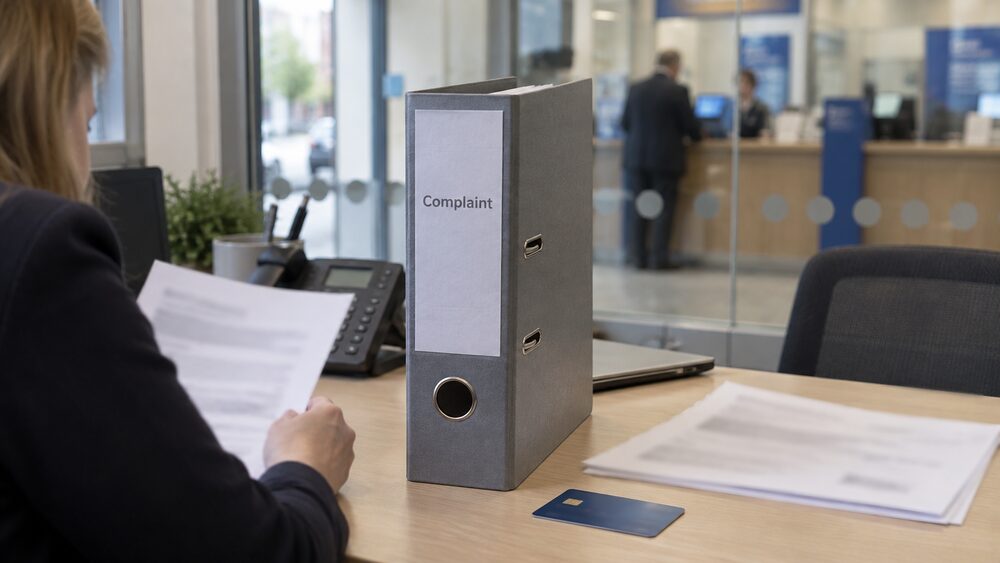
If something goes wrong, the route is fixed and free. Banks and building societies are required by law to have a written complaints process telling customers how to make a complaint26. Your bank will investigate and let you know the outcome within eight weeks, and if you are not satisfied you can take the complaint to the Financial Ombudsman Service. The guides to complaining about a bank, making a complaint and the Financial Ombudsman Service set out each step, including the time limits.
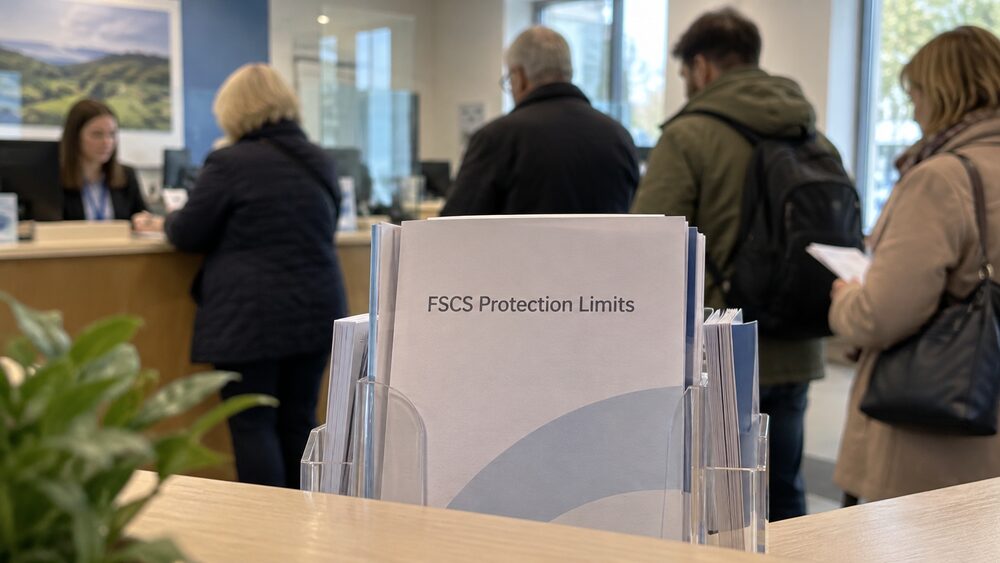
One further protection sits behind all of this. When people consider where to keep money, 30% selected "whether the money is protected if my financial provider went out of business" as a concern in FSCS research27. Deposits are protected up to the FSCS limit per person, per bank, which is separate from service quality but often part of the same question. The pages on FSCS protection and what happens if a bank fails cover that side, and the consumer protection guide brings the whole picture together.
Sources27 cited
- Have satisfaction scores improved service quality in banking for UK consumers? Which?, 2023
- Building societies and customers, FTPNS single pages Building Societies Association, 2023
- Financial Lives 2024: consumers' experiences of financial services Financial Conduct Authority, 2024
- Registering a death with companies: Which? survey Which?, 2021
- Parliamentary Commission on Banking Standards final report Parliament.uk
- Personal current accounts and banking services to SMEs consultation GOV.UK, 2014
- The Payment Accounts Regulations 2019 explanatory memorandum Legislation.gov.uk
- Access to Banking Standard summary report Lending Standards Board
- Rethinking credit: supporting people on low incomes Fair By Design, 2025
- Impact of bank branch closure research report Consumer Council Northern Ireland, 2026
- Closure of high street banks: impact on local communities House of Lords Library, 2024
- Quarterly complaints data Q4 2024/25 Financial Ombudsman Service, 2025
- PS23/1 app scams measure 1 policy statement Payment Systems Regulator
- Basic bank accounts publication, July 2020 to June 2021 GOV.UK, 2022
- Access to cash Financial Conduct Authority, 2024
- Banking to Borrowing survey Consumer Council Northern Ireland, 2026
- Cost of basics report Consumer Council Northern Ireland, 2024
- Quarterly complaints data Q1 2026/27 Financial Ombudsman Service, 2026
- Quarterly complaints data Q1 2025/26 Financial Ombudsman Service, 2025
- Quarterly complaints data Q3 2025/26 Financial Ombudsman Service, 2025
- October 2016 complaints publication Financial Ombudsman Service, 2016
- How to switch your bank account Which?, 2026
- Choosing a bank account for your Universal Credit payment MoneyHelper
- Annual complaints data insight 2024/25 Financial Ombudsman Service, 2025
- Full review 2018 Financial Ombudsman Service, 2018
- Complaints about banks and building societies Citizens Advice, 2026
- Millions receiving large sums now have greater protection FSCS, 2026




 Citizens AdviceFree advice on money, consumer and legal problems in England and Wales
 Financial Ombudsman ServiceFree, independent help when a complaint about a firm is not put right
 MoneyHelperFree, impartial money and pensions guidance, set up by government
 Citizens Advice ScotlandFree advice across Scotland