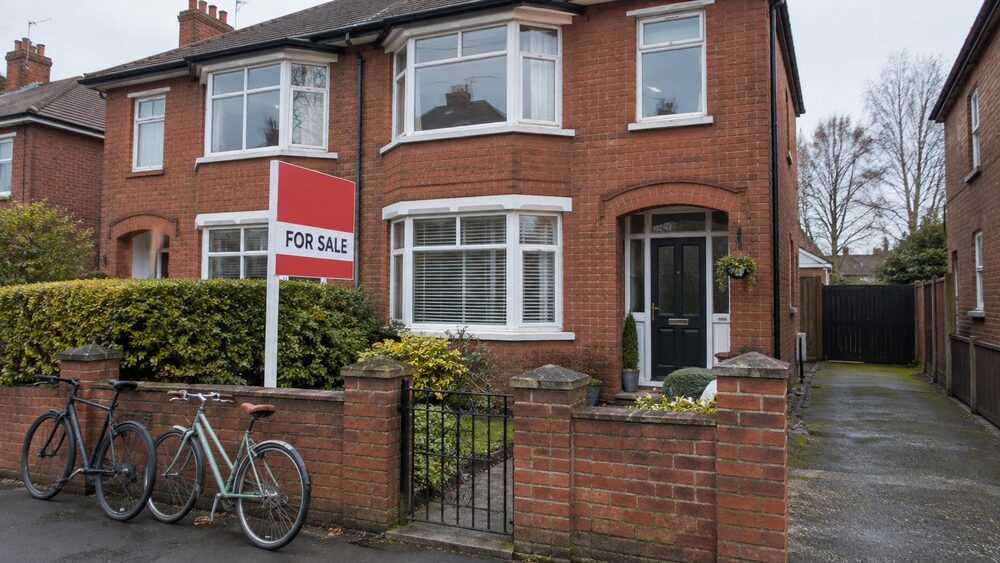
Co-Ownership is Northern Ireland's shared ownership provider, and it works differently from the shared ownership schemes you may have read about in England. You buy a share of a home, Co-Ownership buys the rest, and you pay rent to Co-Ownership on the share it owns. Over time you can buy more of the home, but you do not have to. The scheme is designed for people in Northern Ireland who have a steady income and can afford monthly payments, but cannot save for a deposit within a reasonable time or afford a full mortgage1.
Co-Ownership is Northern Ireland's shared ownership provider, and it works differently from the shared ownership schemes you may have read about in England. You buy a share of a home, Co-Ownership buys the rest, and you pay rent to Co-Ownership on the share it owns. Over time you can buy more of the home, but you do not have to. The scheme is designed for people in Northern Ireland who have a steady income and can afford monthly payments, but cannot save for a deposit within a reasonable time or afford a full mortgage1.
The property value limits are £230,000 for new build homes and £215,000 for existing homes. The new build limit increased to £230,000 in September 20262. For approvals between £215,001 and £230,000, you can choose an existing property up to £215,000 or a new build property up to the property value shown on your Approval3. Co-Ownership has been helping people across Northern Ireland buy a home of their own for more than 45 years, and over 11,000 people across Northern Ireland currently own their home with Co-Ownership4.
How Co-Ownership works: buy a share, own the rest over time
Co-Ownership is Northern Ireland's shared ownership provider11. You buy a share of a property, and Co-Ownership buys the remaining share. You pay rent to Co-Ownership on the share it owns. The ownership structure is an equity sharing lease, which means that when you buy a greater share of your home, or sell it, both you and Co-Ownership benefit from the value going up. If the value falls, both share in that too12.
Co-Ownership funds its work through part-funding from the Department for Communities, rent from co-owners, and money returned when co-owners buy Co-Ownership out11. In March 2025, the Department for Communities announced £153 million funding for Co-Ownership, which allows it to plan ahead and support 4,000 people into home ownership11.
The rent you pay is based on the share Co-Ownership owns. It works out at £25 per year for every £1,000 that Co-Ownership owns9. So if Co-Ownership owns £40,000 of your home, your rent would be £1,000 per year. You also pay a mortgage on the share you buy, plus any service charges if the property has them.
This is different from the Right to Shared Ownership scheme in England, where you buy a share as a leaseholder, pay rent to the landlord on the rest, and usually pay monthly service charges13. In Northern Ireland, Co-Ownership is the provider you deal with.
Who can apply for Co-Ownership
Co-Ownership is designed for people in Northern Ireland who have a steady income and can afford monthly payments, but cannot save for a deposit within a reasonable time or afford a full mortgage1. The Northern Ireland Co-ownership scheme can help people who cannot afford to buy a home outright14.
The property must be located in Northern Ireland, and most residential areas are covered2. It must be suitable as a permanent residence15.
If you are applying for Co-Own for Over 55s, any property you already own must be in the process of being sold6. This is a specific condition for that product.
Co-Ownership does not publish a maximum income limit in the facts available here, but the scheme is aimed at people who cannot afford a full mortgage. If you can afford a full mortgage and a deposit, you would not typically be eligible.
Property limits: up to £230,000 for new builds, £215,000 for existing homes
The maximum property value Co-Ownership will consider is £230,000 for new build homes and £215,000 for existing homes2. The new build limit increased to £230,000 on new build homes in September 20262.
For approvals between £215,001 and £230,000, you can choose an existing property up to £215,000 or a new build property up to the property value shown on your Approval3.
Co-Ownership buys existing homes anywhere in Northern Ireland and new build homes anywhere in Northern Ireland16.
If your approval states a maximum of up to £150,000, you might buy a 60% share of a £150,000 home, with Co-Ownership buying the remaining 40%15. This is an example of how the share works, not a limit on the share you can buy.
Which homes Co-Ownership will not buy
Co-Ownership cannot approve properties that are holiday use properties, buildings with restrictive covenants limiting occupancy, or developments where Co-Ownership is not permitted by lease terms15. The property must be in Northern Ireland and be suitable as a permanent residence15.
There are no government-backed loans to help build homes in Scotland or Northern Ireland, so if you are looking to build your own home rather than buy an existing one, Co-Ownership is not the route17.
If you are a tenant of a registered provider, you may not be able to buy your home under Right to Buy if your landlord is a charity, a landlord which has not received public subsidy, a co-operative association, or Homes England18. This is about Right to Buy, not Co-Ownership, but it affects what you can buy if you are currently a social tenant.
Applying: documents, credit checks and the application fee
To complete your application, you need to upload proof of identity, proof of current address, the last 3 months payslips for all employment (if employed), and the last 3 months bank statements for all accounts19.
The application fee is £100. It covers a check of your income, outgoings and credit history20. If you apply and do not meet the criteria, your £100 Application Fee will not be refunded6. If problems are discovered after applying and paying the fee, it is also not refunded6.
There are Application Fees, Property Assessment Fees and Legal Fees involved in the Co-Ownership process21. You will also need to confirm borrowing with a lender, instruct a solicitor, and pay for a survey if the lender requires one21.
The application takes around 30 minutes to complete, though you can save your progress and return to it later if needed6.
After approval: timescales and increasing your share
Most applications take between three and six months from application to completion, although this can vary depending on your circumstances22. From accepted offer to completion typically takes between 8 to 12 weeks, similar to any house purchase23.
Your Co-Ownership Approval is valid for 4 months for Co-Own applicants23. It is valid for 4 months from the date of approval for Co-Own customers7. For Co-Own applicants, the approval remains valid for four months if you applied for Co-Own8.
You can buy more shares in your home in the future, known as staircasing, and pay less rent on the rest of the property13. Under the new national model for shared ownership, new shared owners can buy additional shares in their home in 1% increments for up to 15 years, with heavily reduced fees24.
To buy out Co-Ownership's share, you can log in to your online account and request a buying-out valuation, which costs £7510.
What happens if you fall behind on rent
If you fall behind on your rent, there is help available. Housing Benefit in Northern Ireland can help with rent, some service charges and also with rates25. It does not cover a mortgage26.
You do not qualify for Housing Benefit if you live in the home of a close relative26. If you and your partner (if you have one) are of pension age, you can apply for the Housing Benefit and Rate Relief Scheme27.
If you are struggling with rent arrears, MoneyHelper has guidance on rent arrears and problems paying your rent28.
Where to get help
If you are struggling with rent or mortgage payments, or you are not sure whether Co-Ownership is right for you, there are free and impartial sources of help.
MoneyHelper provides guidance on rent arrears and problems paying your rent28. Housing Advice NI offers support for people in Northern Ireland29. StepChange also provides debt advice30.
If you have a complaint about Co-Ownership, you can contact Co-Ownership directly. If you are not satisfied, you may be able to take your complaint to the Financial Ombudsman Service, though the facts available here do not confirm whether Co-Ownership is covered by the Financial Ombudsman Service.
For benefits and housing support in Northern Ireland, you can contact the Northern Ireland Housing Executive or visit nidirect.gov.uk14.
Sources30 cited
- Who is Co-Ownership for Co-Ownership, 2026-09-26
- What type of property can I buy Co-Ownership, 2026-09-26
- Property value limits Co-Ownership, 2026-09-15
- Shared ownership in Northern Ireland Co-Ownership, 2026-09-26
- Understanding Co-Ownership Co-Ownership, 2026-09-26
- Application process explained Co-Ownership, 2026-09-26
- What is an approval Co-Ownership, 2026-09-26
- Property assessment explained Co-Ownership, 2026-09-26
- Paying your rent Co-Ownership, 2026-09-26
- Increasing your share Co-Ownership, 2026-09-26
- What is Co-Ownership and how does it work Co-Ownership, 2026-09-26
- Glossary Co-Ownership, 2026-09-26
- Right to Shared Ownership GOV.UK, 2026-09-26
- Low cost home ownership schemes nidirect, 2026-02-18
- Finding a property Co-Ownership, 2026-09-26
- Can I bid on any type of property or are there restrictions on what I can buy Co-Ownership, 2026-09-26
- Apply for Help to Build: Equity Loan GOV.UK, 2026-09-27
- Your right to buy your home: a guide GOV.UK, 2026-04-08
- Acceptable documents Co-Ownership, 2026-09-26
- Fees, costs and rent Co-Ownership, 2026-09-26
- Costs and responsibilities Co-Ownership, 2026-09-26
- Step by step process Co-Ownership, 2026-09-26
- Starting the process Co-Ownership, 2026-09-26
- New national model for shared ownership House of Commons Library, 2026-07-08
- How do I claim Housing Benefit Turn2us, 2026-09-26
- Can I get Housing Benefit Turn2us, 2026-09-26
- Apply for Housing Benefit and Rate Relief as a homeowner nidirect, 2026-07-31
- Rent arrears and problems paying your rent MoneyHelper, 2026-09-25
- Housing advice StepChange, 2026-09-25
- Joint tenants vs tenants in common Which?, 2026-06-08










 Citizens Advice ScotlandFree advice across Scotland
 Citizens AdviceFree advice on money, consumer and legal problems in England and Wales
 MoneyHelperFree, impartial money and pensions guidance, set up by government
 GOV.UKOfficial information on tax, benefits and government services