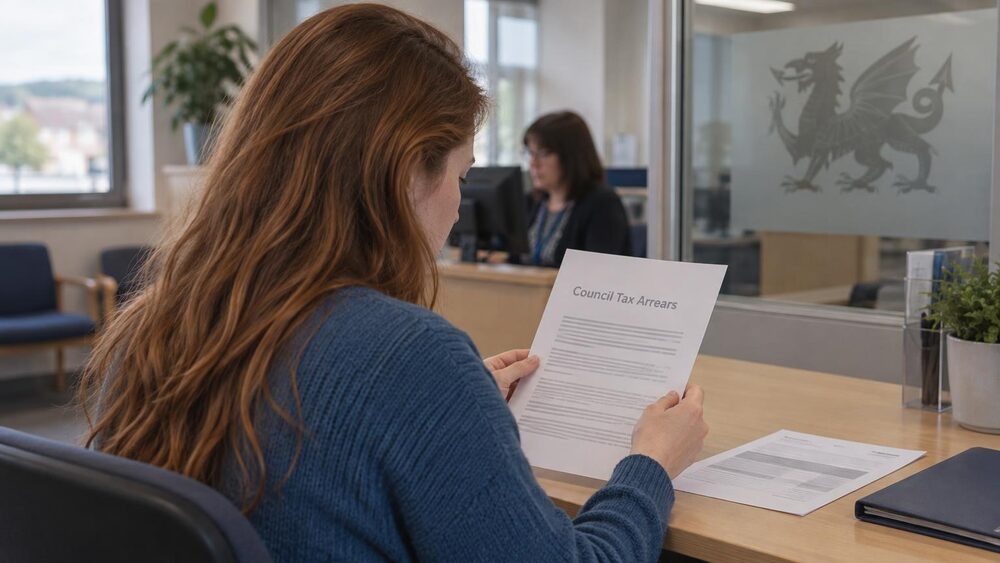
Council tax in Wales at a glance
Council tax is the local tax most households in Wales pay to their council. It applies to all homes and is usually payable by anyone over the age of 18 who owns or rents a home1. Around 1.5 million domestic dwellings in Wales are liable for council tax, and together they contribute over £2.8 billion a year towards the £11 billion cost of essential local services in Wales2. Council tax makes up around a fifth of total council spending in Wales1.
The system was introduced across Wales, England and Scotland on 1 April 1993, replacing the poll tax1. Its legal basis remains the Local Government Finance Act 1992, with later Welsh legislation adding to it2. Each property is placed in one of nine tax bands, A to I, based on its value on 1 April 2003, the last time properties in Wales were revalued1.
Half of households in Wales receive some form of discount or reduction on their bill1. The Welsh Government has described council tax as regressive, and a survey it cited found 57% of respondents disagreed with the statement "the council tax system is fair", while 50% said they knew very little or nothing about it1.
Welsh council tax bands A to I and what they cost
Every home in Wales sits in one of nine bands, A to I, based on what it would have sold for on the open market on 1 April 20031. This is the most recent revaluation anywhere in Great Britain: England and Scotland still use 1 April 1991 values6. The bands, with their 2003 values and the same ranges expressed in today's terms as estimated in a 2022 Welsh Government consultation, are set out below1.
| Band | Value on 1 April 2003 | Estimated value in today's terms | Average tax excluding discounts, 2022-23 | Share of homes |
|---|---|---|---|---|
| A | Up to £44,000 | Up to £103,000 | £1,185 | 14% |
| B | £44,001 to £65,000 | £103,001 to £146,000 | ||
| C | £65,001 to £91,000 | £146,001 to £201,000 | £1,580 | 22% |
| D | £91,001 to £123,000 | £201,001 to £263,000 | £1,777 | 16% |
| E | £123,001 to £162,000 | £263,001 to £356,000 | £2,172 | 13% |
| F | £162,001 to £223,000 | £356,001 to £490,000 | £2,567 | 8% |
| G | £223,001 to £324,000 | £490,001 to £710,000 | £2,962 | 4% |
| H | £324,001 to £424,000 | £710,001 to £954,000 | £3,554 | 1% |
| I | More than £424,000 | More than £954,000 |
The band determines the proportion of the bill a household pays. A band D property pays the full amount set by the council, band A pays 6/9 of it, band C pays 8/9, band F pays 13/9, band H pays 18/9, and band I pays three and a half times as much as band A1. Because the bands are based on 2003 values, the effective tax rate as a share of a home's current value falls as the property becomes more expensive: the 2022 consultation estimated band A homes paid an average of 2.3% of their value in council tax, while band G homes paid 0.5% and band H homes 0.4%1.
The bill itself assumes two or more adults live in the home: 50% of the basic bill is based on the property's band and 50% on household circumstances1. Where fewer adults are counted, a discount applies, as explained below.
What pushes council tax up in Wales
The amount a household pays is driven by three things: the band, the rate the council sets, and any premiums or charges added on top. Councils set their own rates each year, and there is no cap on increases in Wales, unlike the referendum thresholds that apply in England. In 2024-25 the average bill in Wales rose by 7.7%, or £1457.
The average band D council tax in Wales was £1,777 excluding discounts in 2022-231, and the ONS put the average band D bill at £1,374 for Wales in the financial year ending 20178. Despite these rises, the Welsh Government noted in 2022 that the average band D council tax in Wales was still £189 lower than in England1.
Council tax makes up around a fifth of total council spending in Wales, with the rest coming mainly from grants from the Welsh Government1. When grants are tight, councils tend to raise more from council tax, which is one reason bills have risen faster than inflation in recent years. Premiums on second and empty homes, first applied in 2017, have also enabled relevant councils to collect more1.
Discounts, exemptions and help for lower incomes
Over 500,000 households in Wales benefit from a council tax discount, approximately 22,000 of these are due to a disregard (where someone in the home is not counted, such as a full-time student), and a further 64,000 properties are fully exempt9. Half of all households in Wales receive some form of discount or reduction1.
The main discounts and exemptions are:
- Single person discount: 25% off the bill where there is only one resident who is not disregarded, or where there are two or more residents and all but one are disregarded9. The discount is not means-tested, so savings do not affect it10. Some people qualify even when other adults live at home, if those adults are not counted for council tax purposes, for example students or people who are severely mentally impaired11.
- Care leavers: since 1 April 2019, care leavers under the age of 25 have been exempt from paying council tax in all areas of Wales12. The Welsh Government and local government introduced this in 2018 as part of efforts to assist vulnerable groups2.
- Exempt dwellings: the regulations prescribe 7 classes of exempt dwellings for premium purposes3, and the wider exemptions framework covers properties such as those left empty by people in hospital or care.
- Council Tax Reduction Scheme (CTRS): the national scheme by which local authorities in Wales support low-income households with their council tax liability4. The Welsh Government set up the national scheme, and you apply through your local council13. In 2021-22 approximately 268,000 households received a reduction, at a total recorded value of £288 million1; by 2023-24 the £244 million scheme was helping almost 260,000 households, around one in five households in Wales4.
The Welsh Government has repeatedly committed to maintaining full entitlements to the scheme, most recently in its 2025-26 annual report14 and its 2026 technical consultation on reassessment thresholds15. Non-dependant deductions (amounts taken off a reduction when another adult lives with you) are uprated each year by the average increase in council tax16.
Second homes and empty homes: premiums up to 300%
Councils in Wales can charge a premium on top of the standard council tax for long-term empty properties and second homes. The maximum premium is 300% of the council tax bill17. In practice this means a second home or long-term empty property can be charged up to three times the usual rate, and Which? has reported that in Wales councils can charge up to three times the usual rate for such properties18.
Premiums were first applied in 2017, and the Welsh Government estimates they have enabled relevant councils to collect additional revenue since then1. Each council decides whether to apply a premium and at what level, so the treatment of second homes varies across the 22 Welsh councils.
The regulations prescribe 7 classes of exempt dwellings, which set out the properties that do not attract the premium even when they are empty, for example properties that are empty because the resident has moved into hospital or a care home3.
Paying the bill and what happens if you fall behind
The bill is usually divided into 10 or 12 monthly payments, or it can be paid in one lump sum at the start of the year2. If a payment is missed, the council sends a reminder notice. Under the current law, the household has 7 days to pay the missed amount before losing the right to pay in instalments; if it is not paid within 7 days, the law states the household must pay all the council tax owed for the year2. Councils only need to send reminder notices for the first two missed payments in a financial year (1 April to 31 March). If a household misses a third payment, it must pay the remaining annual balance within 1 day2.
A final notice asks for the amount owed to be paid within 7 days. If the debt remains unpaid, the council can apply to the magistrates' court for a liability order. The summons notice states how much council tax is owed and the added costs, up to a maximum of £70 in Wales2. A liability order lets the council use enforcement powers, including enforcement agents, deductions from earnings and, in England and Wales, securing the debt against your home or applying to have the taxpayer declared bankrupt if they owe more than £5,0002.
The stages from a missed payment to enforcement action in Wales.
In November 2023, all council leaders in Wales committed to using only accredited firms to collect council tax, making Wales the first nation in the UK to do so2. Average council tax collection rates in Wales between 2017-18 and 2021-22 were higher than in England, Scotland, and when compared to similar councils in England21.
The Council Tax Protocol: how councils should treat people in debt
In 2019 the Welsh Government ended the threat of imprisonment for non-payment of council tax and published the Council Tax Protocol2. The Protocol is a voluntary code of practice for enforcement and support of those with council tax debt, and all councils in Wales have committed to following the standards it sets out2. All councils in Wales endorse the Protocol, which outlines best practice and guidance around how to deal with residents in debt23.
A 2022 review of the Protocol's impact found:
- Awareness among councils was high, with 96% of survey respondents (23 responses from 14 councils) saying they knew a great deal or a fair amount about it22.
- 14 of the 22 councils signposted to debt advice on their websites; ten of these signposted to external agencies and four advised residents to contact the council. Ten council websites provided no advice or signposting regarding debt22.
- No council stated that the Protocol's introduction had led to a lot of change in enforcement and collection activities, and five council respondents said they had received no training on it22.
- In 2021-22 the average proportion of council tax written off was 3.12% of the total council tax debit for the year22.
Citizens Advice Wales raised concerns that some Welsh councils had still not updated their communications in light of the removal of the sanction of imprisonment24. The review recommended councils review their Section 13A hardship relief policies to align with the Protocol, and review how they use DWP data, which can be used to automatically award Council Tax Reduction or invite applications from Universal Credit recipients22. Use of Section 13A discretionary relief varies widely between councils, with some requiring extreme circumstances and some excluding those on DWP means-tested benefits22.
The dedicated pages on the Council Tax Protocol for Wales, prison for council tax debt in Wales and Section 13A hardship relief cover these in more detail.
Challenging your band, and where protection stops
The Valuation Office Agency (VOA) is responsible for making sure 27 million properties across England and Wales are in the correct council tax band25. The VOA assesses bands based on what a property would have sold for on the open market on 1 April 1991 in England and 1 April 2003 in Wales26. You can challenge your band through a free process, and the VOA publishes a step-by-step guide on how to do so25.
A challenge can go both ways: if the VOA finds your home should be in a higher band, the band can be moved up and the bill with it. There are also 58,000 flags on the Welsh council tax list, out of 1.5 million properties, marking properties that have been altered but not transacted, which can trigger a band review when the property is later sold1.
Where protection stops more broadly: council tax is a priority debt. StepChange advises that council tax arrears should be treated as a priority because the debt can be secured against your home, the council can apply to make you bankrupt, and while there is a risk of prison in England, that risk no longer exists in Wales20. The VOA has also refused to deal with an individual and five companies offering services to business rates customers, and its decision applies to any aliases or companies that individual is linked to now or in the future27.
How council tax in Wales differs from England and Scotland
The three nations share the same 1993 system but have diverged in several ways:
| Feature | Wales | England | Scotland |
|---|---|---|---|
| Valuation date | 1 April 20031 | 1 April 19916 | 1 April 19916 |
| Number of bands | Nine, A to I1 | Eight, A to H6 | Eight, A to H |
| Reduction scheme | National scheme, applied via your council13 | Each council has its own scheme28 | National scheme, applied via your council29 |
| Premiums on second and empty homes | Up to 300%17 | Set by each council | Set by each council |
| Imprisonment for non-payment | Ended in 20192 | Still possible20 | Not applicable in the same way |
Wales is the only nation to have revalued since 1991, using 1 April 2003 values, and the only one with a ninth band, I, for homes worth more than £424,000 at the 2003 valuation1. The average band D council tax in Wales was still £189 lower than in England as of 20221, though bills in Wales rose by 7.7% on average in 2024-25 with no cap on increases7.
On help with bills, each council in England has its own Council Tax Reduction scheme, while Scotland and Wales each have their own national scheme, although you must still apply via your local council29. In Wales all councils will generally offer the same reductions, with only slight differences between them12. The schemes are different in different parts of Great Britain30, and the rules on exemptions from the habitual residence test also vary between England, Wales and Scotland31.
Wales is also the first nation in the UK whose council leaders have all committed to using only accredited enforcement firms2, and the only one to have ended the threat of imprisonment for non-payment2. Northern Ireland does not use council tax at all: it has a domestic rates system, covered in domestic rates in Northern Ireland and compared with council tax in Council Tax vs Domestic Rates.
Where to get free help
Free, impartial help with council tax in Wales is available from several sources:
- Your local council: for Council Tax Reduction, discounts, exemptions and payment difficulties. Contact your local authority to find out more about the reduction scheme13.
- Shelter Cymru: housing advice covering council tax as a housing cost12.
- Turn2us: information on Council Tax Support in Wales and the single person discount13.
- Scope: guidance on council tax reduction and discounts for disabled people10.
- Mental Health and Money Advice: information on council tax exemptions and support for people living with a mental illness32.
- Independent Age: help with council tax for people in later life28.
- StepChange Debt Charity: free debt advice, including how to prioritise council tax arrears20.
- Business Debt Line: guidance on council tax arrears in England and Wales17.
For wider money rules that differ across the nations, see money in Scotland, Wales and Northern Ireland, and for the related pages on council tax in Scotland and water bills.
Sources32 cited
- Council tax fairness consultation, WG45022 Welsh Government, 2022
- Improving the administration and enforcement of Council Tax in Wales consultation Welsh Government, 2025
- Council tax empty and second homes Welsh Government, 2023
- Streamlining Welsh Benefits review Welsh Government, 2023
- New rules confirmed for fairer council tax collection Welsh Government, 2025
- Council tax bands explained Which?, 2026
- April price hikes: how to save money if your costs are going up Which?, 2024
- The effects of taxes and benefits on household income, FYE 2019 Office for National Statistics, 2019
- Council Tax (Discounts, Disregards and Exemptions) (Wales) Regulations 2026 explanatory memorandum Senedd Cymru, 2025
- Help with council tax reduction and discount Scope, 2026
- Single person discount Turn2us, 2024
- Paying for housing: council tax Shelter Cymru, 2026
- Council tax support in Wales Turn2us, 2026
- Council Tax Reduction Scheme annual report 2025-26 Welsh Government, 2026
- Council Tax Reduction Scheme Wales: technical consultation on reassessment thresholds Welsh Government, 2026
- Council Tax Reduction Schemes (Miscellaneous Amendments) (Wales) Regulations 2026 explanatory memorandum Senedd Cymru, 2025
- Council tax arrears in England and Wales Business Debt Line, 2026
- Can my friend save me from extra council tax? Which?, 2025
- Written statement: update on local taxation Welsh Government, 2023
- What debts to pay first StepChange Debt Charity, 2026
- Understanding the impact of Council Tax interventions in Wales: removal of the sanction of imprisonment Welsh Government, 2023
- Understanding the impact of Council Tax interventions in Wales: introduction of the Council Tax Protocol Welsh Government, 2023
- Improving the administration and enforcement of Council Tax in Wales: summary of responses Welsh Government, 2025
- Local authorities' approaches to Council Tax debt recovery Welsh Government, 2017
- How to challenge your council tax band: a step-by-step guide Valuation Office Agency, 2025
- Understand how council tax bands are assessed Valuation Office Agency, 2016
- Staying safe from scammers Valuation Office Agency, 2024
- Help with your council tax Independent Age, 2026
- Help with council tax rates Contact, 2025
- Council tax support and reduction Turn2us, 2026
- What benefits can I claim: refugee leave and humanitarian protection Turn2us, 2025
- Council tax exemptions and support to pay Mental Health and Money Advice, 2026

 Citizens Advice ScotlandFree advice across Scotland
 Citizens AdviceFree advice on money, consumer and legal problems in England and Wales
 MoneyHelperFree, impartial money and pensions guidance, set up by government
 GOV.UKOfficial information on tax, benefits and government services