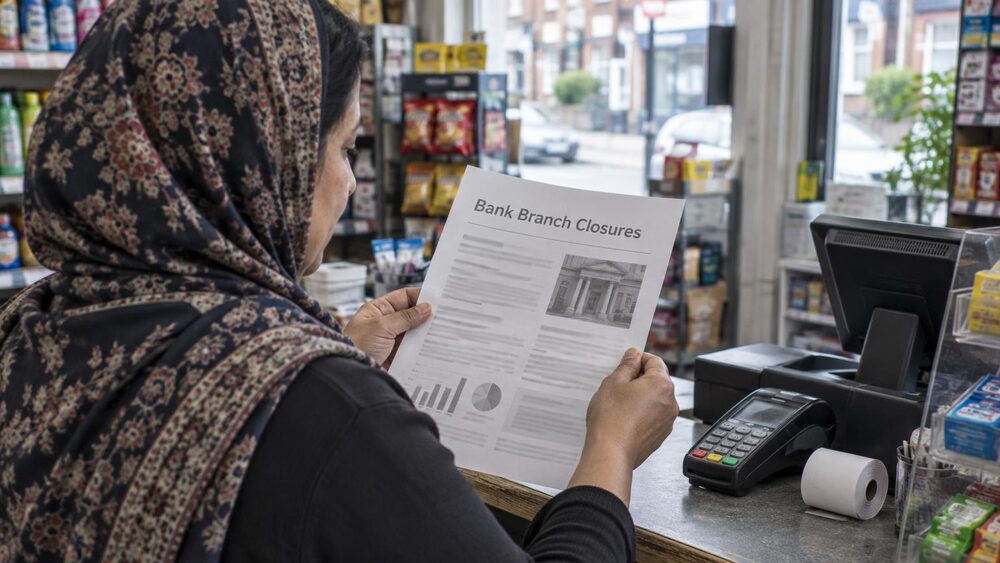
Banking in Northern Ireland sits inside the same UK regulatory system as Great Britain, but the market on the ground looks different. Four banks with deep local roots, Danske Bank, Bank of Ireland, AIB and Ulster Bank, have historically dominated the high street, and the FCA's cash access review lists Danske Bank and Bank of Ireland as firms whose branch networks cover Northern Ireland only1. Alongside them sit building societies such as Progressive, and a credit union movement that, unlike in Great Britain, does not generally offer current accounts2. Branch closures have cut the local network hard, and shared banking hubs are only now being planned for towns such as Kilkeel and Portrush3.
The rules that protect you are the same as elsewhere in the UK. Deposits are covered by the FSCS up to £120,000 per eligible depositor for banks, building societies and credit unions authorised by the PRA and FCA4. The largest banks must offer fee-free basic accounts5. Complaints that a bank cannot settle go to the Financial Ombudsman Service6. What differs is access: two thirds of Northern Ireland's population use cash regularly as their main form of payment, a higher reliance than Great Britain, which makes every branch and ATM closure matter more7.
Who provides banking in Northern Ireland
The Northern Ireland market is unusual in the UK: it is served by banks whose branch networks exist only in the province, alongside the big GB-wide brands. The FCA's work on access to cash identifies Danske Bank and Bank of Ireland as banks whose coverage is Northern Ireland only1. Danske Bank closed four branches in 2024 as part of the wider UK closure wave8. AIB (NI), which grew out of First Trust Bank, and Ulster Bank, part of the NatWest group, complete the traditional local big four, and both also operate across the border in the Republic of Ireland, which shapes how cross-border customers bank. The page on living in Northern Ireland and working in Ireland covers that arrangement.
Building societies are the second tier. Progressive Building Society is the local mutual, and Nationwide, the UK's largest building society, is designated to offer basic bank accounts alongside the major banks10. Nationwide's group now includes the Virgin Money, Clydesdale Bank and Yorkshire Bank brands11.
Credit unions are a distinctly Northern Irish strength. They have a remit to offer a range of basic financial services, such as share accounts, loans and life assurance2, and the Consumer Council notes that credit unions provide a range of savings and loan services12. One limit matters: credit unions in Northern Ireland do not generally offer current accounts2, so they complement rather than replace a bank for everyday banking. The guide to credit unions explains how they work.
Where borrowing from banks is not available, illegal money lending is a recognised problem in Northern Ireland, and the Consumer Council signposts help for people who have borrowed from unlicensed lenders12. A Consumer Council report from March 2024 found that 15% of consumers had taken out additional credit or loans with official lenders such as banks and building societies, a sign of the pressure on household budgets that shapes how people use banks locally13.
Basic bank accounts are fee-free by law
A basic bank account is a no-frills current account: money in, money out, a debit card, and no overdraft. MoneyHelper's position is plain: "Basic bank accounts are free to set up and use"5. The largest banks have been required to offer them, and the list of designated firms includes Barclays, Santander, Royal Bank of Scotland (including NatWest), HSBC, Nationwide, Co-operative Bank, Lloyds (including Halifax and Bank of Scotland), TSB and Virgin Money (including Clydesdale and Yorkshire Bank)14. The government's own account of the scheme confirms Nationwide Building Society is among the designated providers10.
The advantage for someone in financial difficulty is that the account has no fees14. That matters if an account elsewhere has been frozen or if a debt problem makes a full current account with an overdraft risky. Which? reports that the nine largest banks and building societies in the UK have agreed to offer basic bank accounts with no monthly fees to people who have no bank account, who want to change provider, or who are in financial difficulty and want their bank to open a new, functional account for them15.
Eligibility is broad. You do not need a good credit history, because there is no borrowing on the account. If you are in serious debt, a basic account also protects benefit payments from being swallowed by bank charges, which is why debt charities direct clients to them16. The guides to current accounts and to debt set out the wider picture.
Savings and cash ISAs at a local building society
Building societies are a major force in Northern Ireland savings, and nationally they punch well above their size in cash ISAs. The Building Societies Association reports that building societies and mutual-owned banks account for 47% of all cash ISA balances in the UK17. For a saver in Belfast or Omagh, that means the local building society is a genuine alternative to the big banks for tax-free saving, not a niche option.
Moving an existing cash ISA to a Northern Ireland provider is done by transfer, not by closing the account and reopening it. A voluntary agreement between the Building Societies Association, TISA and UK Finance governs how quickly cash ISA transfers must be carried out, and providers report their transfer performance against it18. The practical rule is to ask the receiving provider to arrange the transfer, so the money stays inside the ISA wrapper and keeps its tax-free status. The guide to ISAs explains the wrapper and the annual allowance.
Beyond ISAs, ordinary savings accounts work the same way in Northern Ireland as in Great Britain, and deposits are protected by the same FSCS limit4. The savings section covers account types and how interest is paid.
Banking with the app and online
Day-to-day banking in Northern Ireland has moved to apps and websites in the same way as elsewhere in the UK. To pay bills or move money online you need a UK bank account that you can access through your bank's app or website, as NS&I sets out when explaining its own payment options19. Every major provider in Northern Ireland offers app-based banking, card controls and payment scheduling through the same channels as GB customers.
Cards work on the same national rules. The contactless limit is £100 per payment, and the Consumer Council notes that some banks and building societies are offering to remove that maximum and allow unlimited contactless spending, with the card still verified by PIN periodically9. If a merchant surcharges you unlawfully for paying by card, the complaint route in Northern Ireland runs to your local trading standards authority or the Department for the Economy20.
Budgeting tools inside banking apps, standing orders and direct debits all operate identically across the UK. The how to section gives step-by-step guides for the everyday tasks, from setting up a direct debit to switching providers.
Branch closures and the move to banking hubs
Branch closures have reshaped Northern Ireland's high streets. Across the UK there were 410 closures in 2024, including 90 from Barclays, 83 from Lloyds, 76 from Halifax, 68 from NatWest, 31 from Bank of Scotland and four from Danske Bank8. The pace has not slowed: 314 branches are scheduled for closure in 2026, including 116 from Lloyds, 88 from Halifax, 40 from Santander and 33 from NatWest, and a further 19 are scheduled for 20278. Which? tracks the same figures and publishes the closure lists21.
The response has been shared banking hubs. As of early 2024 there was one banking hub in Northern Ireland, compared with two in Wales22. Further hubs are planned in Kilkeel, Newcastle, Comber, Warrenpoint and Portrush3. A hub gives a town a counter service where customers of the participating banks can do their basic banking in person, which matters most in towns that have lost their last branch.
Two changes in the law now govern closures. The Financial Services and Markets Act 2023 came into force in September 2024, and new FCA rules require designated banks and building societies to assess cash access provision before closing services and to fill gaps where they are found23. The Access to Banking Standard, which banks and building societies can sign up to, sets out what customers should be told before a closure23. If your branch is listed for closure, the bank must consult and explain the alternatives, and the FCA can act where access is lost without a replacement1.
Getting cash when your branch closes
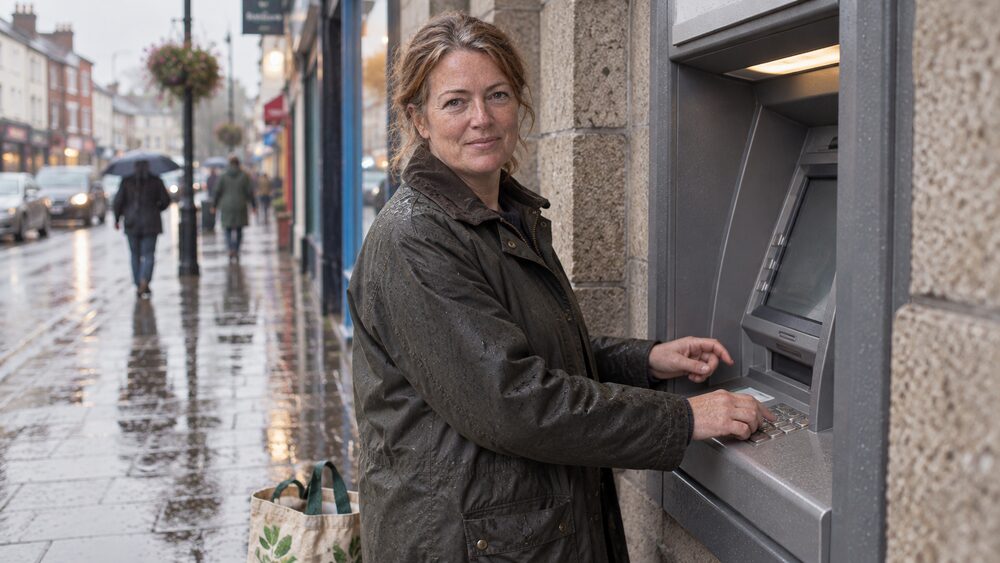
Cash matters more in Northern Ireland than almost anywhere in the UK. Advice NI's evidence to the Northern Ireland Assembly's banking inquiry states that two thirds of the population use cash regularly as their main form of payment, rising to 77% in areas susceptible to paramilitary activity and 79% among those on low incomes7. That is the backdrop to every closure decision.
The alternatives to a branch are post offices and ATMs. The Banking Framework Agreement allows customers of most UK banks and building societies to do everyday banking at Post Office counters23, and the Assembly's banking report notes that despite some closures, there are still 40 or more post offices available in Fermanagh23. LINK's commitment, in place since 2019, is to fund a free-to-use ATM where a high street loses its last one and there is no nearby Post Office counter23.
The FCA's cash access rules, in force since September 2024, are the backstop: designated firms must assess the impact of a closure on local cash access and remedy gaps23. If a withdrawal facility disappears with no replacement, that is the point at which to raise it with the bank and, if unresolved, with the FCA or the Financial Ombudsman Service.
Cash reliance has a harder edge for people in debt. StepChange's guidance for Northern Ireland lists what can happen if priority bills go unpaid: your bank account can be frozen, money can be taken from your bank account or benefits, and a creditor can apply for a money judgment, after which money can be taken from your wage or bank account24. Keeping cash access and a working account is therefore not only convenience but protection. The pages on debt law in Scotland and Northern Ireland and the Enforcement of Judgments Office explain those powers.
Scams and card fraud: what your bank will never ask
The scam warnings that apply across the UK carry particular weight in Northern Ireland, where the authorities have repeated them in local terms. nidirect's guidance on protecting your identity is categorical:
"Your bank will never ask you for your PIN or your online account password, and neither will any trustworthy online retailer"
The same rule covers "safe account" scams, where a caller posing as a bank or the police tells you to move money to protect it. MoneyHelper's advice is that your bank, the police and regulators will never ask you to move money to a "safe" account26. The State Pension service in Northern Ireland gives the same warning about its own contacts: you will never be asked for your bank details by text, social media, email or via links to click within a text or email, and suspicious messages should be reported27. The Northern Ireland Pension Centre repeats that warning for changes of circumstances28.
If you have been tricked into making a payment, the Financial Ombudsman Service can look at your own bank's response and can also look into complaints about the bank or payment service provider that received your money, considering the steps it took to recover it and whether it should have had concerns about its customer's account29. The scams and fraud section covers the main scam types and what to do first.
Complaints and the Financial Ombudsman Service
The complaint route is the same across the UK. The Payment Systems Regulator's guidance is to contact your financial provider first, by phone or in writing, and then to contact the Financial Ombudsman Service if you are still unhappy6. The ombudsman's powers in banking cases are wide: it can order refunding overdraft fees or interest, paying out a cheque the bank did not honour, returning money paid to the wrong person, and compensation for distress or inconvenience30.
The route a banking complaint takes, from the bank's own complaints process to the ombudsman's decision.
The ombudsman also handles complaints about claims companies, including the results of a claim or the fees charged31. For disputes that are not about financial services, Northern Ireland has its own court routes: the small claims process gives you 21 days from the date the forms are sent to respond, and a judge decides how much you pay if the other side does not accept your offer32. The page on courts and legal systems for money disputes explains which route fits which dispute, and complaining about a council or public body covers the public services ombudsmen.
FSCS protection for your money
Money held with a bank, building society or credit union authorised by the PRA and FCA is protected by the FSCS up to £120,000 per eligible depositor4. That limit applies across the UK, including Northern Ireland, and it covers the local providers as well as the GB-wide brands. The FSCS maintains a searchable list of protected firms, and if a bank or brand cannot be found there it is worth checking before depositing, because protection depends on the authorised firm behind the brand4.
Two things catch people out. First, the limit applies per banking group, not per brand: money in accounts with several brands that share one authorised firm counts together towards the single £120,000. Second, if a firm fails, the FSCS pays out rather than leaving you to claim from the wreckage, which is why depositors of failed banks are normally made whole quickly. The consumer protection section explains the wider protections, including Section 75 on credit card purchases.
Bankruptcy changes the picture for the account itself. Official Northern Ireland guidance states that all your bank accounts are usually frozen by the bank when it becomes aware of the bankruptcy order33, and after the order you may open a new bank or building society account but should tell them you are bankrupt, and they may impose conditions and limitations34. A fee-free basic account is often the practical answer in that situation5. The debt section covers bankruptcy and the alternatives.
Northern Ireland banknotes
Northern Ireland is one of the few places in the UK where several banks issue their own notes. Danske Bank, Bank of Ireland, AIB and Ulster Bank have historically issued Northern Ireland pound notes, and they circulate alongside Bank of England notes. Legally, no banknote in the UK, including Bank of England notes, has legal tender status in Scotland or Northern Ireland, and acceptance of any note anywhere in the UK is a matter for the person receiving it. In practice, Northern Ireland notes are accepted routinely within the province and often in the rest of the UK, though a trader in Great Britain may refuse them.
Exchanging Northern Ireland notes is the harder question. AIB branches in the Republic of Ireland offered exchange of First Trust Bank banknotes for their own customers until 31 December 2022, and that service has ended, so there is no standing exchange route across the border. Within the UK, banks that issue the notes will generally exchange their own, and the Bank of England exchanges withdrawn notes, but a holder of another bank's Northern Ireland notes may need to go to the issuing bank itself.
For cross-border living, the practical answer is that notes are not the main channel: card payments and bank transfers work across the border without any note exchange at all. The page on living in Northern Ireland and working in Ireland covers banking, tax and benefits across the border, and money abroad covers currency questions more widely. The wider differences between the nations, from domestic rates to water bills, are gathered in the money in Scotland, Wales and Northern Ireland section.
Sources34 cited
- Access to cash Financial Conduct Authority
- Credit unions in Northern Ireland Northern Ireland Assembly, 2025-03-14
- Banking hubs planned in Northern Ireland Northern Ireland Assembly, 2024-10-04
- FSCS protection limit Financial Services Compensation Scheme, 2026-09-25
- Basic bank accounts MoneyHelper, 2026-09-25
- When you make a payment Payment Systems Regulator, 2026-09-26
- Advice NI briefing on banking in Northern Ireland Advice NI, 2025-01-27
- Bank branch closures: is your local bank closing Which?, 2026
- Safer ways to pay Consumer Council for Northern Ireland, 2026
- Basic bank accounts July 2023 to June 2024 HM Government, 2025-11-05
- Mortgage Charter 2026 HM Government, 2026-03-26
- Help with illegal lending Consumer Council for Northern Ireland, 2026
- Cost of basics report Consumer Council for Northern Ireland, 2024-03
- Safe bank accounts National Debtline, 2026-09-25
- How to open a bank account online Which?, 2026-04-23
- Safe bank accounts in Scotland Business Debtline, 2026-09-26
- BSA warns ISA reforms could undermine investment aims Building Societies Association, 2025-10-16
- Cash ISA transfer performance H1 2026 Building Societies Association, 2026-07-24
- Pay from a bank account NS&I, 2025-12-01
- The IFR and consumers Payment Systems Regulator, 2026-09-25
- Bank branch closures: is your local bank closing Which?, 2026-07-07
- Closure of high street banks: impact on local communities House of Lords Library, 2024-01
- Report on banking and financial services landscape Northern Ireland Assembly, 2025-09-10
- What debts to pay first StepChange, 2026-09-25
- Protect your identity nidirect, 2025-10-28
- Types of scam MoneyHelper, 2026-09-25
- Get your State Pension nidirect, 2026-08-18
- State Pension: report a change in your circumstances nidirect, 2026-09-01
- Scams: you've been tricked into making a payment Financial Ombudsman Service, 2026-09-27
- Cheques and bankers' drafts Financial Ombudsman Service, 2026-09-26
- Complain about a claims company HM Government, 2026-09-26
- Northern Ireland small claims StepChange, 2026-09-25
- Effect of bankruptcy Department for the Economy, 2016-05-06
- Bankruptcy restrictions Department for the Economy, 2019-05-02



 Citizens Advice ScotlandFree advice across Scotland
 Citizens AdviceFree advice on money, consumer and legal problems in England and Wales
 MoneyHelperFree, impartial money and pensions guidance, set up by government
 GOV.UKOfficial information on tax, benefits and government services