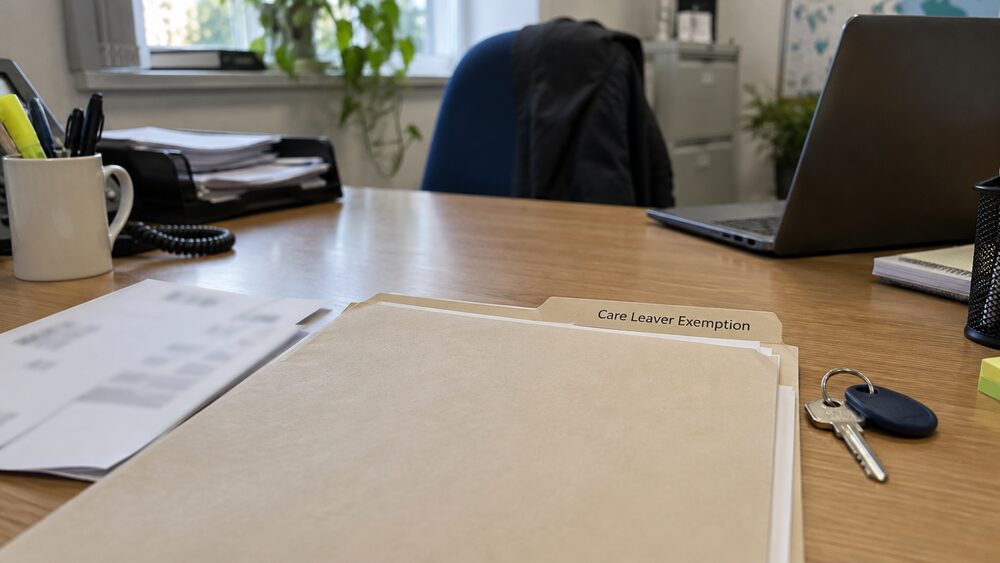
If you are a care leaver aged 18 to under 25 living in Wales, you may not have to pay council tax at all. The exemption, known as Class X, applies in certain living situations and has been in force across all areas of Wales since 1 April 20191. It was introduced by legislation that provided an exemption for care leavers from council tax until their 25th birthday, with the aim of easing the transition to independent living4.
If you are a care leaver aged 18 to under 25 living in Wales, you may not have to pay council tax at all. The exemption, known as Class X, applies in certain living situations and has been in force across all areas of Wales since 1 April 20191. It was introduced by legislation that provided an exemption for care leavers from council tax until their 25th birthday, with the aim of easing the transition to independent living4.
Most people aged 18 or over who own, rent or live in a home must pay council tax, a tax paid on homes in the council's area to fund local services5. The care leaver exemption is one of the exceptions to that duty, and it works differently from a discount: in the right circumstances it removes the property's bill entirely rather than reducing it.
Class X: the care leaver exemption in Wales
The Class X exemption is the specific rule that exempts care leavers in Wales from council tax. Welsh Government guidance states that a care leaver aged 18 to under 25 living in Wales may not have to pay council tax in certain situations1. Shelter Cymru puts it more simply: care leavers under the age of 25 do not have to pay council tax in Wales, and since 1 April 2019 this has applied in all areas of the country2.
The exemption is not a discount that shaves a percentage off the bill. It is a full exemption, meaning that where it applies, the property is treated as exempt and no council tax is charged for it. Welsh Government statistics describe the legislation as providing "an exemption for care leavers from Council Tax until their 25th birthday with the aim of assisting" them into independent living4.
The age range matters. The exemption starts at 18, because under-18s are generally not liable for council tax in any case, and it runs up to, but not including, 25. Special rules apply to care leavers aged 16 or 17 in other areas of support, but the council tax exemption itself is framed around 18 to under 252.
Who you can live with and still be exempt
The exemption is not simply about who you are, but about who lives with you. Under the Class X rules, a care leaver aged 18 to under 25 is exempt if they live alone, or share the home only with1:
- other care leavers who also qualify
- full-time students
- someone who is medically certified as having a significant cognitive impairment
The logic is that council tax assumes two or more adults in a household are liable. If everyone in the home is either exempt or "disregarded" (not counted as an adult for council tax purposes), the property itself becomes exempt. Full-time students and people with a significant cognitive impairment are among the groups disregarded for council tax purposes generally, which is why living with them does not break the care leaver's exemption7.
Sharing a home with people who are not exempt
If you share with adults who are not care leavers, students or disregarded in another way, the position changes. The property is no longer fully exempt, because the other adults remain liable. However, a written statement accompanying the 2026 amendment regulations confirms that a person with a significant cognitive impairment, students and care leavers are disregarded for council tax purposes8. Being disregarded means you are not counted when the council works out how many liable adults live in the property.
In practice, if you share with one liable adult, the bill is calculated as if only one adult lives there, which normally attracts a discount rather than a full exemption. The other adult remains responsible for their share. Joint and several liability rules mean adults in a shared home can each be pursued for the bill, but a disregarded person such as a care leaver is not counted in that calculation8.
How the exemption is applied to your bill
A council tax bill is worked out from three things: the valuation band of your home, how much your council charges for that band, and whether you qualify for a discount or exemption9. In Wales, the rules assume two or more adults are liable, meaning 50% of the basic bill is based on the council tax band and 50% on household circumstances10. The Class X exemption works on the household-circumstances half: if every adult in the home is exempt or disregarded, the bill falls away entirely.
The exemption sits alongside the wider Council Tax Reduction Scheme (CTRS), which the Welsh Government maintains to protect vulnerable and low-income households11. The CTRS supports around 268,000 eligible households across Wales with reductions in their council tax10. A care leaver who is exempt does not need the reduction, but the two can matter at different points: before the exemption is confirmed, or after it ends at 25.
When a Council Tax bill may not be owed
Beyond the care leaver exemption, there are other situations in which no council tax is owed. You will not have to pay council tax if you are getting Income Support, income-based Jobseeker's Allowance or income-related Employment and Support Allowance, as these passport you to the maximum reduction12. More broadly, full-time students, some carers and people with a severe mental impairment do not count towards a household's bill7.
Councils can backdate corrections, and the exemption has applied since 2019, so a wrongly issued bill can be corrected for earlier periods too3.
What happens when you turn 25
The exemption covers care leavers until their 25th birthday4. Once you turn 25, you become liable for council tax in the normal way, like any other adult in Wales. That does not mean no help is available: the Council Tax Reduction Scheme continues to support low-income households, and if you receive a passporting benefit such as Income Support you are entitled to the maximum reduction11.
If you do have to pay, you can ask to spread your payments over 12 months instead of the usual 10, which reduces the amount of each instalment13. Councils may agree to this where the usual schedule is unaffordable.
Care leavers elsewhere in the UK
The Welsh exemption is not matched everywhere in the UK. Care leavers under the age of 25 are exempt from council tax in Scotland, Wales, Northern Ireland and in some local authority areas in England14. For more on how the tax works across the nations, see our pages on council tax in Wales and council tax in Scotland.
Where to get help
Council tax is a priority debt, which means arrears are treated more seriously than ordinary credit debts15. From 1 April 2026, if you miss a council tax payment, the council will send you a reminder notice, and if you do not pay within 7 days of it, you will have to pay the whole year's council tax instead6. Consequences of non-payment can include the debt being secured against your home, the council applying to make you bankrupt, and in England a risk of prison, though not in Wales16. Our page on prison for council tax arrears in Wales covers that distinction in detail.
A landlord cannot require you to make a separate payment to them for council tax, so if you are exempt and a landlord demands a council tax charge on top of rent, that is worth challenging17. Free, impartial help with council tax problems is available from Shelter Cymru for housing and money matters, and from debt charities such as National Debtline and StepChange if arrears have built up. Our debt guide sets out the options in full.
Sources17 cited
- Council tax discounts, disregards, exemptions and reductions Welsh Government
- Advice for young people: care leavers Shelter Cymru
- Advice for young people: money matters Shelter Cymru
- Understanding the impact of council tax interventions in Wales Welsh Government, 2023-03-08
- Council tax and the law Carmarthenshire County Council, 2026-01-19
- Council tax arrears GOV.UK, 2026-09-26
- Help with your council tax Independent Age
- Council Tax (Discounts, Disregards and Exemptions) (Wales) (Amendment) Regulations 2026, Explanatory Memorandum Senedd Cymru, 2025-12-09
- Council tax GOV.UK, 2026-09-26
- Council tax reduction scheme consultation Welsh Government, 2022-07-12
- Council tax reduction scheme annual report 2025-26 Welsh Government, 2026-08-14
- Help to pay council tax One Parent Families Scotland
- Cost of living: if you can't afford your essential costs Business Debtline
- Council tax disregarded people entitledto, 2026-09-26
- If you cannot pay your council tax mygov.scot
- What debts to pay first StepChange, 2026-09-25
- Tenant Fees Act 2019 guidance for tenants GOV.UK, 2026-04-07







 Citizens Advice ScotlandFree advice across Scotland
 Citizens AdviceFree advice on money, consumer and legal problems in England and Wales
 MoneyHelperFree, impartial money and pensions guidance, set up by government
 GOV.UKOfficial information on tax, benefits and government services