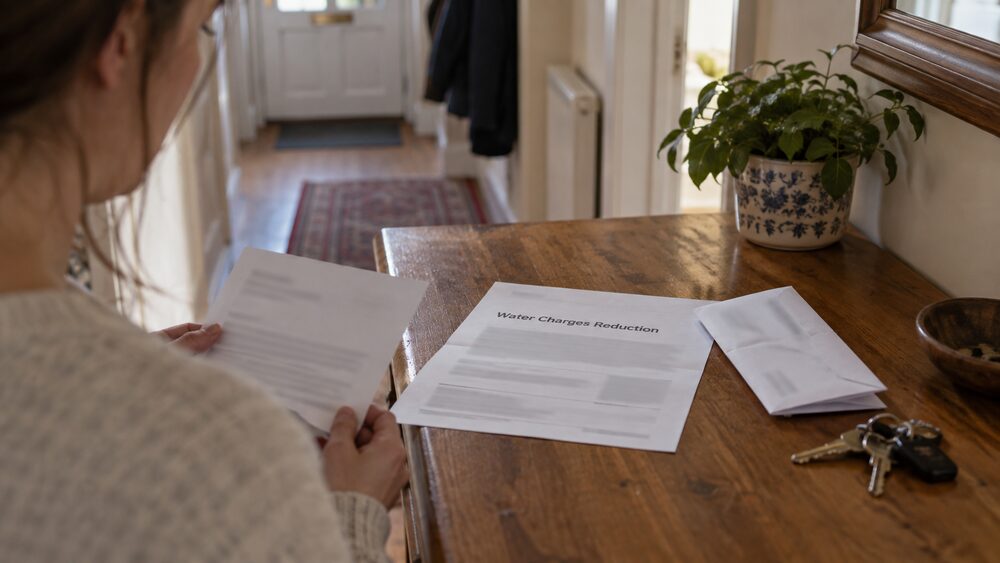
The Water Charges Reduction Scheme (WCRS) is a discount on water and sewerage charges for households in Scotland that receive Council Tax Reduction. The maximum reduction is 35%, and it is applied automatically: local authorities assess households that receive Council Tax Reduction for potential support from the scheme and apply the discount themselves1.
The Water Charges Reduction Scheme (WCRS) is a discount on water and sewerage charges for households in Scotland that receive Council Tax Reduction. The maximum reduction is 35%, and it is applied automatically: local authorities assess households that receive Council Tax Reduction for potential support from the scheme and apply the discount themselves1.
You do not apply separately. If you get Council Tax Reduction, the assessment happens as part of that process. Households with two or more adults who receive Council Tax Reduction but do not already receive status discounts get a discount of up to 25% on their charges2. A household receiving full Council Tax Reduction is entitled to up to 25% off water and sewerage charges, and this should be applied automatically without a claim3.
The scheme is not reaching everyone it could. Only around one in five households (19%) in severe water poverty are in receipt of WCRS, and the proportion of households in water poverty who are in receipt of WCRS might increase to around 50% if all eligible households received it4. That gap is the single most important thing to know about the scheme: eligibility does not guarantee the discount has been applied.
What the Water Charges Reduction Scheme is
The Water Charges Reduction Scheme is a Scottish discount that reduces the water and sewerage charges collected alongside council tax. It sits within the wider system of Council Tax Reduction, which replaced Council Tax Benefit from April 20136. In Scotland, water and sewerage charges are usually collected with council tax unless you are on a water meter, and you cannot claim Council Tax Reduction to help with these payments3. The WCRS is the mechanism that reduces the water element for qualifying households.
The scheme is distinct from the social tariffs that water companies run in England and Wales. Every water company in England and Wales has a social tariff scheme which can help reduce bills for low-income families7. In Scotland, the support route is different: it runs through the council tax system rather than through a company-by-company application. If you live in Scotland, contact Scottish Water for information about the Water Charges Reduction Scheme5.
The scheme provided £29 million of support in 2024-20254. That figure gives a sense of scale: it is a substantial national discount, but it is also well short of what full take-up would cost, which is the subject of the section on missed households below.
Up to 35% off water and sewerage charges
The headline figure is a 35% maximum bill reduction provided through WCRS4. In practice, the discount a household receives depends on its circumstances. Households with two or more adults who receive Council Tax Reduction but do not already receive status discounts get a discount of up to 25% on their charges2. A household receiving full Council Tax Reduction is entitled to up to 25% off water and sewerage charges3.
The difference between the 35% maximum and the 25% figure reflects who the scheme is aimed at. The 35% maximum is the ceiling; the 25% rate is what most eligible households receive. The Single Person Discount gives eligible households a 25% reduction in their Council Tax and water charge bills4, so single-adult households are supported through a separate route rather than through the two-or-more-adults element of WCRS.
| Household situation | Discount on water and sewerage charges |
|---|---|
| Receiving full Council Tax Reduction | Up to 25%3 |
| Two or more adults receiving Council Tax Reduction, not already receiving status discounts | Up to 25%2 |
| Maximum available through WCRS | 35%4 |
| Single Person Discount (Council Tax and water charge bills) | 25%4 |
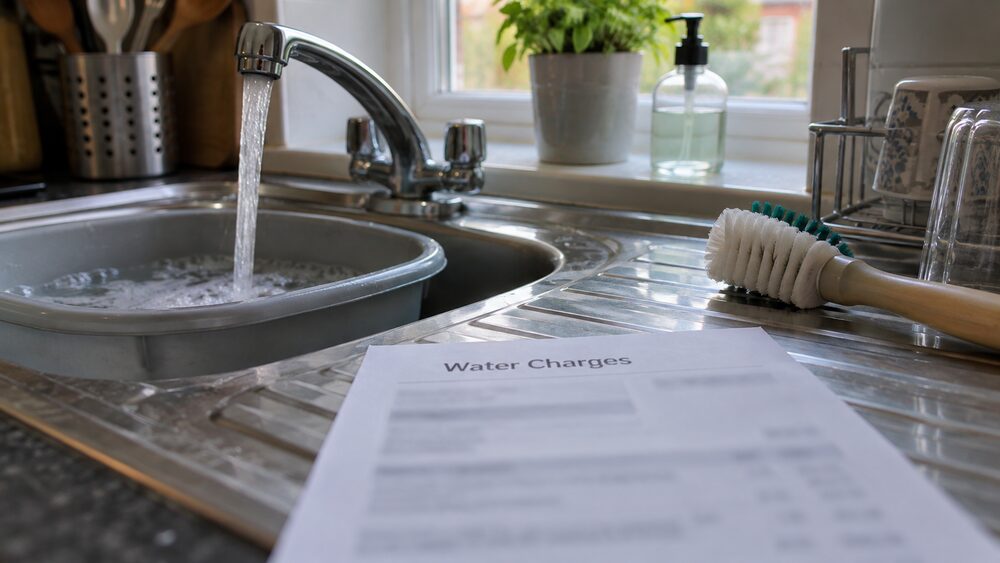
The discount applies to water and sewerage charges, not to council tax itself. Council Tax Reduction reduces your council tax liability; the water discount is a separate reduction on the water and sewerage part of the bill. You cannot claim Council Tax Reduction to help with water and sewerage payments3.
Who qualifies: Council Tax Reduction is the key
Eligibility for the Water Charges Reduction Scheme turns on Council Tax Reduction. The scheme covers households which have two or more adults and which receive Council Tax Reductions (which replaced Council Tax Benefit from April 2013) but do not already receive status discounts2. Council Tax Reduction is available if you are on a low income or get benefits8.
Because the scheme is assessed through Council Tax Reduction, the practical question is whether you receive that reduction. The Council Tax Reduction scheme helps people on low incomes and/or certain welfare benefits to pay their council tax by reducing their bill9. In Wales, the equivalent Council Tax Reduction Scheme is the mechanism by which local authorities provide support to low-income households in meeting their council tax10. Council tax support is available if you have a low income11.
If you receive Council Tax Reduction, you are already in the assessment process for WCRS. The scheme does not require a separate means test or a separate application form. The local authority holds the information it needs from your Council Tax Reduction award.
How you get the discount: it is applied automatically
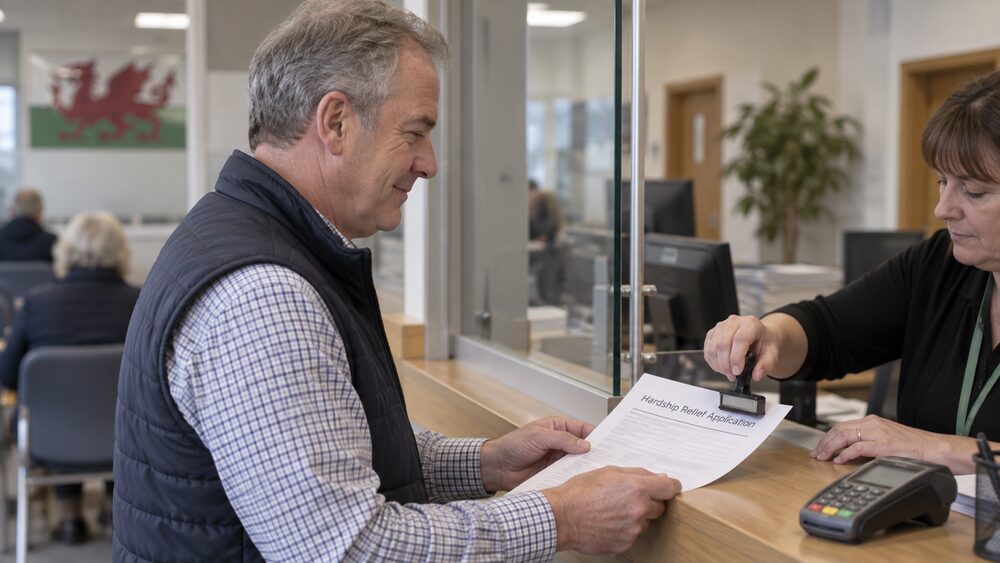
Local authorities automatically assess households that receive Council Tax Reduction for potential support from the WCRS and apply the discount1. The scheme is designed so that households do not have to claim it: the discount should be applied automatically3. This is the central design feature of the scheme, and it is also the source of its main weakness, because an automatic process can fail silently.
The automatic route means there is no application form to complete and no deadline to miss. If your circumstances change, for example if an adult joins or leaves the household, the assessment should update. The discount is applied to the water and sewerage element of the bill, which is usually collected with council tax unless you are on a water meter3.
Paying by Direct Debit may attract a separate discount from your water company. You may get a discount for paying bills by Direct Debit14. That is a company-level discount, separate from WCRS, and it applies to the payment method rather than to your income or benefit status.
Why households with two or more adults get a smaller discount
The scheme's design explains the difference in discount levels. The two-or-more-adults element targets households that receive Council Tax Reduction but do not already receive status discounts, and gives them up to 25%2. Single-adult households receive the Single Person Discount, a 25% reduction in Council Tax and water charge bills4. The two routes overlap in value but reach different households.
The 35% maximum is the ceiling for the scheme as a whole4. A household's actual discount depends on which element applies to it. The structure means that a household with two or more adults on Council Tax Reduction is not disadvantaged relative to a single-adult household; both land at around 25%, with the 35% maximum available in the circumstances the scheme allows.
Water company social tariffs in England and Wales can be more generous. It is possible you may receive a discount of 50% or more on your water bill for a period of time15. That is a different scheme in a different nation, and it does not apply in Scotland, but it explains why comparisons between the nations can be misleading.
Many eligible households still miss out
The scheme's take-up is the most important practical issue for anyone reading this. Only around one in five households (19%) in severe water poverty are in receipt of WCRS4. The proportion of households in water poverty who are in receipt of WCRS might increase to around 50% if all eligible households received it4. Full take-up would result in an additional 160,000 households receiving WCRS, a 38% increase in recipients4.
Those figures describe a scheme that is working as designed for the households it reaches, but is not reaching most of the households it could. The automatic assessment depends on the Council Tax Reduction award being in place and the local authority's records being current. A household that is entitled to Council Tax Reduction but has not claimed it will not be assessed for WCRS either.
The wider picture of support for vulnerable households shows similar gaps. An estimated half of households could be eligible for energy and water support for additional needs16. The Warm Home Discount scheme is only expected to reach 45% of fuel poor households from scheme year 2025/26 onwards17. These are different schemes with different eligibility rules, but the pattern of under-reach is consistent.
What to do if your bill has not been reduced
The first step is to check whether you receive Council Tax Reduction. If you do, the local authority should have assessed you for WCRS automatically1. If the discount is missing from your bill, contact the local authority that administers your Council Tax Reduction, because it holds the assessment.
If the local authority cannot resolve it, the complaint route runs through the water company and then the Consumer Council for Water. The Water Redress Scheme is free and gives an independent decision which the water company has to follow, after the Consumer Council for Water has dealt with your complaint18. That is the final independent step for a water billing dispute.
Water companies may charge you up to six years of unpaid water and sewerage charges19. If arrears have built up while a discount was missing, that limit is worth knowing. Some companies run arrears schemes: if you qualify, and pay your current charges for six months, Welsh Water will pay off half of your arrears, and a further six months of payment clears the remaining balance12. That is a Welsh Water scheme, not a Scottish one, but it illustrates the kind of arrangement companies can offer.
For free, impartial help with water bills and wider debt, the Consumer Council for Water and MoneyHelper provide guidance, and debt advice charities can help with arrears. The Consumer Council's water bill health check provides a simple breakdown and explanation of your water bill, checks billing is correct and identifies opportunities to save money or become more water efficient20.
Where the scheme sits in the UK
The Water Charges Reduction Scheme is a Scottish scheme, and the support available differs across the four nations. In England and Wales, every water company has a social tariff scheme which can help reduce bills for low-income families7. There are two schemes that can reduce your bill: WaterSure and WaterSure Wales21. WaterSure caps a bill at the amount of the average household water bill for the water company, in some cases less22.
In Northern Ireland, water charges are included in domestic rates and there are no direct water charges13. That means there is no equivalent reduction scheme, because there is no separate water charge to reduce. The domestic rates system handles the equivalent cost.
| Nation | Water charge support |
|---|---|
| Scotland | Water Charges Reduction Scheme, up to 35%, automatic through Council Tax Reduction1 |
| England and Wales | Company social tariffs, WaterSure and WaterSure Wales7 |
| Northern Ireland | Water charges included in domestic rates, no direct water charges13 |
The Scottish scheme's reliance on Council Tax Reduction means its reach is tied to the reach of that reduction. Council Tax Reduction reduces liabilities for over 450,000 households23. Every household in that group is in the assessment pool for WCRS, which is why the take-up gap matters: the assessment pool is large, but the scheme reaches only around 19% of households in severe water poverty4.
Sources23 cited
- Unmetered charges 2026-2027 Scottish Water, 2026-09-28
- Water companies in Scotland Turn2us, 2025-07-28
- Your business and household budget (Scotland) Business Debtline, 2026-09-26
- Affordability of water and sewerage charges Consumer Scotland, 2025-12-19
- Water help with costs Independent Age, 2026-09-26
- Family Resources Survey quality and methodology report 2024-25 NISRA, 2026-05-28
- Social tariffs Family Fund, 2026-09-24
- Council Tax arrears GOV.UK, 2026-09-26
- Council tax Shelter Cymru, 2026-08-28
- Streamlining Welsh benefits review Welsh Government, 2026-04-02
- Emergency grants, loans and money help Shelter England, 2026-07-03
- Help with water bills StepChange, 2026-09-25
- Poverty and Income Inequality quality and methodology report 2024-25 NISRA, 2026-03-26
- Saving money with a water meter StepChange, 2026-09-25
- Making the most of your money (England and Wales) Business Debtline, 2026-09-26
- Water, energy and broadband regulators fail to do enough for vulnerable people Public Accounts Committee, 2026-09-11
- Response to DESNZ consultation on continuing the Warm Home Discount Scheme Consumer Scotland, 2025-11-21
- Your priority debts (England and Wales) Business Debtline, 2026-09-26
- Problems paying your bill Ofwat, 2026-09-28
- Water bill health check Consumer Council, 2026
- Your business and household budget (England and Wales) Business Debtline, 2026-09-26
- Water schemes Turn2us, 2025-07-28
- Scottish Budget 2026-2027 Scottish Government, 2026-03-06




 Citizens Advice ScotlandFree advice across Scotland
 Citizens AdviceFree advice on money, consumer and legal problems in England and Wales
 MoneyHelperFree, impartial money and pensions guidance, set up by government
 GOV.UKOfficial information on tax, benefits and government services