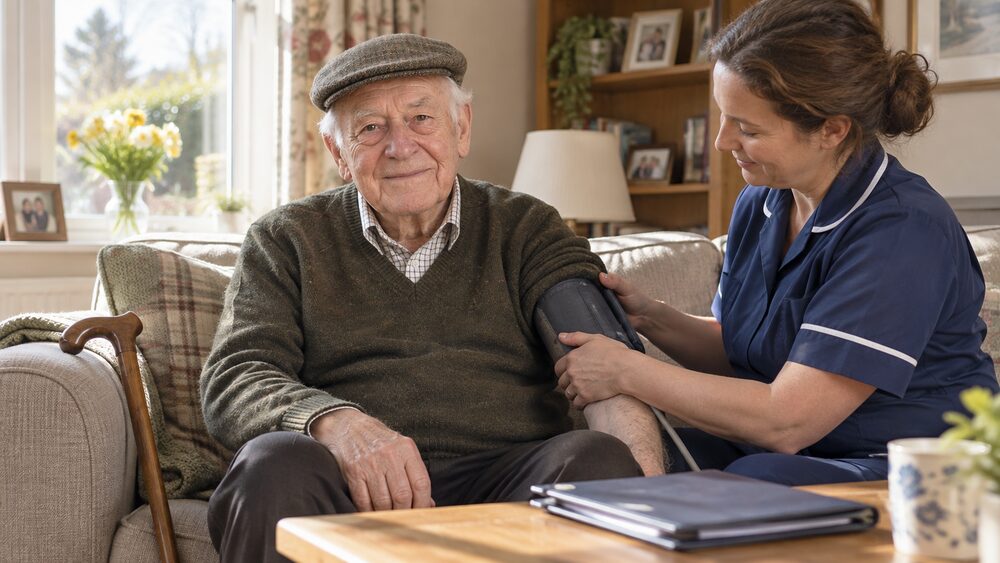
NHS Continuing Healthcare is funding for adults whose main need for care is health related. If the NHS agrees the person has a "primary health need", Continuing Healthcare funding will meet their care costs, and if they qualify, all their care will be paid for, including their care home fees1. It is awarded to adults who are assessed as having a primary health need, and it is not means-tested, so it does not matter how much money the person has2.
NHS Continuing Healthcare is funding for adults whose main need for care is health related. If the NHS agrees the person has a "primary health need", Continuing Healthcare funding will meet their care costs, and if they qualify, all their care will be paid for, including their care home fees1. It is awarded to adults who are assessed as having a primary health need, and it is not means-tested, so it does not matter how much money the person has2.
The route in is an assessment, not an application form. Someone from the NHS or social services carries out a brief screening assessment, known as the Checklist Tool, to see whether the person might be eligible2. If that points to possible eligibility, a full assessment follows using the Decision Support Tool, carried out by two or more health and social care professionals involved in the person's care5. A decision about eligibility should be made within 28 days of the assessment2.
Where the person is terminally ill and their condition is quickly getting worse, a different route applies. They should be considered for the Fast Track Pathway, which does not use the Checklist Tool or the Decision Support Tool, and if accepted the care package should be in place within two days2.
Who qualifies: a primary health need
The test is not how much care someone needs in the round, but what kind of need it is. NHS Continuing Healthcare is awarded to adults who are assessed as having a primary health need2. In practice that means the person has significant, very high health and care needs, and their main need for care must be health related, which is what the professionals mean when they say there is a primary health need5.
That distinction matters because it separates Continuing Healthcare from the council-funded care route. When a council assesses someone's needs, it must refer them to the NHS if it thinks they might be eligible for NHS continuing healthcare7. So a care needs assessment is often where the question first comes up, and the referral is not something the family has to engineer.
If someone you care for has complex ongoing health needs, they may be entitled to long-term financial assistance8. Some people will receive funding via Continuing Health Care8. The judgement is made on the health needs themselves, not on the setting: it applies whether the person is at home, in a care home or leaving hospital.
What NHS Continuing Healthcare pays for, and what it does not
If someone qualifies, all their care will be paid for, including their care home fees2. The funding covers personal care, health care, and care home fees, including food and accommodation5. If you are eligible for NHS continuing healthcare, your care home placement will be free7. You do not pay anything towards continuing healthcare4.
The NHS will not look at your finances to see if you need to pay towards the costs5. That is the practical difference from the council route, where a financial assessment decides what the person contributes.
What it does not do is replace every other source of support. If the person does not meet the criteria for NHS continuing healthcare but needs nursing care, the NHS pays a contribution towards the cost of the nursing care directly to the nursing home, which is a separate arrangement known as NHS-funded nursing care7. That contribution is not the same as full funding, and the rest of the fees are dealt with under the usual care funding rules.
Not means-tested: your savings and benefits are not affected
Continuing Healthcare sits outside the means test entirely. It is not means-tested, so it does not matter how much money the person has4. It does not affect benefits or pension payments4. That is unusual among care funding routes, where savings and property usually decide who pays.
One benefit does change, and it is worth knowing before it happens. Attendance Allowance will stop after 28 days if the person receives NHS Continuing Healthcare, but it will continue to be paid if they get NHS-funded Nursing Care and no other financial support from the state9. More broadly, benefits stop after the first 28 days if the person receives help with their fees from the local council, or the NHS pays their fees through NHS Continuing Healthcare10. The funding sources that stop benefits are NHS continuing healthcare, NHS funding for nursing care, and the local council11.
The reason is that these benefits are meant to help with the costs of care, and once the NHS is meeting those costs in full, the allowance is no longer paid. Pension payments are not affected4.
The assessment: Checklist first, then the Decision Support Tool
The first step is usually a screening assessment using the Checklist Tool5. Someone from the NHS or social services will do a brief assessment of the person's health needs to see if they might be eligible, and this is known as the Checklist Tool4. The screening looks at mobility, breathing, continence, communication, nutrition, skin, psychological and emotional needs, altered states of consciousness, symptom control through drug therapies and medication, cognition and other significant care needs2.
If the Checklist indicates the person might be eligible, the case moves to a full assessment. They will then decide if you qualify for NHS Continuing Healthcare, using the Decision Support Tool (DST)5. It is carried out by two or more health and social care professionals who are involved in the person's care4. In Wales, a representative from the local council is also present2.
A decision about whether the person is eligible for NHS Continuing Healthcare should be made within 28 days of the assessment2.
Fast track for people who are terminally ill
Where someone is terminally ill and their condition is quickly getting worse, they should be considered for the Fast Track Pathway4. This route exists for a primary health need because of a condition that is quickly getting worse and may be entering its final stages, and it does not use the Checklist Tool or the Decision Support Tool5. If it is accepted, the person's care package should be in place within two days6.
The speed is the point. The standard assessment route carries a 28-day decision deadline, and the fast track is designed to bypass both the screening and the full assessment so that funding is not held up while a condition deteriorates.
The same principle runs through the benefits system for people with a terminal diagnosis. People with a terminal illness who are not expected to live more than 12 months can have their claim for benefits fast-tracked and will not usually be required to complete a medical assessment12. For disability benefits in Scotland, there is a separate fast-track application process for people who are terminally ill13. Pension Age Disability Payment fast-tracks terminal illness applications under special rules, needing confirmation of the terminal diagnosis from a doctor or nurse through the BASRiS form, with no other supporting information required14. For DWP benefits, the claim is fast-tracked15.
Reviews and losing eligibility: at three months, then every year
Continuing Healthcare is not awarded once and forgotten. The support package will be reviewed after three months, and then every year, to check it is still suitable6. The same schedule is described as no later than three months after you first qualify, and at least once a year after that5.
Losing eligibility is a formal process, not a quiet decision. It can only happen if you have another full assessment and a new DST is completed, and the DST shows that you no longer have a primary health need5. Both conditions have to be met: a fresh full assessment, and a Decision Support Tool outcome that no longer shows a primary health need. A change in circumstances on its own does not end the funding.
That matters for planning. If a review is coming, the evidence that supported the original decision is the same evidence that will be looked at again, and the person's needs at the time of the review are what count.
If the person has died: claims and refunds
A claim can be made on behalf of someone who has died. You can make a claim for NHS continuing healthcare on behalf of someone who has died if they died on or after 1 April 2012, and it might mean a refund of some of their care costs16. There is a backlog of cases, so a claim may take time16.
This route exists because some people who should have been assessed for Continuing Healthcare were not, or were assessed and refused, and their families paid care fees that the NHS should have met. The claim is about recovering some of those costs, not about the person's care now.
Where the rules differ across the UK
NHS Continuing Healthcare is available in England, Wales and Northern Ireland6. It is not available in Scotland5. In June 2015, NHS Continuing Healthcare was replaced in Scotland by a different system called Hospital Based Complex Clinical Care6. If you are dealing with care costs in Scotland, the funding route and the assessment are different, and the Checklist and Decision Support Tool process described here does not apply.
Within the countries where it does operate, the process is largely the same, with one difference in Wales: a representative from the local council is also present at the full assessment2.
If you are working out how care is paid for more generally, the rules on care needs assessments and financial assessments, and the separate guides for England, Scotland, Wales and Northern Ireland, set out what the council does and when it refers someone to the NHS.
Getting help and asking questions
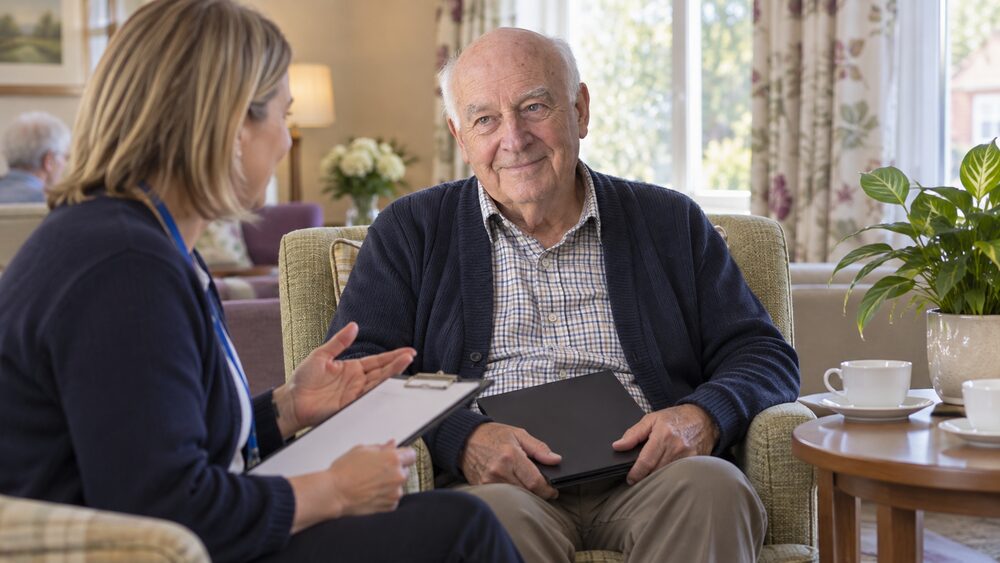
The assessment is a conversation about health needs, and families are usually part of it. The Checklist screening and the full Decision Support Tool both depend on evidence about how the person is day to day, so records, care notes and the views of the people providing care all feed into it.
If the outcome is not what the family expected, the decision can be questioned through the NHS complaints process, and the care needs assessment route is where the council's role and the referral to the NHS are set out. For unpaid carers, Money Help for Unpaid Carers covers the benefits and support that sit alongside care funding, and Money When Someone Is Terminally Ill covers the fast-track benefits position.
Sources16 cited
- Paying for a care home Independent Age, 2026-09-26
- NHS Continuing Healthcare Carers UK, 2026-09-26
- Care Legal & General, 2026-09-26
- Free and cheap equipment for disabled people Scope, 2026-09-23
- NHS funding for care Independent Age, 2026-09-26
- NHS Continuing Healthcare in Scotland Carers UK Scotland, 2026-09-26
- Paying for a care home Age UK, 2026-04-09
- Who pays for your care and support Sense, 2026-09-26
- Attendance Allowance Which?, 2026-04-06
- Benefits, hospital and care homes Independent Age, 2026-09-26
- Going into a care home: benefits GOV.UK, 2026-09-27
- Terminally ill benefits Scope, 2025-10-27
- Adult Disability Payment factsheet Social Security Scotland, 2026-03
- Pension Age Disability Payment factsheet Social Security Scotland, 2026-03
- Income maximisation Advice NI, 2026
- Continuing healthcare assessment Marie Curie, 2022-08-02

 MoneyHelperFree, impartial money and pensions guidance, set up by government
 Citizens AdviceFree advice on money, consumer and legal problems in England and Wales
 Turn2usFree benefits calculator and grants search from a charity
 GOV.UKOfficial information on tax, benefits and government services