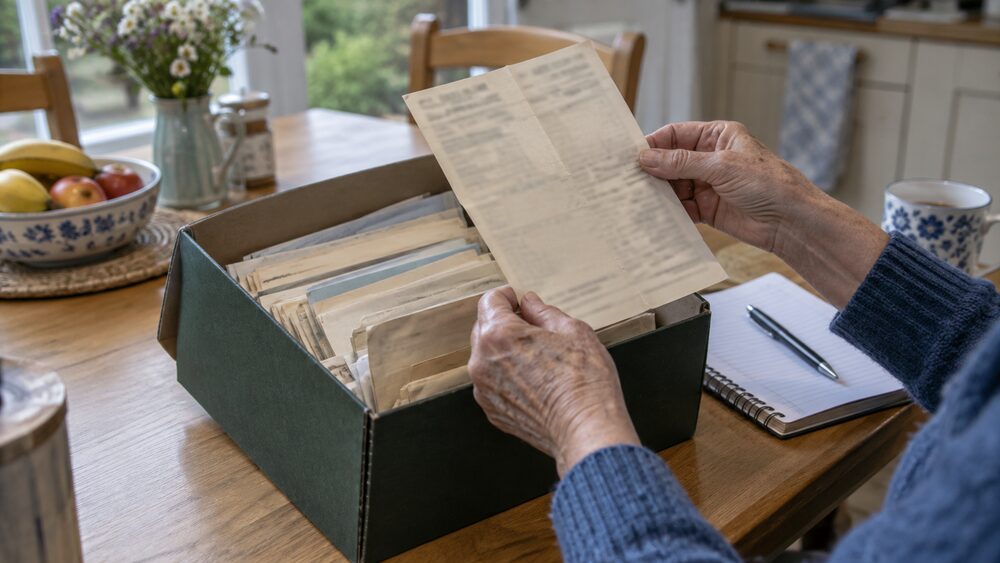
If you were injured or made ill by work and the employer has since closed, been taken over or simply disappeared, the cover that was in force at the time may still exist. Employers' liability insurance is compulsory for traders with employees, and a trader with employees who does not have it is breaking the law1. Insurers must keep an employers' liability register and make it searchable, either on the firm's own website or through a tracing office that meets the conditions in the rules2.
If you were injured or made ill by work and the employer has since closed, been taken over or simply disappeared, the cover that was in force at the time may still exist. Employers' liability insurance is compulsory for traders with employees, and a trader with employees who does not have it is breaking the law1. Insurers must keep an employers' liability register and make it searchable, either on the firm's own website or through a tracing office that meets the conditions in the rules2.
The register is not limited to current policies. It covers a United Kingdom commercial lines employers' liability insurance policy, or other evidence of cover, issued or renewed before 1 April 2011, as well as later cover2. That matters because most industrial disease claims are brought years after the exposure, when the employer may no longer be trading.
The search itself is free, and you do not need a solicitor to run it. What you do need is enough detail to identify the employer and the period you worked there. The sections below set out what to gather, how the search works, what happens when nothing is found, and where to get free help with the claim itself.
Why you might need to trace an old employer's liability policy
An employer's liability policy is what pays compensation when an employee is injured or made ill by the work. If the employer is still trading, the claim is straightforward: the employer passes it to its insurer. The tracing problem arises when the employer has closed, changed name, been bought, or gone into insolvency, and nobody can say which insurer was on cover at the time of the exposure.
Industrial disease claims are the classic case. The Industrial Injuries Scheme provides non-contributory no-fault benefits for disablement because of an accident at work, or because of one of over 70 prescribed diseases known to be a risk from certain jobs5. Independent guidance describes the same scheme as covering disablement due to an industrial accident while at work or training, or one of over 60 prescribed diseases accepted as a particular risk of occupation6. The two published counts differ; the scheme itself is the same.
Because prescribed diseases develop slowly, the claim may relate to work done decades ago. The employer may have had several insurers over that period, and each policy year is a separate contract. That is why the dates you worked matter as much as the employer's name.
What you need before you start a search
Gather the employer's name and address, the dates you worked there, and your National Insurance number. Tracing services generally ask for your name and National Insurance number, as well as details and dates of your previous employers4. The Pension Tracing Service, which many people use first to find old workplace scheme details, needs the name of your previous employer or pension service to get started3.
If you are reporting a problem with a workplace pension rather than tracing insurance, the information needed is similar: the name and address of your employer, the employer's PAYE number if they have one, how much money you think is missing, and evidence7. The PAYE number can be found on payslips, P60s, P45s and P11Ds8. The HMRC app lets you check your tax code, National Insurance number and employment history9.
How to search for the insurer through the Employers' Liability Tracing Office
The employers' liability register is the starting point. Firms that produce one must make the information available either on the firm's own website or by arranging for a tracing office that meets the conditions in the rules to make it available on the tracing office's website2. The register must have an effective search function, one that finds all matches in the register to any specified whole word2. In practice that means you can search on the employer's name and see which insurers appear.
If the employer is still trading, the simplest route is to ask them directly. Contact your HR team to see what policies they have in place10. For a workplace pension, the first step is to contact the former employer, who should be able to tell you who the pension provider is11. Previous and current employers and company scheme administrators could have the information and usually have a customer helpline12.
Where the employer has gone into insolvency, the insolvency practitioner is the next stop. You can usually find contact details for the insolvency practitioner on the failed insurance company's website, or by searching the firm's name on the relevant official site13. Companies House should hold the employer's details and can give further support5.
When the employer has closed or no policy can be found
A closed company does not automatically mean a dead end. Work-related charities will often consider applications from people who worked in their industry a long time ago, and it does not matter if the company no longer exists, though evidence of working in the sector is likely to be required14. Trade unions are another route: if you, your partner or a close family member helping with the bill is a member of a trade union, contact the union welfare department to ask about possible financial support schemes14.
The Industrial Injuries Scheme is separate from any civil claim and does not depend on finding an insurer. It provides non-contributory no-fault benefits for disablement because of an accident at work, or because of one of over 70 prescribed diseases known to be a risk from certain jobs5. Independent guidance describes it as compensation in the form of benefits for disablement due to an industrial accident while at work or training, or one of over 60 prescribed diseases accepted as a particular risk of occupation6. The two published counts differ; the scheme's no-fault, non-contributory character is common to both.
If the employer went into insolvency, there may be a route through the insolvency payment claims process in Northern Ireland, which asks for the name of your employer, the address from which you work, your National Insurance number, your bank account details, and the name and address of anyone else jointly liable for the debt15.
Where to get help with an industrial disease or injury claim
Industrial Injuries Disablement Benefit is claimed on a form. You can download an application form at GOV.UK, or contact the Barnsley Industrial Injuries Disablement Benefit Centre and ask them to send you a form; the phone number is 0800 121 8379 and the textphone is 0800 169 031417. There is a different form depending on whether you are claiming for an accident or an industrial disease18. The same contact details are given for England, Scotland and Wales17.
For a death, the Pension Tracing Service can be used to find details of the person's personal or workplace pension19. You can contact the person's life insurance company to find out about their policy and how to make a claim, and contact their employer to find out whether they had life insurance and how to make a claim9. The Association of British Insurers can help you find the company, and bank statements or the person's emails may show regular payments to an insurer9. Personal representatives of a deceased person may give notice to the scheme administrator of a registered pension scheme20.
The Pensions Ombudsman is clear about its limits: tracing a lost pension is not something it can help with, and the Pension Tracing Service on GOV.UK is set up specifically to help people track down lost pensions21. Where a scheme is being wound up and the employer is insolvent, the employer insolvency test enables the Regulator to issue a contribution notice where, immediately after an act or failure to act, the value of the assets of the scheme was less than the liabilities of the scheme, and the act or failure would have materially reduced the amount recoverable in a hypothetical insolvency of the employer20.
If you are pursuing a claim through a solicitor, some schemes ask for the solicitor's details when you register22. That is a requirement of the scheme, not of the trace itself.
Sources22 cited
- Before you get work done on your home Citizens Advice Scotland, 2026
- ICOBS 8: Employers' liability register FCA Handbook, 2025
- Tracing old pensions Age UK, 2026
- Are you sitting on a windfall? How to track down forgotten money Which?, 2026
- Companies House guidance GOV.UK, 2026
- Disability benefits Advice NI, 2026
- Report missing payments to your workplace pension The Pensions Regulator, 2026
- Report that your employer is not complying with their workplace pension duties The Pensions Regulator, 2026
- Claiming on life insurance Marie Curie, 2026
- Health and wellbeing discounts Carers UK, 2026
- Pension tracing service PensionBee, 2026
- How do I check my pension? PensionBee, 2026
- Who's involved in a claim FSCS, 2026
- Grants for work-related funerals Quaker Social Action, 2026
- Insolvency payment claims nidirect, 2026
- After death: dealing with an estate Citizens Advice Scotland, 2026
- Industrial Injuries Disablement Benefit Macmillan Cancer Support, 2025
- How do I claim Industrial Injuries Disablement Benefit? Turn2us, 2025
- After a death: report without Tell Us Once GOV.UK, 2026
- Pensions Act 2021 legislation.gov.uk, 2021
- What we can and cannot do The Pensions Ombudsman, 2026
- Horizon Convictions Redress Scheme GOV.UK, 2026






 MoneyHelperFree, impartial money and pensions guidance, set up by government
 Financial Ombudsman ServiceFree, independent help when a complaint about a firm is not put right
 FSCSProtects your money if a bank, insurer or investment firm fails
 Citizens AdviceFree advice on money, consumer and legal problems in England and Wales
 GOV.UKOfficial information on tax, benefits and government services