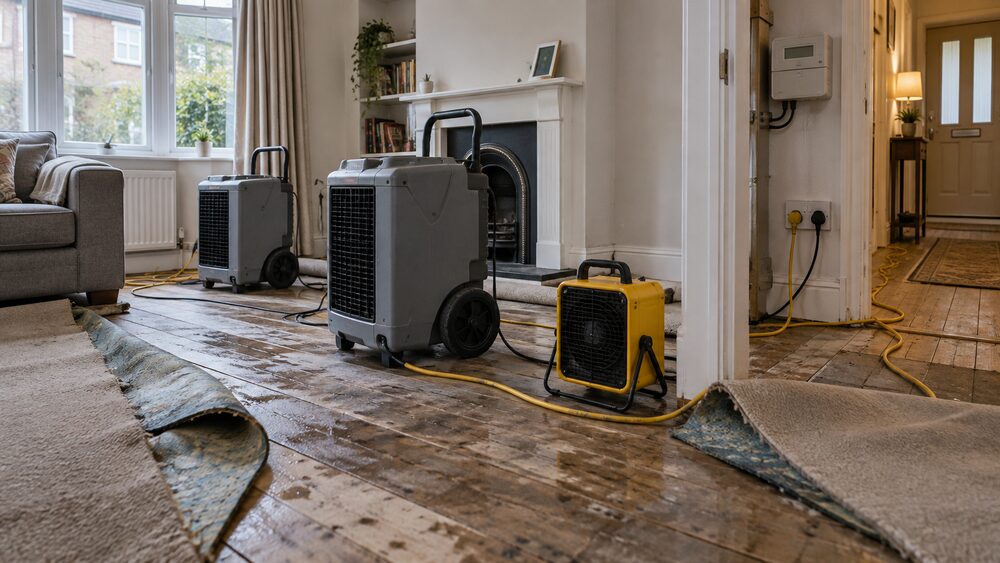
Flood cover is a standard feature of home insurance, and it usually covers the cost of drying out your home, including the electricity used to run dehumidifiers and heaters. Much of the electricity used during recovery, such as for dehumidifiers (often called driers) and building works, may be covered by your insurance policy1. Whether it is depends on your policy terms, so check your documents before you assume a cost is covered.
Flood cover is a standard feature of home insurance, and it usually covers the cost of drying out your home, including the electricity used to run dehumidifiers and heaters. Much of the electricity used during recovery, such as for dehumidifiers (often called driers) and building works, may be covered by your insurance policy1. Whether it is depends on your policy terms, so check your documents before you assume a cost is covered.
The average claim for damage to people's homes and possessions from flooding, storms and burst pipes reached £8,548 in the second quarter of 2026, up 12% on the same period in 20252. That figure covers the whole claim, not just electricity, but it shows the scale of what a flood can cost. If your insurer refuses a cost you think is covered, you can complain to them and then to the Financial Ombudsman Service.
This page explains how flood cover works, how insurers settle claims, where cover stops, what happens if your home cannot be lived in, and what to check before you claim.
Flood cover in home insurance: buildings and contents
Home insurance is usually made up of two main parts: cover for the building itself and cover for the contents within5. Flood insurance is usually a standard part of the buildings insurance for your home, but it will not cover your belongings unless you have contents insurance too6. A typical buildings policy provides cover, at least in principle, for damage caused by floodwater entering your home from an external source, including a river or canal bursting its banks, storms and high tides, and heavy rainfall3.
If your home is flooded, check whether your insurance covers repair costs, replacing your belongings, another place to stay, and legal cover and legal advice7. Your home insurance policy should cover you for sudden, unforeseen events such as bad weather and storms8. Standard home insurance will not usually cover damage caused by wear and tear4.
Contents-only cover provides cover for contents in your home against loss or damage by fire, flood, storm, theft, escape of water and other similar causes9. If you rent, your landlord is usually responsible for buildings cover, but your own belongings need contents insurance.
How insurers settle a flood claim: repair, replace or pay cash
When you claim, your insurer can settle in one of three ways: repairing the damage, replacing something lost or damaged, or paying cash to cover the cost of repair or replacement10. A typical policy term says: "We will decide whether to repair, replace, pay cash or reinstate the damaged part of the building."10
If you insist on cash when the insurer is willing to repair or replace, the insurer will only pay the amount it would cost them, and as insurers get discounts from the suppliers and contractors they use, that is usually less than market rates5. So a cash settlement may leave you short of what a repair would actually cost you to arrange yourself.
For gadgets and phones, a cash settlement is generally the cost of replacing the item with one of the same age and condition before the insured event, from a reputable source11. The same principle of like-for-like replacement often applies to household items, though the exact basis depends on your policy.
If you own your home, you are usually responsible for repairs due to flood damage7. Your insurer may arrange the work through approved contractors, or pay you to arrange it yourself.
Where flood cover stops: groundwater, unoccupied homes and wear and tear
Groundwater flooding is often excluded4. Home insurers will usually cover groundwater flooding if it has built up rapidly, but not where it has risen gradually3. Some policies include buildings cover for groundwater flooding, such as Nationwide Enhanced home insurance, while others do not, such as NFU Mutual Bespoke12. esure states that damage caused by rising ground water levels, which happens gradually over a period of time, is not covered14.
Standard home insurance will not usually cover damage caused by wear and tear4. Your standard policy may not pay out if the loss or damage was caused while the home was unoccupied4. Accidental damage cover for buildings typically excludes any excess on your policy, damage caused by wear and tear, vermin, insects, fungus, the weather or gradual damage, damage caused by water entering the home, and damage caused by building extensions, repairs, alterations, subsidence, heave or landslip9.
Under-insurance may result in only part of a claim being paid15. If your sums insured are too low, your insurer may apply the average clause and reduce your payout.
Alternative accommodation if your home cannot be lived in
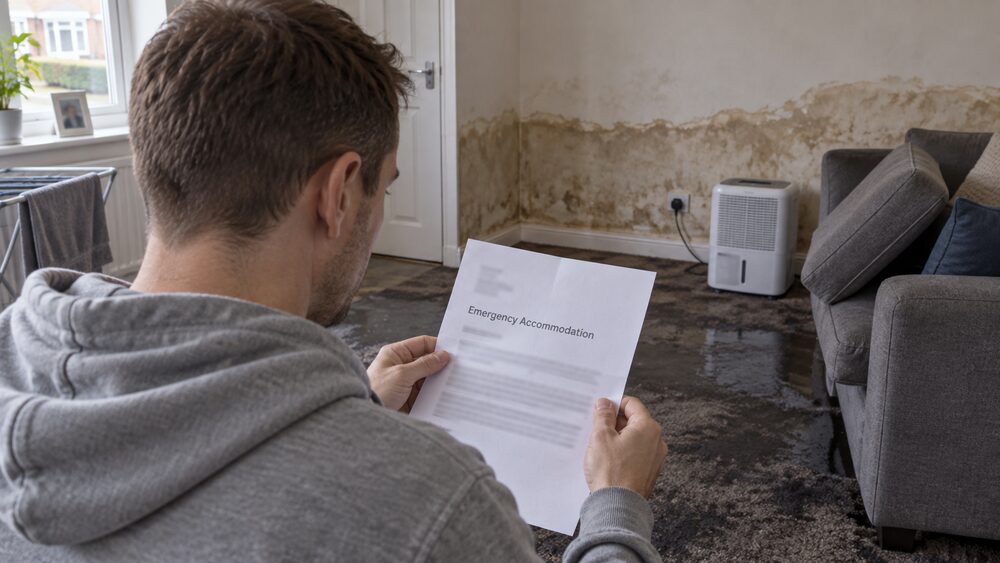
Policies generally include cover for temporary accommodation if your home has been made uninhabitable3. If your home is unsafe or uninhabitable, your policy might also provide alternative accommodation while the problem is being fixed16. Halifax Home Insurance Select, for example, includes a place to stay if you cannot live in your home due to flooding on combined building and contents policies6.
If you are evacuated as a precaution and your property has not been damaged, temporary accommodation is typically arranged through the Local Authority17. Your insurer may not be involved because there is no damage to claim for.
If you rent, your council or housing association landlord might have to give you somewhere to stay if flooding in your home is an emergency hazard7. If you cannot afford to pay the difference between your rent and your housing benefit or Universal Credit housing costs, it may be possible to apply for a discretionary housing payment from the council18.
Council tax arrears can be written off in some circumstances, including where your home cannot be lived in due to fire or flood damage, where there is no money left after living costs for a long time, or where there is serious ill health including mental health conditions19.
Checking your policy and sums insured before you claim
Before you start your claim for damage caused by extreme weather, check what you are and are not covered for in your policy documents20. The Financial Ombudsman Service says: "We'd expect your insurer to check all parts of your policy - not just the storm damage part - to see if you're covered."21
Insurers consider a variety of factors when calculating the premium for the policy they are offering, and it can vary depending on the insurer, the individual circumstances of the policyholder and the particular risk or risks the insurer is being asked to cover22. That means two neighbours can pay very different premiums for similar cover.
If you are in a flood-risk area, failing to provide accurate information could invalidate your policy and prevent you from making a claim15. Under-insurance may result in only part of a claim being paid15.
Flood Re is a re-insurance scheme in which insurers can pool the costs associated with higher-risk properties by paying a levy into a non-profit-making fund23. Householders do not deal with Flood Re directly, and decisions about whether eligible properties are included in the scheme are made by insurers23. Before Flood Re, just over half of flood-claim homes would have paid thousands of pounds, while the remainder would have been unable to obtain insurance altogether24.
Who provides flood cover in the UK
Flood cover is available from a range of insurers, including high street banks and building societies, specialist home insurers and mutuals. Halifax offers flood guidance and includes alternative accommodation on its combined building and contents policies6. Nationwide Enhanced home insurance includes buildings cover for groundwater flooding12. NFU Mutual Bespoke does not cover groundwater flooding on its buildings policies13. esure excludes damage caused by rising ground water levels that happens gradually14. Tesco Insurance does not cover fences, gates or hedges, or fixed items in the open such as outdoor hot tubs under its storm damage cover25.
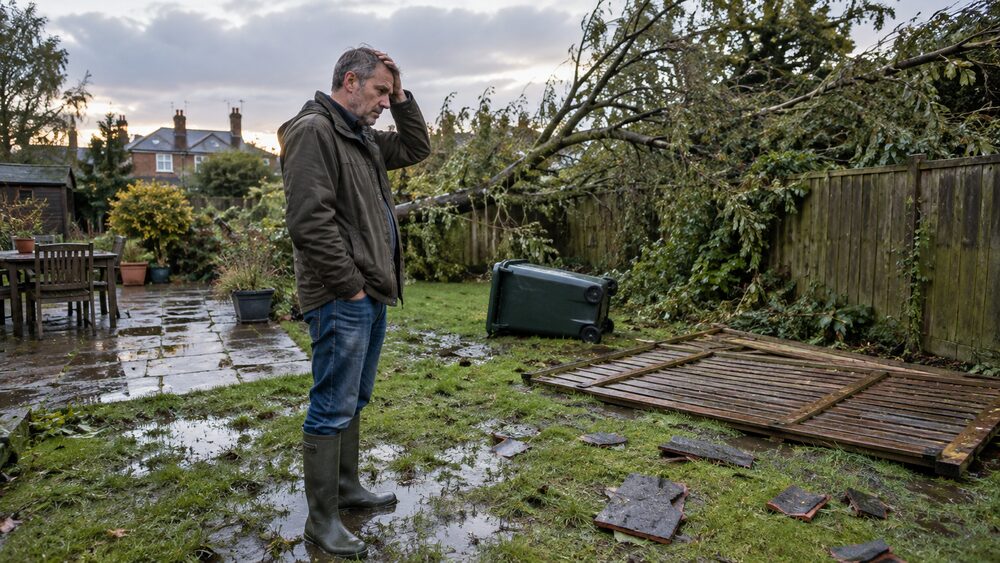
Cover for items in your garden may vary. Some policies include cover for garden furniture, trees, hedges, lawns and fences, while others do not26. Comprehensive car insurance usually includes damage caused by floods, storms, fallen trees or flying debris27.
If you are struggling to find cover, the National Flood Forum offers guidance on home insurance15. The Financial Ombudsman Service can look at complaints about how an insurer handled a claim10.
Sources27 cited
- After a flood National Flood Forum, 2026-09-26
- Average claim for subsidence reaches record £20,000 Association of British Insurers, 2026
- Home insurance and flooding Which?, 2026-09-17
- 5 winter risks your home insurance might not cover Which?, 2026-09-26
- Home insurance complaints Financial Ombudsman Service, 2026-09-26
- Flooding guidance Halifax, 2026-09-27
- Housing help if your home is flooded Shelter, 2025-10-27
- Does your insurance cover damage caused by bad weather? Which?, 2025-12-08
- Buildings and contents insurance HSBC, 2026
- Settling home insurance claims Financial Ombudsman Service, 2026-09-26
- Mobile phone and gadget insurance Financial Ombudsman Service, 2026-09-27
- Nationwide home insurance review Which?, 2026
- NFU Mutual home insurance review Which?, 2026
- Flood damage insurance esure, 2026
- Home insurance National Flood Forum, 2026-09-26
- Home emergency insurance Financial Ombudsman Service, 2026-09-26
- ABI advice for those affected by wildfires Association of British Insurers, 2026-07-31
- Arrears and dealing with debt Shelter Cymru, 2026-08
- Council tax arrears StepChange, 2026-09-25
- Coping with extreme weather AXA, 2026-09-26
- Storm damage Financial Ombudsman Service, 2026-09-26
- Insurance pricing and renewals Financial Ombudsman Service, 2026-09-26
- Flood Re research briefing House of Commons Library, 2026-09-14
- Flood insurance: a Wales perspective Welsh Government, 2025-11
- Tesco home insurance review Which?, 2026-09
- ABI shares advice following recent wildfires Association of British Insurers, 2026-08-14
- Is your car covered for flood damage? Which?, 2025-11-08




 MoneyHelperFree, impartial money and pensions guidance, set up by government
 Financial Ombudsman ServiceFree, independent help when a complaint about a firm is not put right
 FSCSProtects your money if a bank, insurer or investment firm fails
 Citizens AdviceFree advice on money, consumer and legal problems in England and Wales
 GOV.UKOfficial information on tax, benefits and government services