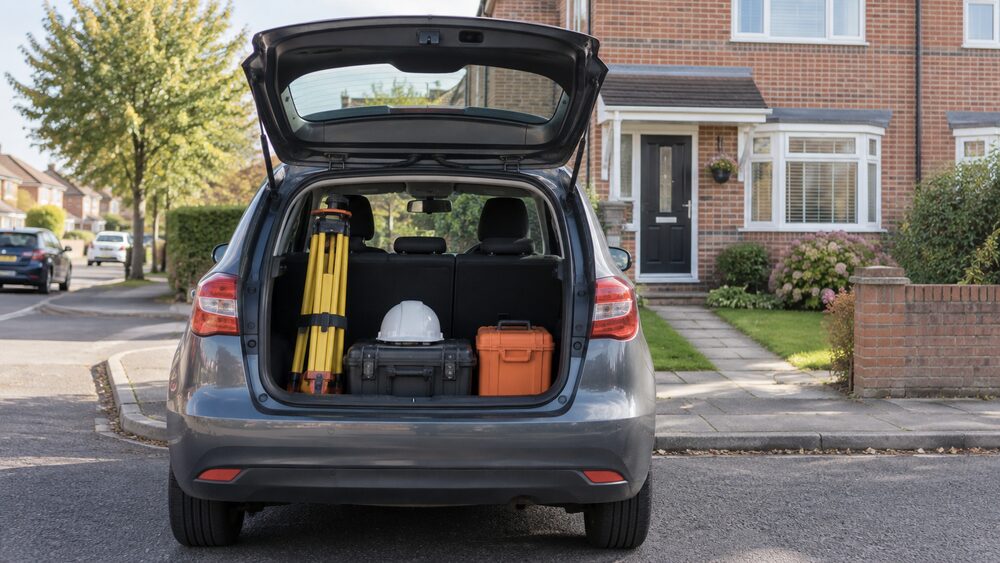
Business use cover is the part of a car insurance policy that allows you to drive for work beyond your normal commute. It is needed for anything work-related beyond your standard commute, such as transporting equipment, visiting another site or attending a meeting1. Driving to and from a single regular place of work is commuting, not business use, and many policies include commuting as standard while business use is an optional extra.
Business use cover is the part of a car insurance policy that allows you to drive for work beyond your normal commute. It is needed for anything work-related beyond your standard commute, such as transporting equipment, visiting another site or attending a meeting1. Driving to and from a single regular place of work is commuting, not business use, and many policies include commuting as standard while business use is an optional extra.
The distinction matters because it is a common reason claims are refused. Insurers describe the classes of use in a fixed order: social, domestic and pleasure only (SDP), SDP and commuting (SDPC), and SDPC and business use2. If your journeys go beyond the class on your schedule, the policy does not match the risk the insurer agreed to cover.
Adding business use is usually straightforward. Insurers describe it as cover you can add for driving to different business sites or attending prearranged meetings away from your normal place of work3. What it costs depends on the insurer, your occupation and how much you drive for work, so ask for the new premium before you agree to it.
What business use cover means on a car policy
A car policy is priced around how the car is used, and the class of use is one of the things an insurer asks about at the start. Social, domestic and pleasure cover is the base. Commuting is added on top for people who drive to a regular workplace. Business use is the next step up, and it covers work journeys that are not simply getting to and from one fixed site.
Insurers draw the line in different places. One insurer defines Business Use as meeting the needs of customers who use their car for various places of work, for example visiting other offices, and treats Commercial Travelling, which covers delivering or travelling selling goods or services, as a separate and wider class7. Another describes business use as cover for driving to different business sites or attending prearranged meetings away from your normal place of work3.
What business use generally does not include is hire and reward work. One insurer states plainly that its policies do not cover hire and reward or use for making a profit, including paid delivery, courier or taxi work8. That kind of driving needs a different policy, often a van or commercial vehicle policy. One insurer's van product is aimed at business owners who rely on their van to get from job to job or in connection with the day-to-day running of their business9.
There is a related trap in breakdown cover. Some packaged bank account breakdown policies exclude vehicles used for business or commercial use10, and some stand-alone breakdown policies exclude company cars, vehicles used for hire such as taxi driving, carrying goods for money such as courier work, demonstration purposes, and trade plates12. If you rely on breakdown cover for a car you use for work, check the exclusions rather than assuming.
Business use: driving to different work sites and meetings
The clearest trigger for business use is a journey that is not your commute. Business use counts for anything beyond your commute to a single place of work, for example travelling between sites or to a meeting1. That includes a single client meeting or a journey to another office, even if it happens once14.
Some occupations are treated differently. One insurer's commuting cover applies where you are employed and use your vehicle to commute to and from your normal place of work, but excludes a list of occupations including Motor Trade, Retired, Housewife/Househusband, Driver, Driving Instructor, Delivery Driver, Courier, Student and Unemployed, where commuting is not covered4. If your job appears on a list like that, the standard commuting element may not apply to you at all.
If you are self-employed, the tax treatment of the same journeys is separate from the insurance question, but it follows a similar logic. Motor expenses and other travel costs relating to business travel can be claimed, but not travel from your home to your business premises15. Where a car is used privately as well as for business, only a proportion of the costs equal to how much the car is used for business purposes can be claimed16. Running costs that can be claimed include petrol, car tax, insurance, repairs and servicing17.
If you use a vehicle for personal or social journeys as well as for business, the costs have to be divided between your business budget and your household budget to show how much you use for each19. A vehicle used for business only is simpler: all the costs, including road tax, insurance, repairs, services and fuel, go in the outgoings section of the business budget19.
Commuting or business use: which one fits your journeys
The three classes insurers use are social, domestic and pleasure only (SDP), SDP and commuting (SDPC), and SDPC and business use2. Working out which one fits is a matter of matching the class to the journeys you actually make, not the journeys you make most weeks.
| Class of use | What it covers | Typical journeys |
|---|---|---|
| SDP | Social, domestic and pleasure only2 | Shopping, school run, visiting friends |
| SDPC | SDP plus commuting2 | The above, plus driving to one regular workplace |
| SDPC and business use | SDPC plus work journeys beyond the commute2 | Travelling between sites, prearranged meetings away from your normal workplace3 |
The practical test is whether the journey is part of your working day or simply how you get to work. Driving to the office you go to every day is commuting. Driving from that office to a supplier, a client or a second site is business use. Driving to a training course or a conference away from your normal workplace is business use on the wording most insurers use3.
Two groups need to look carefully at their own policy rather than the general rule. The first is anyone whose occupation appears on an insurer's excluded list for commuting, because the standard commuting element may not apply4. The second is anyone whose work involves carrying goods or people for payment, because that is hire and reward and sits outside ordinary business use8.
How insurers describe business use on their policies
Insurers do not use one shared wording, so the same journey can fall inside one policy's business use and outside another's. The safest approach is to read the definition on your own schedule and certificate, and to ask the insurer directly if a journey is not clearly covered.
Some insurers describe business use narrowly, as cover for driving to different business sites or attending prearranged meetings away from your normal place of work3. Others use a broader definition covering various places of work, and treat Commercial Travelling, which involves delivering or travelling selling goods or services, as a separate class again7. A third framing is simply that business use is needed for any work-related trip beyond your regular commute, even a single client meeting14.
There is also a difference between what the policy covers and who is covered while they drive. One insurer's terms extend cover to the policyholder's or partner's employer or business partner while the car is used for business purposes, but only if the schedule and certificate of insurance allow business use, and not where the car is owned by, leased or hired to them8. That is a reminder that the class of use on the schedule controls who can drive for work, not just what journeys are allowed.
Where a policy is in the name of a business, other features can drop away. Driving Other Cars cover, which lets a policyholder drive someone else's car third party, is not available on policies in the name of a business20. If you are choosing between a personal policy with business use added and a business policy, that difference is worth knowing about before you buy.
Can I add business use to my existing car insurance policy?
Business use is commonly sold as an add-on rather than a separate policy. Insurers describe it as cover you can add for driving to different business sites or prearranged meetings away from your normal place of work3, and adding an option to an existing policy is a normal administrative step in insurance.
The process is usually:
- Check the class of use printed on your schedule and certificate of insurance.
- Compare it with the journeys you actually make for work, including occasional ones.
- Contact your insurer and ask whether business use can be added to your policy.
- Ask what the change does to your premium before you agree to it.
- Keep a record of the change, and check the updated documents when they arrive.
Adding an option to an existing policy is routine in insurance more widely. Cruise cover, for example, can be added to new or existing travel policies for an extra fee21, and car hire benefits can be added to new and existing policies22. The same principle applies to business use on a car policy: it is a change to the cover you already hold, not a reason to start again.
If your insurer will not add business use, the alternative is to look at policies that include it as standard, or at a van policy if the vehicle and the work fit that. One insurer's van product is designed for business owners who rely on their van to get from job to job or in connection with the day-to-day activities of running their business9. Leasing through a business can also allow some VAT to be reclaimed, but only for miles driven for business purposes23.
What happens if I do not tell my insurer I use my car for work
The consequence of not telling your insurer is set out in the rules on disclosure. A failure to report a change can give your insurance company the right to refuse to cover you in the future24. More immediately, an insurer may cancel your policy and any claims may be rejected5.
The protection that normally helps consumers does not stretch to mid-policy changes. With mid-term information disclosures, policyholders are not protected by the Consumer Insurance (Disclosure and Representations) Act 2012, so insurers may reject a claim even if the policyholder took reasonable care6. That is a higher bar than the one that applies when you take out a policy, and it is why telling your insurer promptly matters.
The same principle runs through other disclosures. Not telling your insurer about modifications could invalidate your insurance25. If you or your named driver are banned from driving or receive a non-motoring conviction, you must tell your insurer immediately5. You must tell your insurer about an accident even if you do not intend to make a claim24.
Where to get help
If a claim is rejected because of the class of use on your policy, or you think an insurer has treated you unfairly, the Financial Ombudsman Service can look at the complaint. The ombudsman updated its guidance on motor insurance complaints about fault claims and no-claims bonuses in September 202627, and it handles disputes about whether a policy responded to a claim.
Free, impartial help is available from MoneyHelper for general questions about insurance and from debt advice charities if the cost of cover is part of a wider problem. If you are insured through the Motability Scheme, the scheme car must always be used for the benefit of the disabled customer28, which affects what work journeys it can be used for.
For anyone whose work involves driving, the practical steps are the same: check the class of use on your schedule, compare it with the journeys you actually make, and tell your insurer about anything that does not match. The cost of adding business use is usually smaller than the cost of a rejected claim.
Sources28 cited
- Common insurance myths Motor Insurers' Bureau, 2026-09-26
- Getting a car insurance quote NFU Mutual, 2026-09-26
- Do I need business use? Quotemehappy, 2026-08-20
- Car insurance eligibility Churchill, 2026-09-26
- Have my penalty points pushed up my car insurance premiums? Which?, 2025-12-29
- Consumer insurance law: disclosure and representations House of Commons Library, 2026-07-08
- AA Car Insurance policy booklet The AA, 2023-12
- Paying out on claims esure, 2026
- Van insurance AXA, 2026-09-26
- Silver Account Lloyds Bank, 2026-09-27
- Ultimate Reward Current Account Halifax, 2026-09-27
- Breakdown Cover Pack Barclays, 2026
- Travel Pack Barclays, 2026
- New and young drivers Motor Insurers' Bureau, 2026-09-26
- Business expenses: what you can claim TaxAid, 2024-06-21
- Self-employed tax allowable expenses Which?, 2026-04-06
- 4 mistakes to avoid when trying to lower your tax bill Which?, 2026-06-26
- Myths about self assessment expenses busted Which?, 2024-01-17
- Your business and household budget Business Debtline, 2026-09-26
- Motor insurance Aviva, 2026-09-26
- Cruise and travel insurance Post Office, 2025-07-17
- Car hire benefits esure, 2026
- Guide to car finance Post Office, 2026-08-12
- I've been in a car accident, do I have to claim on my insurance? Which?, 2026-03-31
- Modified car insurance Which?, 2026-01-22
- Accident checklist British Insurance Brokers' Association, 2026-09-26
- Fault claims and no-claims bonuses Financial Ombudsman Service, 2026-09-16
- Motability Scheme FAQ Motability Foundation, 2026-09-26










 MoneyHelperFree, impartial money and pensions guidance, set up by government
 Financial Ombudsman ServiceFree, independent help when a complaint about a firm is not put right
 FSCSProtects your money if a bank, insurer or investment firm fails
 Citizens AdviceFree advice on money, consumer and legal problems in England and Wales
 GOV.UKOfficial information on tax, benefits and government services