
Moving house means telling a long list of organisations your new address, and the ones that matter most are the ones holding your money. Start with your bank or building society, then your credit card, loan and hire purchase providers, then your pension and investment firms1. If you claim benefits, you will already have given the Department for Work and Pensions your bank, building society or credit union account details, and those records need updating too2.
Moving house means telling a long list of organisations your new address, and the ones that matter most are the ones holding your money. Start with your bank or building society, then your credit card, loan and hire purchase providers, then your pension and investment firms1. If you claim benefits, you will already have given the Department for Work and Pensions your bank, building society or credit union account details, and those records need updating too2.
The order matters less than the completeness. A missed address is how statements, tax letters and policy documents end up at a home you no longer own, and it is one of the ways identity fraud starts: someone at your old address can intercept post in your name and use it to apply for credit4. Consumer guidance is consistent on the fix: redirect your post for at least a year after you move, and update your details with everyone who holds an account in your name6.
This page sets out who to contact, what each organisation needs from you, what happens if you forget, and where to get help if something goes wrong.
Banks, building societies and credit cards come first
Your bank or building society holds the account your income lands in and your Direct Debits leave from, so it is the first call. The same applies to credit card providers, mortgage lenders, personal loan and hire purchase firms, and any savings or investment provider1. Each one needs your new address in writing, by phone or through its app, depending on the firm.
If you are changing bank at the same time as changing address, the two jobs can be done together. Applying for an account with a new bank or building society means the new provider will move your accounts and payments for you10. That is the switching service most current accounts offer, and it covers the Direct Debits and standing orders attached to the old account.
Banks and building societies are also where most people turn when borrowing goes wrong. In a survey of people contacted for help after borrowing from an illegal lender, banks or building societies were the most common source of support, named by 51% of those in the main survey11. That is a reminder that your bank sees your transaction history and can act on it.
One protection worth knowing if a move coincides with mortgage difficulty: most banks and building societies that signed the government's mortgage charter agreed not to force people to leave their home within a year of their first missed payment unless there are exceptional circumstances12. That commitment sits with the lender, not the address, so it travels with you.
HMRC, benefits and your local council
Tax and benefits are where a missed address causes the most expensive problems, because both are calculated on where you live and who lives with you.
For HMRC, the rules depend on where you are moving. You must tell HMRC if you change address in Scotland, so that you pay the right amount of tax13. If you are moving or retiring abroad, you need to tell HMRC to make sure you pay the right amount of tax14. And if you are a non-UK resident selling a UK home, you must tell HMRC you have sold the property within 60 days of transferring ownership, even if there is no tax to pay15.
For benefits, the duty is to report the change quickly. Moving home is a change of circumstance you need to tell the DWP about, as soon as you move7. In most cases Universal Credit will only pay for one home at a time, including when you are moving house, with limited exceptions16. If you get other benefits such as Pension Credit or Housing Benefit, you need to tell those offices about your move as well17.
Housing Benefit and Council Tax Reduction are handled by your local council, not the DWP. Tell your local council about changes if you get Housing Benefit18, and report the change to the Housing Benefit department as soon as possible19. Every time you move home, write to your local authority benefit section to let them know, which is the simplest way to avoid an overpayment20. If you receive Housing Benefit and Rate Relief in Northern Ireland and your personal or household circumstances change, you must tell the right organisation21.
In Scotland, you need to tell your local council if you move into or out of a property, and you must also tell your local council if another adult moves into or out of your home8. That second rule catches situations a standard checklist misses, such as a partner or adult child moving in with you.
Pensions, savings and investments
Pension providers need your current address for the same reason banks do: to send you statements, and to reach you when you are entitled to money. If you get your State Pension or other benefits from the DWP and have moved without telling it, you need to report the change of circumstances before you can use services such as getting proof of your benefits and State Pension22.
If you have lived or worked abroad, the International Pension Centre handles queries about State Pension and benefits for people overseas, and you need to report changes to personal details such as your address or bank details by telephone or letter23. If you are moving abroad, you also need to tell the relevant benefits offices that deal with your benefits14.
For workplace pensions, The Pensions Regulator's route for members with a concern is to speak to your employer first, and if you feel unable to do that, or still have concerns after speaking to them, report the matter to the regulator24. You will need the name and address of who you are reporting, and the evidence you want to send25.
If you are thinking about moving a pension as part of a wider tidy-up, the process is separate from a change of address and has its own steps: check your current scheme allows transfers out, make sure you will not lose any benefits, decide which scheme to transfer into, check whether you need to pay for financial advice, ask your current provider for a transfer value, and ask the new scheme to start the transfer26. The pensions section covers transfers in more detail.
Savings and investments carry their own record-keeping rules. Where an ISA is transferred between providers, the information sent about the account investor must include the full name, the address of the investor's permanent residence including postcode, the date of birth, and the National Insurance number if there is one27. That is why a savings provider will ask you to confirm your address rather than simply accept a phone call.
If you receive Pension Credit and have been awarded an Assessed Income Period, you do not need to tell the Northern Ireland Pension Centre about changes to your savings and investments28. Outside that situation, changes to savings and investments are reportable.
Insurance: why your policy may need changing before you move
Insurance is priced on the risk the insurer is told about, so a move can change what your policy covers even when the premium does not change immediately.
For home insurance, the trigger is often who else lives there. If you are taking in a lodger, tell your home insurance provider, because you may need to update your policy29. If you are letting your home out rather than living in it, you must tell your buildings and contents insurer, as the letting may change your cover30.
For car insurance, the rule is about the car rather than the address. If you modify your car, your insurer needs to know, and not telling it could invalidate your insurance31. A change of address is a change to the policy's rating factors, so it belongs in the same conversation.
There is a limit to how far back an insurer can reach. If something changes after the policy has started, the customer will not usually have to tell the insurer about it until they renew the policy32. That is the Financial Ombudsman Service's summary of how misrepresentation and non-disclosure complaints are handled, and it means a mid-term move is usually dealt with at renewal rather than as a breach.
Travel insurance works differently. Once you buy travel insurance, you must tell the insurer if there are any changes in your health or condition33. That duty is ongoing, not renewal-based, which matters if a move abroad is on the horizon.
If you rely on extra support from your energy supplier, the Priority Services Register travels with you but needs updating. If you move house but stay with the same company, you remain on their register, but you will need to update your details6.
Stop post going astray with Royal Mail redirection
Redirecting your post is the single step that catches everything you forgot. Royal Mail's redirection service ensures that your mail reaches you at your new address if you have recently moved5. There is a charge, and the service runs for a set period.
The consistent advice from consumer bodies is to run it for at least a year. If you move house, ask Royal Mail to redirect your post for at least a year4. If you live in the UK, ask Royal Mail to redirect any mail from your old address to your new one for at least a year5. The same recommendation appears in guidance on reducing identity theft risk: ask for post to be redirected from your old address to your new one for at least a year34.
A year is not arbitrary. It covers the period in which an old address can still be used to apply for credit in your name, and it gives you time to notice which organisations are still writing to the old address.
If post goes missing, contact Royal Mail for help with stolen letters or to find out how to redirect your post34. If you think you have received scam mail, contact Royal Mail and send it to them with a covering letter35. To reduce the volume of addressed marketing that follows you, you can get your name taken off direct mailing lists in the UK by contacting the Mailing Preference Service36.
Protecting yourself from identity fraud after a move
Identity fraud or theft is when somebody steals your personal details and pretends to be you38. A move creates the conditions for it: post arriving at an address you no longer control, and a gap before every organisation has your new details.
The basic defence is the checklist itself. When you move house, contact your bank, credit and store card providers, mobile phone provider and utility providers to give them your new address34. Each of those holds enough information about you to be useful to a fraudster.
If you think your details have been used, act in this order:
- Speak to your bank or building society straight away if you think your credit or debit card, online bank account or cheque book have been stolen or hacked38.
- Inform your bank, building society and credit card company of any unusual transactions on your statement34.
- Report the theft of personal documents and suspicious credit applications to the police and ask for a crime reference number34.
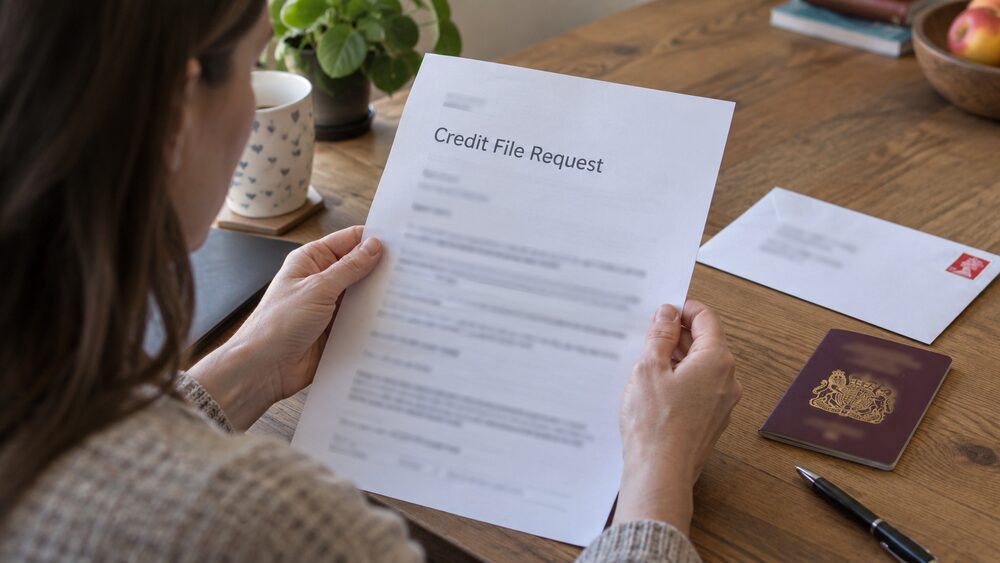
Your credit file is the record that shows whether someone has applied for credit in your name. The people you owe update your credit file when you miss payments, but they should also do it when you repay your debts39. If your address is out of date, that record can be harder to match to you. One provider advises trying not to apply for credit at your new address until you have updated your details on the electoral roll, because you are more likely to be rejected9. You can check what lenders see by requesting your full credit file from each agency.
There is a longer-term consequence to some housing decisions. Handing keys back to a lender is only an option if you do not want a new mortgage in the near future, because your details will be on credit reference agency files for six years40. That is a debt outcome rather than an address one, but it is worth knowing before a move is used to resolve a shortfall.
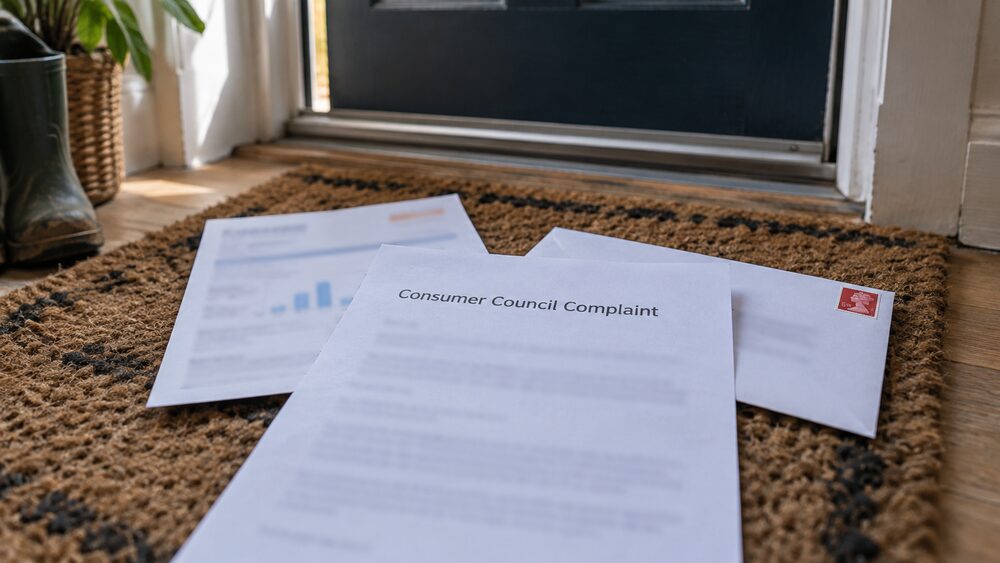
If a dispute with a financial firm stalls after a move, free and impartial help is available. Free consumer advice services can take a complaint forward, and in Northern Ireland the Consumer Council handles complaints about financial services. For debt problems, StepChange and National Debtline offer free advice on dealing with creditors39.
Sources40 cited
- Moving day checklist HSBC, 2026
- How to have your benefits paid GOV.UK, 2026-09-26
- How benefits and pensions are paid nidirect, 2026-07-15
- What is identity theft? Which?, 2026-01-06
- Identity theft Finance & Leasing Association, 2026-09-25
- Priority Services Register: extra services from energy suppliers Scope, 2026-08-17
- Change of circumstances: Universal Credit Scope, 2026-07-14
- Council Tax: register mygov.scot, 2026-04-01
- Moving home Experian, 2026
- Manage and maximise your money Consumer Council for Northern Ireland, 2026
- Banking to Borrowing Consumer Council for Northern Ireland, 2026-09
- Home repossession process Shelter England, 2026-08-24
- Scottish Income Tax: who pays mygov.scot, 2026-04-06
- Moving or retiring abroad GOV.UK, 2026-09-26
- Tax when you sell a UK home while living abroad GOV.UK, 2026-09-27
- Changes to your circumstances Housing Rights, 2026
- I get Carer's Allowance and I'm moving to Scotland Turn2us, 2025-11-11
- Report a change in your circumstances GOV.UK, 2026-09-26
- Changes in circumstances Shelter Cymru, 2026-08-26
- Housing Benefit overpayments Turn2us, 2025-12-09
- How much Housing Benefit and Rate Relief a homeowner can get nidirect, 2026-07-27
- Get proof of your benefits and State Pension GOV.UK, 2026-09-26
- International Pension Centre GOV.UK, 2026-09-26
- Report missing payments to your workplace pension The Pensions Regulator, 2026-09-26
- Report a concern relating to your workplace pension scheme The Pensions Regulator, 2026-09-26
- Pension transfers: defined contribution Financial Conduct Authority, 2026-09-25
- Individual Savings Account Regulations 1998, regulation 21A legislation.gov.uk, 2026
- State Pension: report a change in your circumstances nidirect, 2026-09-01
- Taking in a lodger Shelter Scotland, 2025-10-07
- Consent to Let Ulster Bank, 2026-09-25
- Modified car insurance Which?, 2026-01-22
- Misrepresentation and non-disclosure Financial Ombudsman Service, 2026-09-26
- Insurance Scope, 2025-10-14
- Identity theft Information Commissioner's Office, 2026-09-25
- Scams by post nidirect, 2026-04-13
- Postal scams Age UK, 2025-10-24
- Royal Mail post Surviving Economic Abuse, 2023-02
- Protect your identity nidirect, 2025-10-28
- Dealing with creditors StepChange, 2026-09-25
- Negative equity National Debtline, 2026-09-25










 Citizens AdviceFree advice on money, consumer and legal problems in England and Wales
 MoneyHelperFree, impartial money and pensions guidance, set up by government
 Financial Ombudsman ServiceFree, independent help when a complaint about a firm is not put right
 GOV.UKOfficial information on tax, benefits and government services
 StepChangeFree debt advice and solutions from a charity