
Lost shares are holdings you have forgotten you own, or that you inherited without knowing, and unclaimed dividends are the payouts on those shares that were never collected. There is no single national register of forgotten shareholdings, so the search runs through the records that do exist: your own paperwork, the share registrar that keeps the company's register of members, and the free tracing services that cover bank accounts, pensions and investments.
Lost shares are holdings you have forgotten you own, or that you inherited without knowing, and unclaimed dividends are the payouts on those shares that were never collected. There is no single national register of forgotten shareholdings, so the search runs through the records that do exist: your own paperwork, the share registrar that keeps the company's register of members, and the free tracing services that cover bank accounts, pensions and investments.
Most shares today are not held on paper. They are held electronically, usually in the name of the share-dealing business, which means the shares are recorded in that firm's name rather than yours on the company register1. That single fact explains most of the difficulty: if you once used a broker or a workplace share plan and have since lost touch, the trail usually starts with that firm, not with the company whose name is on the certificate.
The good news is that the main tracing routes cost nothing. My Lost Account is a free service for tracing a lost account at a building society, bank or NS&I through a single web portal2, and Gretel is a free service for finding lost accounts, pensions and investments3. The Pension Tracing Service is also free4. What you pay for, if you pay at all, is a private firm's time, and that is rarely necessary.
What counts as lost shares and unclaimed dividends
A share is "lost" in the practical sense, not the legal one. You still own it; you have simply lost the paperwork, moved house without telling the registrar, or inherited a holding you never knew existed. The company still has you on its register, and dividends declared on those shares may have been paid into an account you no longer use, or held back because the registrar could not reach you.
Dividends themselves have a vocabulary worth knowing before you start searching. If you buy shares when you are entitled to the most recently declared dividend, the shares are described as "cum dividend"6. If you buy after the ex-dividend date, the shares will not have a guaranteed dividend7, which matters if you are trying to work out whether a payment you remember was ever due to you.
Where shares came from a workplace share plan, the tax treatment can differ from an ordinary holding. Dividend shares in an approved plan are not subject to National Insurance contributions1, and there is no limit on reinvestment into dividend shares1. If the shares later leave the plan, the amount of the dividend used to buy them should be included in box 4 in the dividend boxes on page TR 3 of your tax return for the year the shares cease being part of the plan8. For shares acquired free or cheaply outside an approved scheme, the capital gains cost is generally their market value at the date you acquire them9.
Where to start: your own paperwork and old accounts
Before approaching anyone else, gather what you already have. Old share certificates, dividend statements, employer share plan booklets, tax returns and bank statements all carry the names you will need. If records have gone missing, try to get copies, for example by asking banks for copies of statements or suppliers for duplicate invoices10.
Then check the accounts you may have forgotten. If you think there may be savings in a lost bank or building society account, a search can be carried out by using a free application online11, and My Lost Account is a free service you can use yourself to find forgotten and lost bank accounts12. You start a search simply by completing an online application form2. The same service covers NS&I, and it is worth knowing that some NS&I products have closed altogether: the Ordinary Account, Treasurer's Account, SAYE, Yearly Plan and Deposit Bonds have all now been closed completely, with any remaining funds transferred to the NS&I Residual Account13.
Pensions are a separate trail but often run alongside shares, particularly if you worked for a company that paid part of your package in stock. You can contact HMRC if you cannot remember the name of your personal or workplace pension scheme, then use the Pension Tracing Service3. Other routes include contacting your old employers or using the government's Pension Tracing Service14.
Share registrars hold the record of who owns what
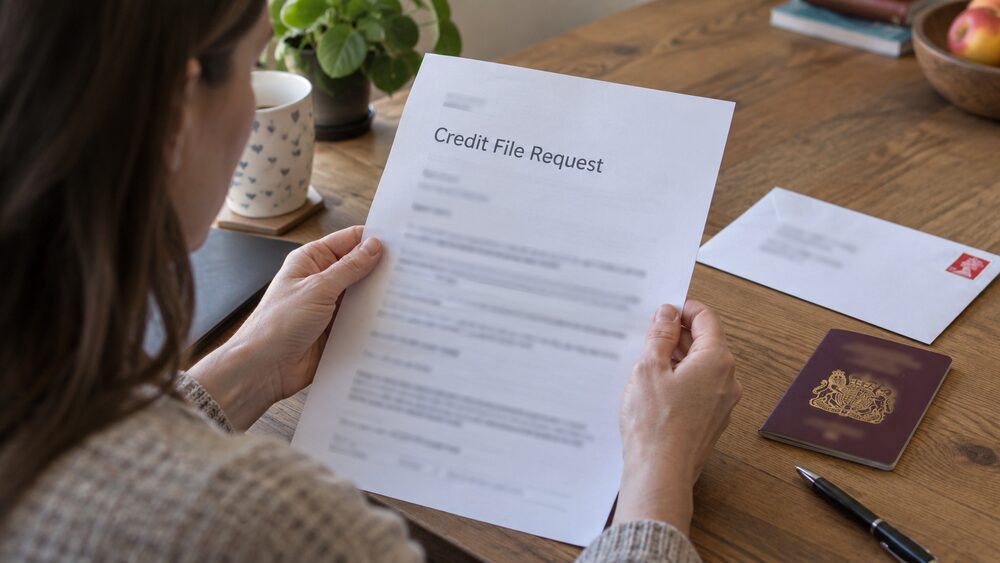
Every UK company keeps a register of members, and most listed companies delegate that job to a share registrar. The registrar is the firm that knows who owns what, sends out dividend payments and annual reports, and handles changes of address. If you can identify the company and the registrar, a written request with proof of identity is usually enough to establish whether a holding exists in your name.
The complication is the electronic holding described above. Because most shares are held in the name of the share-dealing business, the company register may show the broker's name rather than yours1. In that case the registrar cannot confirm your holding directly, and you need to go back to the broker or platform. If the broker has since closed, merged or been taken over, the client book will have moved somewhere, and that is the firm to ask.
Where a company has gone out of business, the names of the administrators will usually be on the website of the company that's gone bust15. For a limited company, you can search for their name on the Companies House website if they are a limited company with the letters "Ltd" or "Plc" after their name15. For an individual sole trader or a partnership, the route is the Insolvency Register, searching both the name of the person and their trading name15. Details of every bankruptcy are recorded on the Individual Insolvency Register, a database that can be viewed by the public16.
If a complaint about a shareholding or an investment firm cannot be resolved, the Financial Ombudsman Service can look at complaints about stocks and shares17. Where the ombudsman finds that you lost money because you received the wrong investments advice, it will tell the firm involved to put things right and pay compensation for distress or inconvenience18.
Tracing services: free routes and paid ones
The free services cover more ground than most people expect, and they are the sensible first stop.
| Service | What it covers | Cost |
|---|---|---|
| My Lost Account | Lost accounts at building societies, banks and NS&I, via a single web portal2 | Free2 |
| Gretel | Lost accounts, pensions and investments3 | Completely free19 |
| Pension Tracing Service | Contact details for workplace and personal pension schemes; unclaimed pension pots4 | Free4 |
The Pension Tracing Service helps people find contact details for workplaces and personal pension schemes20, and it is particularly useful if you have had multiple jobs and therefore may have multiple pensions21. It can also help track down any pension providers you have lost contact with22.
Private tracing firms exist, and most advertise tracing as free23. That does not mean the whole service is free, and it is worth reading what a firm charges before handing over documents or personal details. For comparison, the cost of ordinary investing is not large: tracker funds are generally much cheaper than active funds, sometimes costing as little as 0.1% a year, which is £1 for every £1,000 invested24. A tracing fee that runs into hundreds of pounds is out of proportion to the sums usually involved.
When the company has merged, changed name or closed
Mergers and name changes are the most common reason a holding becomes hard to trace, and they rarely mean the shares have gone. Investment companies sometimes use a structure where shares and proceeds are held in a separate pool and invested, and after a certain period, or when the pool of new money is fully invested, the two portfolios are merged and the new shares are exchanged for ordinary shares25. Something similar happens to your holding in a takeover: the name on the register changes, but the underlying entitlement usually does not.
What does change is who holds your data. If your information was being held by a company and that company is taken over or merged with another organisation, your data may be shared in a way that wasn't originally planned by the company who first held your data26. That is a reason to keep your address up to date with the registrar, because a letter sent to an old address is how many holdings go quiet in the first place.
If a company stops trading, the practical steps are the ones set out above: find the administrators on the failed company's website, search Companies House for a limited company, or the Insolvency Register for a sole trader or partnership15. Courts also send details of new county court judgments to the Registry Trust, which operates the public Register of Judgments Orders and Fines27, which can help establish what happened to a business.
Can I claim shares that belonged to someone who has died?
Shares form part of the estate, which means they pass under the will or under the intestacy rules, not automatically to whoever is named alongside the deceased on an account. Where property was held as tenants in common, the deceased person's share does not automatically pass to the surviving owner, and forms part of the estate available to creditors29. The share belonging to the person who has died becomes part of their estate and goes to whoever is mentioned in their will, but unpaid debts must be paid first from that share11.
In practice, the person dealing with the estate applies, not a relative acting alone. Official processes often ask directly whether someone has taken on that role: applicants for a Funeral Support Payment in Scotland are asked "Has someone applied to the courts for permission to collect any assets, pay any debts or sort out any remaining assets belonging to the person who died?"30. That question is a useful test of whether you are the right person to make the claim.
If you are writing or updating a will and want to make sure a shareholding is dealt with clearly, a solicitor or accountant can help, though it is not always necessary12. Where the estate is complex, or the holding is large, professional help is more likely to be worth it.
What documents do I need to prove I own the shares?
Different organisations ask for different things, but the pattern is consistent: something that ties you to the holding, and something that proves who you are.
- Proof of the holding: a share certificate, a dividend statement, a plan letter, or a preserved benefit statement. The Pension Protection Fund, for example, needs at least one of a letter or preserved benefit statement confirming benefits were preserved at the date of leaving, preserved benefit statements sent after leaving, or pension correspondence sent after leaving31.
- Proof of identity and address: two recent documents are commonly required, for example a passport, driving licence, student or work ID card, bus pass, birth certificate, bank statement or energy bill32.
- Proof of what happened to assets: where a means-tested benefit is involved, documents may be requested to show that ownership of property has been transferred to another person, deeds showing money has been given to another person in trust, settlement or as a gift, or receipts showing what cash or savings has been spent on33.
- Specific agreements: some claims need a particular document, such as a copy of an appliance rental agreement34.
If you cannot find a document, do not treat that as the end of the claim. The same principle applies more widely. Tell the registrar or provider what you have and what you cannot find, and ask what alternative evidence they will accept.
How far back can I claim unclaimed dividends?
There is no single national time limit for unclaimed dividends. What limits a claim in practice is the record the registrar still holds and the evidence you can produce, which is why the paperwork step matters so much.
Tax records follow their own rules, and they are a useful guide to how far back official bodies will look. HMRC can ask for your records for the previous four years if it thinks the right amount of income has not been reported5. It can go back six years if it thinks the error was due to lack of reasonable care, or 20 years in the case of suspected fraud5. Those periods apply to HMRC's inspection of your records, not to a registrar's dividend records, but they show the outer edge of what is normally retrievable.
Some deadlines are much shorter and specific to the product. Premium Bonds prizes, for example, are recorded as unclaimed if you have not come forward to claim after 18 months35. If you hold a mix of assets, it is worth checking each one's own rules rather than assuming a single deadline applies.
Where a complaint about an investment has a time limit, the rules can be more generous than they first appear. The three-year time limit won't usually apply to letters containing mixed messages, for example where there is a high risk warning of a shortfall but the projections show an expected surplus36. It also won't usually apply to amber letters, which warn of a significant risk of shortfall but show a projected surplus at the highest assumed rate of growth36. If you think a time limit has been applied unfairly to your case, that is a point worth raising.
What should I do if a firm contacts me offering to recover shares I did not know I had?
Treat an unexpected approach as a warning sign, not an opportunity. A common warning sign is being contacted unexpectedly about an investment opportunity, and legitimate firms will not contact you out of the blue37. Recovery scams follow a recognisable pattern: the letter or call says the company is authorised to recover the lost money, asks you to give them your details, or wants you to send them more information38.
The follow-up is often the more damaging part. Be alert to follow-up scams, because criminals may contact you again pretending they can recover your money for a fee39. Someone who has already lost money once is a known target for a second approach.
There are other signs to watch for. Onetime passcodes you did not request are a warning sign of digital wallet fraud40. If you are unsure whether a firm is genuine, check it independently before responding, and remember that the free tracing services above do the same job at no cost.
If you have already responded to a suspicious approach, or lost money, free and impartial help is available. MoneyHelper sets out the main types of scam and what to do37, and Citizens Advice can help where something has gone wrong with a purchase or a firm has stopped trading15. Where a regulated firm is involved and a complaint cannot be settled, the Financial Ombudsman Service can look at complaints about stocks and shares17.
Sources40 cited
- Share incentive plans: a guide for employees GOV.UK, 2025-10-20
- Lost a savings account Building Societies Association, 2025-11-18
- Making the most of your bank account Independent Age, 2026-09-26
- Debts after death Business Debtline, 2026-09-26
- Preparing for Self Assessment TaxAid, 2026-03-10
- Guides and glossary The Association of Investment Companies, 2026
- Dividend Moneyfarm, 2026-09-26
- Employment related shares and securities: further guidance GOV.UK, 2026-04-06
- Capital Gains Tax and employee share schemes GOV.UK, 2026-04-06
- Keeping your pay and tax records GOV.UK, 2026-09-26
- Debt when someone dies nidirect, 2026-06-26
- Do I need a solicitor and accountant to write my will? Which?, 2026-02-02
- Closed accounts NS&I, 2026-08-27
- How do I check my pension? PensionBee, 2026-05-18
- If a company stops trading or goes out of business Citizens Advice, 2026-09-25
- Bankruptcy register StepChange, 2026-09-25
- Stocks and shares Financial Ombudsman Service, 2026-09-26
- Capital protected structured investments Financial Ombudsman Service, 2026-09-26
- Tracing old pensions Age UK, 2026-03-25
- Over 55s StepChange, 2026-09-25
- Pensions Age UK, 2026-09-26
- Preparing your finances for retirement Citizens Advice, 2026-09-26
- Lost pensions: the tracing services that could help you find them Which?, 2026-03-06
- Investment funds explained Which?, 2026-07-23
- What are investment companies The Association of Investment Companies, 2026
- GDPR and data protection Resolver, 2026-09-26
- How long does a CCJ last? StepChange, 2026-09-25
- Targeted support Financial Services Compensation Scheme, 2026-09-25
- Debts after death National Debtline, 2026-09-25
- Funeral Support Payment: telephone application Social Security Scotland, 2026-09-26
- Who we protect Pension Protection Fund, 2026-09-26
- Credit union current accounts MoneyHelper, 2026-09-25
- Deprivation of savings and other capital Entitledto, 2026-09-26
- DPP setup StepChange, 2026-09-25
- Are you sitting on a windfall? How to track down forgotten money Which?, 2026-07-11
- Time limits: mortgage endowments Financial Ombudsman Service, 2026-09-26
- Types of scam MoneyHelper, 2026-09-25
- Insolvency Service related scams and fraud GOV.UK, 2024-08-21
- Investment fraud Take Five, 2026-09-26
- Digital wallet fraud Take Five, 2026-09-26






 Citizens AdviceFree advice on money, consumer and legal problems in England and Wales
 MoneyHelperFree, impartial money and pensions guidance, set up by government
 Financial Ombudsman ServiceFree, independent help when a complaint about a firm is not put right
 GOV.UKOfficial information on tax, benefits and government services
 StepChangeFree debt advice and solutions from a charity