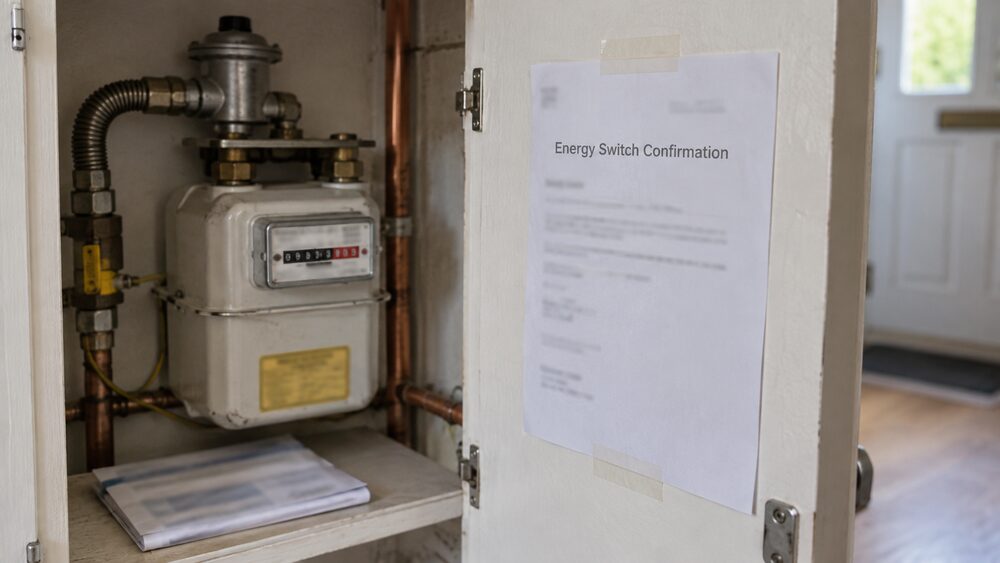
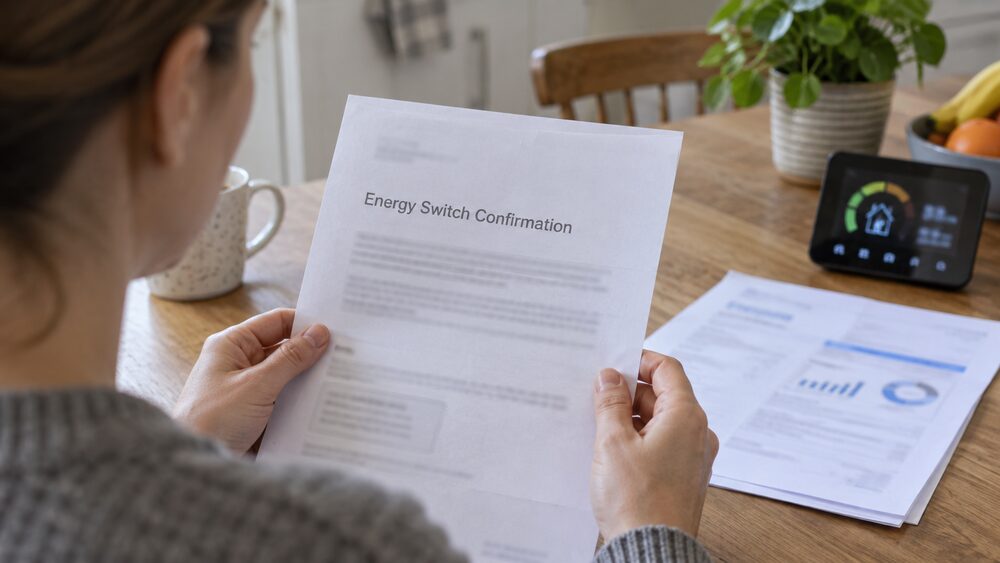
Switching energy supplier normally takes about three weeks from the day you agree a new contract. The first 14 days are a cooling-off period, during which you can cancel without penalty. Only after that does the switching clock start, and since 1 April 2024 suppliers have five working days to move you from your old supplier to your new one1.
Switching energy supplier normally takes about three weeks from the day you agree a new contract. The first 14 days are a cooling-off period, during which you can cancel without penalty. Only after that does the switching clock start, and since 1 April 2024 suppliers have five working days to move you from your old supplier to your new one1.
That gives a typical total of around 21 days. Independent guidance puts the whole process at about 21 days once the cooling-off period is over2, and one provider describes the account switch as taking a total of 17 days including a two-week cooling-off period3. The difference is mostly in how each counts the days.
The supply itself is never interrupted. What changes is who bills you, not the gas or electricity coming into your home. If the switch runs past the five-working-day deadline, you are owed £40 compensation from your new supplier4.
The 14-day cooling-off period comes first
Every energy switch begins with a cooling-off period of 14 days, starting the day after you agree the new contract1. During this window you can cancel the switch without penalty5. The supplier must allow it, and it is not something you can give up to speed the process along.
This is not unique to energy. A 14-day cooling-off period is the minimum a seller must give you for a service arranged at a distance, and it is the standard that applies to services bought online, running from the day you place your order6. The same 14-day minimum appears across consumer law, from credit agreements to building work contracts8. Energy sits inside that wider framework rather than having a special rule of its own.
What matters for timing is that the cooling-off period and the switching deadline are two separate things. The five-working-day deadline does not start until the cooling-off period has ended1. So the earliest a normal switch can complete is 14 days of cooling-off plus five working days of switching.
If you change your mind after the tariff has already been switched, there is still a 14-day cooling-off period in which you can act10. Cancelling after the 14 days is different: an early termination charge may apply, so the terms of the tariff you agreed are worth reading before the window closes11.
Five working days: the deadline once cooling-off ends
Once the cooling-off period is over, the switch itself has a hard deadline. Energy suppliers have five working days to move you from your old supplier to your new one, a standard that has applied since 1 April 20241. Before that date, suppliers had 15 working days to complete a switch, and only those signed up to the Energy Switch Guarantee were bound by the shorter target1.
If the new supplier misses the five-working-day deadline, you are owed £40 compensation from them4. The same £40 figure applies in a different situation: if your old and new suppliers take more than 20 working days to decide whether a switch was made in error, you get £40 from each of them1.
There is a separate set of deadlines for switches that should never have happened.
Gas or electricity: how long each switch takes on average
Gas and electricity are registered separately, and the two have historically taken slightly different times to move. Industry figures from 2021 put the average gas switch at 18 days and the average electricity switch at 16 days12. Both sit inside the same overall timescale, so the gap is a matter of days rather than weeks.
Switching is common. More than 250,000 consumers switch energy provider each month13. In a survey covering February and March 2023, 56% of consumers said they had switched energy supplier at some point, with 21% having done so in the previous year and 35% more than a year earlier14. Among people who had changed provider in the four years to 2021, 86% said switching supplier is easy12.
The practical preparation is simple. You need to know how much energy you use and the name of your current tariff, both of which should be on a recent bill15. Fixed-energy deals usually last one or two years, and checking your tariff about once a year is the usual rhythm15. Some tariffs require one month's payment, or even two in some cases, before they start supplying your gas and electricity, so the first payment can fall before the switch completes1.
If you have both gas and electricity, taking them from the same supplier may work out cheaper16. That is a general point about how dual-fuel accounts are priced, not a recommendation for any particular supplier.
Switching when you owe money or use a prepayment meter
Debt does not automatically block a switch. You have the right to switch supplier if you have been in debt to your current supplier for less than 28 days17. The same right applies to prepayment meter customers in that position17.
If you pay by Direct Debit or when you receive a bill, you can still switch when you have owed your supplier money for less than 28 days, and the debt is added to your final bill4. The restriction bites at 28 days or more: if you have a credit meter and have owed money to your current supplier for 28 days or more, the switch can be blocked18.
If money is tight, free and impartial help is available. National Debtline and Age UK both provide debt advice at no cost20, and StepChange offers guidance on understanding energy bills19. None of these services charges for the help they give.
Do I need to tell my old supplier that I am switching?
No. Your new supplier arranges the switch and notifies your old one, so you do not need to contact them to start it. The one situation where you do need to make contact is if you are moving home: tell your energy supplier at least 48 hours in advance, and ideally more1. Some suppliers may let you start the process earlier.
Your supplier is required to contact you 42 to 49 days before the end date of your fixed-term tariff, telling you it is ending and that you can switch without a fee21. That notice is your cue to compare what is available before the tariff rolls onto a more expensive default.
If you are moving into a new home, you do not have to stick with the existing energy supplier22. The account is yours to arrange, and the switch follows the same 14-day cooling-off period and five-working-day deadline as any other.
What can go wrong, and what protects you
The main risk is delay. If the switch runs past five working days, the £40 compensation from your new supplier is automatic in principle, but you may need to ask for it4. If a switch was made in error, the process is different: you contact the supplier, receive written confirmation within five days, and confirmation of your return to the original supplier within 20 working days21.
There is also a wider protection around how the switch is sold to you. Misleading information during the sales process is a recognised complaint category, and price comparison sites are subject to unfair contract terms rules11. If a switch was arranged on the basis of something that was not true, that is a complaint in its own right.
If something goes wrong and the supplier does not put it right, you can complain formally21. If the complaint is not resolved, the Energy Ombudsman can look at it21. For a delayed switch or a late final bill specifically, there is a defined route to compensation4.
"Energy suppliers have five working days to move you from your old energy supplier to your new one."
The rules differ slightly across the UK in how complaints and advice are handled. In Northern Ireland, the Consumer Council provides complaint help14. In Scotland and Wales, Citizens Advice and Shelter Cymru offer free guidance on energy and debt2. The switching timescales themselves apply across Great Britain.
Sources22 cited
- How to switch energy supplier Which?, 2026-05-15
- Switch energy supplier and tariff Shelter Cymru, 2026-08-28
- Energy providers rights guide Resolver, 2026-09-26
- Guide to switching supplier Which?, 2024
- Getting the best energy deal Age UK, 2026-09-10
- Cancelling a service you've arranged Citizens Advice, 2026-09-25
- Can I cancel an online order Which?, 2025-07-30
- Consumer Credit Act 1974 legislation.gov.uk, 1974-07-31
- Consumer Contracts (Information, Cancellation and Additional Charges) Regulations 2013 legislation.gov.uk, 2024-05-24
- Switching energy supplier Scope, 2026-08-17
- Energy supply: misleading information during sales process complaints Resolver, 2026-09-26
- Five energy switching myths busted Which?, 2021-07-07
- Price comparison websites: unfair contract terms complaints Resolver, 2026-09-26
- Research on the impact of the energy crisis on affordability Consumer Council, 2023
- Managing energy and heating costs Macmillan, 2022-11-01
- Your business and household budget Business Debtline, 2026-09-26
- Prepayment meters Shelter Cymru, 2026-09-17
- Gas and electricity arrears National Debtline, 2026-09-25
- Understanding energy bills StepChange, 2026-09-25
- Debt advice Age UK, 2026-09-25
- How to complain about your electricity, gas or energy bill Which?, 2026-07-30
- Energy costs in shared accommodation Shelter Cymru, 2026-08-29







 Citizens AdviceFree advice on money, consumer and legal problems in England and Wales
 MoneyHelperFree, impartial money and pensions guidance, set up by government
 Financial Ombudsman ServiceFree, independent help when a complaint about a firm is not put right
 GOV.UKOfficial information on tax, benefits and government services
 StepChangeFree debt advice and solutions from a charity