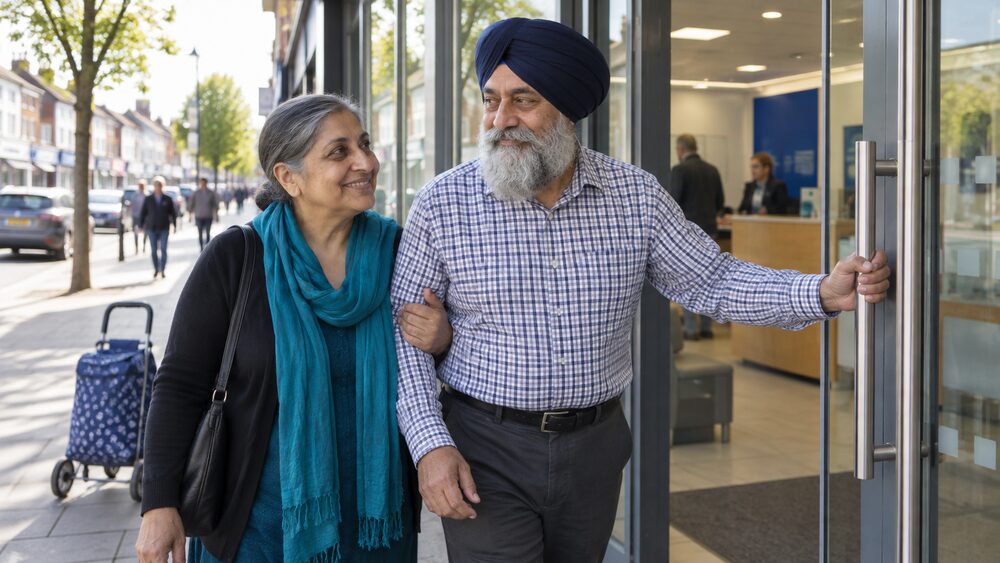
Banking in the UK now runs on four routes: an app, a website, the phone, and a branch counter. Most banks let you choose to apply in person or online, and you can usually open, run and close an account without ever visiting a branch1. What changes between the routes is not the account itself but how you reach it, what you can do at a counter, and what happens when something goes wrong.
The direction of travel is one way. The number of bank branches and cash machines has been falling over the past decade, as consumers increasingly use online banking and digital payments3. For most people the practical question is no longer whether to bank online, but what to do about the handful of things a branch used to handle: paying in cash, sorting out a problem face to face, and getting help when a payment goes wrong.
The good news is that the money is protected the same way whichever route you use. FSCS protection for banks, building societies and credit unions is up to £120,000 per person per banking licence4. The differences that matter are in access, identification and complaints, and those are what this page sets out.
Ways to bank: app, online, phone and branch
Online banking is checking your balance, paying bills and transferring money via your smartphone, tablet or computer8. With most banks you can use it to check your balance any time of day or night, check your bank statements, transfer money between your bank accounts, send money to people you know, and set up or cancel direct debits and standing orders9. Most banks also have their own smartphone and tablet apps, so once you have set up online banking you can download your bank's app from the Google Play Store or the App Store9.
Branch banking offers a wide range of face-to-face and automated services, and to access certain services you may need to make an appointment, for example for a mortgage application8. Telephone banking lets you pay bills or transfer funds by landline or mobile phone without visiting a branch or cash machine, though call charges may apply8.
App-only banks sit at one end of the range. All banking is done through the app and you cannot go into a branch to speak to someone2. That suits some people and not others, and it is the single clearest difference between the routes.
There is one group for whom the route matters more than most. Most banks give telephone and online access plus branch instructions to an attorney acting under a power of attorney, but only a small number of banks will give access to the mobile app10. If you are arranging access for someone else, that is worth checking before you choose where to bank.
Opening an account online or in person
To open a bank account you usually have to fill in an application form, and you can usually do this online, using an app, over the phone or in person, depending on the account you have chosen1. Most banks let you choose to apply in person or online2. Basic bank accounts are slightly different: you will often need to apply for one of the bank's other accounts first, such as their standard current account, and you can usually apply online, by phone or in a branch6.
If you are applying online, expect the process to include registering on the bank's website, entering personal details, answering identity verification questions, entering an activation code sent by post or text, and setting up a username and secure password or passcode9. To access online banking you must already have an account with the relevant bank, so the online registration comes after the account is open, not before9.
Eligibility is broadly the same whichever route you take. You typically need to be aged 18 or over and a UK resident1. Some online banks offer a current account where you do not need proof of address, which can help if your paperwork is thin2.
One practical step before you apply: register to vote with your local council, as some banks use this as part of their checks, and check your credit score and correct any errors before applying12. It costs nothing and it removes one common reason for a delay.
ID you need: a passport, driving licence or a photo
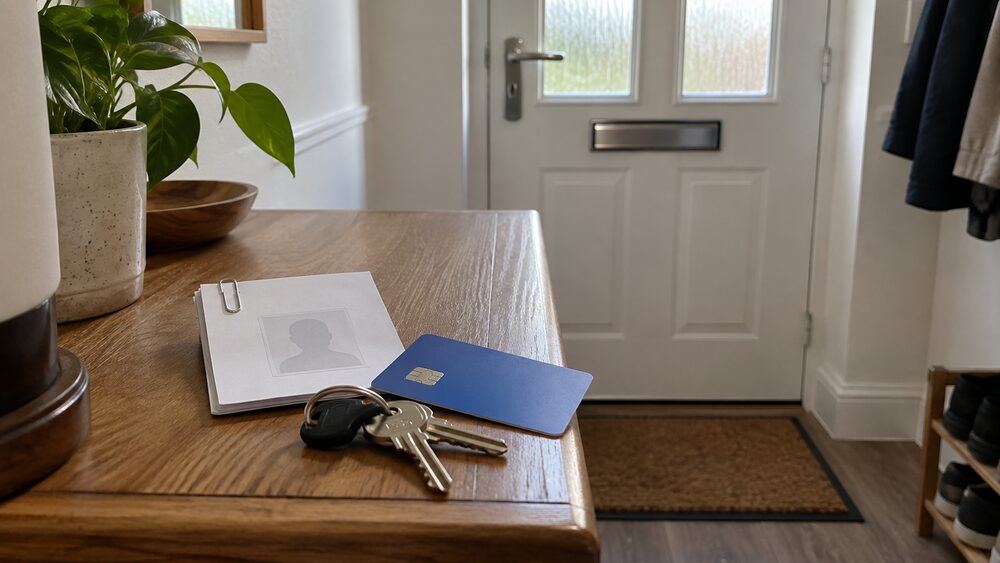
Most banks will ask for a driving licence or passport to prove your identity, or a photo of these if you are applying online, often along with a selfie1. You usually have to show the bank two separate documents that prove who you are, for example your passport, and where you live, for example a recent bill13.
If you do not have a passport or photocard driving licence, ask the bank what forms of ID they will accept before you try to open an account10. Banks may accept other documents, such as letters from the DWP, HMRC, JobCentre+, your local council, a GP, a minister of religion, a social landlord, an armed services officer, a warden, a care home manager, an employer, a college or a training provider6. Where the standard documents are missing, a letter from a responsible person such as a GP, teacher, social worker or probation officer may be accepted instead13.
There is a separate route for people who cannot get a bank account at all. If you are entitled to court funds held for you, you can apply for them when you turn 18 using proof of identity, for example your passport, and either a copy of a bank statement or a letter from your bank dated within the last 3 months14.
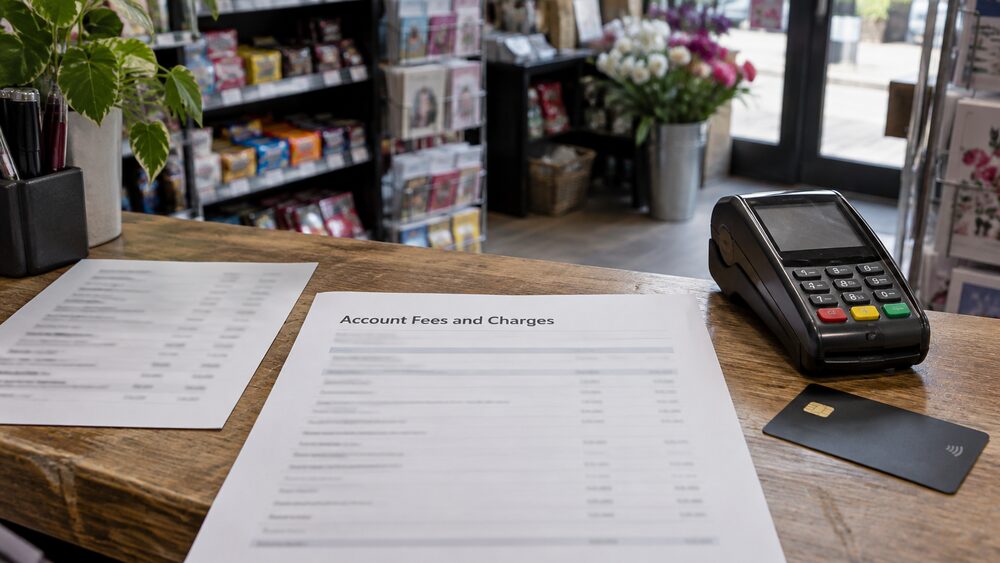
Fees and charges are the same whichever way you bank
The route you use does not change what the account costs. What drives charges is the account type and what you do with it. A current account is for managing money day to day, including paying bills, receiving money such as salary or benefits, and keeping track of spending13.
The main charges to know about are these. Using an overdraft costs daily interest, often up to 40% APR until paid back1. There is a fee if you do not have enough money to cover a payment, usually called an unpaid transaction fee1. Using your debit card abroad usually brings a foreign exchange fee, often around 3% of the transaction amount, plus a spending or cash machine charge, typically between £1 and £3 each time you use your card, except for Euros in the EU1.
Basic bank accounts work differently. Because there is no overdraft facility, you will not be charged interest on the account, and there are no fees for returned direct debits or standing orders10. They still let you set up direct debits and standing orders, use a debit card to pay for items and withdraw money from a cash point, have income paid into the account, and check your balance at a bank, cash machine or online10.
If you are comparing accounts, the fees and charges page sets out what triggers each one, and overdraft charges explains how the interest is worked out.
Getting cash without a branch: Post Office and abroad
Post Offices offer simple banking facilities, such as withdrawing and depositing cash and cheques, for customers of nearly all banks8. According to UK Finance, 99% of retail banking customers can carry out basic banking at the more than 11,500 Post Offices across the UK5. An earlier figure put it at 99% of current account customers in the UK being able to access some banking services over a post office counter15.
Some banks will let you cash a current account personal cheque or use your cash card at the Post Office, free of charge, so it is worth asking at your local post office what your bank allows13. The banking at the Post Office page covers what each counter can and cannot do.
If you cannot get a bank account at all, most benefits are paid direct into a bank account, but a Post Office account or the Payment Exception Service may be available as an alternative16. The Payment Exception Service lets you get vouchers that you can swap for cash at a Post Office or PayPoint outlet, often found in a corner shop, loaded onto a payment card or sent by email or text message12. It is for people who cannot get a bank or building society account, and you can collect your benefit or State Pension payment in cash by visiting a Post Office or PayPoint outlet16.
Fraud and scams: the most complained-about issue
The most complained about issue in relation to current accounts was fraud and scams7. In 2025/26, the Financial Ombudsman Service received 18,900 cases involving fraud and scams17. Consumers lodged 6,800 complaints about fraud and scams in the first quarter of 2025/26, compared with 8,800 cases reported in the first quarter of 2024/2518.
Banking fraud can occur through three channels: internet banking, telephone banking and mobile phone banking in-app19. Victims are most likely to report fraud to their bank or account provider, rather than the national reporting service Action Fraud or the police3.
What you get back depends on the type of payment. For unrecognised transactions, check your transactions and report any you do not recognise quickly, and you will usually get a refund if it is fraud1. The Financial Ombudsman Service covers complaints about the way a financial business has dealt with a scam involving unauthorised payments, stolen details or identity theft20.
There is a protection gap worth knowing about. If you use open banking to make a payment to a business directly from your bank account, instead of using a debit or credit card, you lose Section 75 and chargeback21. Paying by bank transfer generally means it is harder to get your money back, and you have much less protection if something goes wrong22.
FSCS protection: up to £120,000 per person
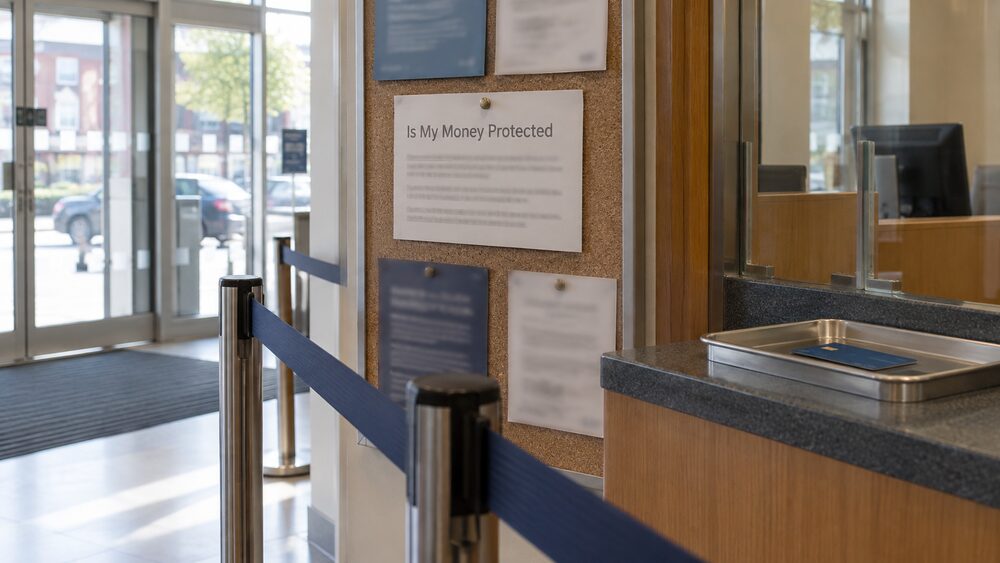
Your money is protected by the Financial Services Compensation Scheme if your bank, building society or credit union goes out of business. FSCS protection for banks, building societies and credit unions is up to £120,000 per person per banking licence4. The scheme gives you automatic protection up to £120,000 if your bank, building society or credit union goes out of business23.
The limit rose recently. It protects up to £120,000 of savings per individual, per financial institution, and before 1 December it was £85,00024. Some older material still quotes the previous figure of £85,000 per person per bank, so check the date on anything you read26.
Two details change what the limit means in practice. First, banks can share a banking licence, so money held in two brands under one licence counts together towards a single £120,000 limit26. Second, business accounts are treated separately: if your business is a separate legal entity, such as a limited company or LLP, you could claim up to £120,000 for each account26. Credit unions work the same way as banks here: FSCS protects up to £120,000 in total across all accounts you hold with the credit union27.
The FSCS protection page explains how shared licences affect the total, and what happens if your bank goes out of business covers the process step by step24.
How to complain and where to get help
Start with the bank. Complain to customer services, then make a formal complaint, and give the bank eight weeks to investigate and give a final response28. The deadlines differ by subject: if the complaint is related to payments, the bank has 15 days to investigate and give a final response, and if it is about anything else, it has eight weeks6.
If you are unhappy with the outcome, or the bank has not responded in time, you can take it to the free Financial Ombudsman Service28. Complaints can be sent via the ombudsman's website, using an online form that guides consumers through the information needed29. You can also contact the Financial Ombudsman Service if you are still unhappy after raising a payment issue with your provider30.
Some complaints are specific to the way you bank. If you shared your data with a third-party provider through open banking and something went wrong, complain to that provider first, and if they do not resolve it you can lodge a complaint with the Financial Ombudsman Service21. If you were turned down for a basic bank account and were not told why, or feel you were turned down unfairly, you may be able to complain to the Financial Ombudsman Service10. If you feel a complaint about your credit file has not been resolved fairly, you can escalate it to the Financial Ombudsman Service31.
Branch closures do generate complaints. The ombudsman has seen a small number of complaints about lack of access to in-person banking from micro-enterprises and small businesses, including about branch closures and problems with banking hubs, and from small businesses unable to deposit cheques at the Post Office with no local branch32. In one case, a customer complained about his local branch closing; the bank said he could have gone to the branch in the next town, or made the transfer using either telephone or online banking, both of which he was registered for33.
For free, impartial help with money problems, MoneyHelper offers guidance on banking, benefits and complaints. If a complaint is about a claims management company rather than a bank, the Claims Management Ombudsman takes complaints online or by calling its helpline, and cannot speak to you in person at any of its offices34.
Sources35 cited
- How to open, switch or close your bank account MoneyHelper, 2026-09-25
- How to open a bank account Shelter, 2024-07-16
- Access to banking services and cash House of Commons Library, 2026-09-26
- Banking licences Financial Services Compensation Scheme, 2026-09-25
- Bank branch closures: is your local bank closing? Which?, 2026-07-07
- Basic bank accounts MoneyHelper, 2026-09-25
- Annual complaints data and insight 2024/25 Financial Ombudsman Service, 2024
- Ways to bank Consumer Council, 2026
- Online banking Age UK, 2026-03-23
- Basic bank accounts StepChange, 2026-09-25
- Managing your own money Scope, 2025-08-18
- Choosing a bank account for your Universal Credit payment MoneyHelper, 2026-09-25
- Getting a bank account Citizens Advice, 2026-09-26
- Get court funds money when you turn 18 GOV.UK, 2026-09-27
- Access to banking services over the Post Office network House of Lords Select Committee, 2017
- What to do now your Post Office card account is closing MoneyHelper, 2026-09-25
- Annual complaints data and insight 2025/26 Financial Ombudsman Service, 2025
- Quarterly complaints data Q1 2025/26 Financial Ombudsman Service, 2025-08-07
- Banking fraud Take Five, 2026-09-26
- Scams involving unauthorised payments and identity theft Financial Ombudsman Service, 2026-09-26
- Open banking: sharing your financial data Which?, 2026-03-06
- Shop safely online MoneyHelper, 2026-09-25
- FSCS protected leaflet Financial Services Compensation Scheme, 2025-11
- What to do if your bank goes out of business Which?, 2025-12-01
- FSCS: are my savings safe? Which?, 2025-12-01
- What we cover: banks, building societies and credit unions Financial Services Compensation Scheme, 2026-09-25
- Deposit protection for credit unions Financial Services Compensation Scheme, 2026-09-25
- Joint accounts MoneyHelper, 2026-09-25
- How to complain Financial Ombudsman Service, 2026-09-26
- When you make a payment Payment Systems Regulator, 2026-09-26
- How does debt affect a credit file? StepChange, 2026-09-25
- Our response to HMT's call for evidence for the Access to Banking Review Financial Ombudsman Service, 2026-07
- Consumer wants compensation after local bank branch closed Financial Ombudsman Service, 2026-09-26
- Complain to the Claims Management Ombudsman Claims Management Ombudsman, 2024-08-20
- Overdrafts and other bank debts nidirect, 2025-11-07

 MoneyHelperFree, impartial money and pensions guidance, set up by government
 FSCSProtects your money if a bank, insurer or investment firm fails
 Financial Ombudsman ServiceFree, independent help when a complaint about a firm is not put right
 Citizens AdviceFree advice on money, consumer and legal problems in England and Wales