A joint bank account is one account shared by two or more people. It still lets you do everything a sole account does, but you share control and responsibility with the other holders1. A sole account belongs to one person only. The choice between them is not just about convenience: it changes who can spend the money, who owes the bank if the account goes overdrawn, and what lenders see when either of you applies for credit.
On most joint accounts, each holder can withdraw money without asking the other person2. Everyone named on the account is equally responsible for it, and the bank can ask any of you to repay overdraft borrowing run up by another holder3. Opening one adds a financial link to the other person's credit file, so a poor credit history on their side can affect your own applications4.
The sections below set out how joint and sole accounts differ, what each arrangement costs you in risk, how to open or close one, and what protection applies. If you are weighing up whether to pool everything, keep everything separate, or do a bit of both, the facts here are the ones that decide it.
What a joint account is and how it differs from a sole account
A joint account is opened in the names of two or more people. It normally allows those people to receive payments, pay by debit card, transfer money and manage the account, depending on the bank3. A joint savings account works the same way: two people share an account, which can be with a partner, a relative or a close friend7.
The difference from a sole account is control. A sole account belongs strictly to the person named on it, regardless of any non-financial contributions anyone else made8. On a joint account, both holders can manage the account and withdraw cash9. That shared access is the point of a joint account and also its main risk.
Banks keep the two separate in their apps. If you have a joint account with someone, you can both see that account in the app and online banking, but any accounts that are solely yours are only visible to you10. So a joint account does not give the other person sight of your personal current account or savings.
Joint accounts are not only for couples. You can open a bank account jointly with other people, for example to manage household bills3. Some savings products are more restrictive: NS&I Income Bonds and Direct Saver can each be held in your own name or jointly with one other person11.
Who controls the money: either-to-sign or both-to-sign
Most joint accounts are set up as "either-to-sign", where each account holder can give payment and withdrawal instructions independently5. In practice that means either person can withdraw whatever money they want from it6. There is no built-in requirement to check with the other holder first.
Some banks offer "all to sign", which means all account holders have to make decisions jointly, but this usually limits management to a branch3. That is a meaningful restriction: you may not be able to use the app or card in the normal way.
The signing arrangement also decides how the account can be closed. If it is set up with "one to sign", either person can close it. If it is set up as "two to sign", both need to sign to close the account1. Some savings providers require joint accounts to be set up with "either of us" to sign8.
Under FCA rules, where a personal current account is held by two or more customers jointly, the firm must enrol each customer in the overdraft alerts required by the rules13. So both holders should receive warnings about fees and interest, not just the person who did the spending.
Joint accounts link your credit files
Opening a joint account adds a financial link to the other person3. From then on, lenders can look at the other person's credit history when you apply for credit, even if you apply in your own name only6. A financial association arises from a joint credit application, a joint bank account, or a joint financial product such as a loan or mortgage, and it continues after divorce or separation14.
The practical effect runs both ways. If one of you runs into financial problems, this could affect everyone else's credit rating, which could make it difficult for you to borrow in the future9. A missed mortgage payment shows on both credit reports, regardless of whose fault it was10. A financial associate can affect your score if they have a bad credit history15.
It is not all downside. Having a good payment history towards joint debts helps both people named on the account and can make it easier to get credit in future6.
MoneyHelper's guidance is blunt about the risk: only consider opening a joint bank account with someone you trust, as it could damage your credit score if they have poor credit, and you could be responsible if they run up debt4. A joint account can create a financial link with a partner which affects your own score, so it is worth considering their credit score too8.
You are both liable for an overdraft on a joint account
Everyone named on a joint account is equally responsible for it3. You are both responsible if the account is overdrawn6, and you are each liable for the other's debts2. This is called joint and several liability: both parties are liable for joint bank accounts, loans and mortgages16.
The consequence is that the bank can pursue either of you for the whole amount. Barclays states that each account holder is responsible for the whole of any overdraft on the account17. Nationwide states that if there is an overdraft on the account, a new account holder will be jointly responsible for it, even if it is already in use12.
There is a related rule about what a bank can take money from. A bank's right of set-off allows transfers from your sole bank account to a debt only in your name, from your sole account to a debt you have jointly, and from your joint bank account to a joint debt if the same two people are named. It does not allow transfers from your joint account to a sole debt in your name, or from your joint account to another joint account you have with a different person18.
Fees, overdrafts and how to open a joint account
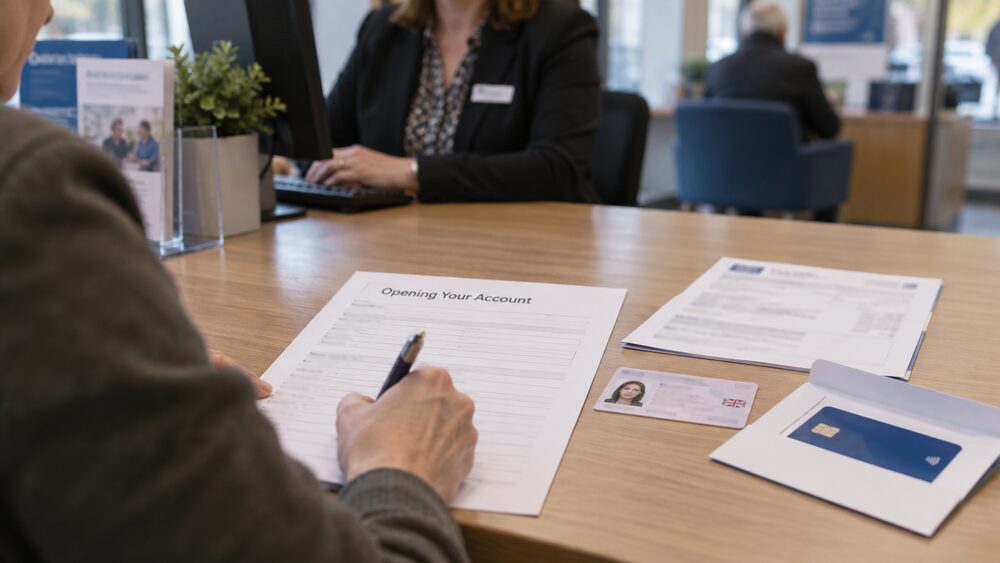
Opening a joint account usually means both people applying and passing the bank's checks, in the same way as a sole account. The how to open a current account page covers the documents and identity checks involved. Some accounts cannot be opened jointly at all, and some savings accounts must be opened in a single name first, with the second holder added later through a separate process8.
If you are moving an existing account, the Current Account Switch Service works for joint accounts, provided you are switching to another joint account and all account holders agree3. You can also switch a sole account to a joint account elsewhere. It is not possible to use the switch service to move from a joint account to a sole account19.
Overdrafts are the main cost to watch. If you switch with an overdraft and the new bank offers one that covers what you owe, the funds are sent to your old bank and you owe the overdraft balance on the new account instead. If the new overdraft is a lower amount, or you cannot get one, you need to arrange to pay off the remainder separately before you can switch or close your old account11. The overdrafts explained page sets out how charges work.
Closing a joint account is possible at any time, but any overdraft must be repaid first. Some banks need permission from all account holders, while others let one person close it unless a dispute is registered3.
Joint, separate or both: how couples and housemates split their money
There is no single right answer, and the tax and legal treatment differs depending on which arrangement you choose.
A joint account for shared costs. Both people pay in, and both can spend. Interest earned in a joint account is usually split equally between each person, with tax only due if a share is above the annual allowance3. On a tax return, if you have a joint account you enter your share, usually 50%, of the interest received20.
Separate accounts, with each person paying their share. Separate bank accounts and savings accounts belong strictly to the person named on the account, regardless of any non-financial contributions21. This keeps credit files unlinked and means neither person is liable for the other's overdraft.
A mix of both. Many households run a joint account for bills and keep personal accounts for their own spending. This limits the shared risk to whatever sits in the joint account, though the credit link is still created.
Ownership rules differ across the UK. In England and Wales, money in joint accounts belongs to whoever paid it in, though a non-contributing partner could claim a share if they prove the account was intended as a shared fund; if married or in a civil partnership, money belongs to both equally5. In Scotland, if only one person contributed to the joint account, the balance would be held to belong to that person; if both contributed, it is presumed the money is held equally22.
For means-tested care at home, if you and someone else jointly hold capital such as a joint savings account, you will usually be treated as having half of the money23.
When a relationship ends: closing or removing a name from a joint account
If you have a joint debt with an ex-partner, your credit files are connected, and how you manage those debts affects the other person's ability to get credit, and vice versa24. A financial association continues after divorce or separation14.
Removing the link is not automatic. If you still have a joint debt, there is no way to remove the financial link until the account is closed, repaid in full, or the ex-partner's name is removed. For a loan, only once it is repaid in full; for a bank account, only likely if there is no overdraft to repay25. You can only apply for disassociation if the joint account has been paid off in full and you no longer live with the other person26.
The process is:
- Close the joint account, or transfer it into one name. Removing the customer from the account is one option27.
- Once the account is closed, write to the credit reference agencies to request a financial disassociation from that individual28.
- If the only remaining link is a joint mortgage and you have lived apart for at least six months, agencies may be able to unlink your reports29.
A notice of disassociation takes any financial link with your ex-partner off your credit file26. Until you file one, the financial connection remains on your credit report29.
If a joint account is being used to control or monitor you, banks can help. You can ask your bank to register a dispute and cancel the mandate, which freezes the account until everyone agrees how to split the money3. Barclays, for example, has a specialist domestic and financial abuse team that can help with account security, changing how you receive statements and letters, removing the abuser as a named cardholder from your credit cards, and removing you from joint accounts or freezing them17. Nationwide says you can speak to them safely and in confidence, whether in a branch, by calling them, or having them call you12. You can also report financial abuse to the police30. The banking help after domestic abuse page has more on separating your finances.
FSCS protection for joint accounts: up to £120,000 each
Joint accounts are eligible for FSCS protection up to the same limit of £120,000 per eligible person31. With two holders, that means a joint account is protected up to £240,000 in total32. The limit of £120,000 applies to each depositor separately33.
The rule works per person, per banking group, not per account. If you have an individual account and a joint account within the same banking group, the £120,000 compensation limit applies across all those accounts, not to each separate account34. So if you hold £80,000 in your own name and £80,000 in a joint account with the same bank, your own share of the joint account counts towards your single £120,000 limit.
The FSCS protection checker assumes a joint account with two account holders, each with an equal share34. If you have a joint account with more than two holders, each person still gets their own £120,000 limit35.
If a bank fails, the FSCS aims to return your money automatically, up to £120,000 per person3. The FSCS and e-money accounts page explains which accounts are covered and which are not.
Sources36 cited
- Joint accounts MoneyHelper
- Joint account Royal Bank of Scotland
- Co-servicing FAQs Bank of Scotland
- Choosing a bank account for your Universal Credit payment MoneyHelper
- Six steps to financially separate from your ex Which?
- How joint debts affect me StepChange
- Joint savings accounts explained Yorkshire Building Society
- Should you open a joint savings account Which?
- Joint tenants vs tenants in common Which?
- Mortgage types explained Which?
- How to open, switch or close your bank account MoneyHelper
- Get a joint current account Nationwide
- BCOBS 8 Financial Conduct Authority
- Partners and debt Experian
- Credit Information Commissioner's Office
- Debt myths true or false StepChange
- Joint bank account Barclays
- Right of set-off StepChange
- How to switch your bank account Which?
- Form P53Z HM Revenue & Customs
- Can a joint bank account help me manage a loved one's finances Which?
- After death: dealing with an estate Citizens Advice Scotland
- Paying for non-residential care and support at home Disability Rights UK
- How does debt affect a credit file StepChange
- Divorce and separation StepChange
- DMP and credit score StepChange
- Managing money for someone else Scope
- Separating your finances Surviving Economic Abuse
- Credit reports and credit reference agencies Advice NI
- Supporting customers separating finances from abuser Surviving Economic Abuse
- What we cover FSCS
- What is the Financial Services Compensation Scheme Bank of England
- FSCS protected leaflet FSCS
- Check your money is protected FSCS
- Deposit protection for banks FSCS
- Are my savings safe Which?


 MoneyHelperFree, impartial money and pensions guidance, set up by government
 FSCSProtects your money if a bank, insurer or investment firm fails
 Financial Ombudsman ServiceFree, independent help when a complaint about a firm is not put right
 Citizens AdviceFree advice on money, consumer and legal problems in England and Wales