Moving a balance to a new credit card does not close the card you moved it from. Transferring your balance does not automatically cancel your old credit card, so the account stays open until you ask the provider to close it1. That matters, because cancelling a card after transferring its balance may lower your score, since old accounts have a positive impact on a credit file2.
Moving a balance to a new credit card does not close the card you moved it from. Transferring your balance does not automatically cancel your old credit card, so the account stays open until you ask the provider to close it1. That matters, because cancelling a card after transferring its balance may lower your score, since old accounts have a positive impact on a credit file2.
Current accounts work the other way round. If you use the Current Account Switch Service, the old bank closes the account for you, and you do not need to do anything3. The service transfers your Direct Debits and standing orders, moves your balance, redirects incoming payments such as benefits or salaries, and closes your old account4. The old account closes on day 7, when any remaining credit balance is transferred and your new bank writes to tell you it is done5.
So the answer depends on which account you mean. A credit card you have cleared with a balance transfer stays open unless you close it, and closing it has a credit file effect. A current account moved through the full switch service closes itself, and that closure can result in a positive contribution to your credit score6.
A full switch closes your old current account for you
The Current Account Switch Service is the process most people mean when they talk about switching bank. You provide your account and debit card numbers and choose a date for it to complete, and the service then transfers Direct Debits and standing orders, moves your balance, redirects incoming payments such as benefits or salaries, and closes your old account4. Your old bank account will be closed once the switch completes8.
Providers describe the same rule in their own words. When the switch is complete the old bank account is closed and the new one is ready to use9. The old account is closed and the balance switched to the new account10. If you want to, you can switch and keep the old account open, but you will not be able to use the Current Account Switch Service11.
That last point is the one to hold on to. The closure is not a separate step you opt into; it is part of what the service does. It also means the switching guarantee, which covers payments going astray during the switch, comes with the closure. Keeping the old account open means the service and the guarantee cannot be used6.
What happens to money left in the old account
Any remaining credit balance in your old account is transferred to your new account, and your old account automatically closes11. Money in your old account is transferred to the new account on your switch date9. The same applies across providers: on day 7 your balance will then be transferred and your old account will be closed12. Day 7 is when any credit balance will be transferred to your account with us, and your old bank account will be closed13. One provider puts the window at within 6 to 7 days, after which the balance is transferred, the old account is closed and the switch is confirmed complete14.
If you close an account yourself rather than switching, the money comes back to you rather than moving to a new bank. When you close your account, your existing balance will be transferred back to you either by a bank transfer into another account or by cheque to the registered address15.
Refunds are handled too. Any refunds applied to your old debit card after switching your account will be sent to your new bank6. That covers the common case of a retailer refunding a purchase to a card you no longer hold.
Will payments sent to my old account still reach me?
Yes, for a set period. Payments made to your old account after your switch date will be automatically redirected to your new account, and this runs for 3 years after the switch date7. All incoming and outgoing payments will be automatically redirected to your new account16. An automatic message is sent back to the originator advising them of the new account details16.
There is one exclusion worth knowing. The redirection does not include any payments received from abroad11. If money is sent to you from overseas, it will not follow the redirect, so anyone paying you from outside the UK needs your new details directly.
Stopped payments stay stopped. Any debit card or Direct Debit transactions that you have asked your bank to stop should remain stopped after your switch6. A cancelled subscription or a disputed Direct Debit does not restart just because the account has moved.
On what date does my old account actually close?
The standard timetable puts closure at day 7. Your old account is closed and any remaining credit balance transferred, and your new bank will write to you to tell you that it is all done5. Day 7 is when the switch is complete, the new account is ready to use, and the old account will be closed17.
There is a condition attached. The old account will close on the switching date, if you are using the Current Account Switch Service, unless it is overdrawn13. An overdrawn account is the main thing that stops the closure happening on schedule, and the next section deals with why.
| Point in the switch | What happens |
|---|---|
| Before the switch date | You can continue using your old account up to and until your switch date, when your funds will be transferred to your new account11 |
| Day 7 | The credit balance is transferred and the old account is closed5 |
| After the switch date | Payments to the old account are redirected to the new one for 3 years, excluding payments from abroad7 |
Switching with an overdraft or money still owed
An overdraft does not automatically block a switch, but it changes what has to happen first. You can switch using the Current Account Switch Service even if you are overdrawn18. You will need to agree any overdraft facilities you require with your new bank or building society, subject to their normal lending criteria, and if no agreement is reached the existing overdraft must be repaid before switching6.
Where the new bank agrees an overdraft, the mechanics are straightforward. If the new overdraft covers what you owe, the funds will be sent to your old bank and you will owe the overdraft balance on the new account instead. If it is a lower amount, or you cannot get one, you will need to arrange to pay off the remainder separately before you can switch or close your old account4.
Providers vary on how readily they will take an overdraft across. Barclays and NatWest told Which? that if you have an overdraft with your current bank, the balance can be transferred to your new account, provided your agreed overdraft limit is high enough, and this must be arranged before using the switch service19. Santander told Which? that an overdraft with your previous bank would not move to your new Santander account, and you would remain responsible for repaying the old provider19. NatWest's own guidance says it may be possible to switch with an existing overdraft, but it is often done on a case-by-case basis20. HSBC says you may be able to switch with an overdraft but to check with your new bank first, and that you may have to repay the overdraft before switching13.
Some providers will even let you switch if you have a large overdraft debt outstanding, but there may be a charge to do this21. If you are currently overdrawn, you might not be able to switch bank accounts until you have paid off the overdraft22. Where an overdraft has to be cleared, one route is to repay the balance using credit with a lower interest rate, such as a balance transfer to a credit card or an affordable loan23. After repayment, options include asking the bank to reduce or remove the overdraft, or switching to a basic bank account with no overdraft23.
Student and graduate accounts have their own rules. Nationwide states that if you decide to close your current account and have an existing overdraft, you will need to pay that back first, including any outstanding fees or charges24.
Can my old account be closed if I still owe the bank money?
Closing an account does not clear a debt. You may still be sued for the money you owe if you do not pay it when you close the account25. The same warning appears in Citizens Advice guidance for the rest of the UK26.
There is also a right of set-off to be aware of. Bank of Ireland's personal current account terms state that if you have any other account with us that is in credit we can transfer money from that account to any other account (including a joint account) that is overdrawn or in default27. In practice, that means money sitting in one account can be used to cover what you owe on another with the same bank.
For credit cards the position is similar. You can cancel your credit card with an outstanding balance but you will still need to pay it off, making at least the minimum payments, at the same standard interest rate you have now3. Closing the card stops new spending on it. It does not stop interest, and it does not remove the debt.
Keeping your old account open instead
A manual switch gives you the choice to close your old account or leave it open28. That is the route for anyone who wants to keep a long-standing account running, perhaps for its overdraft facility or its history.
A partial switch will not close your old account29. You move across what you choose and leave the rest where it is. If you take this route, do not set up any new Direct Debits or standing orders from your old account30, because those will not follow you.
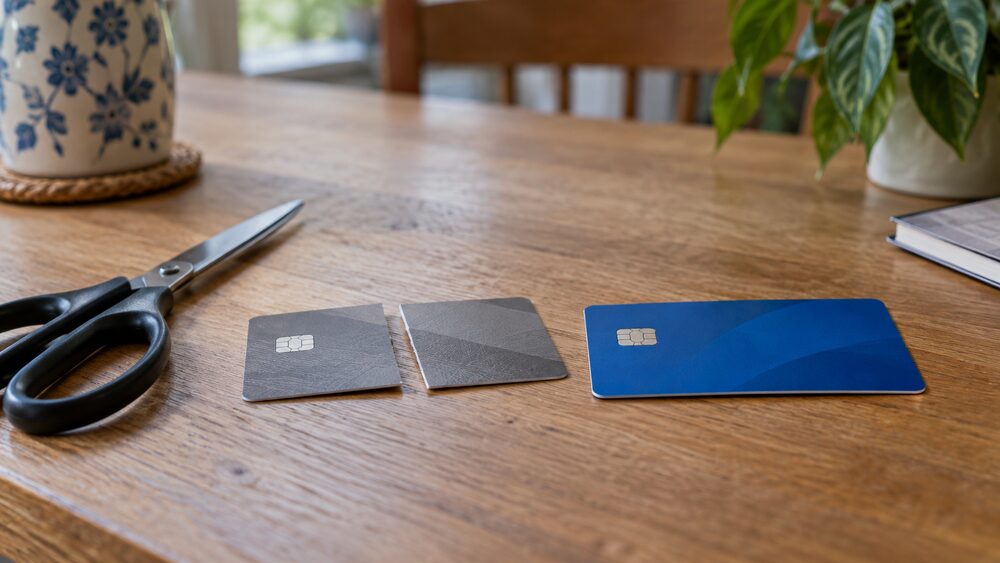
If you are closing an account yourself rather than switching, the standard sequence is to open a new account before closing your old one, cancel or move standing orders and Direct Debits, return unused cheques and cards cut into pieces, and leave enough money to cover uncleared cheques if you are transferring a balance25.
Getting old statements and records after closure
Transaction history on the old account is not transferred through the Current Account Switch Service6. Old statements have to be obtained from the old bank, and once an account is closed you lose access to statements, so it is worth making sure you have copies if you need them4.
What does move automatically is narrower than people expect. The service moves your saved payees, balance and planned payments for you, and asks your old bank to close your account31. Statements, past transaction records and old card details do not come with it.
If you need a record for tax, a benefits claim or a dispute, request it from the old bank before the switch completes. After closure, the old bank is still the only place that holds it.
Where to get free help
If an overdraft or card balance is proving hard to clear, free and impartial help is available. MoneyHelper covers how to open, switch or close a bank account and how overdrafts work4. Stepchange offers guidance on graduate overdrafts and on getting out of an overdraft21. Citizens Advice covers getting a bank account and what happens to money you owe when an account closes26. Independent Age covers making the most of your bank account22.
For credit card debt specifically, the options and the rules on repayment are set out in our guide to help with credit card debt, and the effect of opening and closing accounts on your file is covered in how credit cards affect your credit file. If you are weighing up whether to move a balance at all, balance transfer credit cards explained sets out how the deals work and what they cost.
Sources31 cited
- How to transfer a credit card balance Experian, 2026
- What is a balance transfer? Experian, 2026
- Close an account TSB, 2026
- How to open, switch or close your bank account MoneyHelper, 2026-09-25
- Switching an account Coventry Building Society, 2026
- Switching your personal current account Zempler Bank, 2026-09-25
- Current account switch guide Virgin Money, 2022-11
- Current Account Switching Service Zempler Bank, 2026-09-25
- How to switch current accounts first direct, 2026
- Switching Virgin Money, 2026
- Current account switch service Triodos Bank, 2026-09-25
- Switch to Ulster Bank Ulster Bank, 2026-09-25
- Switching to HSBC HSBC, 2026
- Switch offer The Co-operative Bank, 2026-09-28
- Closing an account Santander, 2026
- Switching my account Metro Bank, 2026-09-25
- Switching current accounts Santander, 2026
- Overdrafts explained MoneyHelper, 2026-09-25
- Can you switch your student bank account after the first year? Which?, 2026-08-06
- Switch your banking to NatWest Premier NatWest, 2026-09-25
- Graduate overdrafts StepChange, 2026-09-25
- Making the most of your bank account Independent Age, 2026-09-26
- How can I stop living in my overdraft? StepChange, 2026-09-25
- FlexGraduate maturity Nationwide, 2026
- Getting a bank account Citizens Advice Scotland, 2026-09-26
- Getting a bank account Citizens Advice, 2026-09-25
- Personal current account guide Bank of Ireland UK, 2026
- Switch your Nationwide current account Nationwide, 2026
- Ask an expert: how do I switch current account without closing my existing account? Which?, 2017-11-10
- Switching current accounts HSBC, 2026
- Current account switch service Chase, 2026-09-26







 MoneyHelperFree, impartial money and pensions guidance, set up by government
 StepChangeFree debt advice and solutions from a charity
 National DebtlineFree debt advice by phone, webchat and online
 Financial Ombudsman ServiceFree, independent help when a complaint about a firm is not put right
 Citizens AdviceFree advice on money, consumer and legal problems in England and Wales