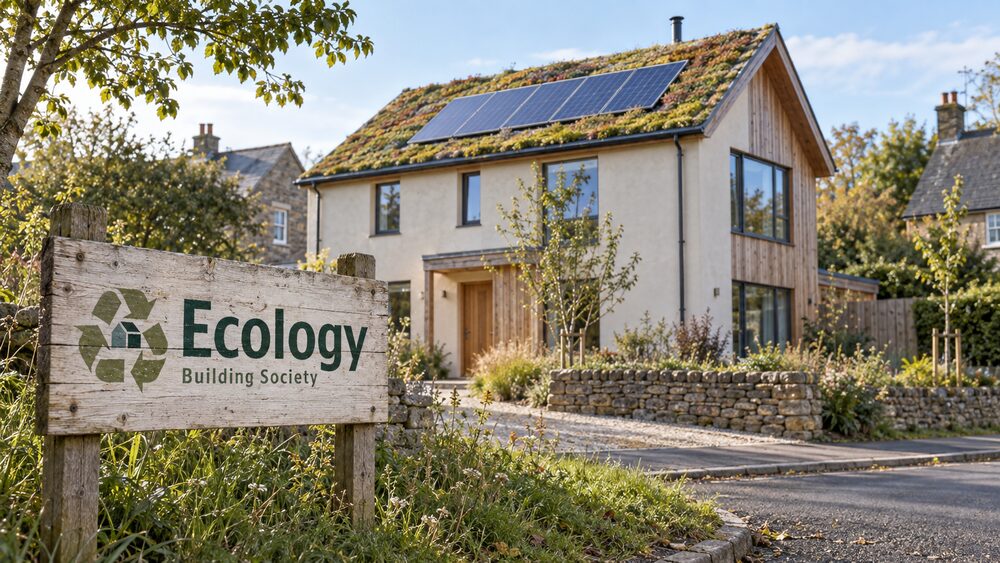
The Ecology Single Access Saver is a savings account from Ecology Building Society that pays interest monthly and lets you take money out once each calendar year without a charge1. It is built for people who want a better return than a standard easy access account in exchange for accepting that their money is not instantly available whenever they want it.
The account is opened by post or in branch, not online, and you can only hold one Single Access Saver at a time3. A second withdrawal in the same calendar year closes the account and triggers a charge equal to 100 days' interest, based on the balance at the time of closure, deducted from the money moved out3. The calendar year runs from 1 January to 31 December3.
Eligible deposits are protected up to £120,000 by the Financial Services Compensation Scheme3. Ecology's own site carries today's interest rate and balance limits for the account; this page explains how the account works rather than what it currently pays.
What the Ecology Single Access Saver offers
Ecology Building Society is a member-owned building society, and every one of its savings accounts supports sustainable housing and environmental projects across the UK2. Its savings range runs from easy access accounts and notice accounts through to Cash ISAs1. The Single Access Saver sits between the two extremes: it pays more than an account you can dip into freely, in exchange for a limit on how often you can take money out.
The account is a single access savings account, limited to one withdrawal per calendar year3. Interest is paid monthly2. Ecology's own product page carries the current rate and the balance range the account accepts, and those figures change, so the provider's site is the place to check them.
It helps to see where the account sits among the alternatives, because the trade-off is the whole point of the product:
| Account type | Access | Interest paid |
|---|---|---|
| Ecology Easy Access Savings | Unlimited withdrawals6 | Calculated daily, paid annually on 31 December6 |
| Ecology Single Access Saver | One withdrawal each calendar year3 | Monthly2 |
| Ecology 90-Day Notice | Notice period before withdrawal7 | Stated on the provider's page7 |
The pattern across the market is the same: the fewer times you can reach your money, the more the provider tends to pay for it. Accounts limited to one withdrawal a year appear at several building societies, and some allow two or three8. If you expect to need your money more than once in a year, an easy access account or a notice account removes that risk at the cost of a lower return.
One withdrawal a year: how access works
The rule is simple to state and worth reading twice. You can take money out of the account once each calendar year without paying a charge3. The calendar year runs from 1 January to 31 December, so the allowance resets on 1 January rather than on the anniversary of opening the account3.
If you need a second withdrawal within the same calendar year, the account is closed. The money is transferred into an Instant Access Share account, and a charge equal to 100 days' interest, based on the account balance at the time of closure, is deducted from the balance3. That charge is calculated on the whole balance, not just on the amount you withdraw, which is what makes a second withdrawal expensive rather than merely inconvenient.
Two further points shape how the account behaves in practice. All withdrawals from an Ecology savings account go to a linked bank account that must be in your name, so you cannot have money sent to someone else's account5. And the account is not a notice account: there is no notice period to serve before a withdrawal, only a limit on how many you make3.
How interest is paid and taxed
Interest on the Single Access Saver is paid monthly2. That differs from several of Ecology's other accounts, where interest is calculated daily and paid annually on 31 December6. Monthly interest suits someone who wants the income to arrive regularly, or who wants each month's interest to start earning in turn.
Ecology pays all savings interest gross, which means no tax is deducted before the money reaches you6. You pay tax on any interest over your allowance at your usual rate of Income Tax10. Whether you owe anything therefore depends on your own circumstances: your allowance, your other income and your marginal rate all feed into it. The personal savings allowance and the starting rate for savings are the two rules most savers need to check, and how tax on savings interest works sets out the mechanics.
The rate itself is variable. Ecology states that the rate on the Single Access Saver is variable and that the society may make changes to it at any time, with notification in accordance with the account terms3. The same wording appears on the society's 35-Day Notice account11. A variable rate can fall as well as rise, so the interest you receive is not fixed for the life of the account. If you want a rate that cannot move for a set period, a fixed-rate bond is the alternative, and when a savings provider changes your rate explains what notice you are entitled to.
Who can open a Single Access Saver
You can only have one Single Access Saver at a time3. The account may be opened and operated by a maximum of two account holders4. Joint accounts and accounts for children are opened by post rather than online6.
Ecology's other accounts set comparable limits, which gives a sense of how the society treats multiple holdings. The Limited Access Saver is open to new and existing customers, allows a maximum of two account holders and permits only one such account at a time8. Elsewhere in the market, single-account limits are common: one provider allows only one Easy Access Savings account per customer12, and another permits only one Online Saver (Triple Access) per customer, though other easy access accounts can be held alongside it13.
If you are saving for a child, children's savings accounts sets out the options and the tax rules that apply.
How to open and manage the account
Existing Ecology customers can open and operate the Single Access Saver online via the society's website, by post or in branch. New customers can open and operate it by post or in branch4. That is a narrower set of routes than many savings accounts offer, and it is the single most practical thing to know before applying.
Joint accounts cannot be opened online or on the app, and Ecology asks joint applicants to apply by post10. Joint accounts opened after 24 March 2026 cannot use the online service or app at the moment5. Joint customers must apply and manage the account by post6.
Ecology moved to a new account system on 24 March 2026. Customers who opened accounts before that date were given new account numbers and sort codes and must re-register for the Online Service and app10. Registration requires your previous ten digit account number, your email address, a memorable password, and bank account details of a UK personal bank account in your name to link to your Ecology savings account10. If you use the wrong security details more than three times, your account locks5.
The society's phone lines are open Monday to Friday, 9am to 5pm, opening at 10am on Tuesdays2. Its support pages give the same hours, Monday to Friday except bank holidays between 9am and 5pm, with 01535 650 770 given for reporting fraud5. If you are moving money from another provider, how to move savings to a new account covers the process, and how to open a savings account covers the identification you will need.
Where your savings go: sustainable housing lending
Ecology is an ethical savings provider, and the destination of the money is part of what the account offers. Every Ecology savings account supports sustainable housing and environmental projects across the UK2. The society lends on energy-efficient and affordable homes, including shared ownership properties14, and its mortgage range includes an eco home mortgage15 and lending for off-site and modular construction16.
The society's community-led housing lending can consider projects with a single property17. Those are mortgage terms, not savings terms, and they are set out here only to show what the savings are used for.
If the ethical angle is what draws you to the account, it is worth knowing how the wider market labels these products. Funds with sustainability aims carry one of four labels: sustainability impact, sustainability focus, sustainability improvers, and sustainability mixed goals18. Those labels apply to investments rather than savings accounts, but they show the vocabulary used to describe sustainable finance. Ethical and green savings: how they work explains how providers in this part of the market differ, and affinity savings accounts covers accounts that make a donation to a named charity.
Complaints and getting help
If something goes wrong with the account, the first step is Ecology itself. The society's phone lines run Monday to Friday, 9am to 5pm, opening at 10am on Tuesdays2, and its support pages are open Monday to Friday except bank holidays between 9am and 5pm5.
If you are not satisfied with the response, the Financial Ombudsman Service is the independent body that looks at complaints about financial firms. It has handled complaints about sale and rent-back arrangements, and its own account of that work records that it had few enquiries on the topic and only one complaint19. That is a record of one subject area rather than a statement about Ecology, but it illustrates the kind of evidence the ombudsman publishes and the route open to a consumer who cannot resolve a dispute with a firm.
Two practical points are worth keeping in mind. First, the account's access rule is the most likely source of a dispute: a second withdrawal in a calendar year closes the account and costs 100 days' interest on the balance at closure3. Second, if you are struggling with debt rather than a complaint, free and impartial help is available from debt advice charities, and Debt: a complete guide to help, solutions and your rights sets out the options. Paying off debt or building savings first covers the order in which many people tackle the two.
How your savings are protected
Eligible deposits with Ecology Building Society are protected up to a total of £120,000 by the Financial Services Compensation Scheme, the UK's deposit guarantee scheme3.
Ecology Building Society is authorised by the Prudential Regulation Authority and regulated by the Financial Conduct Authority and the Prudential Regulation Authority, with firm reference number 16209021. It appears on the Bank of England's list of building societies incorporated in the UK22. The society's website is www.ecology.co.uk21.
If you hold more than that with Ecology across all your accounts, the excess is not covered if the society fails. What happens to money above the FSCS limit explains the position, and how FSCS protection works for savings covers the scheme in full.
Sources22 cited
- Our savings products Ecology Building Society, 2026-09-25
- Easy access savings accounts Ecology Building Society, 2026-09-25
- Single Access Saver The Melton Building Society, 2026-09-25
- Single Access Saver The Melton Building Society, 2026-09-25
- Savings FAQs Ecology Building Society, 2026-07-30
- Easy Access Savings Ecology Building Society, 2026-07-24
- 90 Day Notice Ecology Building Society, 2026-09-25
- Limited Access Saver The Melton Building Society, 2026-09-25
- Easy access accounts Chorley Building Society, 2026-09-26
- Ecology Interactive FAQs Ecology Building Society, 2026-07-13
- 35 Day Notice Ecology Building Society, 2026-08-21
- Easy Access Savings Monument, 2026
- Online Saver (Triple Access) Chorley Building Society, 2026-09-25
- Shared ownership Ecology Building Society, 2026-09-23
- Eco home mortgage Ecology Building Society, 2026-08-21
- Off-site build Ecology Building Society, 2026-07-24
- Mortgages FAQs Ecology Building Society, 2026-03-12
- Ethical investing explained Which?, 2026-08-11
- About the annual review Financial Ombudsman Service, 2009
- 180 Day Notice Ecology Building Society, 2026-08-21
- Ecology Building Society register entry Financial Conduct Authority, 2026-09-25
- Building societies list Bank of England, 2026-09-25











 MoneyHelperFree, impartial money and pensions guidance, set up by government
 FSCSProtects your money if a bank, insurer or investment firm fails
 Financial Ombudsman ServiceFree, independent help when a complaint about a firm is not put right
 Citizens AdviceFree advice on money, consumer and legal problems in England and Wales
 GOV.UKOfficial information on tax, benefits and government services