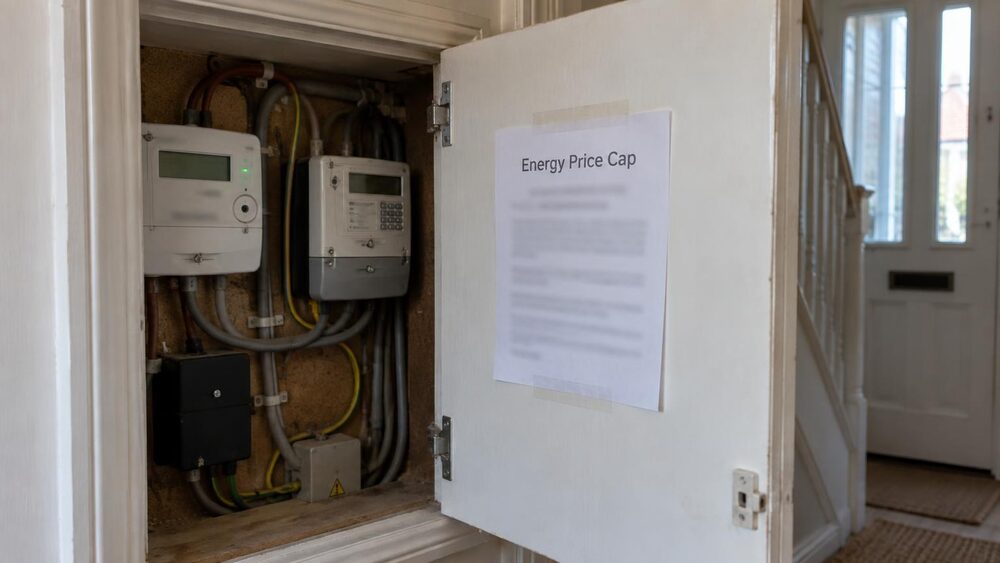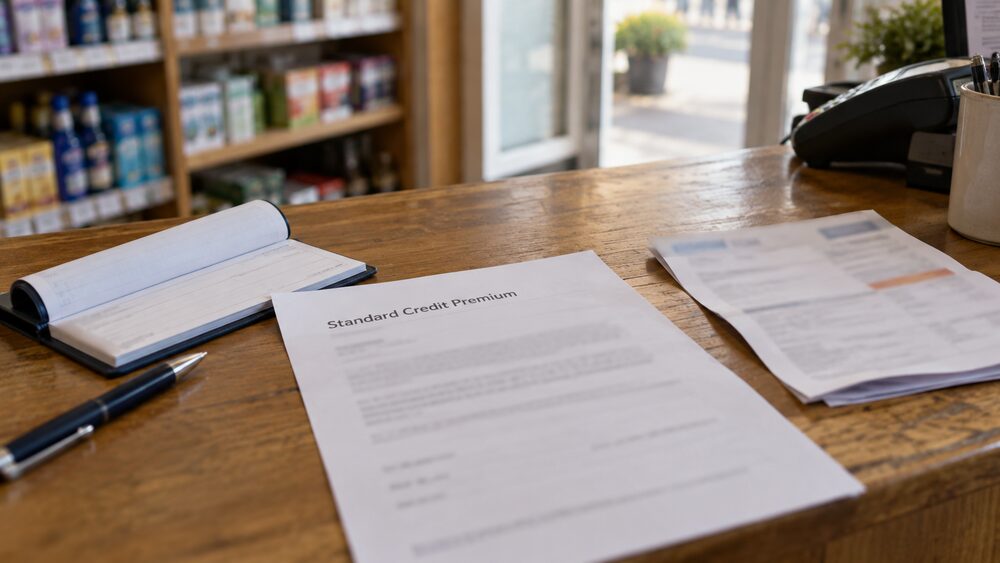
Paying for gas and electricity when the bill arrives, rather than by monthly Direct Debit, costs a typical household around £143 a year more1. Ofgem's price cap sets a separate, higher limit for these customers: for 1 October to 31 December 2026 the standard credit cap level is £138 higher than the Direct Debit cap level2. The gap exists because collecting money by cash, cheque or card costs suppliers more to administer, and the cap allows them to recover it through higher unit rates and standing charges.
Paying for gas and electricity when the bill arrives, rather than by monthly Direct Debit, costs a typical household around £143 a year more1. Ofgem's price cap sets a separate, higher limit for these customers: for 1 October to 31 December 2026 the standard credit cap level is £138 higher than the Direct Debit cap level2. The gap exists because collecting money by cash, cheque or card costs suppliers more to administer, and the cap allows them to recover it through higher unit rates and standing charges.
The premium is not a late payment charge. It applies to the payment method itself, so a standard credit customer who always pays on time still pays more than a Direct Debit customer using the same amount of energy. The cap still protects you: it limits the maximum unit price per kWh and the maximum daily standing charge suppliers can set, and it varies by energy supply region, payment method and type of electric meter3.
This page explains what standard credit is, how the premium is set, how the three main payment methods compare, and what to do if Direct Debit does not work for you.
What standard credit means and how it differs from Direct Debit
Standard credit is the arrangement where you receive a bill, usually quarterly, and pay it when it arrives, by cash, cheque, card or bank transfer. The premium is the extra cost paid by consumers who pay their bill when they receive it compared to those who pay by Direct Debit6. Direct Debit, by contrast, is a regular payment of a variable amount from your account to a third party or company, and it is commonly used for mortgage, phone, energy or gas bills7.
The two methods differ in more than price. Direct Debit payments are usually based on an estimate of the amount of energy you will use over a year, so the monthly figure is smoothed rather than matched to each bill8. That protects you from a large winter bill but can leave you in credit or in arrears when the estimate is wrong. Standard credit bills reflect actual metered use, so the amount varies with the weather and with how much you heat your home.
Direct Debit also carries a guarantee that standard credit does not. Direct debits give you more consumer protection under the Direct Debit Guarantee, which includes a right to a refund from your bank if a payment is taken in error7. A continuous payment authority, the arrangement used for some card payments, does not have the same guarantee9. If you pay by direct debit or quarterly credit you have a credit meter, and your supplier will take a reading at least once a year10.
The standard credit premium: around £135 to £143 a year
The size of the premium depends on how it is measured and on the period. Fair by Design puts it at around £143 a year for households who pay their bills on receipt of bill rather than by direct debit1. Research on the poverty premium found dual fuel customers paying by Direct Debit on an Energy Price Cap tariff paid a premium of £171 compared with the best fixed rate tariff, and that a household could save £100 a year by changing payment method to Direct Debit, calculated as £271 minus £17111. The same research found electricity customers on a Direct Debit Energy Price Cap tariff paid on average around £95 more annually than they would have if they had switched11.
One independent estimate puts the standard credit premium at over £100 a year, another at £135 a year, and the two have not been reconciled. What is consistent across the sources is the direction and the rough scale: paying on receipt of bill costs more than Direct Debit, and the difference runs to more than £100 a year for a typical household.
For context, the Direct Debit cap for a typical dual fuel household stood at £1,663 a year under the July to September 2026 cap4. The cap was £1,758 a year for a typical household paying by direct debit in January 202612, and £1,755 for the final quarter of 202513. These figures move with each quarterly announcement, so the premium is best understood as a percentage gap between two cap levels rather than a fixed sum.
How the price cap sets different prices by payment method
The price cap is the highest amount of money that energy suppliers can charge you for each unit of energy and the standing charge, if you are on a standard variable tariff14. It is not applied to your total energy bill; it is applied to each individual unit of energy15. Ofgem sets the maximum unit price per kWh and the maximum daily standing charge energy suppliers can charge, and this varies by energy supply region, payment method and type of electric meter, such as standard or economy 73.
That is the mechanism behind the premium. The cap is not one number but a set of numbers, and the payment method is one of the variables that produces a different set. The cap only affects standard variable tariffs, also known as standard, default or out-of-contract tariffs2. If you are on a fixed deal, the cap does not set your prices, though your supplier can still charge different rates for different payment methods within the fix.
The cap changes every three months9. Under the October 2026 cap, the average price of gas under the Direct Debit cap rose by 9% to 8.0 p/kWh, and the average price of electricity rose by 1% to 26.3 p/kWh, with VAT removed from electricity bills for six months4. The latest period saw a gas unit charge change of 8.8% and a gas standing charge change of 2.2%, based on unrounded figures3. Because the cap is set per unit, a household that uses more energy sees a bigger cash difference from the payment-method gap than a household that uses less.
Standard credit, Direct Debit or prepayment: how each one compares
The three payment methods differ in cost, in when you pay, and in what protection you get.
| Method | How it works | Cost relative to Direct Debit | What to watch |
|---|---|---|---|
| Direct Debit | Fixed monthly payments based on estimated annual use8 | Baseline; most companies offer a discount for paying this way16 | Payments can be raised; your supplier must tell you before an increase8 |
| Standard credit | Bill on receipt, usually quarterly, paid by cash, cheque, card or transfer6 | Around £143 a year more1 | No Direct Debit Guarantee; larger winter bills |
| Prepayment | Pay for energy before you use it | Slightly cheaper than Direct Debit on the price cap14 | Prepayment customers report more difficulty affording bills17 |
Direct Debit dominates how households pay regular bills: it is used by consumers to make around 7 out of 10 of all regular bill payments5. The saving is not trivial. Paying by Direct Debit will generally save you hundreds of pounds a year compared with paying by cash, card or cheque18, and gas and electricity may cost less if you pay by monthly direct debit from a bank account19.
Prepayment is the cheapest of the three on the price cap, but cost is not the whole picture. Prepayment means paying before you use energy, and Consumer Scotland's winter 2022 to 2023 Energy Tracker found that 53% of prepayment consumers reported cutting back on food to afford energy bills, compared with 33% of direct debit and standing order consumers17. Research on flexible payment methods ran six focus groups with individuals on low incomes, including those paying for energy by prepayment meter, receipt of bills (standard credit), or Direct Debit20.
What to do if you cannot or do not want to pay by Direct Debit
Moving to Direct Debit is a payment change with your existing supplier rather than a switch of supplier, and it is the single step that closes the premium. You can get money off your bills by using Direct Debit to pay most energy and telephone companies21. If a fixed monthly amount is the problem, ask about variable Direct Debit payments instead of paying the same each month, so the payment follows what you have actually used8.
If you are in debt to your supplier, switching supplier is still possible in some circumstances: you can switch if you pay by direct debit or when you receive a bill and you have owed your supplier money for less than 28 days, with the debt added to your final bill9. The same rule appears in independent switching guidance22.
Cancelling a Direct Debit is a different decision from never setting one up, and the advice is cautious. If you can afford your monthly payment, continue to pay; only cancel your direct debit if it seems likely the direct debit will bounce or if taking the payment would cause you more financial difficulty, such as going into an unauthorised overdraft19. Non-payment can result in higher bills and affect your credit file, and your energy supplier could also look at fitting a prepayment meter or, if you have a smart meter, switching it to prepayment19.
Will my supplier tell me how much extra I am paying?
Your supplier has to let you know about a payment increase before it happens, which is known as the Direct Debit Guarantee8. There is no matching duty to write to standard credit customers setting out the premium as a figure, so the practical way to see it is to compare the rates on your bill with the Direct Debit rates your supplier publishes. Most companies offer a discount for paying by Direct Debit, so the difference is usually visible as a discount line or as two sets of rates16.
If you think your Direct Debit has been set too high, you can ask your supplier to review it, and if you are unhappy with the response you can complain. The Financial Ombudsman Service can look at unresolved complaints about financial businesses, and its approach to complaints sets out how it decides what is fair24. Free, impartial guidance on managing bills is available from MoneyHelper21.
Where to get help if you are falling behind
Energy debt is widespread. The majority of survey respondents, 91%, were already behind with their energy bills when seeking debt advice22. If you are struggling, the first step is to contact your supplier, because they have to offer a payment plan. Free, independent debt advice is available from StepChange, National Debtline and Citizens Advice, and MoneyHelper offers guidance on making your money easier to manage21.
The Warm Home Discount gives eligible households £150 off their electricity bill. Customers on a direct debit are credited £150 to their electricity account, or to their gas account if requested; prepay customers are credited against future energy use; and some customers may receive a voucher or cheque redeemable at a Post Office or PayPoint shop20. Eligibility rules are set by Ofgem20.
If you cannot resolve a problem with your supplier, you can take the complaint further. The Financial Ombudsman Service is free to consumers and can look at complaints about financial businesses, including how they have handled payments and charges24. For energy-specific disputes, your supplier's complaints process and the ombudsman route are the standard path.
Sources24 cited
- Our response to the May 2026 energy price cap announcement Fair By Design, 2026
- What is the energy price cap? Which?, 2026
- Fuel poverty scenario modelling based on Ofgem energy price caps Scottish Government, 2026
- Energy price cap research briefing House of Commons Library, 2026
- Payment Markets Report 2026 summary UK Finance, 2026
- Long term measures to reduce energy bills and debt Fair By Design, 2025
- Direct Debits and standing orders explained Which?, 2026
- Understanding energy bills StepChange, 2026
- How to switch energy supplier Which?, 2026
- Bills and metering Consumer Council, 2026
- Poverty Premium 2026 University of Bristol Personal Finance Research Centre, 2026
- Scottish Economic Bulletin, December 2025 Scottish Government, 2025
- Scottish Economic Insights, September 2025 Scottish Government, 2025
- Energy tariffs explained Which?, 2026
- Energy price cap Turn2us, 2026
- Switching utility providers StepChange, 2026
- Prepayment meters and the energy crisis Consumer Scotland, 2022
- Getting the best energy deal Age UK, 2026
- Cost of living: making the most of your money National Debtline, 2026
- Warm Home Discount eligibility Ofgem, 2026
- Make your money easier to manage by yourself MoneyHelper, 2026
- Powering up support University of Bristol Personal Finance Research Centre, 2025
- Making the most of your money Business Debtline, 2026
- The Ombudsman's approach to PPI mis-sale complaints Financial Ombudsman Service, 2026




 MoneyHelperFree, impartial money and pensions guidance, set up by government
 Citizens AdviceFree advice on money, consumer and legal problems in England and Wales
 GOV.UKOfficial information on tax, benefits and government services
 StepChangeFree debt advice and solutions from a charity
 FSCSProtects your money if a bank, insurer or investment firm fails