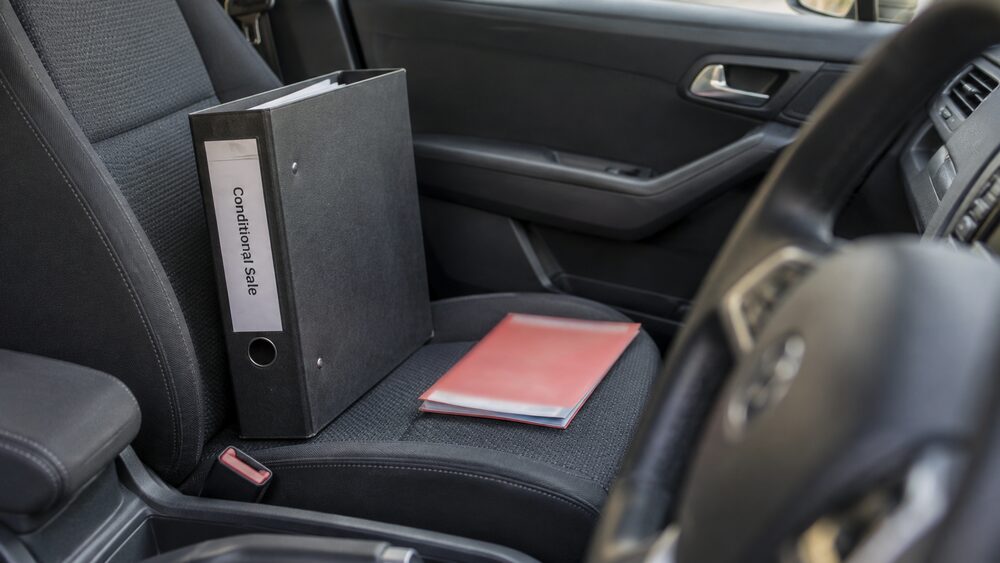
A conditional sale agreement is a way of buying goods, most often a car, on credit while the seller keeps legal ownership until you have made every payment. The legal definition is an agreement for the sale of goods under which the purchase price, or part of it, is payable by instalments, and the property in the goods remains with the seller until specified conditions are fulfilled1. In practice, those conditions are almost always that you complete all the instalments.
It is one of the main ways people buy cars on finance, sitting alongside hire purchase and personal contract purchase. The finance is normally provided by a company separate from the garage or dealership, so the firm you pay each month is usually not the firm that sold you the car2. Conditional sale agreements taken out by individuals come under the Consumer Credit Act 1974, which gives you rights over how the agreement can be ended, how the goods can be taken back and what must happen if you fall behind3.
What a conditional sale agreement is
A conditional sale agreement is, in substance, a sale with strings attached. You agree to buy the goods and to pay the price by instalments, but the contract says ownership stays with the seller until the conditions in the agreement are met1. Unlike a hire purchase agreement, where you hire the goods with an option to buy, a conditional sale agreement is a sale from the outset: you are committed to buying, and ownership transfers automatically once the final payment is made.
The definition comes from the Consumer Credit Act's framework of regulated agreements. A conditional sale agreement is a type of debtor-creditor-supplier agreement, meaning the credit is arranged by or through the seller of the goods7. That matters to you because it connects the finance to the purchase: if something goes wrong with the goods, the link between the seller and the finance company can affect who you can claim against, a point covered in more detail on Section 75 protection on point-of-sale credit.
Conditional sale agreements are used mainly for cars, but the same structure covers other goods bought by instalments. The rules described on this page, including the repossession protections, apply to hire purchase and conditional sale agreements together, and the guidance from debt charities treats the two in the same breath throughout3. Agreements taken out by a limited company do not come under the Consumer Credit Act 1974, so the protections on this page apply to agreements taken out by individuals3.
You do not own the goods until the last payment
The single most important feature of a conditional sale agreement is that you are not the owner while it runs. You do not own the goods until you have paid the last instalment8. Until then, the finance company owns the car, and you are effectively a keeper with obligations to look after it.
This has practical consequences beyond the paperwork:
- You cannot sell the goods without the lender's written permission, because they are not yours to sell4. Selling a car on conditional sale without permission can leave the buyer with nothing and you with a debt and possible legal action.
- You cannot use the goods to take out other credit, for example with a pawnbroker, because you do not own them by law until they are paid for in full9.
- The lender can take the goods back if you do not keep up the payments, subject to the protections described below3.
This is the sharpest difference from buying a car with an ordinary personal loan. With a personal loan, you own the car from the start, before it is paid for, and the lender cannot take the car back: it has no claim on the car at all, only on the debt4. You can sell a car bought on a personal loan at any time2. With a conditional sale agreement, the car itself is the lender's security.
The same ownership rule applies to other instalment arrangements. Weekly payment stores, where you pay for goods in weekly instalments, work the same way: until you make the final payment, the item does not belong to you, and the store can take it back if you do not pay10.
Conditional sale or hire purchase: how each one works
Conditional sale and hire purchase are close cousins, and for most practical purposes the rules are identical. Under both, the goods belong to the seller or finance company until your last payment11, you cannot sell them without the finance company's permission2, and the repossession and termination protections described on this page apply to both3. Debt charities publish a single set of guidance covering "hire purchase and conditional sale" because the rules for dealing with them are usually the same3.
The difference lies in the legal shape of the deal:
| Hire purchase | Conditional sale | |
|---|---|---|
| Legal form | You hire the goods, with an option to buy | A sale, with ownership held back until conditions are met |
| Ownership passes | When you exercise the option and pay | Automatically when the final payment is made |
| Can you walk away from buying? | The agreement is structured as hire plus option | You are committed to the purchase from the start |
| Repossession and termination rules | Same one-third and 50% protections | Same one-third and 50% protections |
Both are also distinct from a logbook loan, which is not a purchase agreement at all. A logbook loan is a bill of sale agreement: it transfers the legal ownership of your vehicle to the lender until you have paid the loan in full, while you keep using it12. You cannot sell the car while the loan is outstanding2, and the lender can take and sell the vehicle if you do not repay12. Logbook loans carry weaker protections than conditional sale agreements, which is why the two are worth telling apart.
One further point worth knowing: if you go bankrupt, a hire purchase or conditional sale agreement may include a clause ending the agreement, in which case the lender can repossess the vehicle and sell it, though some lenders may allow you to keep the car13. If the agreement ends before you are discharged, ownership of the vehicle passes to the official receiver, who may sell it or allow you to keep it depending on its value13.
Missing payments: default notices after two or three missed instalments
Falling behind on a conditional sale agreement follows a recognisable path. Your creditor must send you an arrears notice if you have missed two payments and owe at least that amount on your agreement14. You normally need to miss two or three payments before a default notice is issued4. Guidance on car finance in Northern Ireland describes a similar pattern: continuous non-payment can result in formal notices of arrears, and after three or four missed payments in a row, a default notice15.
A default notice is a formal document that sets out what you owe and gives you time to put it right. Default notices give you at least two weeks to make up missed payments16. The default notice itself gives you 14 days to make up any missing payments17. If you clear the arrears within that window, the agreement usually continues. If you do not, the lender can end the agreement and move to take the goods back.
The timing varies between lenders and between types of credit. Guidance on hire purchase says the default notice is usually issued after three months of missed payments5, while credit reference agency guidance says a default usually happens after you have missed between three and six months' payments19. The pattern is consistent: a default is not triggered by a single missed payment, but it does arrive after a run of them.
If you are struggling, free debt advice is available from charities including StepChange, National Debtline and Business Debtline, and from Advice NI in Northern Ireland. A debt adviser can also talk to you about a time order, a court order that can reduce your instalments to a level you can afford while the agreement continues14. The page on what to do if you can't repay a loan sets out the wider options.
Repossession once you have paid a third: court order needed
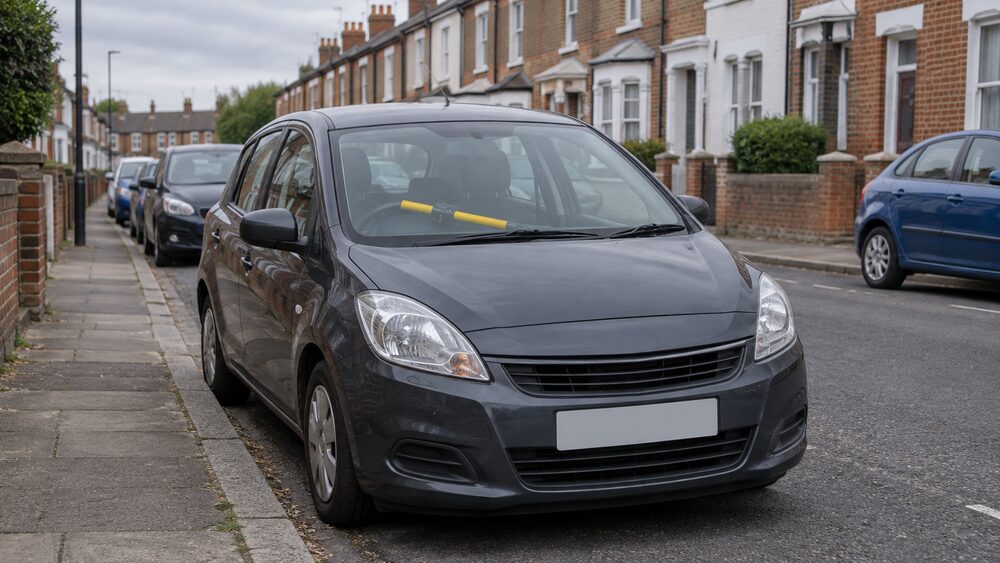
The Consumer Credit Act builds a protection around goods once you have paid a third or more of the total amount payable. At that point the goods become "protected goods", and the creditor must go to court for an order for the goods to be returned unless you consent to the repossession3. The legislation puts it directly:
"the creditor may not take back the goods against your wishes unless he gets a court order. (In Scotland he may need to get a court order at any time.)"20
The threshold is worked out on the total amount payable under the agreement, not the cash price of the car. That includes the interest and charges built into the instalments, so you reach the one-third point sooner than you might expect from the price alone.
It is worth being clear about what the protection actually gives you. Guidance from Advice NI is blunt: paying one third makes the car a protected good, but "in all reality, this doesn't provide much protection as it merely requires the lender to get a court order to repossess the car"15. The protection does not stop repossession; it forces the lender through a court process first, which gives you notice and a chance to respond.
There is a second protection that applies regardless of the one-third threshold. Even if you have not paid more than a third of the total amount payable, the creditor needs an order from the court, or your consent, to remove the goods from "any premises" they are on3. So a car parked on your driveway or in your garage, on premises where you have not given the lender permission to enter, cannot simply be towed away without a court order, whatever stage the payments have reached4.
When a lender can repossess without going to court
The flip side is that below the one-third threshold, and outside protected premises, the lender can act without a court. If you have paid less than a third of the total amount payable, the lender can repossess the car if it is on a public road, or from any premises where you have given permission to enter4. Guidance on hire purchase puts the same rule in two parts: the lender does not usually need to go to court first if you have paid less than a third of the debt, but may have to if the goods are inside your home or business3.
So the practical position for a car on a conditional sale agreement is:
- Paid less than a third, car on a public road: the lender can take it without a court order4.
- Paid less than a third, car on your driveway or premises where you have not given permission: the lender needs a court order or your consent4.
- Paid a third or more: the goods are protected and the lender needs a court order or your consent, wherever the car is3.
This is where conditional sale differs most sharply from a logbook loan. A logbook loan is secured by a bill of sale, and if you do not keep up to date with payments, the lender can take and sell your goods without going to court17. A bill of sale allows the lender to seize your car without a court order21. The one-third protected goods rule does not apply to logbook loans in the same way, which is one reason the two products carry very different levels of risk.
If a lender does repossess protected goods without a court order and without your consent, the consequences for the lender are serious. You are entitled to a refund of all the money you have paid under the agreement3. The lender risks having to refund all the money you have paid if they break this rule4. If this happens to you, keep records of what was paid and when, and complain to the lender, escalating to the Financial Ombudsman Service if the lender does not put it right.
Responding to a return order: 14 days to reply
When a lender goes to court for a return order, you need to respond to the application by filling in the N9C admission form and returning it to the court, and you have 14 days to do so4. The return order, sometimes called a return of goods order, is the court's mechanism for letting the creditor take back the goods lawfully.
Responding matters. If you do not reply within the 14 days, the court can decide the case without your input, and the order can be made as asked. If you do reply, you can set out your position, including whether you dispute the arrears or want time to pay. A debt adviser can help with the form, and a time order, which reduces your instalments to an affordable level, can be requested as part of the court process14.
The sequence from default notice to return order is not instant. The default notice gives you at least two weeks to make up the missed payments16, and the court process adds further time and notice before any order takes effect. That window is the point at which free debt advice has the most value, because options narrow sharply once the goods are actually returned.
Voluntary termination: ending the agreement by paying up to half
You do not have to wait for the lender to act. The Consumer Credit Act gives you a statutory right to terminate a hire purchase or conditional sale agreement yourself, at any time before the last instalment is due22. This is called voluntary termination, and it is covered in detail on the voluntary termination page.
The financial limit is half. When the agreement is terminated and the goods returned, what is owed is up to half of the total amount payable under the agreement, minus sums already paid and sums that are due3. Guidance gives a worked example: on an agreement where 50% of the amount repayable is £2,000, that figure is the ceiling of what is owed on termination22.
Two points are commonly misunderstood:
- The 50% does not have to be actually paid before terminating. Notice in writing is what the rule requires, although some creditors say otherwise3. Where less than half has been paid, the difference falls due; where more than half has been paid, nothing further should be owed2.
- Notice to the creditor must be in writing that the agreement is being terminated, for the 50% limit to apply3. Verbal notice is not enough.
The right is not unlimited. You can voluntarily terminate at any time before the last payment is due, but only if the lender has not already terminated the agreement4. Guidance on hire purchase adds that you can end the agreement at any time only if the creditor has not issued a default notice5. In other words, voluntary termination is a right you hold while the agreement is alive and you are ahead of the lender's enforcement process; once the lender has ended it, the 50% ceiling no longer protects you.
On top of the half limit, you will owe any arrears, and reasonable charges if the car is damaged4. Terminating the agreement does not terminate any subsidiary insurance agreement, and you remain liable for that3.
Where the rules differ: Scotland and Northern Ireland
The one-third protected goods rule applies across the UK, but Scotland adds a wrinkle. In Scotland, the law is unclear about whether a creditor has to get a court order to repossess hire purchase goods if you have paid less than one third of the total amount payable22. The legislation itself notes that in Scotland the creditor may need a court order at any time20. If you are in Scotland and facing repossession below the one-third threshold, take advice before assuming the lender can act without a court.
The repossession guidance covering the court process, the N9C form and the 14-day response deadline is written for England and Wales4. In Northern Ireland, the same one-third threshold applies and the lender needs a court order to repossess once it is reached15, and Advice NI publishes guidance on car finance for Northern Ireland consumers15. The rules for dealing with hire purchase and conditional sale are otherwise usually the same whether the debt is treated as a business or a household priority debt8.
Free advice is available in each nation: StepChange and National Debtline across the UK, Business Debtline for the self-employed, and Advice NI in Northern Ireland. The loans and car finance in Scotland and loans and car finance in Northern Ireland pages cover the nation-specific differences in more detail.
How a conditional sale agreement affects your credit file
A conditional sale agreement is a credit agreement, and how you run it is recorded. Missed payments, defaults and court judgments stay on your credit file for six years6. A default stays on the file for six years from the date it is recorded19, and credit accounts in default stay on your credit report for six years from the date of default19. The repossession of a car under a hire purchase or conditional sale agreement is also information that is normally kept on your credit reference file for six years, and it can affect your ability to get credit4.
Clearing the debt does not wipe the record. If you choose to sell assets to repay your debt, that will not remove any negative information from your credit file23. The six-year clock runs from the date the entry was recorded, not from the date you paid it off.
This matters most at the point of termination. Voluntarily terminating a conditional sale agreement is a legal right and using it is not itself a default, but any arrears or missed payments that led up to it, or a default notice already issued, will have been recorded and will remain for six years. The credit file impact of loans page explains how entries are recorded and what you can check.
Complaints and where to get help
If you have a dispute with a conditional sale lender, over repossession, charges, termination or anything else, complain to the lender first and give it a chance to respond. If it does not resolve the matter, you can take it to the Financial Ombudsman Service free of charge. The ombudsman deals with complaints about credit and borrowing, including car finance, and its quarterly data shows the volume of complaints by product: conditional sale (motor) agreements drew 708 complaints in the first quarter of 2026/2724.
The ombudsman has also been active in motor finance more broadly. It operates temporary complaint handling rules for commission complaints on common finance agreements such as hire purchase, personal contract purchase and conditional sale agreements, extended from 4 December 2025 until 31 May 202625. If your complaint concerns commission paid in connection with your agreement, the motor finance redress scheme page explains how that process works.
For money trouble rather than a dispute, free debt advice is the right port of call. StepChange, National Debtline and Business Debtline provide free advice, and Business Debtline covers hire purchase and conditional sale debts for the self-employed22. A debt adviser can check whether a time order would help14, whether the agreement is affordable, and what your options are before a default notice or repossession takes the choice out of your hands.
Sources25 cited
- Consumer Credit (Disclosure of Information) Regulations: definitions legislation.gov.uk, 2020
- Car finance debt guidance StepChange Debt Charity, 2026
- Hire purchase and conditional sale agreements under the Consumer Credit Act Business Debtline, 2026
- Car repossession: what happens and what you can do about it National Debtline, 2026
- Hire purchase debts guidance StepChange Debt Charity, 2026
- How does debt affect a credit file StepChange Debt Charity, 2026
- Consumer Credit Act 1974 Part II: debtor-creditor-supplier agreements legislation.gov.uk, 1974
- Your priority debts (Scotland) Business Debtline, 2026
- Weekly payment store debt guidance StepChange Debt Charity, 2026
- Store finance debt guidance StepChange Debt Charity, 2026
- Hire purchase debt guidance (England and Wales) Business Debtline, 2026
- Logbook loans: how they work Financial Ombudsman Service, 2026
- Bankruptcy and my car StepChange Debt Charity, 2026
- Time orders on hire purchase agreements Business Debtline, 2026
- Car finance advice for Northern Ireland Advice NI, 2026
- Default notices and missed payments StepChange Debt Charity, 2026
- Bill of sale guidance (England and Wales) National Debtline, 2026
- Hire purchase debt (Scotland) National Debtline, 2026-09-25
- Credit reference agencies guidance (England and Wales) Business Debtline, 2026
- Consumer Credit Act regulations: Schedule 2 Form 11 legislation.gov.uk, 2026
- Loans: nidirect guidance nidirect, 2025
- Hire purchase debt guidance (Scotland) Business Debtline, 2026
- Selling assets to clear debt (England and Wales) Business Debtline, 2026
- Quarterly complaints data Q1 2026/27 Financial Ombudsman Service, 2026
- Complaints about commission in car finance Financial Ombudsman Service, 2025





 MoneyHelperFree, impartial money and pensions guidance, set up by government
 StepChangeFree debt advice and solutions from a charity
 National DebtlineFree debt advice by phone, webchat and online
 Financial Ombudsman ServiceFree, independent help when a complaint about a firm is not put right
 Citizens AdviceFree advice on money, consumer and legal problems in England and Wales