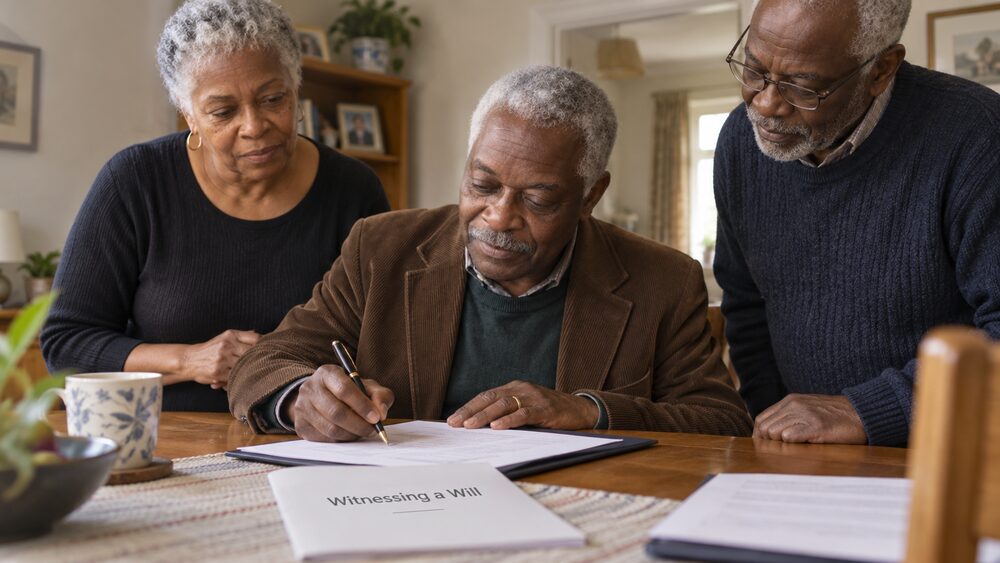
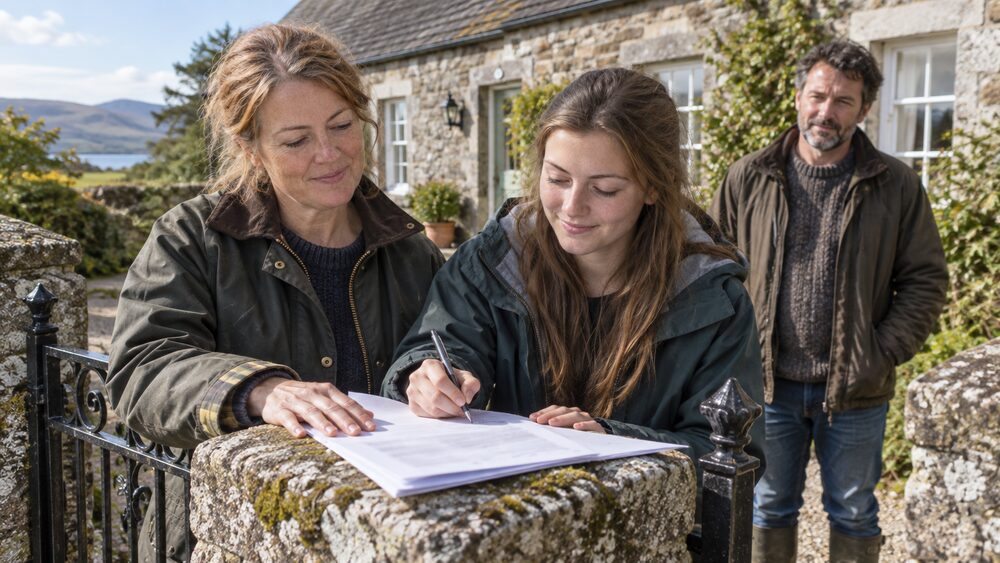
A will needs two adult witnesses. The person making the will signs it, both witnesses watch that signature, and then both witnesses sign the document themselves. A will that is not signed and witnessed correctly is not valid, so the signing is not a formality: it is part of what makes the document legally binding1.
A will needs two adult witnesses. The person making the will signs it, both witnesses watch that signature, and then both witnesses sign the document themselves. A will that is not signed and witnessed correctly is not valid, so the signing is not a formality: it is part of what makes the document legally binding1.
The witnesses must be adults, and they cannot be people who inherit under the will. If you leave anything to a witness, that gift is void, which means the act of witnessing can cancel a gift you meant to make1. Choosing witnesses who are not beneficiaries avoids the problem entirely.
This page covers how many witnesses a will needs, who is eligible to act, how the signing works in practice, and what happens when it goes wrong. It applies across the UK, with notes where the rules differ.
Two witnesses are needed for a valid will
The requirement is straightforward: a will needs to be written and signed correctly in order to be valid, and the standard way of doing that is with two adult witnesses present2. Both witnesses watch the person making the will sign, and then both of them sign the document themselves.
This is not a rule that bends for convenience. A will is a legally binding document, and the witnessing is one of the things that makes it so6. If the signing is not done properly, the document may not be accepted, and the estate could end up being distributed under the intestacy rules instead of according to the will7.
The same two-witness principle runs through other formal documents, which is a useful check on what "witnessed correctly" means in practice. A civil partnership, for example, is created when two people sign a civil partnership document in the presence of a registrar and witnesses8. The pattern is consistent: a signature that matters is a signature someone else has seen and confirmed.
Where a will is being used to set up a trust, the witnessing still applies to the will itself. A will trust only comes into effect when you die, and trustees can only use it for money or property in the trust, after the person has died9. None of that changes the signing requirement on the will that creates it.
Witnesses must be adults
Witnesses have to be 18 or over. Guidance on wills and on comparable formal documents sets the witness age at 18, and a signature witnessed by a child does not meet the requirement3.
The age rule shows up in several related settings, which helps explain why it is set where it is. A witness to a power of attorney must be 18 or over11. In Scotland, a witness to a continuing power of attorney can be anyone aged over 16, such as a friend, family member, neighbour, colleague or solicitor, but must not be an attorney or replacement attorney under the same document12. The Scottish position on powers of attorney is not the same as the position on wills, so it is worth checking which document you are dealing with.
There is a second condition that matters as much as age: a witness should not be a beneficiary. Witnesses cannot be named as beneficiaries, and if you leave anything to a witness in your will, the gift will be void1. That is the single most common way a well-intentioned signing goes wrong, because the natural people to ask are often the people you are leaving money to.
| Rule | What it requires |
|---|---|
| Number of witnesses | Two adults1 |
| Age of witness | 18 or over3 |
| Can a witness inherit? | No, and any gift to a witness is void1 |
| Must the will maker sign? | Yes, and the signature must be formally witnessed2 |
How the will maker and the witnesses sign
The order matters. The person making the will signs first, in front of both witnesses, and then the witnesses sign. Both witnesses need to be present at the same time to see the same signature; a witness who signs later, having not watched the will being signed, has not witnessed anything.
The same sequence appears in other formal documents, which is a useful illustration of the principle. For a lasting power of attorney, the forms must be signed in a particular order: the donor signs first and that signature must be witnessed, then the certificate provider signs, and finally the attorney signs and that signature is witnessed too. Get the order wrong and the document will be rejected11. A will is not identical, but the underlying idea is the same: the witnessing has to happen at the right moment, not afterwards.
A will must be signed and formally witnessed, and it should also be kept in a safe place where others can find it3. That last point is not a legal requirement but it is a practical one. A will that cannot be found may as well not exist, and the first step in dealing with an estate is to check whether there is a will at all13.
Witnesses cannot inherit, and other limits
The rule that a witness cannot benefit is the one most likely to catch people out. Witnesses cannot be named as beneficiaries, and any gift to a witness is void1. If you want to leave something to a close friend or relative, they should not be a witness to your will.
There are other limits worth knowing about, because they affect who is suitable to act:
- A witness must be an adult, 18 or over3.
- A witness should not be a beneficiary under the will1.
- A witness needs to be present when the will is signed, not asked to sign later.
- If a will is being used to leave money or property to a dependant who cannot look after themselves, including children under 18, professional advice is often recommended14.
Where a will names guardians for children, the witnessing rules are unchanged. If you have children under 18 (16 in Scotland), a will is a chance to nominate a guardian who would legally look after them15. You can also decide who looks after your children if they are under 1816, and a will can show who you would like to look after them17. None of that alters the two-witness requirement on the will itself.
What happens if the signing goes wrong
If a will is not witnessed correctly, it may not be valid. That matters because the consequences fall on the people left behind, at a point when they are least able to deal with a problem.
The most serious outcome is that the estate is distributed under the intestacy rules rather than according to the will7. That means the people you intended to benefit may receive nothing, and people you did not intend to benefit may receive a share. The rules that apply depend on where in the UK the person lived, and they are not the same in each nation.
There are also smaller failures that cause trouble. A will that is signed but not witnessed, or witnessed by only one person, or witnessed by someone who then inherits under it, all create a risk that the document is challenged or rejected. Because a will is a legally binding document, the safest approach is to have the signing done properly the first time6.
Changing a will after it has been witnessed
You cannot amend a will after it has been signed and witnessed by editing the document. You can either make a new one, which will cancel any previous will you have made, or alter the existing one by adding what is known as a codicil5.
A codicil must be witnessed and signed in the same way as the will itself2. That means the same two-witness rule applies, and the same restriction on beneficiaries acting as witnesses. If the original signing was done properly, the codicil needs to match it.
It is also worth reviewing a will periodically rather than leaving it untouched for years. A review every three years is a common recommendation1. Circumstances that commonly prompt a new will include separation, where you may also need a new will18.
Where to get help
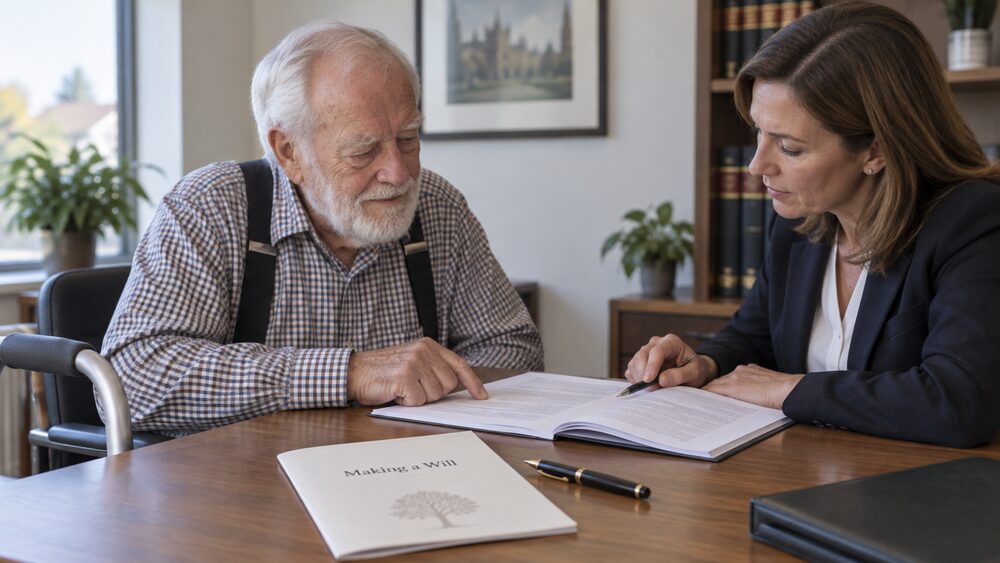
You do not have to use a solicitor to write a will, but it needs to be written and signed correctly6. A will pack that you fill in yourself is only suitable if your will is going to be very simple19, and writing your own will is generally not advised and only suitable if your affairs are very straightforward1.
Where a will is more complex, professional advice is worth considering. An accountant would not need to be involved in the drafting of your will, and a solicitor is better placed to advise on inheritance tax planning in most cases20. If you have a business, or want to set up trusts, or are leaving money to a dependant who cannot look after themselves, that points towards taking advice19.
Free and impartial help is available. MoneyHelper offers guidance on wills and estate planning, and the organisations that provide will-writing services can explain their own processes. If a will has already gone wrong, or you are unsure whether one was signed correctly, a solicitor can advise on whether it is valid and what the options are.
Sources20 cited
- How to make a will Which?, 2026-02-26
- Making a will: four dos and three don'ts Which?, 2023-03-01
- Dementia and managing money nidirect, 2026-09-03
- The six mistakes that could invalidate your will Which?, 2023-07-18
- Making a will Royal London, 2025-10-09
- Wills and trusts Sense, 2025-01
- Intestacy rules Which?, 2026-07-28
- Partnership rights Age UK, 2026-07-28
- Will trusts and lifetime trusts Which?, 2026-03-23
- Leaving money to a disabled person in a will trust Scope, 2026-04-09
- Power of attorney Age UK, 2026-01-09
- Power of attorney in Scotland TSB, 2026
- What is the process of probate Kuflink, 2024
- Sut ydw i'n gwneud ewyllys neu gronfa ymddiriedolaeth Mental Health and Money Advice, 2024-02-13
- Wills Skipton Building Society, 2026-09-26
- Making a will Scottish Widows, 2026-09-26
- Will writing Santander, 2026
- Relationships and your money Independent Age, 2026-09-26
- How do I make a will Mental Health and Money Advice, 2024-02-13
- Do I need a solicitor and accountant to write my will Which?, 2026-02-02



 MoneyHelperFree, impartial money and pensions guidance, set up by government
 Citizens AdviceFree advice on money, consumer and legal problems in England and Wales
 Turn2usFree benefits calculator and grants search from a charity
 GOV.UKOfficial information on tax, benefits and government services