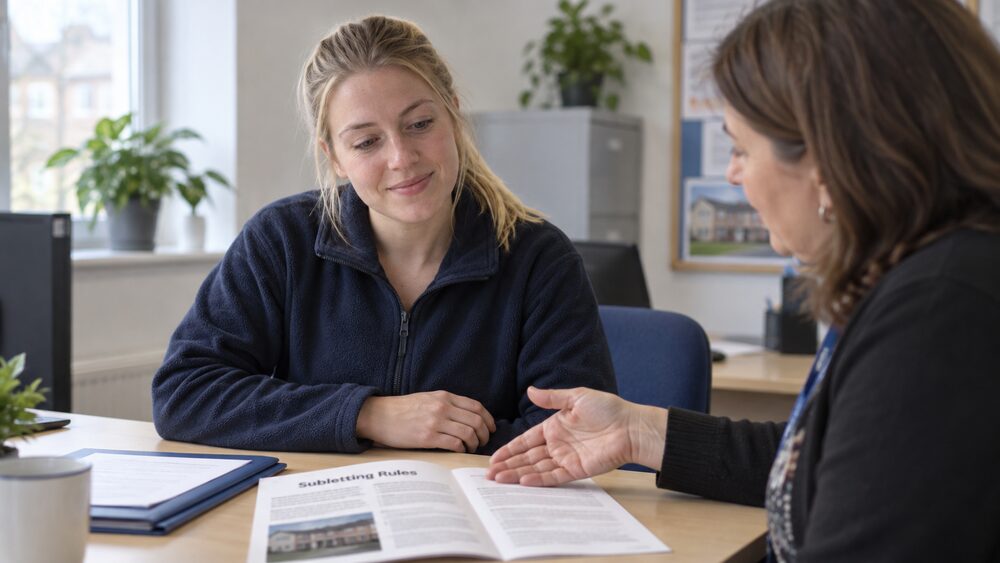
In most cases, no. Shared ownership lets you buy a share of a home, usually between 10% and 75%, and pay rent to a housing association on the rest1. The lease you sign normally stops you renting the whole property out, and landlords rarely give permission. Renting out without permission is a breach of your agreement, and in the most serious cases a shared owner could lose their interest in the property, with ownership returning in full to the landlord3.
In most cases, no. Shared ownership lets you buy a share of a home, usually between 10% and 75%, and pay rent to a housing association on the rest1. The lease you sign normally stops you renting the whole property out, and landlords rarely give permission. Renting out without permission is a breach of your agreement, and in the most serious cases a shared owner could lose their interest in the property, with ownership returning in full to the landlord3.
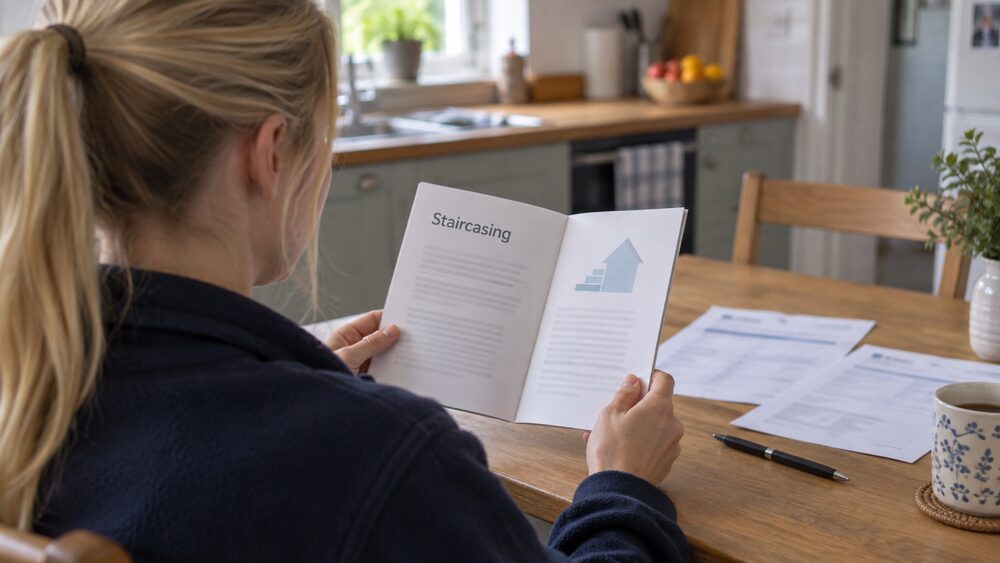
There is one clear route to letting freely: buying the remaining shares until you own 100%, known as staircasing. Around 4,000 to 5,000 shared owners a year staircase to full ownership2. Until then, the rules on letting, subletting and lodgers all come back to your lease and your landlord.
This page sets out what the standard rule is, when a landlord might say yes, why a spare room is usually off limits, how staircasing changes things, and what to do if you need to move out.
Shared ownership homes usually cannot be rented out
Shared ownership is a government-backed scheme where you buy a share of a property and pay rent to a landlord for the share they own7. Under the current model you buy an initial percentage of between 10% and 75% and pay a reduced rent on the rest2. Because you own only part of the home, the lease normally restricts what you can do with it, and letting the whole property is top of that list.
The restriction is not a quirk of one landlord. It is built into the tenure. Shared ownership properties are usually leasehold, meaning shared owners are leaseholders rather than freeholders8, and in England shared ownership properties are always leasehold9. A lease sets out what the leaseholder may and may not do, and renting out the whole home is normally prohibited without the landlord's consent.
One lender's guidance is blunt about the outcome: you cannot rent out a shared ownership property, though there are some exceptions, so it is best to speak to your landlord4. Another says plainly that you cannot rent out your home, although you can sublet a room10. That last point is where sources disagree, and it matters, so it is worth checking your own lease rather than relying on a general rule.
The practical effect for a shared owner who needs to move for work, or whose circumstances change, is that the home is not a letting investment. It is a home you live in, and if you leave, you sell.
When the landlord may give permission to let
Permission is possible but rare. The standard position is that in most cases permission to rent out your home will not be granted5. Where a landlord does consider it, the decision sits with them, and it usually comes with conditions: a fixed period, a reason such as a job move, and confirmation that your mortgage lender agrees.
Your mortgage lender is a separate gatekeeper. If you rent out your home you may need permission from your lender, and your mortgage interest may increase11. Most mortgage agreements let you have a lodger as long as you live in the property, and lenders ask to be contacted first12. Letting the whole property is a bigger step than taking in a lodger, and lenders treat it differently.
If you are behind on rent, the advice is to talk to your housing association before anything else. A shared owner who cannot pay their rent should contact their housing association directly, which will support and advise them13. Letting the property without permission to cover arrears would make the situation worse, not better.
Subletting a spare room: usually not allowed
Taking in a lodger feels like a smaller step than letting the whole home, but under shared ownership it is usually blocked too. In most cases you will not be able to sub-let a spare room under a shared ownership scheme10. In Wales, shared ownership guidance is explicit that you must not sub-let any part of the home being bought through the scheme14.
Where subletting is allowed at all, it comes with conditions. Most contract holders can only take in a lodger if they rent a whole house or flat, have a spare room, and get permission from their landlord before the lodger moves in15. Homeowners can usually take in lodgers, but generally need permission from their lender under most mortgage agreements15. A shared owner sits between the two: part owner, part renter, and bound by the tighter of the two sets of rules.
There is a benefits angle worth knowing. If you do sub-let a room, you will not be affected by the extra bedroom rules16. But subletting without permission breaks your tenancy agreement and you could be evicted17. For joint tenants in social housing with a spare bedroom, the calculator will not split the spare room subsidy between joint tenants, and the full deduction applies if you enter that you have a spare room18.
The safest reading is the simple one: check your lease, and ask your landlord in writing before anyone moves in.
Staircasing to 100%: the route to letting freely
Staircasing is buying more shares in your home, and it is the mechanism that eventually removes the shared ownership letting restriction. As you buy more shares, you pay less rent on the rest of the property6. The scheme offers the person the opportunity over time to increase their share and eventually own the property in full19. In some cases the shared owner may be able to purchase 100% of the property, which is referred to as final staircasing20.
Once you own 100%, you own the whole property, so the restriction that comes from owning only part of it no longer applies in the same way. You would still need to check your lease, your mortgage terms and any lender permission before letting it out, because those obligations do not disappear with the final share.
The current model has made staircasing more flexible. There is an option to staircase in 1% increments per year for 10 years without undertaking a valuation, and other staircasing transactions are reduced to a minimum of 5% rather than 10%2. Around 4,000 to 5,000 shared owners a year staircase to full ownership2. If letting the home out is your goal, staircasing is the route that gets you there, and it is worth understanding the costs before you start.
Moving out without permission: selling your share
If you want to leave, the answer is to sell, not to let. You cannot rent out or keep the home; you will need to sell your share if you want to leave21. Shared ownership leases usually set out how that sale works, including any period your housing association has to find a buyer.
Selling a share is not the same as selling a home you own outright. You are selling a leasehold share, and the buyer takes on the same lease terms you did, including the rent on the share they do not own. The Right to Shared Ownership scheme works the same way: you buy a share of your home as a leaseholder, pay rent to the landlord on the rest, and usually pay monthly service charges6.
If you are in financial difficulty and cannot sell, there may be other routes. If your home is a shared equity or shared ownership property, you can apply to the Mortgage to Rent scheme22. That is a scheme for people who cannot keep up with their mortgage, not a letting route, and it is worth asking your housing association or a free debt advice service about it before matters escalate.
Does the rule on renting out apply to Older People's Shared Ownership homes?
Yes. The Older Persons Shared Ownership scheme follows the same rules as the shared ownership scheme23. So the same restrictions on renting out the whole home, and on subletting, apply.
Older People's Shared Ownership does have its own staircasing feature. You can buy more shares in your home in future, and if you buy more shares you will pay less rent23. Once you own 75% of the home you do not have to pay rent on the remaining 25% share of the property23. That is a different threshold from the standard scheme, where rent continues until you own 100%, but it does not change the letting rule.
The same applies to other shared ownership variants. The HOLD scheme, for people with a long-term disability, also allows staircasing, and buying more shares means paying less rent24. Whatever the scheme name, the letting restriction comes from the lease and the fact that you own only part of the home.
Sources24 cited
- Shared ownership: buying a share and paying rent GOV.UK, 2026
- Shared ownership National Housing Federation, 2026
- Can shared owners lose all of their investment if they don't pay their rent? National Housing Federation, 2026
- Shared ownership mortgages Lloyds Bank, 2026
- Can I rent out my Co-Own home? Co-Ownership, 2026
- Right to Shared Ownership GOV.UK, 2026
- Mortgages for people with a long-term disability Scope, 2026
- Why are shared ownership customers responsible for paying for major structural works? National Housing Federation, 2026
- Right to Shared Ownership House of Commons Library, 2026
- Shared ownership mortgages Experian, 2026
- Problems paying your mortgage Independent Age, 2026
- Taking in a lodger if you have mortgage arrears Shelter England, 2026
- Can shared owners lose all of their investment if they don't pay their rent? National Housing Federation, 2026
- Shared ownership eligibility Welsh Government, 2026
- Can I take in a lodger or sub-let? Shelter Cymru, 2026
- Getting a lodger Entitledto, 2026
- How to deal with the bedroom tax Shelter England, 2026
- Non-dependants Entitledto, 2026
- Mortgage jargon buster StepChange, 2026
- Why is shared ownership considered ownership? National Housing Federation, 2026
- Shared ownership mortgages NatWest, 2026
- Help with mortgage payments Business Debtline, 2026
- Older Persons Shared Ownership GOV.UK, 2025
- HOLD: Home Ownership for people with a Long-term Disability GOV.UK, 2025







 MoneyHelperFree, impartial money and pensions guidance, set up by government
 Citizens AdviceFree advice on money, consumer and legal problems in England and Wales
 ShelterFree housing advice from a charity
 GOV.UKOfficial information on tax, benefits and government services
 Financial Ombudsman ServiceFree, independent help when a complaint about a firm is not put right