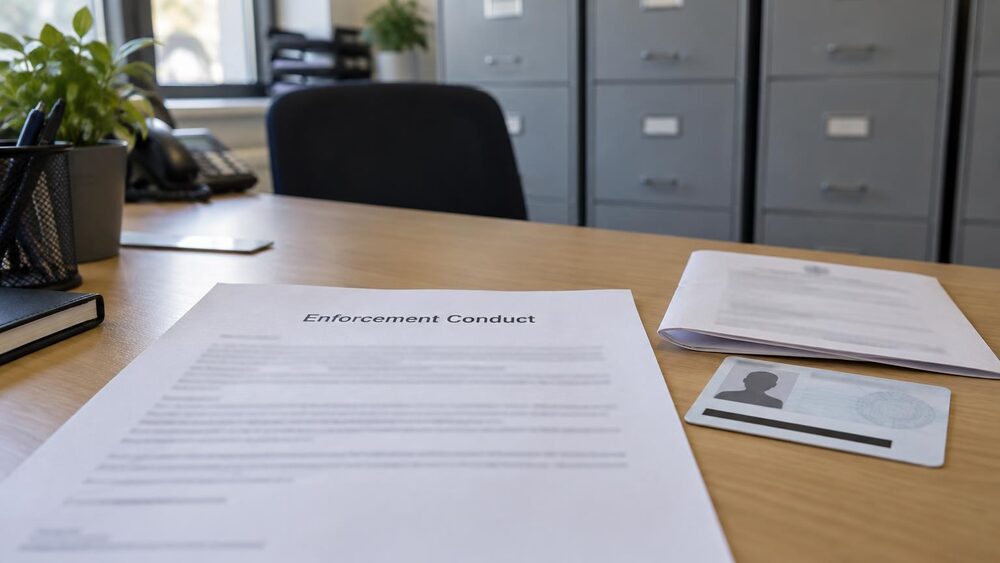
Bailiffs, enforcement agents and sheriff officers all do the same basic job: they enforce a debt or a court order by visiting your home, and in some cases taking control of your belongings. Which one you deal with depends entirely on where in the UK you live. In England and Wales, bailiffs are officially called enforcement agents. In Scotland, the equivalent role is carried out by sheriff officers, who enforce a process called diligence. In Northern Ireland, enforcement is handled through the Enforcement of Judgement Office (EJO)1.
The rules are not interchangeable. A bailiff in England and Wales operates under a different legal framework from a sheriff officer in Scotland, and the powers, the complaint routes and the protections available to you all differ. Knowing which system applies to you is the first step to understanding what can and cannot happen4.
This page sets out how the three systems compare, what each type of officer can do, what they cannot do, and where to get free help if you are facing enforcement action.
Where you live decides which rules and help apply
The single most important fact about bailiff enforcement in the UK is that it is not one system. England and Wales share a framework, Scotland has its own, and Northern Ireland has a third. A bailiff in England and Wales is officially known as an enforcement agent, and the advice that applies to them covers England and Wales only4. If you live in Scotland, you need different advice entirely8.
In Scotland, sheriff officers are responsible for enforcing diligence, which is the Scottish term for the legal process creditors use to recover money2. Sheriff officers start diligence to enforce the recovery of goods, such as hire purchase items, the recovery of money owed, or the repossession of your home2. They can also evict you, make you pay a debt such as a summary warrant for council tax arrears, make you pay a fine, remove people from a home, deliver legal documents, and carry out court orders about property arguments and family issues3. The court decides what powers sheriff officers have in different situations3.
In Northern Ireland, enforcement is handled through the Enforcement of Judgement Office (EJO)1. Magistrates' courts in Northern Ireland can issue liability orders for unpaid rates and child maintenance, under a process different to the criminal justice system9. The Department for the Economy provides official insolvency guidance for Northern Ireland, separate from the guidance that applies in Scotland and England and Wales10.
Debt collectors are not bailiffs and are not sheriff officers. They have no special legal powers and the same rights as the original creditor. Pretending to be a bailiff or sheriff officer can be a criminal offence7.
What bailiffs and enforcement agents can and cannot do
In England and Wales, bailiffs can only be used if you have a court judgment and you miss a payment that the court has ordered you to make11. Only the courts can send bailiffs to visit your home4. Councils can only use bailiffs to collect business rates or council tax arrears after they have got a liability order against you12. For council tax, bailiffs are usually sent only after a first reminder letter has been ignored, a second reminder letter has been ignored, and non-payment continues after a final reminder letter, at which point the council applies for a liability order4.
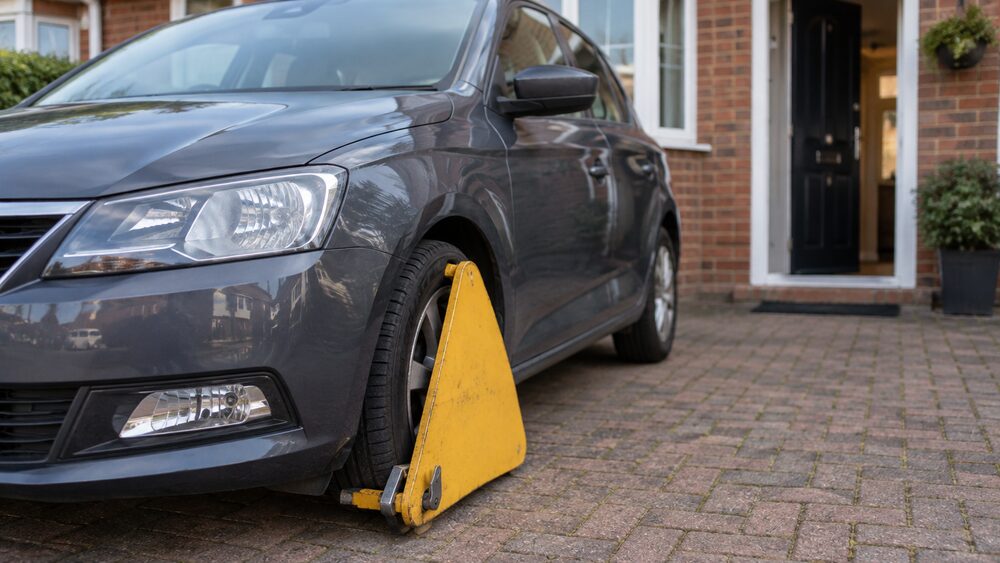
Once a bailiff is involved, they have specific powers and limits. They usually need your permission to enter your home, and permission counts if you let them in or a door is left unlocked13. You do not have to let them into your home14. A bailiff does not need to be inside your home to take control of some goods, such as clamping your car if it is parked on the street or in your driveway4.
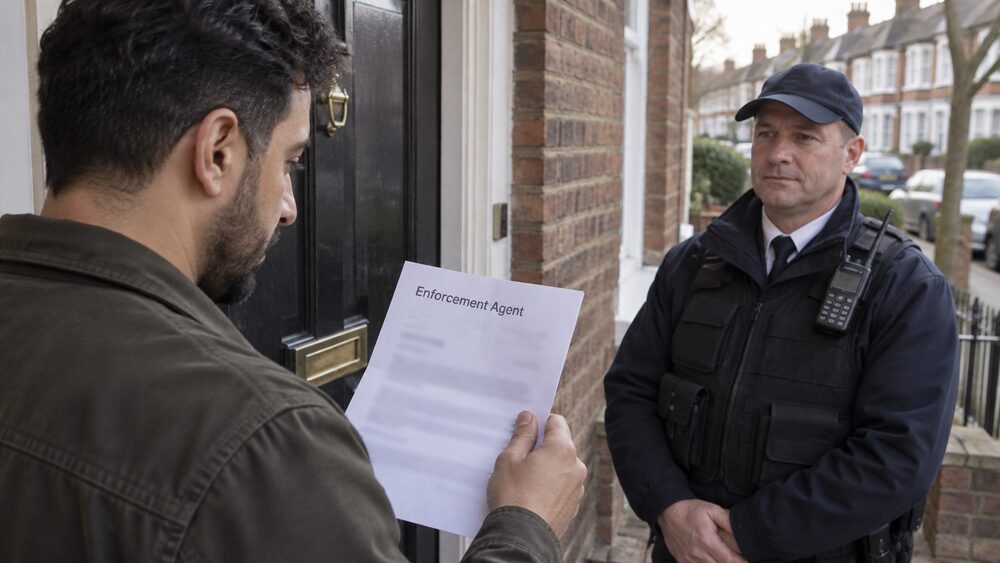
Bailiffs must show identification, tell you which creditor they are collecting for, show their court warrant and give you a reasonable chance to pay15. They must not use violence or offensive language when evicting you, nor damage your belongings, and they cannot keep belongings to pay for court costs or rent arrears unless a separate court order allows it16. They need to leave you with basic household items and should only take enough items that will sell to pay off your debt15. They cannot turn up at your place of work unless you are self-employed15. They must arrange an interpreter where they can and make communications available in large print, braille and other languages if needed15.
If a bailiff is collecting a debt owed by you personally, the bailiff can only take control of goods owned by you17. High court bailiffs can take goods that are jointly owned by you and your partner, but they are only entitled to your share18.
Sheriff officers in Scotland: diligence and your rights
Scotland's enforcement system is built around diligence, and sheriff officers are the officers who carry it out. Debt collectors do not have the same powers as sheriff officers19. If you live in Scotland, the rules are different from England and Wales, and you need advice that covers Scottish law2.
Sheriff officers can evict you, make you pay a debt such as a summary warrant for council tax arrears, make you pay a fine, remove people from a home, deliver legal documents, and carry out court orders about property arguments and family issues3. The court decides what powers sheriff officers have in different situations3. Sheriff officers start diligence to enforce the recovery of goods, the recovery of money owed, or the repossession of your home2.
If you are struggling with council tax in Scotland, you can ask a sheriff officer to make a payment agreement with you20. This is a specific option within the Scottish system that does not exist in the same form in England and Wales.
You can complain if a sheriff officer treats you in an unfair way. You cannot complain about the outcome of your case or the handling of your case2. This distinction matters: the complaint route is about conduct, not about the decision itself.
Northern Ireland: the Enforcement of Judgement Office
Northern Ireland has its own enforcement framework. The Enforcement of Judgement Office (EJO) handles enforcement in Northern Ireland1. Magistrates' courts can issue liability orders for unpaid rates and child maintenance, under a process different to the criminal justice system9.
The Department for the Economy provides official guidance on insolvency and bankruptcy for Northern Ireland, separate from the guidance that applies in Scotland and England and Wales10. A guide for creditors covers procedures in Northern Ireland10.
For free debt advice in Northern Ireland, Advice NI offers free, confidential help and advice for anyone struggling to deal with money and debt, covering debt-related issues and a range of debt solutions including debt management plans, plus advice on benefits, housing, employment, tax and consumer rights21. Advice NI has offices throughout Northern Ireland, which you can visit or telephone for advice22. Appointments with Advice NI debt advisers are free for an unlimited time and there are no limits to how many you can have23.
Advice NI's debt service dealt with approximately £46m in debt, with an average debt per client of just over £11,000, and an average debt of the small business caseload amounting to just over £53,00024. The network dealt with over 288,000 enquiries last year, with over 75% being social security-related, generating almost £150 million in unclaimed benefits and entitlements24.
Rent, mortgage and council tax arrears come first
Not all debts are treated equally when enforcement is on the horizon. Council tax arrears are a priority debt, and the local authority can go to court to obtain a liability order and then use bailiffs to recover the debt25. The cost of using bailiffs is added to the amount you owe26.
If you do not pay what the court has told you to pay under a county court judgment (CCJ), you are at risk of enforcement agents being sent to your home, a charging order on your property, or an attachment of earnings order taking money from your wages27. This can include bailiffs taking control of goods, an attachment of earnings order, or a charging order securing the debt against your home28.
Unpaid TV licence fines can lead to bailiffs or sheriff officers being sent to your home, deductions from wages or benefits, and prison as a last resort29. Business rent arrears can lead to eviction or a visit from bailiffs30.
If your CCJ is more than six years old, and the creditor wants to use bailiffs or High Court Enforcement Officers, they must first get permission from the court31.
Debt solutions that can stop creditors chasing
Several formal debt solutions can stop enforcement action, depending on your circumstances and where you live.
A Debt Relief Order (DRO) can stop bailiffs from trying to recover a debt if it is included in your DRO, your DRO is approved, and no goods have been taken into control32. A DRO may be a cheaper alternative to full bankruptcy for some people33. DROs do not involve the courts and are made under a partnership between the Insolvency Service and approved intermediaries, who help you apply to the Insolvency Service34.
In Scotland, the Debt Arrangement Scheme (DAS) offers creditor protections. Over the course of your debt payment programme (DPP), your creditors cannot take further action against you, such as a diligence or sending sheriff officers, add interest and charges, or take assets35.
Breathing Space gives 60 days of legal protection from creditors in England and Wales, with most interest and penalty charges frozen and most enforcement stopped6. A creditor cannot start bailiff action against you while you are in Breathing Space, and a bailiff cannot take control of goods. Goods already taken can still be sold, but storage cannot be charged during or after the Breathing Space6. Breathing Space will stop most types of enforcement and also stop most creditors applying interest and charges for 60 days17.
Other solutions include Debt Management Plans (DMPs), Individual Voluntary Arrangements (IVAs), bankruptcy, and loan consolidation37. For a full comparison of these options, see Debt solutions across the UK.
What free debt advisers can and cannot do for you
Free debt advisers can help you understand your options, negotiate with creditors, and in some cases set up formal solutions. They cannot stop a court order that has already been made, and they cannot make a bailiff disappear if the debt is valid and enforcement is lawful.
National Debtline provides free, impartial debt advice to more than 100,000 people each year, and its expert advisers have been helping people get out of debt for over 30 years38. It is an independent registered charity, authorised and regulated by the Financial Conduct Authority, and your details will never be shared39. National Debtline offers free debt advice and free sample letters that you can use to contact creditors in writing13. If you ask National Debtline to help you set up a DMP, it will not charge you for this help and neither will the DMP provider it works with40.
Advice NI offers free, confidential and impartial advice and information to help you manage your money and take back control34. Its members can provide free, confidential help and advice for anyone struggling to deal with money and debt21.
Free and independent advice organisations exist across the UK, such as Advice NI, though some financial advisers charge a fee41. There are free advice services that can help19.
Debt collection agencies are not bailiffs and do not have any special legal powers. They have the same rights as the original creditor42. They have no right to enter your home or to take anything8. If a bailiff firm is working as a debt collector, it only has the same powers as other debt collectors and cannot enter or take things without permission8.
Phone, webchat or face to face: how to reach an adviser
National Debtline can be reached by phone, webchat, or through its My Money Steps online tool39. The freephone number is 0808 808 40006. Opening times are 9am to 8pm, Monday to Friday, and 9:30am to 1pm on Saturday7. Webchat opening hours are Monday to Friday 9am to 8pm and Saturday 9:30am to 1pm44. Calling from abroad is not free of charge44.
Advice NI has offices throughout Northern Ireland, which you can visit or telephone for advice22. Appointments with Advice NI debt advisers are free for an unlimited time and there are no limits to how many you can have23.
If you are self-employed or run a small business, Business Debtline provides free advice, and Advice NI runs a Business Debt Service in Northern Ireland only45. Bailiffs can collect tax and National Insurance arrears if you are self-employed9.
If you need to complain about a bailiff, send the complaint to the bailiff company, send a copy to the people they are collecting debt for, and if you are not happy with the response, raise it with a governing body, an ombudsman like The ECB, or the court15. You can also complain by writing to your creditor, asking them to get the bailiffs to cancel the fees or return your money43. For more detail, see Bailiff fees and how to complain.
Sources45 cited
- Debt myths: true or false StepChange, 2026-09-25
- Sheriff officers StepChange, 2026-09-25
- Sheriff officer powers and rights mygov.scot, 2023-11-07
- Bailiff rights and powers StepChange, 2026-09-25
- Your rights with bailiffs GOV.UK, 2026-09-26
- Breathing Space National Debtline, 2026-09-25
- Free debt advice contacts Which?, 2025-08-26
- Can debt collectors come to your house National Debtline, 2026-09-25
- Northern Ireland magistrates' court fines StepChange, 2026-09-25
- Guide for creditors Department for the Economy, 2025-10-01
- Refused offers National Debtline, 2026-09-25
- Bailiff complaints National Debtline, 2026-09-25
- Dealing with bailiffs StepChange, 2026-09-25
- Bailiff help and advice StepChange, 2026-09-25
- Bailiff complaints StepChange, 2026-09-25
- Notices of possession served from 1 May 2026 GOV.UK, 2026-04-07
- Emergency situations Business Debtline, 2026-09-25
- High Court enforcement Business Debtline, 2026-09-25
- Debt advice Shelter Scotland, 2026-01-16
- Council tax: if you cannot pay mygov.scot, 2026-04-01
- Help and advice Consumer Council, 2026
- Getting information and help nidirect, 2026-06-26
- Meeting your debt adviser Advice NI, 2026
- Advice NI response to UC Bill LCM NI Assembly, 2026-01-26
- What happens to debts when you get divorced National Debtline, 2026-09-25
- Paying council tax Which?, 2026-04-17
- Can't pay a CCJ StepChange, 2026-09-25
- County court judgments National Debtline, 2026-09-25
- TV licence fines StepChange, 2026-09-25
- Self-employed debt advice StepChange, 2026-09-25
- Mortgage shortfalls National Debtline, 2026-09-25
- Debt relief order StepChange, 2026-09-25
- How to go bankrupt StepChange, 2026-09-25
- Debt repayment options nidirect, 2025-11-06
- Debt arrangement scheme or DMP StepChange, 2026-09-25
- Individual insolvencies August 2026 GOV.UK, 2026-09-18
- Debt solutions Debt Advice Foundation, 2026-04-08
- Budget planning National Debtline, 2026-09-25
- Worried about someone National Debtline, 2026-09-25
- Debt management plans National Debtline, 2026-09-25
- Consolidating debts nidirect, 2025-09-11
- Debt transferred while on a TPP StepChange, 2026-09-25
- Check bailiffs' fees Citizens Advice, 2026-09-25
- Free debt advice contacts Which?, 2026-09-26
- Self-employed StepChange, 2026-09-25





 StepChangeFree debt advice and solutions from a charity
 National DebtlineFree debt advice by phone, webchat and online
 MoneyHelperFree, impartial money and pensions guidance, set up by government
 Citizens AdviceFree advice on money, consumer and legal problems in England and Wales
 Citizens Advice ScotlandFree advice across Scotland