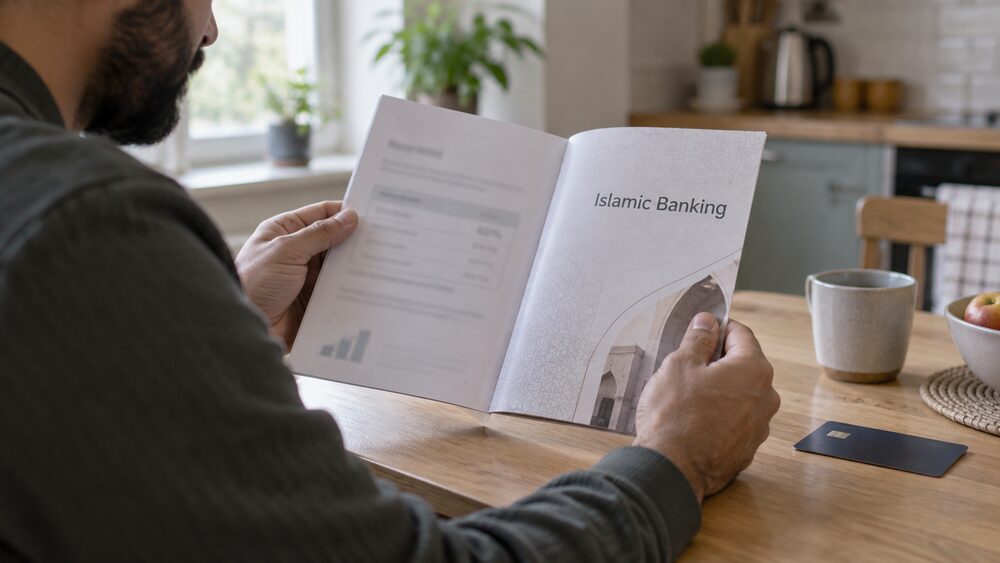
Islamic banking in the UK offers the everyday things most people need from a bank, current accounts, savings and a way to buy a home, but built to comply with Islamic principles. The central difference is that Islamic banks do not charge or pay interest, which is not considered sharia-compliant1. Instead of interest, savings pay an Expected Profit Rate, and instead of a mortgage, a bank may buy a home and let you buy it back or rent it from them over time.
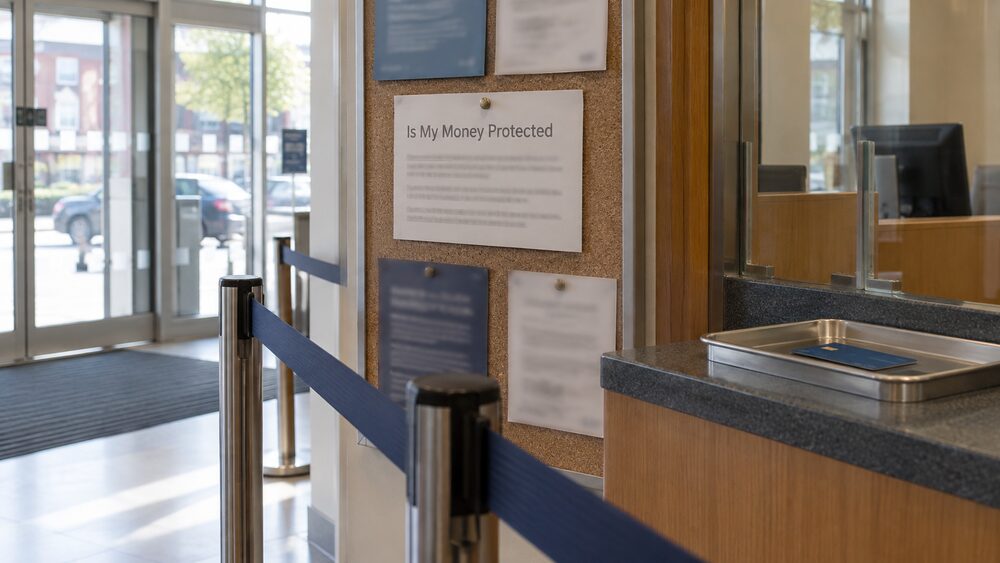
Anyone can open an account with an Islamic bank, regardless of their religious beliefs1. The products are regulated by the same authorities as conventional banking, and all of the Islamic banks currently offering sharia-compliant accounts in the UK are covered by the Financial Services Compensation Scheme (FSCS), the same scheme that protects money in ordinary banks2. The UK is a leading Western hub for Islamic finance, according to a 2025 report by credit ratings agency Fitch Ratings1.
How Islamic banking differs from conventional banking
The defining feature of Islamic banking is the absence of interest. Both charging and paying interest are considered non-compliant with sharia principles, so the products are structured differently from the outset. A conventional bank takes deposits and pays interest on them, and lends money out and charges interest on the loan. An Islamic bank instead takes deposits and uses them in activities that comply with Islamic principles, sharing the resulting profit with the depositor rather than paying a fixed return1.
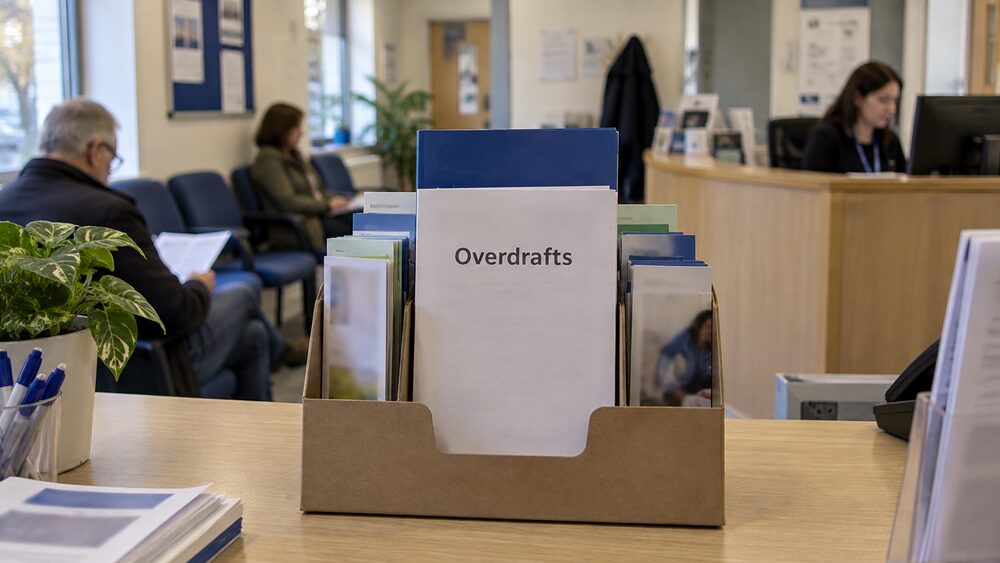
That principle shapes what the banks can and cannot offer. Islamic banks do not offer overdrafts, because both charging and paying interest are considered non-compliant1. This is a practical difference for anyone used to a conventional current account: there is no buffer if a payment takes the account over its balance, so budgeting and keeping an eye on the balance matter more. The rules on overdrafts and overdraft charges that apply elsewhere in the market simply do not come into play, because the product does not exist.
The second difference is what the bank does with deposited money. Sharia-compliant savings accounts will not invest in businesses that provide goods or services such as alcohol, tobacco or gambling, as these are against Islamic principles2. So the money behind a sharia-compliant savings account is directed into a different set of assets from a conventional one, and the return comes from the profit on those activities rather than from an interest rate the bank sets.
Everything else works much as a customer would expect. Accounts are held with UK-authorised banks, money is protected by the FSCS in the same way2, and complaints can be taken to the Financial Ombudsman Service like any other bank. The differences are in how returns are generated and how home finance is structured, not in the basic mechanics of holding and moving money.
Current accounts without interest
A sharia-compliant current account does the ordinary job of a current account: money is paid in, Direct Debits and standing orders go out, and a debit card spends from the balance. What it does not do is pay interest on the balance or allow an overdraft, since both charging and paying interest are considered non-compliant1. For most current account customers this changes little, since the interest paid on standard current account credit balances is small, but it removes the safety net of an arranged overdraft entirely.
Because there is no overdraft, the account behaves more like a basic account in one respect: spending is limited to the money actually in the account. Customers who want to know more about how accounts without credit work can read about basic bank accounts, which the largest UK banks are obliged to offer to retail customers who are legally resident in the United Kingdom and do not have a bank account, or who are not eligible for a standard current account4. Basic bank accounts are open to people who fail a standard account's credit checks, which is often the reason an overdraft is unavailable in the first place.
Opening an account follows the same process as any other bank. The bank will carry out identity and address checks, and it must complete the 'know your customer' checks required by anti-money-laundering rules; banks are required to close accounts if they cannot complete those checks5. The general guide to opening a bank account and the list of documents you need apply here as anywhere.
One point worth knowing: anyone can open an account with an Islamic bank, regardless of their religious beliefs1. The accounts are sometimes chosen by people who want their money kept out of certain sectors, or who simply prefer the structure, as well as by customers who need to comply with Islamic principles.
Savings accounts that pay expected profit, not interest
Instead of paying an annual equivalent rate (AER) of interest on savings, sharia-compliant accounts pay an Expected Profit Rate (EPR)2. The bank places deposits into activities that comply with Islamic principles, and the profit from those activities is what funds the return to the saver. The accounts will not invest in businesses that provide goods or services such as alcohol, tobacco or gambling, as these are against Islamic principles2.
The market is larger than many people expect. As of September 2026, accounts registered as sharia-compliant included 14 cash Isas, 46 fixed-rate savings accounts and 11 variable-rate savings accounts1. Published counts of sharia-compliant savings and cash Isa accounts differ, with one figure of 71 accounts and another count of 46 fixed-rate accounts alone, so treat any single total with caution and check the current list with the provider1.
The crucial point about an EPR is in its name: the rate is only a target and is therefore not guaranteed2. With a conventional fixed-rate savings account, the rate is a contractual promise. With an expected profit rate, the bank estimates what the underlying activities will earn, and if they earn less, the return can be lower. This is the main risk a saver takes in exchange for the structure, and it is the question to ask before opening any sharia-compliant savings account.
Rules on how rates are shown apply to savings accounts generally. A firm should ensure that the rate of interest that applies to a savings account is prominently shown alongside, or in close proximity to, any account balance information in paper or online statements, the first personalised page of online banking, and notifications of material rate changes, promotional rate expiry and fixed term expiry. A firm should also inform a customer of the current rate on request by telephone or in a branch6. These rules are written in terms of interest, but the principle of clear rate disclosure is the standard sharia-compliant providers are measured against too.
For a broader comparison of how savings accounts work, see the guide to savings accounts and Isas.
Home purchase plans: ijara, musharaka and murabaha
Buying a home without interest requires a different structure, and UK regulation recognises three main ones. In an ijara arrangement, the provider buys the land and allows the customer to occupy it whilst also making regular payments; in a diminishing musharaka arrangement, the provider and the customer share an interest in the land and the customer gradually acquires the provider's share; and in a murabaha arrangement, the homeowner buys the property from the provider on deferred payment terms3.
The regulatory treatment differs between them, and this matters for what protections apply. Ijara arrangements and diminishing musharaka arrangements are home purchase plans, provided they meet the necessary conditions. Murabaha arrangements are regulated mortgage contracts, assuming they meet the necessary conditions including a first legal charge over the property, and are not home purchase plans3.
The distinction is not just a label. Home purchase plans are covered by the FCA's Mortgage and Home Finance: Conduct of Business sourcebook (MCOB), and the responsible lending chapter of MCOB 11 applies in full to mortgage lenders and to the responsible financing of home purchase plans7. So a customer taking an ijara or diminishing musharaka plan gets the same conduct protections around affordability assessment and responsible financing as a mortgage borrower, even though the legal structure of the deal is different.
Home purchase plans also sit within wider home-buying policy. Under the First Homes scheme, purchasers must use a mortgage or a home purchase plan (if required to comply with Islamic law) to fund at least 50% of the discounted purchase price8. In other words, government support for first-time buyers explicitly makes room for the sharia-compliant route.
For background on the conventional side of the market, see the guides to mortgages and buying a home.
Fixed or variable: how home purchase plan payments behave
As with mortgages, home purchase plan payments can be fixed for a period or can vary. The general principle is the same as for any loan: repayments are usually fixed, but if you are borrowing on a variable rate, your repayments may change if the bank's rate changes9. With a home purchase plan, the equivalent of a rate change is a change in the rent or the profit element the provider charges, which can move when the provider's own costs or benchmark change.
What this means in practice is the same budgeting question a conventional borrower faces. A fixed structure gives certainty about the payment for the fixed period, which makes household budgeting predictable, while a variable one can go down as well as up. Guidance on drawing up a household budget treats loan repayments as a fixed outgoing, but flags that variable-rate borrowing can change if the bank's rate changes9, and the same caution applies to the payment on a variable home purchase plan.
The rules on arrears and early repayment apply to home purchase plans through MCOB, so a customer who struggles to pay, or who wants to end the plan early, is dealing with a regulated process rather than an informal arrangement with the provider7. MoneyHelper publishes an information sheet on problems paying your mortgage, available on its website and by calling 0800 138 777710, and its guidance is relevant to home purchase plan customers facing payment difficulties as well as mortgage borrowers.
Costs and charges compared with conventional products
There is no rule that makes a sharia-compliant product cheaper or dearer than its conventional equivalent. Cost depends on the individual deal, and the way to compare is the total cost over the whole term, not the headline payment. The FCA's rules on the total cost of credit require that, where opening or maintaining an account is obligatory to obtain the credit, or to obtain it on the marketed terms and conditions, the total cost of credit to the consumer must include the costs of opening and maintaining that specific account, using a means of payment for both transactions and drawdowns on that account, and other costs relating to payment transactions11. This applies to home finance generally, so fees tied to an account you must hold to get the deal count towards the cost.
The wider market gives a sense of how much choice exists on the conventional side: there are around 5,000 mortgage deals on the market from more than 80 lenders12. The sharia-compliant home finance market is far smaller, which means fewer deals to compare and less price pressure between providers. That does not make it more expensive by definition, but it does mean a customer has fewer alternatives to weigh against each other, and the comparison of total cost matters more, not less.
A caution from the conventional market applies equally here: headline features can be misleading. Which? has found mortgages that come with £500 cashback but have an arrangement fee of exactly £500 more than their competitors12. The same trick of presentation, a sweetener offset by a fee, can appear in any home finance product, so the total cost figure is the one to compare.
For savings, the cost comparison is about the return rather than fees. An expected profit rate can be compared with a conventional AER as a starting point, but with the caveat that the EPR is a target and not guaranteed2, while a conventional fixed rate is a promise. A saver weighing the two is comparing a certain rate against an estimated one, and should treat them accordingly.
Who provides sharia-compliant products in the UK
Sharia-compliant banking in the UK is provided by dedicated Islamic banks alongside conventional banks that offer sharia-compliant products. The UK is a leading Western hub for Islamic finance, according to a 2025 report by credit ratings agency Fitch Ratings1, and the range of registered accounts, 14 cash Isas, 46 fixed-rate savings accounts and 11 variable-rate savings accounts as of September 20261, points to a market served by several providers rather than one or two.
The banks offering these products are UK-authorised banks, and all of the Islamic banks currently offering sharia-compliant accounts are covered by the FSCS2. That means they sit inside the same regulatory perimeter as the high street names, with the same obligations towards customers and the same compensation arrangements if things go wrong.
Customers who want a sharia-compliant current account but cannot find a suitable one have a fallback worth knowing about. The largest UK banks are obliged to offer basic bank accounts to retail customers, though not business customers4, and basic bank accounts are available to customers who are legally resident in the United Kingdom and do not have a bank account, or who are not eligible for a standard current account4. A basic account pays no interest and has no overdraft, which coincidentally aligns with the two features a sharia-compliant current account lacks. The guide to basic bank accounts explains who qualifies and how to apply.
For a wider view of the providers in the market, the directories of banks and building societies and lenders list the firms operating in the UK.
How sharia compliance is checked and certified
Sharia compliance is checked on two levels, and it helps to keep them apart. The first is regulatory: a firm offering these products must be authorised by the Financial Conduct Authority, and customers can check any firm's status themselves. The FSCS advises checking the Financial Services Register on the FCA's website at register.fca.org.uk to see if a firm is listed13, and its first step for anyone checking their protection is to confirm the provider is authorised by the FCA14.
The second level is the religious certification of the products themselves. Sharia-compliant products are structured to comply with Islamic principles, avoiding interest and avoiding investment in sectors such as alcohol, tobacco and gambling2, and providers have their structures reviewed for compliance with those principles. The regulatory authorisation and the religious certification are separate things: the FCA authorises the firm to do banking business, while the sharia certification speaks to whether the product structure meets Islamic principles. A customer who cares about both can ask a provider for evidence of each.
The practical check for a consumer is the register. Before opening any account, confirm the firm appears on the Financial Services Register13, and confirm the deposit taker is a UK-authorised bank, since the FSCS can only protect money held by UK branches of authorised banks and building societies15. The guide to FSCS protection on current accounts walks through this in more detail.
FSCS protection and regulation of Islamic banks
All of the Islamic banks currently offering sharia-compliant accounts are covered by the Financial Services Compensation Scheme2. The FSCS covers a range of financial products if a UK-authorised financial firm fails, including deposits, insurance, investments, pensions, mortgage advice and certain other regulated services16. It follows rules set by UK regulators, the Financial Conduct Authority and the Prudential Regulation Authority17.
The protection works the same way as for any bank. The FSCS protects eligible deposits if a firm fails, up to a limit set by the PRA, and protection is provided per depositor, per firm18. If your bank goes bust, you will automatically get your money back within the scheme's limits16. Two conditions matter: the FSCS can only protect money held by UK branches of authorised banks and building societies15, and the firm must have failed and be in default, with the FCA or PRA having authorised it when you used it, and you must have actually lost money17.
The FSCS only covers financial services firms that have been authorised by the FCA or the PRA to do business in the UK19, which is why the register check comes first. Its website at www.fscs.org.uk sets out what is covered and how to claim20. For most customers of UK Islamic banks, the position is straightforward: the bank is authorised, the deposits are eligible, and the protection is the same as anywhere on the high street.
Where to get help if something goes wrong
Problems with an Islamic bank follow the same routes as problems with any bank. The first step is always to complain to the bank itself and give it the chance to answer. The Financial Ombudsman Service can help if you have made a complaint to the financial business and you are not happy with their answer21. The ombudsman handles banking complaints in large numbers: it received 91,430 banking complaints from within the UK in the year to 8 July 202022, and 78,661 banking and lending complaints in the year to 8 July 202223.
The ombudsman's reach extends to payment problems as well as account problems. It can also look into complaints about the bank or payment service provider that received your money, considering the steps taken to recover it and whether it should have had concerns about its customer's account25. Individuals and small businesses who feel they have been de-banked unfairly can complain to the Financial Ombudsman Service if unsatisfied with how their bank dealt with their complaint5.
If the problem is a scam rather than a service dispute, act quickly. If you think you have been scammed, contact your bank immediately and report it to the police at reportfraud.police.uk or on 0300 123 204026. The Payment Systems Regulator similarly advises victims to contact Action Fraud to make a report and call their bank immediately so it can protect the account27. The guide to scams and fraud covers the warning signs and refund rules in detail.
For money trouble rather than disputes, free help exists. MoneyHelper's information sheet on problems paying your mortgage is available on its website and by calling 0800 138 777710, and the guide to debt sets out the free advice options. The guide to consumer protection in UK financial services pulls together the rights and remedies that apply across the market, including to Islamic banks.
Sources27 cited
- Islamic finance and sharia-compliant savings Which?, 2026
- Should you open a sharia-compliant savings account? Which?, 2025
- PERG 14.4: home purchase plans and similar arrangements FCA Handbook, 2014
- Basic bank accounts, July 2023 to June 2024 HM Treasury, 2025
- Access to banking services and cash House of Commons Library, 2026
- BCOBS 4.1: savings account rate disclosure FCA Handbook, 2026
- MCOB 11: responsible lending and responsible financing of home purchase plans FCA Handbook, 2026
- First Homes scheme research briefing House of Commons Library, 2026
- Your business and household budget Business Debtline, 2026
- MCOB 13.4: MoneyHelper information sheet FCA Handbook, 2021
- MCOB 10A.1: total cost of credit FCA Handbook, 2016
- Mortgage loyalty penalty: sticking with your current bank could cost you thousands Which?, 2024
- FSCS podcast episode 46 transcript FSCS, 2025
- Guide to investment protection FSCS, 2026
- Can't find your provider? FSCS, 2026
- What we cover FSCS, 2026
- FSCS: are my savings safe? Which?, 2025
- Depositor protection consultation paper Bank of England, 2025
- FSCS protected website leaflet FSCS, 2025
- COMP 1.3: information about the FSCS FCA Handbook, 2001
- Financial Ombudsman consumer leaflet, easy read Financial Ombudsman Service, 2026
- Financial Ombudsman Service ADR activity report 2019-20 Financial Ombudsman Service, 2019
- Financial Ombudsman Service ADR activity report 2021-22 Financial Ombudsman Service, 2021
- Complaints about a financial services organisation Building Societies Association, 2013-10-16
- Scams: you've been tricked into making a payment Financial Ombudsman Service, 2026
- Protect yourself from fraud Take Five, 2026
- Warning: fraudsters posing as PSR employees Payment Systems Regulator, 2026




 MoneyHelperFree, impartial money and pensions guidance, set up by government
 FSCSProtects your money if a bank, insurer or investment firm fails
 Financial Ombudsman ServiceFree, independent help when a complaint about a firm is not put right
 Citizens AdviceFree advice on money, consumer and legal problems in England and Wales