
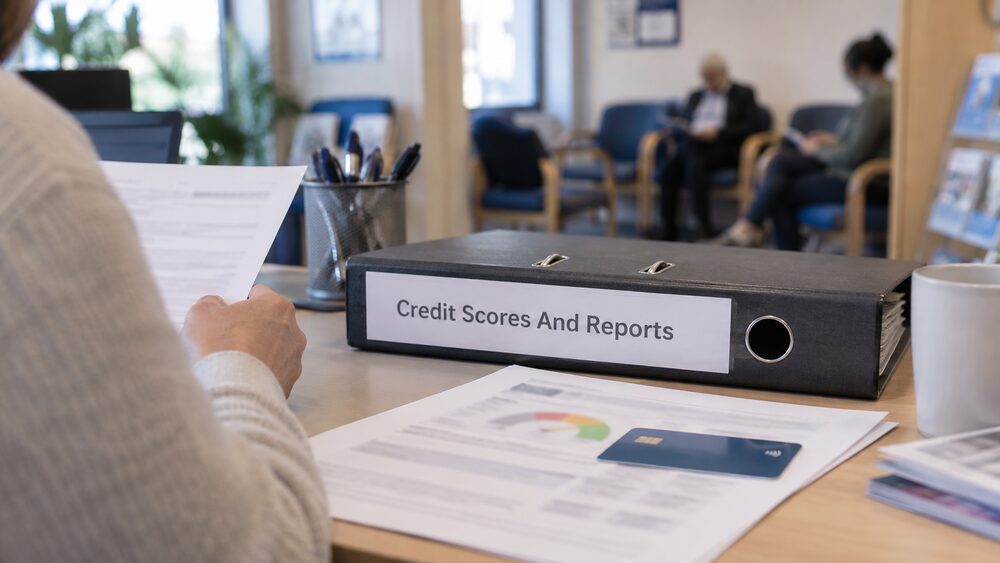
A county court judgment (CCJ) on your credit file that is not yours, or one you never knew about, is a problem you can usually get corrected. The first step is to check your credit report with Experian, Equifax or TransUnion, because all CCJs are listed there and the entry names the creditor and the court1. A free copy of your report is available from a credit reference agency3.
A county court judgment (CCJ) on your credit file that is not yours, or one you never knew about, is a problem you can usually get corrected. The first step is to check your credit report with Experian, Equifax or TransUnion, because all CCJs are listed there and the entry names the creditor and the court1. A free copy of your report is available from a credit reference agency3.
While a CCJ is recorded on your files it can make borrowing harder or more expensive, so it is worth acting quickly once you spot one1. CCJs are often used to recover non-priority debts such as credit card debts and payday loans, which is why a judgment can appear from a lender you dealt with years ago5.
There are two broad situations. Either the entry is a genuine mistake or a case of mistaken identity, in which case you dispute it with the credit reference agency and the creditor, or the judgment is real but you never had the chance to respond, in which case you can ask the court to set it aside. The routes, the costs and the timescales differ, and this page sets out each one.
What a wrong CCJ entry on your credit file means
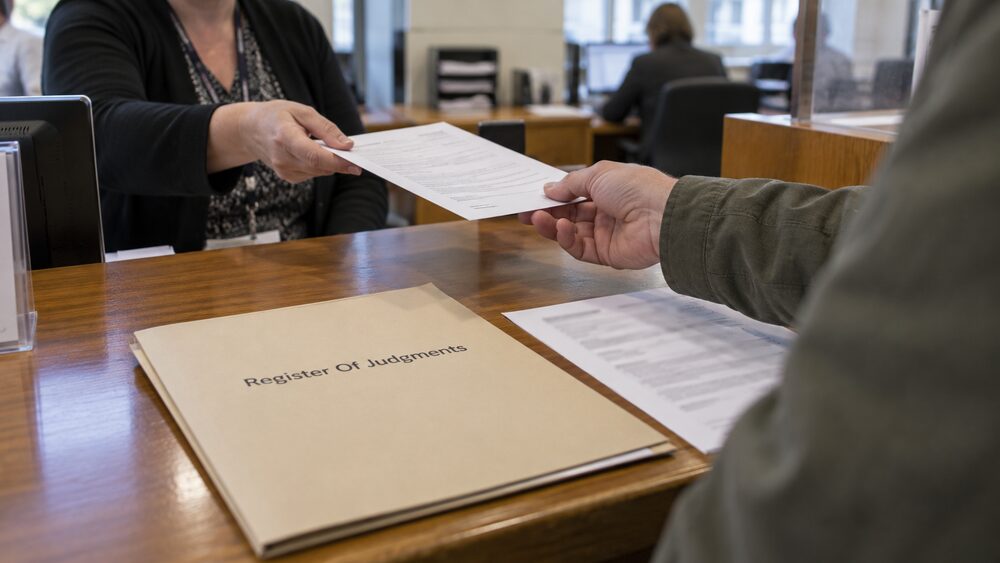
A CCJ is a court order saying you owe money, and it is recorded on the public Register of Judgments, Orders and Fines as well as on your credit files. Your credit file holds information on your debts, bank accounts, loans, credit cards and other credit, bills such as mobile phones, utilities and insurances, plus CCJs, decrees and insolvencies like bankruptcy9. Having a CCJ can affect your credit rating and may make it harder to obtain credit in the future5.
If the judgment is not yours, the effect is the same as if it were: lenders see the entry and price or decline accordingly. That is why the correction routes matter. A CCJ stays on the register and your credit files for six years, and it is removed after that even if you have not paid it off4. If you paid the debt within 30 days of the judgment being issued, or you successfully disputed it, it might not appear on your credit history at all12.
It helps to know what a credit reference agency can and cannot do. Agencies do not have a "blacklist" of people who should not get credit, and searches on your credit file should not have a negative impact on your credit history13. Details of council tax debts are not kept by credit reference agencies, and magistrates' court fines are not currently passed on to them either13. So if an entry you are querying is one of those, it should not be on your file in the first place.
Mistaken identity or a genuine mistake: how each one is fixed
The two situations look identical on a credit report but are handled differently.
A genuine mistake is usually a data error: the wrong person's details attached to your file, a debt that was already paid, or a judgment recorded against the wrong address. A case of mistaken identity is where someone else's debt has been linked to you, often because you share a name or have lived at an address a creditor has on file for someone else.
If you think your identity has been used, the warning signs include your credit rating going down even though you have not missed any payments or do not have an account in arrears16. The action to take is to request a copy of your credit file to check for any suspicious credit applications, and to check your credit card and bank statements regularly for suspicious activity16. A Cifas marker may be added to your credit file to warn lenders that your identity has been compromised18.
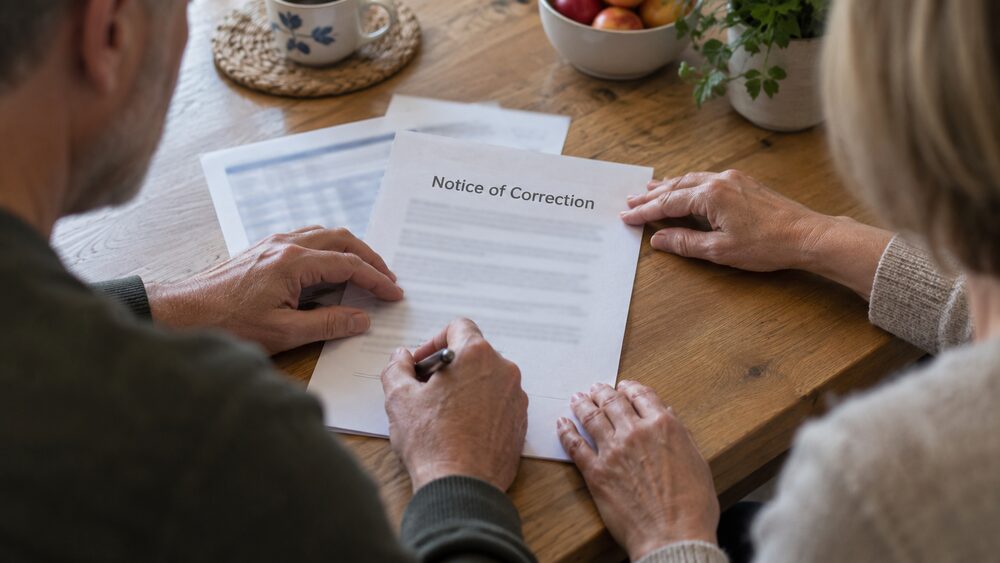
Where the entry is simply wrong, the dispute route is the same. If a CCJ mix-up has happened to you, raise it as a dispute with the credit reference agency you obtained your credit file from3. You can also contact each of the three credit reference agencies and ask for a notice of correction to be added to your credit report12. A notice of correction does not remove the entry, but it lets you explain the circumstances in your own words for lenders to read19.
Getting a CCJ set aside when you never knew about the claim
If the judgment is real but you never had the chance to respond, the remedy is to apply to have the CCJ set aside20. The court looks for three things: that you were not aware of the CCJ, for example because the claim form was sent to an old address; that you have a good argument against the CCJ, such as already having paid the debt off; and that you acted as soon as you found out about it21.
Not knowing about a CCJ on its own is not a good enough reason to set it aside7. You need the second element too, a real defence to the claim, and you need to move promptly once you learn of it.
There is a fee to apply, and you have to pay it even if you are not successful7. You also have to prove you did not know about it, or that the creditor did not apply using the process properly2.
There is a related point worth knowing if you are defending a claim rather than setting one aside. If you attempt to defend the court claim but are unsuccessful, the CCJ will not be registered unless the court has ordered instalments to be paid, or the creditor takes steps to enforce the debt6. So a defended claim that fails does not automatically put a CCJ on your file.
A Tomlin order is a different arrangement again: it is a settlement with the creditor, and there is no CCJ on your credit file or the public Register of Judgments23.
Correcting the Register of Judgments and the credit reference agencies
Correcting the record means dealing with two places: the public register and the credit reference agencies. They are not the same, and one does not automatically follow the other.
The register is the court's record. The credit reference agencies hold their own copy of the information, and they cannot amend data supplied by another company without that company's permission19. That is why a dispute usually runs through the creditor as well as the agency.
If you are disputing a debt rather than a judgment, the same principle applies: you dispute it with the creditor, and the agency acts on what the creditor confirms20. Where the entry is a CCJ that has been set aside, it is removed from your credit reference file24. When a CCJ is set aside, it is removed from your credit history7.
Timing varies. In Northern Ireland, once a CCJ is set aside your CCJ will drop off your credit file, but it might take six to eight weeks for this to happen8. Elsewhere, a settled CCJ disappears from your credit file after six years in the ordinary course12.
If the entry stays wrong: complaints and the Financial Ombudsman Service
If a dispute is not resolved, you can raise a formal complaint with the credit reference agency online, and escalate it to the Financial Ombudsman Service if it is not resolved25. The Ombudsman can ask a firm to correct a credit file, refund extra costs, and pay compensation for distress or inconvenience26.
The Ombudsman expects firms to hold proper evidence when a debt collection complaint reaches it. For a complaint about a debt, that typically includes copies of relevant correspondence or call recordings, a copy of the notice of assignment and the underlying credit agreement, a statement of account confirming the current balance and any new charges or interest, a copy of the notice of sums in arrears and default notice if the account defaulted after assignment, evidence of the CCJ if the debt concerns one, and evidence of raising the dispute with the original creditor and their response where fraud or wrong-person is alleged18.
One limit to be aware of: where a consumer gave incorrect information in their application, the complaint would usually not be upheld on that basis alone16. So if the entry stems from details you supplied, the Ombudsman route is less likely to succeed.
If the firm you want to complain about is not on the FCA Register, the complaint should be referred to the Pensions Ombudsman instead17. And if you have already missed payments, any help you receive will impact your credit file27.
Free, impartial help is available. National Debtline and StepChange both publish guides on CCJs, set aside applications and disputing debts, and Citizens Advice can advise on judgments and your credit rating1.
How long a wrong entry lasts, and what happens next
The clock matters as much as the dispute. A CCJ is removed from the Register and your credit file after six years, even if you have not paid it10. A CCJ will be recorded on your credit reference file for six years and can affect your ability to get further credit6. If your CCJ was longer than six years ago it will not appear on your credit file12.
If you successfully set aside a CCJ, it will be removed from your credit reference file24. If you paid the debt within 30 days of the judgment being issued, or you successfully disputed it, it might not even appear on your credit history at all12.
How a disputed or set aside CCJ comes off the record.
Where the rules differ across the UK
The set aside process and the registers differ by nation. In England and Wales, CCJs are registered on the Register of Judgments, Orders and Fines, and the set aside application goes to the county court1. In Northern Ireland, the process is separate, and the credit file update after a set aside can take six to eight weeks8. Scotland uses decrees rather than CCJs, with its own registers and its own recall process.
If you are dealing with a judgment in Scotland or Northern Ireland, the guidance and the forms are different from the England and Wales route, and the timescales for the credit file to update can differ too.
Sources27 cited
- County court judgments (CCJs) National Debtline, 2026-09-25
- County court judgments (CCJs) StepChange, 2026-09-25
- County court judgments and your credit rating Citizens Advice, 2026-09-25
- County court judgments (CCJs): enforcement, removal and what you need to know National Debtline, 2026-09-25
- County court judgments (CCJs) Shelter Cymru, 2026-08-30
- Replying to a county court claim Business Debtline, 2026-09-26
- Set aside a CCJ StepChange, 2026-09-25
- Set aside a Northern Ireland CCJ StepChange, 2026-09-25
- Finding who I owe money to StepChange, 2026-09-25
- How long does a CCJ last? StepChange, 2026-09-25
- Not paying or ignoring a CCJ StepChange, 2026-09-25
- How to get a mortgage with CCJs Which?, 2025-08-20
- Credit reference agencies Business Debtline, 2026-09-26
- Credit Information Commissioner's Office, 2026-09-25
- Magistrates' court fines Business Debtline, 2026-09-26
- Types of scam MoneyHelper, 2026-09-25
- Identity theft Information Commissioner's Office, 2026-09-25
- Debt collection complaints Financial Ombudsman Service, 2026-09-27
- Credit reference agencies and your data House of Commons Library, 2026-09-26
- Disputing debts with creditors StepChange, 2026-09-25
- Can't pay a CCJ StepChange, 2026-09-25
- Varying a CCJ National Debtline, 2026-09-25
- Tomlin order StepChange, 2026-09-25
- Setting aside a CCJ National Debtline, 2026-09-25
- How debt affects a credit file StepChange, 2026-09-25
- IT problems at banks Financial Ombudsman Service, 2026-09-25
- How joint debts affect me StepChange, 2026-09-25







 MoneyHelperFree, impartial money and pensions guidance, set up by government
 Financial Ombudsman ServiceFree, independent help when a complaint about a firm is not put right
 Citizens AdviceFree advice on money, consumer and legal problems in England and Wales
 StepChangeFree debt advice and solutions from a charity
 GOV.UKOfficial information on tax, benefits and government services