
If you have paid off a county court judgment (CCJ) in England or Wales, you can ask the court that issued it for a certificate of satisfaction. This is the document that proves the judgment has been paid. It matters because a CCJ stays on your credit file for six years from the date it was made, and without a certificate the record still shows as unpaid1.
If you have paid off a county court judgment (CCJ) in England or Wales, you can ask the court that issued it for a certificate of satisfaction. This is the document that proves the judgment has been paid. It matters because a CCJ stays on your credit file for six years from the date it was made, and without a certificate the record still shows as unpaid1.
The certificate itself costs £15 to apply for, and you apply to the same County Court hearing centre that issued the judgment, using court form N443 with proof of payment1. If you paid the CCJ in full within one calendar month of the judgment, you do not need a certificate of satisfaction at all: you can apply instead for a certificate of cancellation, which stops the judgment being added to the register in the first place2.
The distinction between the two certificates is the single most important thing to understand. Pay within a month and the CCJ can be kept off your credit file entirely. Pay after that, and the judgment is already registered, so the best you can do is have it marked as satisfied. Either way, the debt is cleared, but the effect on your credit file is very different.
What a certificate of satisfaction shows
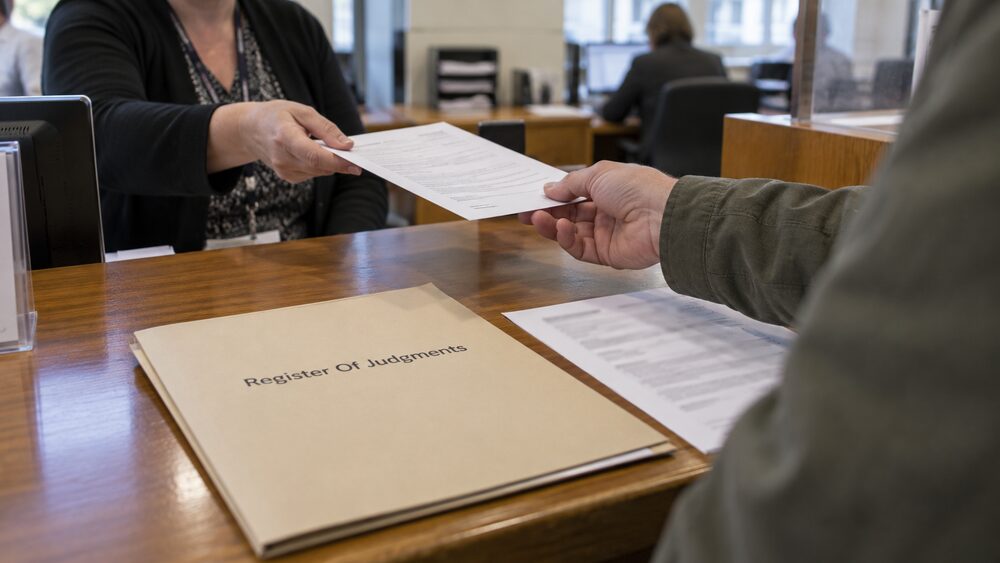
A certificate of satisfaction is the court's written confirmation that a CCJ has been paid. It shows that the judgment has been settled, and it allows the entry on the Register of Judgments, Orders and Fines to be updated to show the debt as satisfied6.
The register is the official public record of judgments in England and Wales. When a CCJ is made, it is added to the register, and that information is passed to the credit reference agencies. A note is made against your entry on the register to show the debt has been satisfied, or paid, once you provide proof7. The certificate is what triggers that update.
It is worth being clear about what the certificate does not do. It does not remove the CCJ from your credit file, and it does not change the fact that a judgment was made against you. What it does is change how the entry reads: instead of showing an unpaid judgment, your file shows that the debt has been cleared. According to independent guidance, this makes it easier to apply for credit in the six years before the CCJ drops off your credit file1.
If you are checking your own file, the three main credit reference agencies are Experian, Equifax and TransUnion2. You can read more about how they work and what they hold in our guide to the UK credit reference agencies.
Satisfaction or cancellation: it depends when you paid
The certificate you need depends entirely on when you paid. The dividing line is one calendar month from the date of the judgment.
If you paid the CCJ in full within one month, you can apply to the court for a certificate of cancellation2. This stops the judgment being added to the register, which means it should not appear on your credit file at all. Independent guidance is explicit that paying in full immediately means it will not be recorded on your credit file3. The same principle applies if you successfully disputed the judgment or proved another party was responsible: in those cases the CCJ can be removed8.
If you paid after one month, the judgment is already registered. At that point you can apply for a certificate of satisfaction, which marks the entry as paid but leaves the judgment on your file for the remainder of the six years9. There is no route to early removal simply because you have paid.
There is one further variation worth knowing about. If your debt was secured by an order charging land, you can apply for a certificate of satisfaction if you complete the repayments in less than 12 years4. This is a specific situation, and the timescale is much longer than the usual one month.
How to apply to the court that issued the judgment
The application goes to the same County Court hearing centre that issued the judgment. You apply for a certificate of satisfaction from that court, and you provide proof of payment using court form N4431. The same form and the same court apply if you are seeking a certificate of cancellation instead1.
Before you apply, it helps to have written confirmation from the creditor that the debt is settled. Independent guidance suggests getting the creditor to agree to amend your credit reference file to show the debt is paid off or satisfied10. That confirmation supports your application and gives you a record if the register is not updated promptly.
Once the court issues the certificate, the entry on the register is updated. If you have checked your credit file and the satisfied status has not appeared, you can raise it with the credit reference agency. Our guide to correcting your credit report explains how disputes work, and there is a separate page on what to do when a CCJ or register entry is not yours or is wrong.
If you are applying in Scotland, the process is different, and it is covered below.
Court fee for a certificate of satisfaction
The court fee to apply for a certificate of satisfaction is £151. This is the figure given in independent guidance on CCJs, and it is the amount you pay to the court when you make the application.
Other sources give different figures for related certificates. Guidance on administration orders states a £19 fee for a certificate of satisfaction from the County Court11. A glossary published by a debt advice firm states that certificates of satisfaction are issued by the court for a fee of £1013. These figures do not agree, and the documents do not resolve the difference. If the exact fee matters to you, confirm it with the court before you apply.
What is consistent across the sources is that there is a fee to pay. Independent guidance confirms that you apply for a certificate of satisfaction on the judgment from the court and that there is a fee14. The fee is separate from anything you might owe on the judgment itself, and it is not refundable if the application is refused.
A satisfied CCJ still stays on your credit file for six years
Paying a CCJ does not shorten the time it spends on your credit file. A CCJ stays on the register and your credit files for six years2. The same six-year period is given across independent guidance: six years from the date the CCJ was made15, six years from the date it was made16, and six years from the date of issue17.
The one exception is a judgment paid in full within one calendar month. In that case, the information stays on your credit reference file and the register for six years unless you pay the CCJ in full within one calendar month15. Paying within the month means the judgment should not be registered at all, so the six-year clock never starts.
If you paid after one month, you can ask for your entry to be marked as satisfied if you provide proof of payment, but the CCJ will still stay on your credit reference file15. The satisfied marker is what changes lenders' view of the entry. It does not remove it.
This is why the timing of payment matters so much. A judgment paid within the month can be cancelled and kept off your file. A judgment paid later is registered, marked satisfied, and visible to lenders for the full six years. If you are dealing with a CCJ and want to understand how long other items stay on your file, our guide to how long information stays on your credit file covers the timescales for defaults, missed payments and other markers.
What happens if you never pay
An unpaid CCJ does not go away quietly. The CCJ will be visible on the public register and your credit file if it is not paid in full within a month of the judgment3. Once registered, it stays for six years.
The creditor can also take enforcement action. Options available to a creditor include bailiffs, an attachment of earnings order, which takes money directly from your wages, and a charging order, which secures the debt against your home4. If you do not respond to the original court claim, you might have to pay more or get a county court judgment18.
There is a specific rule about registration after an unsuccessful defence. If you attempt to defend the court claim but are unsuccessful, the CCJ will not be registered unless the court has ordered instalments to be paid, or the creditor takes steps to enforce the debt15. This is a narrow exception and does not apply to judgments where no defence was made.
If you are struggling with a CCJ you cannot pay, free and impartial help is available. National Debtline and StepChange both provide free debt advice, and Citizens Advice can help you understand your options. Our guide to debt solutions and your credit file sets out how different arrangements affect your record.
Scotland: a letter from the pursuer, not the court
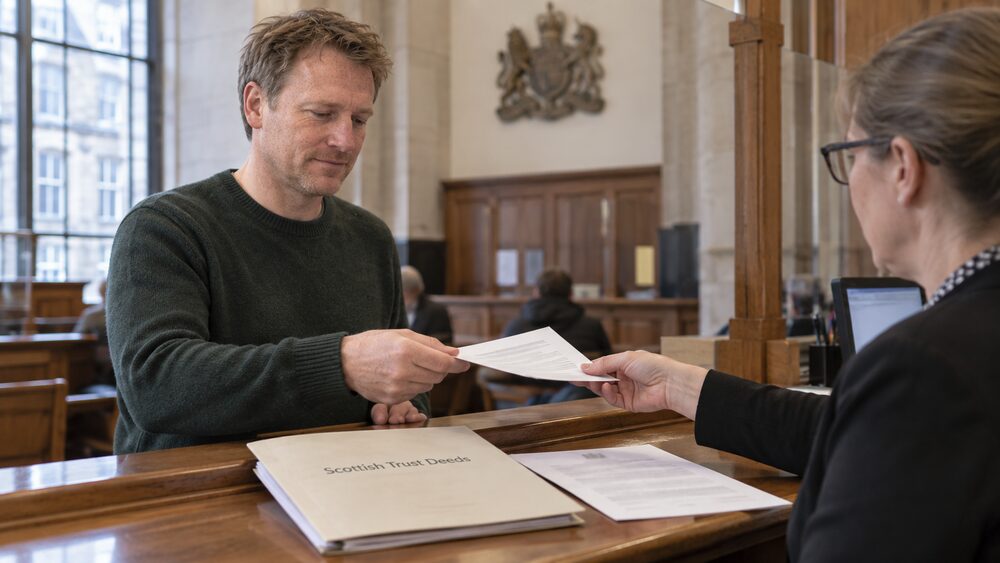
The process in Scotland is different, and the difference is fundamental. In Scotland, it is not the court that issues the certificate5. Instead, you need to obtain a letter of satisfaction from the pursuer in the action, or the pursuer's solicitor, explaining that the debt has been paid19.
Once you have that letter, you send it to Registry Trust Limited along with their administration fee and confirmation of your name and address at the time of the decree5. Registry Trust is the body that maintains the register of judgments, and it is the register that feeds the credit reference agencies.
The letter needs to contain specific information. The written evidence should confirm the name of the court, the case number, the date of decree, the amount of decree, and the date that the debt was repaid in full19. If any of these details are missing, the application may be delayed or refused.
This means that in Scotland, the certificate of satisfaction as it exists in England and Wales has no direct equivalent issued by the court. The letter of satisfaction from the pursuer serves the same purpose: it proves the debt has been paid and allows the register entry to be updated. Our guide to credit files in Scotland explains how decrees, trust deeds and the Scottish registers work, and there is a dedicated page on getting a Scottish decree marked as satisfied.
Checking the register and your credit file
You can check the Register of Judgments, Orders and Fines online through TrustOnline, and there is a small fee to search9. The register is the official record, and it is separate from your credit file, though the same information feeds into it. Our guide to the Register of Judgments, Orders and Fines and TrustOnline explains how to search it.
After your CCJ is marked as satisfied, it is worth checking your credit report with Experian, Equifax or TransUnion2. The three biggest organisations for checking your credit report are TransUnion, Equifax and Experian8. If you suspect a CCJ has been made against you, checking your credit report with one of these agencies is the way to find out2.
If the satisfied status has not been applied, or if a judgment appears that is not yours, you can raise a dispute. Our guide to checking your credit report for free explains how to get your report, and there is more on your rights in our page on your data rights over your credit file.
Sources19 cited
- How long does a CCJ last? StepChange
- County court judgments (CCJs) in England and Wales National Debtline
- County court judgments (CCJs) StepChange
- Tomlin orders StepChange
- Money judgments and certificates of satisfaction FAQs Scottish Courts and Tribunals Service
- Set aside a CCJ StepChange
- County court judgments and your credit rating Citizens Advice
- Bad credit mortgages Which?
- County Court Judgments (CCJs): enforcement, removal and what you need to know National Debtline
- Debt solutions Shelter Cymru
- Administration orders National Debtline
- Administration orders Business Debtline
- Creditfix debt glossary Creditfix
- Interest on a CCJ National Debtline
- Defending a CCJ National Debtline
- Varying a CCJ National Debtline
- Respond to a court claim for money GOV.UK
- Attachment of earnings orders National Debtline
- Money judgments and certificates of satisfaction FAQs Scottish Courts and Tribunals Service










 MoneyHelperFree, impartial money and pensions guidance, set up by government
 Financial Ombudsman ServiceFree, independent help when a complaint about a firm is not put right
 Citizens AdviceFree advice on money, consumer and legal problems in England and Wales
 StepChangeFree debt advice and solutions from a charity
 GOV.UKOfficial information on tax, benefits and government services