
If a county court judgment (CCJ) has been made against you, paying the full amount within one month of the judgment date can stop it being recorded. The entry is removed from the Register of Judgments, Orders and Fines, and it should not appear on your credit report at all. Pay it in full immediately and it will not be recorded on your credit file1.
If a county court judgment (CCJ) has been made against you, paying the full amount within one month of the judgment date can stop it being recorded. The entry is removed from the Register of Judgments, Orders and Fines, and it should not appear on your credit report at all. Pay it in full immediately and it will not be recorded on your credit file1.
The deadline runs from the date of the judgment, not the day the paperwork arrived. If you pay after that month, the CCJ stays on the Register and on your credit file for six years from the date it was made, although it can be marked as satisfied once paid2.
The one-month rule is not the only route. If the debt was not yours, or you never received the papers, you can ask the court to set the judgment aside. This page explains how the deadline is counted, how to get a certificate of cancellation, and where the one-month rule does not help.
Pay in full within one month and the CCJ is not recorded
The one-month rule is the difference between a CCJ that disappears and one that follows you for six years. If you pay the full amount within one month of the judgment date, you can ask for the entry to be removed6. The Register of Judgments, Orders and Fines holds the record that credit reference agencies use, so removing the entry removes the trace that lenders see.
The rule is strict about what counts. It requires the full amount, not a first instalment or an arrangement to pay. If you cannot afford the CCJ, you can ask the court if you can pay in stages, but that does not remove the entry8. The judgment will be registered and will stay on your file for six years.
There is one exception worth knowing if you tried to defend the claim and lost. If you attempt to defend the court claim but are unsuccessful, the CCJ will not be registered unless the court has ordered instalments to be paid, or the creditor takes steps to enforce the debt9. In other words, a failed defence does not automatically put you on the Register, but an instalment order or enforcement action will.
Paying in full within the month is the cleanest outcome. It removes the entry, it removes the credit file mark, and it means a lender running a search will not see a judgment at all.
How the one-month deadline is counted
The month runs from the date of the judgment, not the date you received the papers. The court's own guidance refers to one calendar month from the date of judgment, paid in full, with proof of payment to the court4. That distinction matters if the post was slow or the papers went to an old address.
The judgment itself usually requires payment sooner than a month. Payment should normally be made within 14 days of the date of the order10. The one-month window is the period for getting the entry removed, not the period the court gives you to pay. If you pay within 14 days, you are comfortably inside the removal window. If you pay on day 25, you are still inside it, but you are relying on the court processing your application before the entry is confirmed.
All CCJs are listed on the Register for Judgments, Orders and Fines within a month11. That is why the deadline is framed as a month: it is the point at which the entry becomes a matter of record. If you pay and apply for cancellation before that point, the entry comes off.
Getting a certificate of cancellation from the court
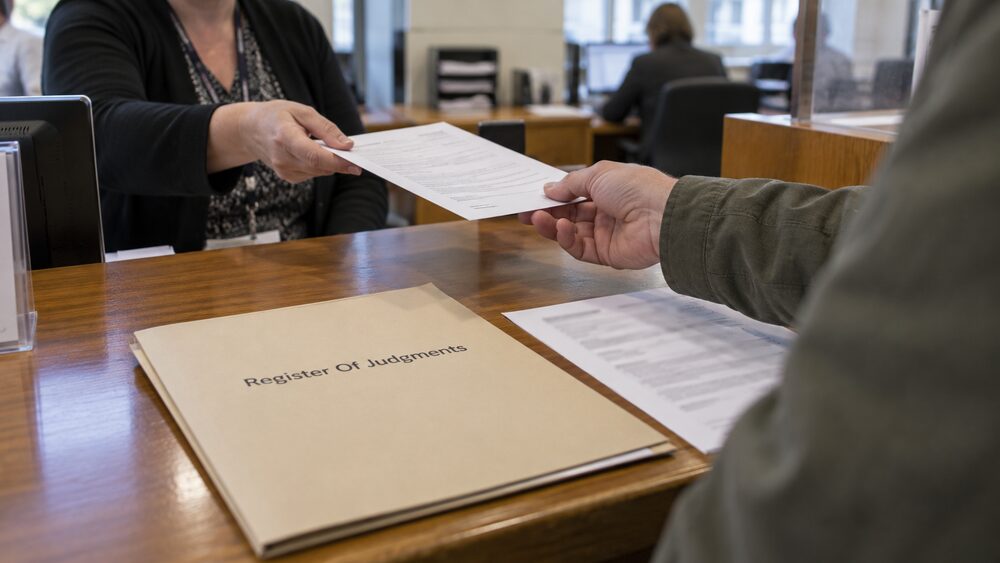
The certificate of cancellation is the document that proves you paid within the month. It is issued by the court if you pay a county court judgment within one month12. Without it, the Register entry stays, even if you have paid.
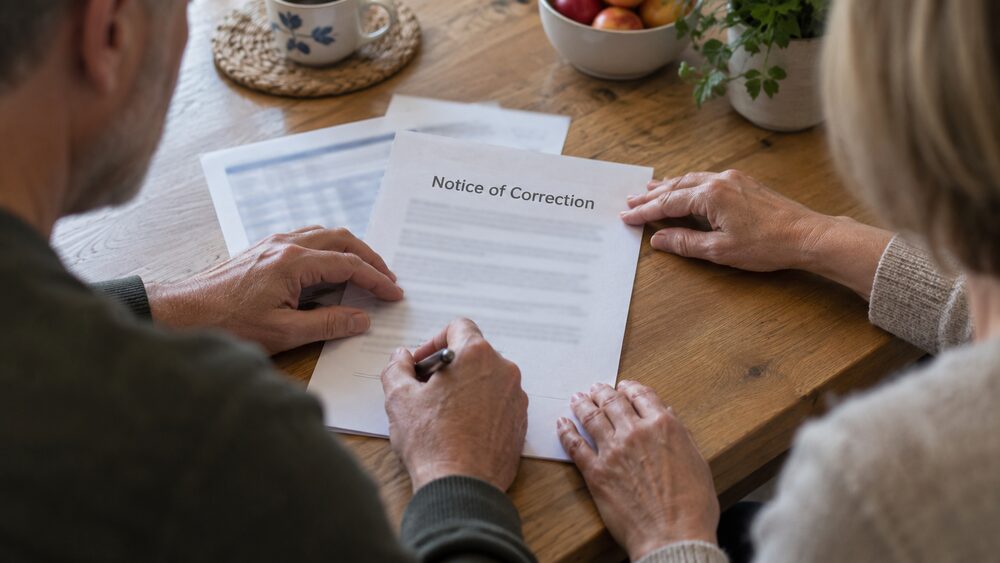
To apply, contact the same County Court hearing centre that issued the judgment and provide proof of payment using court form N4435. The form is the application; the proof of payment is what the court checks. Keep a copy of the certificate, because you may need it when applying for credit, and because it is the only document that confirms the entry has been cancelled rather than merely satisfied.
If you paid after the one-month window, the document you can apply for is different. You can apply to the court for a certificate of cancellation if you paid within one month, or satisfaction if you paid after one month6. The certificate of satisfaction confirms the debt is paid, but it does not remove the entry.
Other ways a CCJ can be removed: disputes and the wrong person
The one-month rule is not the only way off the Register. You can get a CCJ removed from your credit file if it was paid within 30 days of being issued, if you successfully disputed it, or if another party was proven responsible7. The last of those covers cases where, for example, an insurer later accepted responsibility for the debt.
If you never received the papers, you may be able to apply to set aside the judgment. This asks the court to cancel the CCJ and reopen the case so you can properly respond. It usually involves a fee and may require a hearing6. Setting aside is the route for a judgment you did not know about, for example because the claim went to an old address.
There is also a limitation ground. If you think the CCJ was ordered after the six year limitation period, you can ask the court to set aside the CCJ8. And if you can prove to the court that you do not owe the debt, you can apply to have your entry in the Register removed2.
These routes are separate from the one-month rule and have their own tests. A dispute about whether the debt is yours is not the same as a payment within the month, and the evidence you need is different.
Where the one-month rule does not help
The one-month rule only removes the entry if the full amount is paid within the month. It does not help if you are paying by instalments, if you are disputing the debt but have not won, or if the judgment was made more than a month ago.
If you pay after one month, it can be marked as satisfied but will remain for the full six years6. You can ask for your entry to be marked as satisfied if you provide proof of payment, but the CCJ will still stay on your credit reference file13. The CCJ will still stay on your credit report until the six years is up, but your record will show that you have paid the debt2.
There are also consequences that follow a CCJ regardless of the one-month rule. If your creditor applied for a CCJ before 1 October 2012, they can only apply for a charging order if you have not kept to the payments the court ordered you to pay14. For CCJs applied for on or after 1 October 2012, your creditor cannot apply for an order for sale unless you have missed payments that the court ordered you to pay on the CCJ15. Interest rules also differ: for CCJs made before 1 October 2008 the rules on how your creditor may add interest to the debt are not very clear, while for later judgments there are specific notice requirements16.
If you are struggling to pay, free and impartial help is available from MoneyHelper and from debt advice charities such as StepChange and National Debtline. They can explain the options, including asking the court to vary the payments, and they do not charge for the advice.
Sources16 cited
- County court judgments (CCJs) StepChange
- County court judgments and your credit rating Citizens Advice
- Credit reference agencies National Debtline
- CCJs Experian
- How long does a CCJ last? StepChange
- County court judgments (CCJs): enforcement, removal and what you need to know National Debtline
- How to get a mortgage with CCJs Which?
- Set aside a CCJ StepChange
- Defending a CCJ National Debtline
- How to enforce a county court judgment (CCJ) Advicenow
- Northern Ireland CCJs StepChange
- Glossary StepChange
- Not paying or ignoring a CCJ StepChange
- Replying to a county court claim Business Debtline
- Charging orders National Debtline
- Interest on a CCJ National Debtline







 MoneyHelperFree, impartial money and pensions guidance, set up by government
 Financial Ombudsman ServiceFree, independent help when a complaint about a firm is not put right
 Citizens AdviceFree advice on money, consumer and legal problems in England and Wales
 StepChangeFree debt advice and solutions from a charity
 GOV.UKOfficial information on tax, benefits and government services