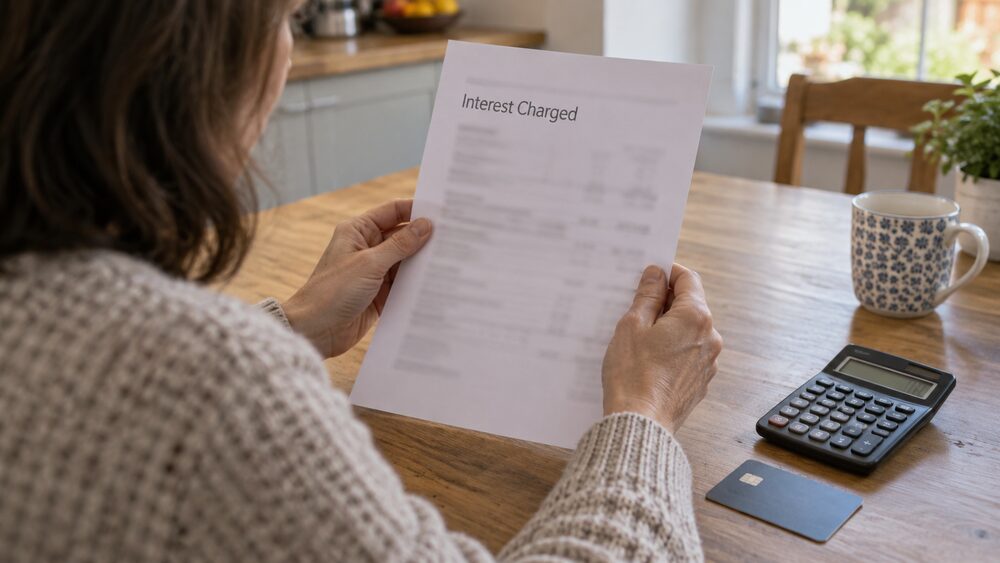
If your credit card company writes to tell you it is putting up your interest rate, you do not have to accept it. You can reject the increase, close the card and pay off what you owe at the old rate. The Financial Conduct Authority rule requires firms to permit the customer sixty days, from the date of the firm's notice of the proposed increase, during which the customer may give notice requiring the firm to close the account1.
If your credit card company writes to tell you it is putting up your interest rate, you do not have to accept it. You can reject the increase, close the card and pay off what you owe at the old rate. The Financial Conduct Authority rule requires firms to permit the customer sixty days, from the date of the firm's notice of the proposed increase, during which the customer may give notice requiring the firm to close the account1.
That 60-day window is the core of the protection. Independent guidance puts it the same way: a borrower is given 60 days to reject the hike, cancel the card and pay back what is owed at the old rate2. The clock runs from the date of the notice, not from when the letter is read, so the letter's date matters.
Rejecting the increase is not the same as disputing it. It is a right to walk away from the new terms while keeping the old ones for the debt you have already built up. What it does not do is keep the card open: rejecting the rise closes the account to new spending, and you then repay the balance at the rate you had before.
Your right to say no to a higher interest rate
The right to reject a rate increase sits in the FCA's banking conduct rules. The rule requires firms to permit the customer sixty days, from the date of the firm's notice of the proposed increase, during which the customer may give notice requiring the firm to close the account1. It applies to a proposed exercise of a power to increase the interest rate on a credit card or store card.
In practice this means the letter is not simply an announcement. It is an offer of new terms, and there is a fixed period in which to decline them. Independent guidance describes the same right in plain terms: a borrower is given 60 days to reject the hike, cancel the card and pay back what is owed at the old rate2.
The right is about the interest rate, not about every change a provider can make. It is also separate from the rules on credit limits. If a provider offers you a higher limit, you can simply decline it, and Halifax says customers who would rather not be offered credit limit increases need to get in touch to say so6. Bank of Scotland says it can stop automatic increases to your credit card limit so you stay in control of how much you can borrow7. Those are different rights from the rate rise rejection, and they do not close your account.
Notice of a rate rise: at least 30 days
Before any increase takes effect, your provider has to tell you. Independent guidance states that if your credit card company decides to increase your interest rate, it must contact you at least 30 days beforehand3. The same 30-day minimum appears in Which?'s explanation of card interest2.
Some sources put the notice period longer. Which? reported in March 2024 that if your provider wants to increase the interest on your deal, it must notify you at least 60 days before the change3. The two figures describe different things: the minimum notice before the change takes effect, and the window you then have to reject it. Read your own letter for the dates that apply to you, because the rejection clock runs from the date of the notice.
Tesco Bank's card terms set out the customer's side of this: you can choose not to make any further transactions, by calling or writing within 60 days of being notified about the increase, and the revised interest rate or annual fee will not apply to you8.
Rejecting the rise: what happens to your card and balance
Rejecting the increase closes the account to new spending. Santander sets out what that means in practice: you will not be able to use your card for further transactions, you will need to cancel any regular payments and subscriptions, and any additional credit cards attached to this account will also be blocked9.
Chase states the position just as plainly: you will have at least 60 days to reject a rate change, but this will close your account10. Chase also explains that if you do not want to accept an interest rate increase, you can close the account and pay off the amount you owe at the unchanged rate10.
So the trade-off is straightforward. You keep the old rate on the debt you already have, and you give up the ability to spend on the card. That includes any subscriptions or recurring payments set up on it, which need to be moved to another card or payment method.
If you do nothing, the new rate applies and interest continues to build on the balance. Credit card debt works the other way round from a repayment plan: more interest is added as the balance gets bigger11. If you do not pay your credit card bill, the company will add on interest each month12.
Paying off your balance at the old rate
The point of rejecting the increase is that the debt you already owe stays on the old terms. You then have to repay it, and how you do that shapes what it costs.
The first step is to stop adding to the balance. Independent guidance is direct: the first thing to do is stop using the credit card you want to pay off, because the amount you owe stops growing, making it quicker to repay11. Rejecting the increase does this for you, since the card is closed to new spending anyway.
The second is to understand what interest you are still paying. If you pay off the whole amount owed on the card by the due date, you will not be charged interest on your purchases4. That is the cleanest way out, if you can manage it. If you cannot clear the balance in one go, interest continues on what remains.
There are several routes to clearing the balance, and they are not mutually exclusive. Independent guidance on getting out of persistent debt lists the options: increase monthly repayments; repay the balance using credit with a lower interest rate; cancel the card and move the balance to a different one with lower interest; get a loan you can afford to repay; or shop around using a price comparison site14.
The cost of card borrowing has risen. Independent statistics show average credit card interest rates up by 3.6 percentage points compared with 202115. That makes the old rate you keep by rejecting the increase more valuable than it would have been a few years ago.
How to reject a rate increase
Rejecting the increase is a notification, not a negotiation. You tell the provider you do not accept the new rate, and the account closes.
There is no single prescribed form, but the safest approach is in writing so you have a record of the date. Independent guidance on withdrawing consent for card payments describes the method in similar terms: tell whoever issued your card, the bank, building society or credit card company, that you do not want the payment to be made, by phone, email or letter13. The same channels work for a rate rise rejection.
Tesco Bank's terms describe the customer action as calling or writing within 60 days of being notified about the increase8. Chase frames it as closing the account and paying off the amount owed at the unchanged rate10.
A practical sequence:
- Find the date on the provider's notice. That is day one of your 60-day window1.
- Decide whether to reject the increase or accept it. Rejecting closes the card; accepting means the new rate applies10.
- Tell the provider in writing that you reject the increase, and keep a copy.
- Move any regular payments and subscriptions off the card before it stops working9.
- Agree a repayment plan for the balance at the old rate, or clear it in full if you can4.
If your card provider ignores your rejection
If you reject the increase within the window and the provider applies the new rate anyway, or refuses to accept the rejection, you have routes to escalate.
Start with the provider's own complaints process. If that does not resolve it, the Financial Ombudsman Service is free and independent, and it can look at complaints about how a firm has handled a rate change. The ombudsman's approach to interest is set out in its guidance: for complaints referred to it from 1 January 2026, it applies simple interest at the average Bank of England base rate plus 1 percentage point16. The ombudsman has confirmed that the default interest rate applied to some awards it directs firms to make is being revised to track that measure5.
If the problem is a payment taken without your consent rather than the rate itself, the rules are different. If you did not consent to the recurring card payments, your card issuer should stop the payments and give your money back17. If your card provider will not give you your money back, you can report them to Trading Standards18.
There is a limit to how far a provider can be pushed on the rate itself. The FCA's banking conduct rules include a disregard rule: an interest rate is disregarded for the purpose of identifying the highest interest rate payable by banking customers if that rate or a higher rate is payable by fewer than 1% of banking customers holding that personal current account product19. That rule concerns current accounts rather than cards, but it shows the kind of detail the conduct rules go into.
Will rejecting a rate rise affect my credit score?
Rejecting the increase does not, by itself, affect your credit score. What affects your file is how you handle the debt afterwards.
If you keep up the repayments at the old rate, there is nothing adverse to record. If you miss a payment, that can be recorded. On a 0% deal, missing a payment and moving onto the regular APR could reflect negatively on your credit score and could also affect how much you can borrow in the future20. The same principle applies to any card: the rate change is not the problem, the missed payment is.
Closing the account is a separate matter. It reduces the amount of available credit on your file, which can matter if you are applying for other borrowing, but it is not a black mark in itself.
If you are already in financial difficulty, the picture is different. Most lenders will either refuse you credit or charge a higher rate of interest if you have been bankrupt21. Poor credit is unlikely to stop you getting an insurance policy, but you can be charged a higher interest rate if you pay monthly22.
Can I move my balance to another card instead of rejecting the rise?
Yes, and for some people it is the better route. Moving the debt to a card with low or 0% interest could help you pay off the debt faster11. This is one of the options listed for getting out of persistent debt: cancel the card and move the balance to a different one with lower interest14.
The cost is a fee. If you move a balance to another card you are likely to be charged a handling fee of around 2% of the balance4. That fee is charged by the receiving card, not the one you are leaving, and it is added to the balance you transfer.
The two routes do different things. Rejecting the increase keeps your existing debt on the old rate and closes the card. A balance transfer moves the debt to a new card, usually with a fee, and leaves you to decide what to do with the old account. You can do both: reject the increase to stop the new rate applying, then transfer the balance to a cheaper card to pay it off faster.
If you are weighing up the options, the balance transfer fees page sets out how the charge is worked out, and ways to clear card debt sooner covers the alternatives side by side.
Where to complain if your provider will not accept your rejection
Complain to the provider first, in writing, and keep a copy. If you are not satisfied with the response, you can take the complaint to the Financial Ombudsman Service, which is free and independent5.
If the dispute is about a payment rather than the rate, different routes apply. If your card provider will not give you your money back for a payment you did not authorise, you can report them to Trading Standards18. If a card is declined, the guidance is to find another way to pay and immediately contact your card provider to ask for an explanation23.
For free, impartial help with card debt, StepChange and National Debtline both offer advice, and Citizens Advice can help with complaints and with working out what you can afford. The complaining about a credit card provider page covers the full escalation route, and help with credit card debt sets out the free services available.
Sources23 cited
- CONC 6.7: Notice of variation of interest rates Financial Conduct Authority, 2014-04-01
- Credit card interest explained Which?, 2026-09-18
- Why your credit card could be costing you more in 2024 Which?, 2024-03-05
- The costs and charges of credit cards Citizens Advice, 2026-09-25
- New interest rate now applies to compensation awards Financial Ombudsman Service, 2026-01-01
- Credit card limits explained Halifax, 2026-09-27
- Help from someone you trust Bank of Scotland, 2026-09-27
- Credit card terms and conditions Tesco Bank, 2025-02-18
- Credit card repricing Santander, 2026
- Chase credit card agreement Chase, 2026-09-26
- Paying off credit card debt StepChange, 2026-09-25
- Should you increase your credit card limit HSBC, 2026
- Stopping a future payment on your debit or credit card Citizens Advice, 2023-09-22
- Dealing with persistent debt StepChange, 2026-09-25
- Money on my mind Resolution Foundation, 2025-09-10
- Guidance on our new interest awards Financial Ombudsman Service, 2026-01-01
- Recurring card payments Financial Conduct Authority, 2025-06-23
- Your payment card was used without your permission Citizens Advice, 2026-09-25
- Payment Services Regulations 2017 Which?, 2025-06-18
- A guide to 0% interest credit cards TSB, 2026
- Making the most of your money guide National Debtline, 2026-09-25
- How does debt affect a credit file StepChange, 2026-09-25
- Card declined complaints Resolver, 2026-09-26







 MoneyHelperFree, impartial money and pensions guidance, set up by government
 StepChangeFree debt advice and solutions from a charity
 National DebtlineFree debt advice by phone, webchat and online
 Financial Ombudsman ServiceFree, independent help when a complaint about a firm is not put right
 Citizens AdviceFree advice on money, consumer and legal problems in England and Wales