
An app-based credit line is borrowing that works like a credit card but lives on your phone. You get a credit limit, you spend against it, you receive a statement, and you repay what you owe, either in full or in monthly instalments. Some products come with a physical card as well, others exist only as a virtual card number inside the app, and some let you split a purchase into payments at the checkout. In every case the borrowing itself is a form of revolving credit: the limit is there whenever you need it, and you only pay interest on what you actually use.
Because these products are regulated as consumer credit, most of the rules that govern an ordinary credit card apply to them too. The interest-free period on purchases, the right to reject an interest rate rise, the ban on surcharges, and Section 75 purchase protection all depend on how the credit is structured rather than on whether it comes with a piece of plastic. The differences that matter are practical: how you apply, how the limit grows, and which protections can fall away if the product sits outside the card framework.
How an app-based credit line works
The mechanics are the same as any revolving credit facility. The provider sets a limit, you draw on it when you spend, and each month you get a statement showing what you owe, the minimum you must repay, and the due date. Applications can be made online, by post, by phone, or at a bank or building society, though app-based products are typically applied for in the app itself3. What distinguishes an app-based line is where the account is managed: the balance, the statement, the repayment schedule and any virtual card details all appear on your phone rather than on paper.
Your credit file is what the provider looks at when you apply. It tracks how you use loans, credit cards, bank accounts, mobile phone contracts, car insurance paid in monthly instalments, and some utility companies7. It tells the provider whether you are a good payer and about any court orders you have had in the last six years3. A lender checks your credit file to establish whether you are eligible to borrow from them and whether they are happy to lend the amount you need8.
Some app-based products also let you split a purchase into instalments at the point of sale, in the same way buy now pay later works. Where that instalment option sits inside a regulated credit card or credit line agreement, the card rules, including Section 75, generally follow it. Where it is a separate, unregulated arrangement, the protections can be different, which is covered later on this page.
Credit limits start small: the low and grow model
App-based credit lines, particularly those aimed at people building or repairing a credit history, tend to follow what StepChange calls the "low and grow" model, where credit limits start small and are increased as customers borrow more9. Which? describes the same approach for credit-builder cards: an initial credit limit that is very low, say £100 to £200, which increases as you prove you can manage it responsibly10. Credit-builder cards generally come with lower spending limits as standard11.
This model has a purpose. A small limit caps the lender's exposure while it learns how you handle credit, and it caps yours too: it is hard to run up a large debt on a £150 limit. But it also means the limit can rise without you asking, and a bigger limit changes what you can borrow, not what you can afford. You can refuse a limit increase or ask for a lower one, and the page on credit card limits explains how.
There is a regulatory wrinkle worth knowing. When a provider quotes an APR for running-account credit where the credit limit is not yet known, the limit shall, where necessary, be assumed to be £1,2002. The Consumer Credit (Total Charge for Credit) Regulations make the same assumption where credit is provided subject to a maximum credit limit of less than £1,200: the limit is assumed to equal that maximum12. In practice this means the APR you see advertised for a small-limit product may be calculated on a notional £1,200 limit rather than the £200 you actually receive.
Interest-free on purchases if you pay in full
The headline rule is simple: if you pay off the whole amount owed on the account by the due date, you will not be charged interest on your purchases1. This is the interest-free period, and it applies to app-based credit lines structured as cards in exactly the way it applies to plastic. The page on how the interest-free period works explains how many days you get and when the clock starts.
The rule turns on paying in full. If you do not pay off the full amount every month, you will be charged interest on the whole lot, not just the unpaid amount13. That catches many people out: leaving even a small balance can mean interest is charged on the entire month's spending, backdated to the purchase dates. Cash-type transactions are different again, as the next sections set out.
Some products start you on an introductory rate. This is where you start off paying a low rate of interest or none at all, and the rate then increases after a certain amount of time3. All credit card companies have to quote an APR, and the interest rate should be clearly displayed on any application form and promotional material13, so the rate you will move to after any introductory period should be visible before you commit. The page on what rate you move to when a 0% offer ends covers this.
Fees and charges
Most app-based credit lines charge no fee simply for having the account, but the charges that do exist cluster around particular events. You will usually be charged for going over your credit limit, for using the account abroad, and for late payments3. Some cards charge a fee each year for use of the card, which is added to the amount due3. Check the credit agreement for what other charges apply, because the agreement, not the advert, is what binds.
Going over the limit carries a double cost. Charges and interest can be added if you go over the limit, and this makes it harder to get further credit in future11. Late payments are similar: the immediate charge is one thing, but the mark on your credit file lasts longer and affects what you can borrow afterwards. The pages on late payment and over-limit charges and missing a payment set out what is allowed and what happens next.
One charge you cannot be asked for is a surcharge for paying by credit card. You cannot be charged extra for using a credit or debit card5, a ban that comes from the Consumer Rights (Payment Surcharges) Regulations 2012, under which traders are banned from imposing surcharges on consumers for using certain payment methods14. The exceptions are narrow but real: you can still be charged extra if your bank or the seller's bank is outside the European Economic Area, or if you are using a business card5. The page on the surcharge ban has the detail.
Cash, money transfers and balance transfers cost more
Everything that is not a straightforward purchase tends to cost more. Cash transactions will always charge interest, and you are charged interest from the day you took the money out15. When you take cash out on a credit card, interest is added to your account straight away, even if you pay off the balance by the due date5. On top of the interest you may be charged a cash handling fee of around 2% of the amount you withdraw5. The same treatment applies to things treated like cash, including foreign currency: paying for it by credit card brings a cash advance fee, a higher APR, and no interest-free period even if the bill is repaid in full and on time10.
A money transfer moves money from the credit line to your current account to spend as cash, usually for a fee of around 4%10. A balance transfer moves an existing card debt onto the new account: most credit card providers charge 2 to 3% of the amount you are transferring as a one-off fee6, and independent guidance puts the typical handling fee at around 2% of the balance1. Some providers charge a flat fee instead, or one that depends on the amount transferred13. The pages on money transfer fees and balance transfer fees break these down.
Who can get one and how eligibility checks work
You must be 18 or older to get a credit card or card-style credit line13. Beyond the age rule, eligibility is a matter of the provider's assessment of your credit file and your circumstances. When you apply, the provider checks your file to see whether you are eligible and whether it is happy to lend the amount you need8. Applications leave a mark on your credit file, so if you apply and are rejected, that mark can count against the next application10.
Many providers offer a soft search eligibility check, which shows your likelihood of acceptance without impacting your credit score10. That is worth using before a full application, because a rejected application is worse than no application. The page on applying for a credit card walks through the process.
Products aimed at people with a poor or thin credit history exist on the same terms as everything else on this page, but with lower limits and higher rates. The Bank of England notes that certain types of borrowing, such as overdrafts, revolving credit on your credit card and payday loans, charge higher interest16, and app-based lines for bad credit sit closer to the card end of that range. The page on credit-builder cards covers these products in detail.
Minimum payments and what late payment costs you
If you do not pay off the balance each month, you will be asked to repay a minimum amount, typically around 3% of the balance due or £5, whichever is higher3. The minimum is not a target and not a repayment plan. Minimum payments usually only cover the interest and charges on a debt6, which means a balance repaid at the minimum can take years to clear and cost a great deal in interest. The page on how long paying only the minimum takes shows the effect.
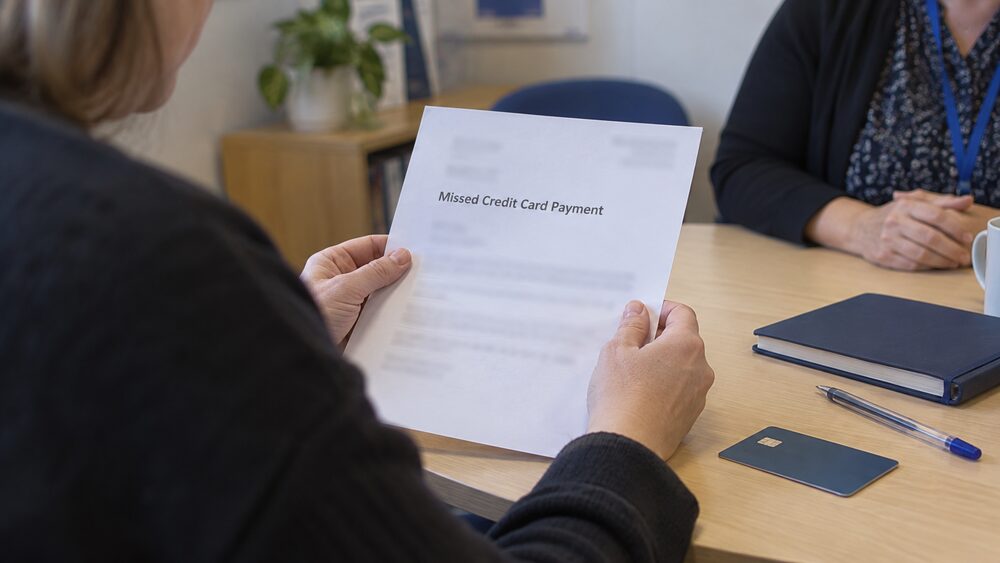
Missing a payment altogether brings late payment charges and a mark on your credit file3. If you are on an introductory or promotional rate, missing a payment can end the offer early, moving you to the standard rate at once. The page on losing a 0% offer after a missed payment explains when that happens.
There is also a regulatory backstop designed to stop minimum payments trapping people. The persistent debt rules require providers to act when a customer has been paying more in interest and charges than they have off the actual debt over a prolonged period. StepChange has called for reforms to affordability checks, minimum repayments and earlier support for people in persistent debt, arguing the current framework leaves borrowers carrying balances for too long9. The pages on persistent debt rules and when you cannot afford to pay more set out your rights.
Section 75 protection: £100 to £30,000
Section 75 of the Consumer Credit Act 1974 is the strongest protection that comes with card-style credit. It applies to purchases costing more than £100 and up to £30,00017, and MoneyHelper puts the same range at £100 to £30,000, even if you are only paying some of that amount on your credit card4. If the goods never arrive, the trader vanishes, or what you bought is faulty and the seller will not help, you can claim your money back from the credit provider as well as, or instead of, the seller.
The protection is statutory, not a goodwill gesture. The lender and the seller are jointly liable for the debt, which is why a claim can be made against the provider even when the retailer has gone bust. The page on Section 75 explains the rule, and how to make a Section 75 claim gives the process step by step.
For app-based credit lines, the question is whether the product is a regulated credit card agreement. Where it is, Section 75 applies to purchases between £100 and £30,000, the same range confirmed in the government's impact assessment of the buy now pay later regulatory regime, which restates that section 75 of the CCA allows consumers to claim refunds from their lender for purchases between £100 and £30,00018. Where the credit is provided under a different structure, the protection may not follow, which is the subject of the next section.
Where purchase protection and surcharge rules do not apply
The limits of Section 75 matter as much as its reach. It applies only to credit purchases, not debit card purchases17. It may not cover cases where the goods or services are paid for via a third party such as a travel comparison website, PayPal or Amazon Marketplace, rather than directly using a credit card19. The Financial Ombudsman Service warns that you will not automatically be protected by either Section 75 or chargeback if you purchase through a third-party website20. The pages on when Section 75 does not protect you and paying by PayPal cover these gaps.
There is also a technical exclusion in the payment regulations. Under the Payment Services Regulations 2017, the rules on rectification of and liability for unauthorised transactions do not apply where a payment service is provided in relation to funds covered by a credit line under a regulated agreement21. In plain terms, the protections that govern unauthorised payments from a current account work differently when the money being spent is borrowed under a credit line, because the consumer credit rules take over instead. The page on fraud and unauthorised payments explains what to do if a payment you did not authorise appears.
The surcharge ban has its edges too. Traders are banned from imposing surcharges on consumers for using certain payment methods14, but the ban does not reach every situation: charges can still appear where a bank is outside the EEA or where a business card is used5. And where a credit line is bundled with other goods, as insurance is with a packaged bank account, separate disclosure rules can apply rather than the standard ones5.
Problems, complaints and help with credit debt
If something goes wrong, complain to the provider first, giving it a chance to put things right. If it does not, the Financial Ombudsman Service can look at the complaint for free. Its workload shows how common these disputes are: in the first quarter of 2026/27 it opened 5,783 complaints about credit cards, 2,103 about personal loans, 757 about debit cards, 552 about debt collection, 228 about credit records, 130 about BNPL loans and 210 about short term lending22. In an earlier study of payday lending complaints, the ombudsman found poor administration was the main feature of 14% of a sample of 353 complaints, and that in 18% of cases where the main complaint was an allegation of fraud there was a subsidiary complaint about credit file damage23.
Accounts can also be frozen. People come to the ombudsman when their bank or building society has frozen their account or blocked a payment because of unusual or suspicious activity, or doubts about whether the customer authorised a payment24. When it investigates, the ombudsman looks at what the terms and conditions say and whether they are clear and unambiguous, how the account has been used, how long the restriction lasted, why the provider will not release money, and how the restriction affected the customer25. The page on complaining about a credit card provider gives the process.
Free help with the debt itself is available and costs nothing. National Debtline is free to use, always6. StepChange's first piece of advice for paying off card debt is to stop using the credit you want to pay off, so the amount you owe stops growing and repaying becomes quicker6. The pages on help with credit card debt, debt in Scotland and debt in Northern Ireland cover the options across the nations, and the debt section covers solutions such as repayment plans and formal insolvency.
Additional cardholders on an app-based line
Credit cards cannot be taken out in joint names26, and the same applies to app-based credit lines: only one person is liable for the debt27. A provider may let you add an additional cardholder, who gets their own card and shares the credit limit, but they have no legal responsibility to pay towards the debt26. The main cardholder is responsible for paying off the debt in full, including whatever the additional cardholder spends26. If you add someone, you are responsible for paying off whatever they spend on your card3.
Adding a cardholder does not create a financial link on your credit file, even though they can spend on the account27. That is different from a joint bank account, where opening the account adds a financial link to the other person, companies look at both credit histories, and a poor history might lower the chances of acceptance28. Closing a joint account will not remove the link; a notice of disassociation can be requested from credit reference agencies if there is no other financial connection28.
The liability rule survives changes in circumstances. On divorce, a credit card will not be in joint names and only one person will be liable for the debt27. After a death, repayment of personal loans, credit cards and credit debt must wait until other debts have been settled, and if cards are held jointly any debts will be the joint holder's responsibility29. The page on additional cardholders and third party access has more.
Sources29 cited
- The costs and charges of credit cards Citizens Advice, 2026-09-25
- FCA Handbook CONC App 1.2.5 Financial Conduct Authority, 2024
- Choosing and applying for a credit card Citizens Advice, 2026-09-25
- Shop safely online MoneyHelper, 2026-09-25
- The costs and charges of credit cards (Scotland) Citizens Advice Scotland, 2026-09-25
- Paying off credit card debt StepChange, 2026-09-25
- Can I avoid my debts? StepChange, 2026-09-25
- Mortgage agreements in principle (AIPs) Which?, 2026-05-20
- Credit card persistent debt StepChange, 2026-09-25
- Should I get a credit card? Which?, 2026-09-18
- Credit cards for a bad credit score StepChange, 2026-09-25
- Consumer Credit (Total Charge for Credit) Regulations 2010, Schedules legislation.gov.uk, 2026
- Credit cards and debt nidirect, 2025-11-06
- Remedies and redress: your key consumer rights Anglesey County Council, 2025-09
- Understanding interest charges StepChange, 2026-09-25
- What do I need to know about debt? Bank of England, 2025-08-19
- The Consumer Credit Act Which?, 2025-06-18
- Impact assessment: BNPL regulatory regime legislation.gov.uk, 2025-05-19
- Cancellations, refunds: helping consumers with rights, routes to refunds Financial Conduct Authority, 2020-10
- Festival refunds not guaranteed, warns Financial Ombudsman Service Financial Ombudsman Service, 2026-06-04
- The Payment Services Regulations 2017, Part 7 legislation.gov.uk, 2026
- Quarterly complaints data Q1 2026/27 Financial Ombudsman Service, 2026
- Payday lending complaint insights Financial Ombudsman Service, 2026-09-27
- Frozen accounts and blocked payments Financial Ombudsman Service, 2026-09-25
- Electronic money complaints Financial Ombudsman Service, 2026-09-26
- How joint debts affect me StepChange, 2026-09-25
- What happens to debts when you get divorced National Debtline, 2026-09-25
- Joint accounts MoneyHelper, 2026-09-25
- Debt when someone dies nidirect, 2026-06-26




 MoneyHelperFree, impartial money and pensions guidance, set up by government
 StepChangeFree debt advice and solutions from a charity
 National DebtlineFree debt advice by phone, webchat and online
 Financial Ombudsman ServiceFree, independent help when a complaint about a firm is not put right
 Citizens AdviceFree advice on money, consumer and legal problems in England and Wales