
When you retire with a defined contribution pension, the money sits in a pot and the question becomes how to turn it into an income. One option is to buy an annuity, which pays a guaranteed income for life. The other main route is pension drawdown: you leave the pot invested with your provider and take money out when you want it. Pension Wise, the government's free guidance service, describes this as "adjustable income", because you decide how much to take and when, and you can adjust it as your circumstances change1.
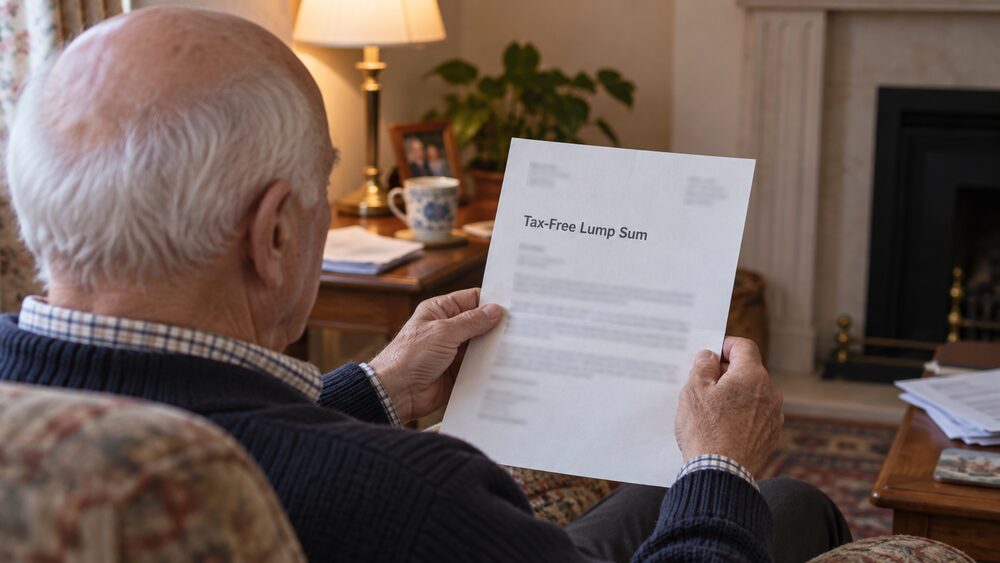
Drawdown is flexible, but it is not guaranteed. Because your pension remains invested, its value can rise and fall until you take the money, which means your retirement income can go down as well as up1. You can normally take up to 25% of the pot as a tax-free lump sum, and anything above that is taxed as income1. The earliest you can usually move your pension into drawdown is age 55, rising to 57 from April 20281.
Since the pension freedoms in 2015, providers have had to support this flexibility, and most now offer three routes for deciding how your drawdown money is invested: ready-made "investment pathways" chosen by the provider, funds you pick yourself, or a financial adviser who manages the investments for you1. This page explains how each route works, what it costs, what can go wrong, and where to get free help before you decide.
What pension drawdown is and how it pays you an income
Pension drawdown means leaving some of your pension fund invested and taking only part of it as income, drawing money from the fund itself rather than converting it into a guaranteed payment4. It is also known as income withdrawal5. Instead of handing your pot to an insurance company in exchange for a fixed income, you keep the pot with a provider and take money out as and when you wish. You can take out as much as you want, although the money above your tax-free entitlement is subject to income tax6.
The mechanics are straightforward. When you move your pot into drawdown you can take a tax-free lump sum of up to 25% at the same time7. The remainder stays invested in funds, and the income those funds produce, together with any withdrawals you make, provides your retirement income. The Work and Pensions Committee describes it this way: "Drawdown: Pension drawdown can provide a regular income by reinvesting it in funds designed for this purpose"8. The income is not guaranteed and varies with how the funds perform8.
Tax is deducted through the pay-as-you-earn (PAYE) system, the same mechanism used for wages9. Pension income is taxed in the same way as your earnings and any other income you receive, such as savings interest10. Because withdrawals count as income, taking a large amount in one year can push you into a higher tax band, which is one reason many people spread withdrawals over several years. A change in your pension income can also change your tax code, just as a pay rise or a new job does11.
Drawdown is one of three broad ways to take pension benefits. nidirect, the Northern Ireland government service, lists the options as taking a scheme pension, buying an annuity, or drawing an income directly from your pension fund as a drawdown pension12. Drawdown sits alongside other retirement income sources, which can include your State Pension, occupational pensions, part-time work, and other savings or investments13. Many people use drawdown for part of a pot and an annuity for the rest, to combine flexibility with some guaranteed income.
Not every provider offers it. Citizens Advice advises checking with your pension provider to see if they offer income drawdown, because some won't14. Some workplace pension providers insist you change your pension to a personal pension before you can take the income drawdown option4. If your current provider cannot support drawdown, you may need to transfer to one that does, which is covered below.
Investment pathways: four ready-made options from your provider
If you don't want to choose funds yourself, you can ask your provider to choose for you based on your preferences. These ready-made investment options are called investment pathways1. They were introduced for contract-based schemes in 2021, following a Work and Pensions Committee inquiry into how people fared in drawdown without advice8. The Committee's report explains the purpose: "The four pathways, each linked to a particular objective, are designed to enable nonadvised consumers to achieve better outcomes by helping them to choose the best way to invest their money in drawdown"8.
The pathways work by asking you a simple question about your plans, and matching your money to an investment designed for that answer. The FCA's rules set out the four statements you choose from2:
| Pathway | What you tell your provider |
|---|---|
| Option 1 | I have no plans to touch my money in the next 5 years |
| Option 2 | I plan to use my money to set up a guaranteed income (annuity) within the next 5 years |
| Option 3 | I plan to use my money to set up a long-term income within the next 5 years |
| Option 4 | I plan to take out all my money within the next 5 years |
Each pathway is invested differently because each objective calls for a different approach. Money intended to buy an annuity in two years faces different risks from money meant to fund twenty years of withdrawals. The pathway is not advice, and it does not take account of everything about your situation; it matches an investment to the one statement you select. Providers must offer pathway investments for at least two of the options, and must not offer the same pathway investment for all options2. Some firms, known as pathway investments exempt firms, may instead refer you to the MoneyHelper investment pathways comparison tool2.
Pathways do not remove the investment risk. Whatever the pathway, your money stays invested and its value can still fall. What they change is the chance that your pot is invested in a way that plainly doesn't match your stated plans, which was a recognised problem for people entering drawdown without advice8.
Choosing your own investments
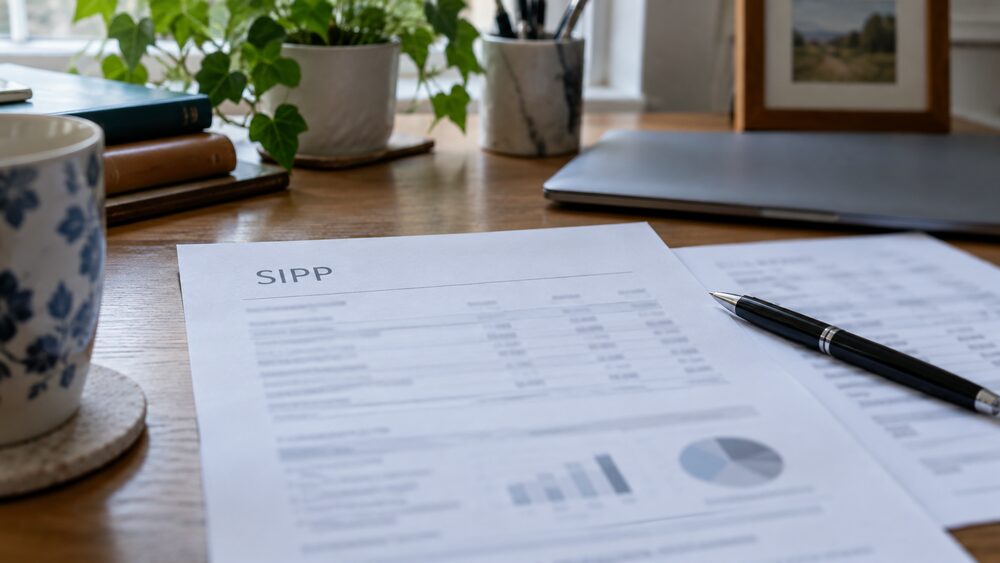
The second route is to pick the funds yourself. Pension Wise lists this alongside pathways and advice as one of the ways to invest a drawdown pot1. This suits people who are comfortable deciding how their money is invested, perhaps because they have experience of choosing funds in a SIPP or through a workplace pension, and who want to control the balance between growth and security as they go.
The trade-off is that the decisions, and the consequences, are yours. Citizens Advice is blunt about the risk: "This makes income drawdown a high risk choice because the stock market can go up or down" and you could end up with far less income than planned4. Choosing your own funds means deciding how much to hold in shares, which rise and fall more sharply, and how much in lower-risk assets whose value is steadier but grows more slowly. It also means reviewing those choices as you age and as the pot is drawn down.
Costs are part of the picture whichever route you take. You'll have to pay charges on the investments you hold, as well as those levied by your drawdown provider15. With your own fund selection you can see each fund's charges and weigh them against what you expect, but you carry the responsibility for whether the mix is right. nidirect also notes that with a flexi-access drawdown fund you'll pay a fee to your pension provider for each withdrawal16, so frequent small withdrawals can cost more in fees than fewer larger ones.
Tools exist to help you think it through. A pension drawdown calculator lets you adjust how much annual income you want to take and the investment growth you assume, to see what impact this has on how long the money lasts17. A calculator cannot predict the future, but it can show how sensitive your plan is to the amount you take out and the returns you get.
Using a financial adviser to manage your drawdown investments
The third route is to appoint a financial adviser to manage the investments. Pension Wise lists this as an option alongside pathways and your own choice1. An adviser assesses your circumstances, your other income and assets, your attitude to risk and your plans, and recommends and manages an investment strategy for your drawdown pot. For people with larger pots, complex tax positions or several pension arrangements, this is the route that takes the most decisions off your shoulders, and it is the only one of the three that is regulated advice tailored to you.
Advisers charge for their services, and the cost is usually either a fixed fee, an hourly rate or a percentage of the money being managed. One way to pay for advice from a pension is the Pensions Advice Allowance, which lets you take money from your pension to pay for financial advice, with the money paid directly to the financial adviser you have chosen18. Which? has also looked at whether you can access your pension early specifically to pay for financial advice, and the conditions that apply19.
Finding an adviser is straightforward in principle. nidirect suggests several routes: search online, check specialist investment publications, talk to your accountant or solicitor, check the investment pages in major newspapers, or contact trade bodies like IFA Promotion or the Personal Finance Society3. The FCA's rules allow a guidance provider, when giving information about retirement options, to refer you to a directory or other list of financial advisers20. Before appointing anyone, check they appear on the FCA Register, and be clear from the outset what the advice will cost and what you get for it.
Guidance and advice are different things, and the distinction matters. Pension Wise and MoneyHelper give free guidance: they explain your options, how each is taxed, and what to check before deciding, but they don't recommend a particular product or provider3. A financial adviser gives regulated advice and can recommend specific investments, but charges for it. Many people take free guidance first and then decide whether their situation needs paid advice.
Pathways, own choice or adviser: how the three routes differ
The three routes answer the same question, who decides how your drawdown money is invested, in three different ways. Pension Wise sets them out side by side: ask your provider to choose for you based on your preferences, choose your own investments, or have a financial adviser manage them1.
| Route | Who decides | What it costs | What it risks | Tends to suit |
|---|---|---|---|---|
| Investment pathways | Your provider, from your chosen statement | The provider's charges and fund fees15 | Pot still rises and falls with markets1 | People who don't want to pick funds but aren't ready to pay for advice |
| Your own choice | You | Fund charges plus provider charges, and a fee for each withdrawal15 | You carry the decisions, and markets can still fall4 | People comfortable choosing and reviewing funds |
| Financial adviser | A regulated adviser, managing for you | Adviser fees, plus underlying charges18 | Markets can still fall, but the strategy is monitored | Larger or more complex pots, or people who want the decisions handled |
None of the three routes removes investment risk. The value of your pot could take a hit if your investments underperform, whichever route you choose15. What differs is who selects the investments, how closely they match your circumstances, and what you pay for that judgement. A pathway matches one statement about your plans; your own choice reflects your own research; an adviser's recommendation reflects a full look at your finances.
It is also worth knowing that firms can flag concerns under the FCA's targeted support rules: a firm could suggest an alternative drawdown rate for consumers drawing down their pension unsustainably21. This is not advice to switch route, but it means a provider may sometimes contact you if your withdrawal pattern looks likely to exhaust the pot.
The minimum pension age rises from 55 to 57 on 6 April 2028
The earliest you can usually move your pension into drawdown is age 55, rising to 57 from April 20281. The same minimum applies to taking a private pension, including some workplace pensions22, and to taking the tax-free lump sum: you can take up to 25% from your pension as a tax-free lump sum at any time from age 55, rising to 57 from April 20281.
This is the second rise of its kind. Since April 2010, the minimum age when you can take your workplace or personal pension increased from 50 to 55 for most people12. The change was phased in over several years before that: the rules set the minimum age as increasing from 50 to 55, to reach 55 by April 2010 at the latest, with timing varying between schemes24. Official statistics record the same milestone: the earliest age at which it was possible to receive an income from a registered private pension increased to 55 from April 201023.
The 2028 rise works the same way. From 6 April 2028, savers will need to be 57 to start taking their pension. If you reach 55 before that date you can still start drawdown under the current rules; if you are 55 or 56 on 6 April 2028, you will wait until 57 unless your scheme has a protected lower age. Which? notes the same threshold for the minimum age for accessing pensions, currently 55, rising to 57 in April 202819. Anyone planning to retire at 55, 56 or just before their 57th birthday in the late 2020s should check the date against their own birthday carefully.
Where drawdown can go wrong
Drawdown's flexibility is also its main risk. Take out too much, too soon and you could run out of money15. Because the pot has to keep funding withdrawals for an unknown number of years, the rate at which you draw income matters as much as the investments themselves. A pot that falls in value early in retirement, especially while withdrawals continue, recovers only with difficulty.
The second risk is the market itself. Your pension remains invested, so its value can rise and fall until you take the money, which means your retirement income is not guaranteed1. Citizens Advice warns that income drawdown is a high risk choice because the stock market can go up or down, and you could end up with far less income than planned4. The value of your pot could take a hit if your investments underperform15.
The third is cost. Charges come from two directions: the investments you hold, and the drawdown provider itself15. On top of those, nidirect notes you'll pay a fee to your pension provider for each withdrawal from a flexi-access drawdown fund16. Charges compound against you over a long retirement in the same way investment returns compound for you.
There are also consequences for the people who inherit your pot. If you die before the age of 75 and leave money in pension drawdown, your beneficiaries don't have to pay income tax on the money they withdraw25. If you die when you're 75 or over, your beneficiaries will have to pay income tax on any income they take from your drawdown plan25. The tax treatment of inherited drawdown money also depends on when the drawdown fund was set up: money from an old drawdown fund, set up before 6 April 2015, is taxed differently from money in a fund set up after that date26.
Finally, drawdown interacts with the rest of your finances. Money taken from a pension counts as income and can affect means-tested benefits, and income from non-state pensions, including occupational and private pensions, is counted when benefits are worked out27. Debt charities note that people sometimes use pension money to clear debts, and free advice is available before doing so28. Pension scams are a further risk at exactly this moment, because people approaching retirement with accessible pots are a target; Pension Wise appointments cover how to look out for pension scams3.
Where to get free help
You don't have to work through these choices alone, and the main sources of help are free. Pension Wise is the government's guidance service for people with defined contribution pensions. Its appointments cover your pension and payment options, how each option is taxed, the next steps to take and what to check before making decisions, and how to look out for pension scams3. Since the "stronger nudge" rules came into force, providers must point you towards Pension Wise guidance before you access your pension savings3.
MoneyHelper provides free help as well, including the investment pathways comparison tool that the FCA's rules allow firms to refer you to2. nidirect lists the sources of pension information and help available, including for people in Northern Ireland3. Guidance is impartial and free, but it is not regulated advice: it explains the options without recommending one.
For help with the wider picture, TaxAid covers tax and retirement for people on low incomes13, and Citizens Advice, Age UK's jargon checker and debt charities such as StepChange and National Debtline can help where pension decisions sit alongside debts or benefits questions5. If something goes wrong with a provider, complaints can be taken to the Pensions Ombudsman, and the complaints process is explained elsewhere on the site.
Before starting drawdown, it is also worth checking the other pages in this section: the full guide to pension drawdown, how drawdown compares with an annuity, the tax-free lump sum and how pension income is taxed, and what happens to your pension when you die. If your current provider doesn't offer drawdown, the guide to transferring pensions between providers explains how moving works, and nidirect notes that in some cases it's also possible to transfer to a new pension provider after you've started to draw retirement benefits30.
Sources30 cited
- Adjustable income, Pension Wise Pension Wise, 2026-09-28
- COBS 19.20: investment pathways, FCA Handbook FCA, 2026-06-26
- Getting information and help with pensions, nidirect nidirect, 2026-06-26
- Pensions income drawdown, Citizens Advice Citizens Advice, 2026-09-26
- Financial jargon checker, Age UK Age UK, 2026-08-26
- Options for cashing in your pension, Which? Which?, 2026-07-09
- Pension flexibility: new options from 6 April 2015, GOV.UK HM Government, 2015-02-12
- Work and Pensions Committee report on pension freedom, Parliament House of Commons, 2022-01-18
- Tax on pensions, Which? Which?, 2026-03-18
- Working in retirement, Which? Which?, 2026-03-17
- Understanding the basics Scottish Widows
- Introduction to workplace, personal and stakeholder pensions, nidirect nidirect, 2026-09-25
- Understanding tax and retirement, TaxAid TaxAid, 2026-01-20
- What you can do with your pension pot, Citizens Advice Citizens Advice, 2026-07-01
- Annuities vs pension drawdown, Which? Which?, 2024-10-24
- How your personal pension is paid, nidirect nidirect, 2026-09-25
- Income drawdown calculator, Which? Which?, 2026-03-02
- Pension freedoms and debts, Business Debtline Business Debtline, 2026-09-26
- Can I access my pension early to pay for financial advice, Which? Which?, 2026-05-18
- FCA policy statement 2015/9, FCA FCA, 2015-03-06
- New FCA targeted support, Which? Which?, 2025-12-17
- State Pension, Pension Wise Pension Wise, 2026-09-28
- Private pension wealth in Great Britain, ONS ONS, 2010
- FCA instrument 2006/12, FCA FCA, 2006-04-27
- What happens to my pension when I die, Which? Which?, 2026-09-17
- Do you know who will inherit your pension pot, Which? Which?, 2018-03-02
- Income from non-state pensions, entitledto entitledto, 2026-09-26
- Pension freedoms and debt, National Debtline National Debtline, 2026-09-25
- Retirement and debt, StepChange StepChange, 2026-09-25
- Transferring your pension, nidirect nidirect, 2026-09-25


 Pension WiseFree guidance on your options for a defined contribution pension, from age 50
 FSCSProtects your money if a bank, insurer or investment firm fails
 GOV.UKOfficial information on tax, benefits and government services