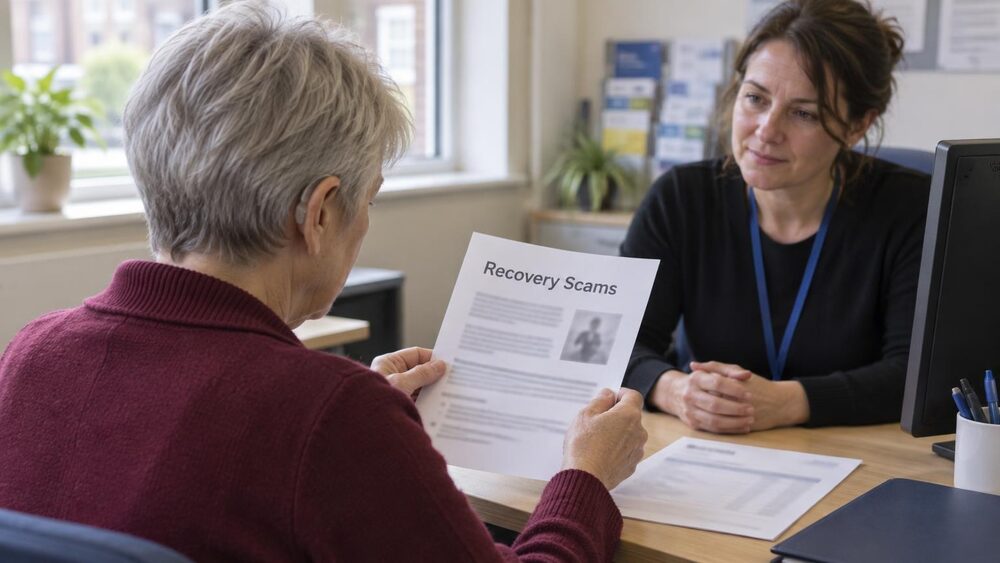
Which? has warned that people who use Trustpilot to describe their experience of a scam and warn others are being targeted by recovery scammers, in an article published on 13 November 20251. A recovery scam is when fraud victims are targeted by "professionals" claiming to be able to recover lost money, only to be scammed again1.
Between November 2024 and November 2025, Action Fraud received 5,553 reports related to recovery scams, resulting in £185.4m in losses1.
Which? found six scam reimbursement services, all purporting to offer legal services or claims management services1. None of the firms are registered with the Financial Conduct Authority (FCA), meaning they are not authorised to provide claims management services or financial services in the UK1. Many were listed as being located in the US, while having websites registered in Germany1. All the websites were created in September and October, around the same time that the mass reviews were written1. Which? contacted all six companies and did not get a response before publication1.
Which? found that lots of financial firms had reviews on their Trustpilot pages promoting the reimbursement services, and that in one case 93 reviews were written by the same person in one day, all praising one of these recovery services1. Other reported red flags included links that did not lead anywhere, AI-generated images used to illustrate team members, and business addresses that listed the entire state of Pennsylvania, linked to a dissolved company or led to a virtual office1.
Trustpilot told Which? that all reviews submitted on its platform are run through generative AI technology and that it uses fraud specialists in tandem with automated systems to check for anything suspicious before they are published1. After publication, Trustpilot told Which? that it found more fake reviews related to these companies and removed them, and it contacted four of the firms with warnings1. It also placed permanent consumer warnings on all of these firms' profiles, which are now closed for new reviews, and blocked review accounts found to be leaving numerous similar reviews on similar company profiles1.
The Digital Markets, Competition and Consumers Act, which became law in May 2024, banned fake reviews1.
"Scam victims using Trustpilot to recount their story and warn others are being targeted by recovery scammers, Which? warns."
Which? also reported the account of a person using the name Holly, who was caught out by both an investment scam and a recovery scam, not related to Trustpilot1. She said the firm told her she needed to cover audit fees, compliance checks and clearance charges, and that it would take 7-10% of the recovered funds1. She said she was asked for more money for made-up reasons after paying the initial fees, and that she is now out of pocket £20,0001.
Why it matters for households
Recovery scams add a second loss on top of a first one, and the reported figures cover a 12-month period to November 20251. The firms Which? identified were not authorised by the FCA, so anyone dealing with an unauthorised firm does not have the protections that come with dealing with an authorised one, including access to the Financial Ombudsman Service and the Financial Services Compensation Scheme1.
For people who have already lost money, the routes to recovery differ by how the payment was made. Since October 2024, it has been mandatory for banks to reimburse faultless victims of Authorised Push Payment (APP) fraud, which are scams where someone is convinced into paying a fraudster by bank transfer1. Where a credit card was used and the transaction was for more than £100, a claim can be made under Section 75 of the Consumer Credit Act1. For PayPal transactions, Buyer Protection may apply1. Which? notes that if a scammer was paid in cash or gift vouchers, getting money back can be very challenging1.
What happens next
Trustpilot has closed the six firms' profiles to new reviews and placed permanent consumer warnings on them, and has contacted four of the firms with warnings1. Reviews can be reported on Trustpilot by selecting the flag under the review1. Which? said the article was updated on 14 November 2025 to add that Trustpilot uses fraud specialists alongside automated systems, and to include the outcome of its investigation into the firms1.
 FCA Warning ListCheck whether a firm is authorised before you deal with it
 Financial Ombudsman ServiceFree, independent help when a complaint about a firm is not put right
 Citizens AdviceFree advice on money, consumer and legal problems in England and Wales
 MoneyHelperFree, impartial money and pensions guidance, set up by government