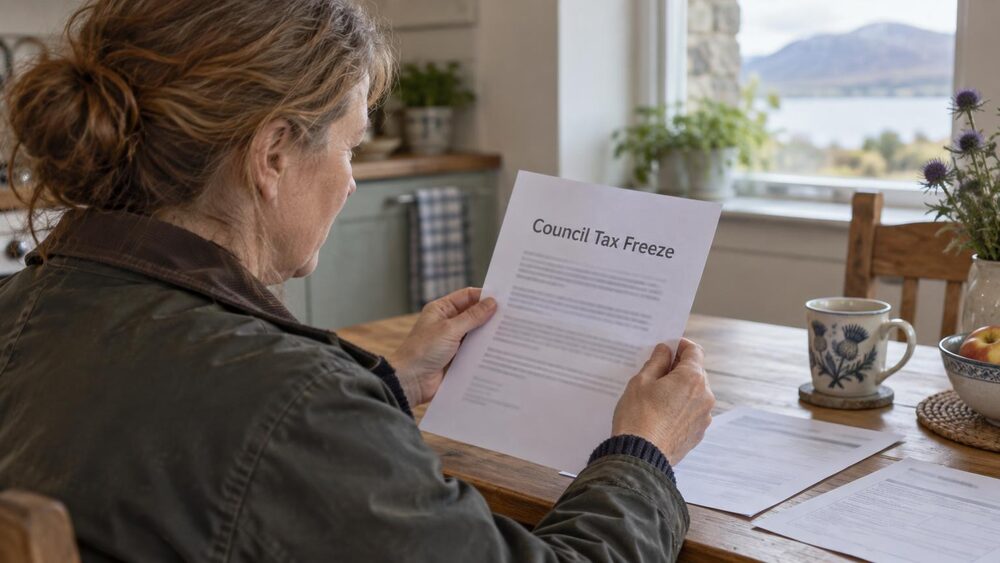
Council tax in Scotland will be frozen at current levels until April 2025, First Minister Humza Yousaf has announced1. The freeze means rates for around 2.5 million households will stay the same in 2024-251.
The announcement follows rises in the current financial year. Most Scottish local authorities increased bills by at least 5% in 2023-24, and, unlike in England and Wales, Scotland did not set a cap on rate increases this financial year, so some councils were able to raise council tax by more1. The First Minister says the announcement will bring "much needed financial relief" to Scottish taxpayers struggling with soaring prices and the ongoing cost of living crisis1.
"Council tax in Scotland will be frozen at current levels until April 2025, First Minister Humza Yousaf has announced."
Separately, a 12-week consultation launched in the spring found support for higher charges on second and empty properties. Of the 938 respondents, 55% backed charging twice the rate on second and empty properties, and 59% supported a 300% council tax premium on second homes, saying it would discourage people from buying properties that will not be used regularly by owners1. In September 2022, around 1% of all residential properties in Scotland, over 24,000 homes, were classified as a second home for council tax purposes1. It is not currently clear how the rate freeze will affect proposals to double council tax for second homes from April 20241.
Council tax is calculated using bands based on the value of a property in April 1991 in England or Scotland, or April 2003 in Wales; Northern Ireland uses the older system of domestic rates, based on a property's capital value1. Where a property has been placed in the wrong band, a challenge can be made to the Valuation Office Agency or the Scottish Assessors Association, and VOA data from 2022-23 showed one in three households successfully had their property moved to a lower band, cutting their bills and likely getting a refund for overpaid money1. A change to a home's valuation could also push it into a higher band1.
Why it matters for households
For households in Scotland, the practical effect is that the amount billed in 2024-25 stays at the level set for 2023-24, a year in which most councils raised rates by at least 5%1. The freeze covers around 2.5 million households and runs until April 20251. It does not change the band a property sits in, which continues to be based on its April 1991 value in Scotland1.
Two discounts and reductions sit alongside the headline rate. A 25% discount is available to people who live alone, or with someone who is not counted as having to pay council tax, including student nurses, full-time students, those under 25 in approved training and members of visiting forces1. These discounts are not applied automatically; an application is required and proof is usually needed1. More detail on bands, discounts and water charges is in our guide to council tax in Scotland, and the different system in Northern Ireland is set out in council tax versus domestic rates.
What happens next
The Scottish government hopes its proposals on second homes will increase the amount of affordable homes if approved by Holyrood1. It has not been reported how the freeze will interact with the plan to double council tax on second homes from April 20241.
 GOV.UKOfficial information on tax, benefits and government services
 MoneyHelperFree, impartial money and pensions guidance, set up by government
 Citizens AdviceFree advice on money, consumer and legal problems in England and Wales
 Turn2usFree benefits calculator and grants search from a charity
 Citizens Advice ScotlandFree advice across Scotland