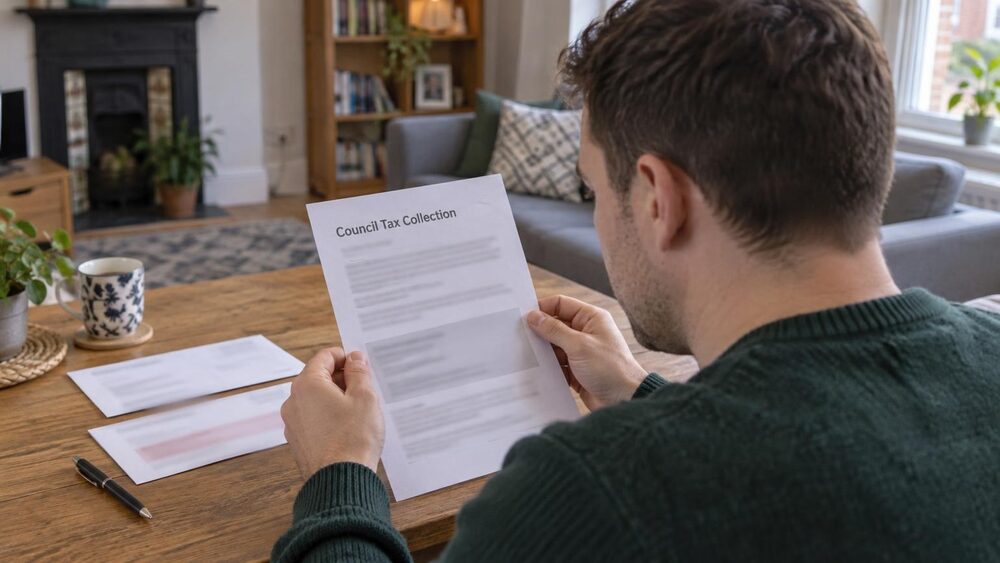
The Welsh Government published a consultation on 30 April 2025 setting out proposed changes to the administration and enforcement of Council Tax in Wales1. The consultation applies only to Wales and runs for 12 weeks, closing on 23 July 20251. It carries the reference number WG517631.
The Welsh Government says the proposals aim to help councils manage collection in a way that encourages earlier engagement and earlier intervention, to prevent people becoming trapped in cycles of debt1. It states that Council Tax arrears are a common debt issue for households in Wales, often alongside other debts, and that the collection framework can make it hard for households to escape debt because it escalates to a larger amount relatively quickly1.
The consultation describes the current process. A Council Tax bill is usually divided into 10 or 12 monthly payments, or paid in one lump sum at the start of the year1. If a payment is missed, the council sends a reminder notice, and the law currently states the household then has 7 days to pay the missed amount before losing the right to pay in instalments1. If they do not pay within 7 days, the law currently states they must pay the remaining annual balance after another 7 days1. Councils only need to send reminder notices for the first two missed payments in a financial year, which runs from 1 April to 31 March; if a household misses a third payment, they must pay the remaining annual balance within 1 day1. A final notice asks for the amount owed to be paid within 7 days1. A summons notice states how much Council Tax is owed and the added costs, up to a maximum of £70 in Wales1.
Among the proposals, the Welsh Government says councils should always send a reminder notice when a Council Tax instalment is missed1. It also proposes changes to final notices, liability order timing and new best practice guidance1. The consultation notes that many councils in Wales already send final notices, which it considers a positive approach because it provides a clear warning before further action1.
"We propose that councils should always send a reminder notice when a Council Tax instalment is missed."
Once a liability order is issued, the council can use recovery methods including sending enforcement agents, attachment of earnings, deductions from benefit payments, a charging order, and applying to have the taxpayer declared bankrupt if they owe more than £5,0001. The Welsh Government ended the threat of imprisonment for non-payment of Council Tax in 2019 and published the Council Tax Protocol for Wales1. In November 2023, all council leaders in Wales committed to using only accredited firms to collect Council Tax, making Wales the first nation in the UK to do so1. Court fees associated with liability orders were capped at a maximum of £70 in 20111.
The Welsh Government states that taxpayers contribute over £2.8 billion a year towards the £11 billion cost of essential local services in Wales1. It says the Council Tax system was created in 1993, and that the Senedd approved the Local Government Finance (Wales) Act 2024, paving the way for a revaluation of properties for Council Tax purposes in 20281. From April 2025, changes to the Council Tax Reduction Scheme enable local councils to use Universal Credit data to automate applications for Council Tax support1.
Why it matters for households
The consultation concerns households in Wales who fall behind on Council Tax instalments, and the steps councils can take once a payment is missed. Under the current rules described in the consultation, missing a payment can lead to the right to pay in instalments being lost after 7 days, and to the full remaining annual balance becoming payable after a further 7 days1. Missing a third payment in a financial year means the remaining annual balance is due within 1 day1. The proposals would change when reminder notices must be sent and the timing around final notices and liability orders, though the consultation does not set out final rules1. The £70 cap on court fees linked to liability orders, in place since 2011, is unchanged in the document1. Households already in arrears can contact their council to check eligibility for discounts or reductions and discuss payment options, and free advice is available through Advicelink Cymru on 0808 250 57001. The consultation notes that support includes the Council Tax Reduction Scheme and that young care leavers are exempt from Council Tax until age 251.
What happens next
The consultation is open until 23 July 2025, and comments can be submitted by email to CTandNDR.Consultations@gov.wales1. The Welsh Government has not reported what will follow the consultation or when any changes would take effect1.
 Citizens Advice ScotlandFree advice across Scotland
 Citizens AdviceFree advice on money, consumer and legal problems in England and Wales
 MoneyHelperFree, impartial money and pensions guidance, set up by government
 GOV.UKOfficial information on tax, benefits and government services