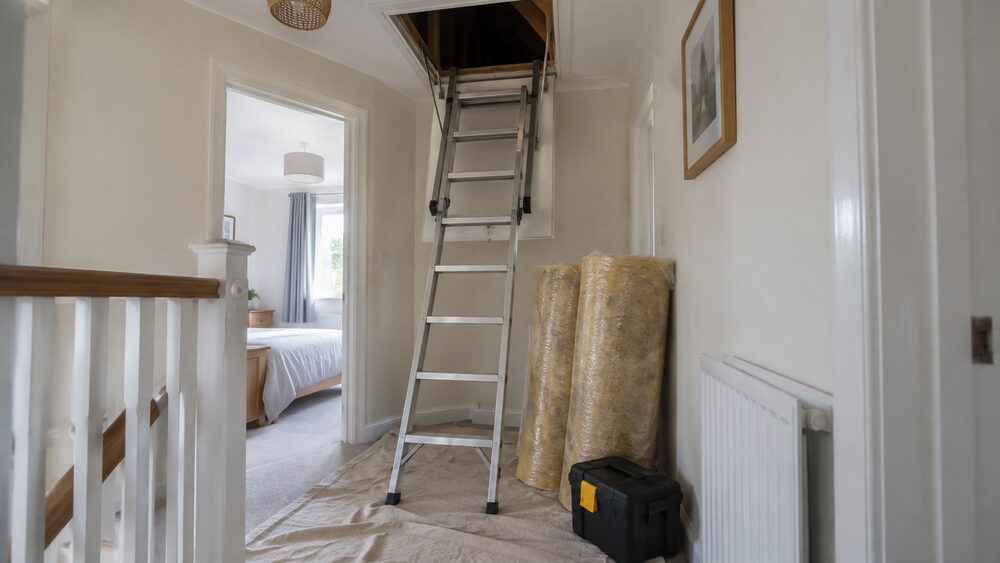
A green loan is usually an ordinary personal loan with a lower rate attached, offered by lenders who want to encourage energy-saving work on your home. The same is true of a home improvement loan: there is no separate product. As the Post Office puts it, "There's really no such product as a home improvement loan. In fact, it's a regular unsecured loan" that you choose to spend on your property1. HSBC describes it the same way, as "a type of unsecured personal loan" that lets you borrow a lump sum to fund renovation work2.
A green loan is usually an ordinary personal loan with a lower rate attached, offered by lenders who want to encourage energy-saving work on your home. The same is true of a home improvement loan: there is no separate product. As the Post Office puts it, "There's really no such product as a home improvement loan. In fact, it's a regular unsecured loan" that you choose to spend on your property1. HSBC describes it the same way, as "a type of unsecured personal loan" that lets you borrow a lump sum to fund renovation work2.
What makes green borrowing different is the purpose, and sometimes the price. Some lenders give lower interest rates, cashback or larger loans if your home meets a minimum energy-efficiency level or you make energy-efficiency improvements3. Green mortgage rates are often around 0.1% or 0.15% below the lender's standard rate4. Gatehouse Bank's Home Purchase Plan carries a discounted rate of 0.10% off the standard product rate for its Green Finance Products5.
The amounts are modest by mortgage standards but useful for a single project. Credit union green loans run from £5,000 to £15,0006, and one quotes a £10,000 loan repaid at £250 a month over 48 months, with a total repayable of £11,799.777. If you already own your home, adding to your mortgage is the other main route, and it comes with the security of your property attached.
A green loan is usually an ordinary personal loan with a lower rate
The label on the tin matters less than the terms inside it. A green loan from a credit union is a personal loan whose purpose is home improvements that help towards making a positive impact on the environment while also saving money on energy bills10. One credit union lists its green loan simply as covering car or home improvements11. Another describes its green loan as being for home improvements that help towards making a positive impact on the environment10.
The discount is real but small. Green mortgage rates are often around 0.1% or 0.15% below the lender's standard rate4, and Gatehouse Bank's green finance discount is 0.10% off the standard product rate5. Some banks offer cheaper rates for people buying new-build properties that have high energy-efficiency ratings12. That is a rate reduction on a mortgage, not a grant, and it applies only where the property or the work meets the lender's definition of green.
There is a historical scheme worth knowing about because it still affects some homes. The Green Deal was a government scheme providing loans for energy efficiency home improvements13. Home owners, landlords and tenants could get loans for improvements such as adding insulation or solar panels13. If a Green Deal loan is attached to a property, the seller or landlord must tell the buyer or tenant that there is a Green Deal loan and that they are responsible for it, and show the Energy Performance Certificate before they move in13. That is a disclosure duty, not a choice.
Where to borrow: credit unions, mortgage top-ups and personal loans
There are three main routes, and they differ in cost, risk and who they suit.
Credit unions. All credit unions offer savings and loans14, and they offer loan products suited to your individual needs and at rates you can easily afford15. They are an alternative borrowing option to payday loans16, and they deliver through online and phone banking, a payroll partnership with your employer, or a local branch or service point you can walk into15. Several run dedicated green loans10. The trade-off is membership: you generally need to qualify through a common bond such as your employer, trade or where you live.
Mortgage additional borrowing. If you already have a mortgage, you can borrow more against your home, sometimes at a green rate. Nationwide's green additional borrowing is for people looking to make energy efficient home improvements18, and requires that 100% of the loan must be used to make energy-efficiency improvements to your home, with exclusions possibly applying19. Skipton asks that you spend at least 50% of what you borrow on energy efficient home improvements8. Coventry Building Society's version requires at least 50% on energy-saving improvements, with the rest of the money usable for other home improvements20, and can finance things such as heat pumps or solar panels21. Leeds Building Society also offers additional borrowing for this purpose22.
Personal loans. Building societies and banks may be able to offer you a personal loan23, and this is the simplest route if you do not want to touch your mortgage. The rate depends on your credit history and the amount, and the loan is unsecured, so your home is not at risk if you fall behind.
What it costs: rates by loan size and a worked example
Costs vary widely by lender and by how much you borrow. The clearest published example is a credit union green loan: given a fixed APR of 8.8% for green loans between £7,000 and £15,000, borrowing £10,000 and repaying £250 per month over 48 months gives a total repayable of £11,799.777. That is the interest and the capital together.
A green car loan from another credit union quotes an example rate of 6.06% on a £20,000 loan, with total interest of £3,142.8425. The two examples are not directly comparable, because one is a home improvement loan and the other is for a vehicle, and the amounts and terms differ.
| Borrowing route | Example amount | Example cost |
|---|---|---|
| Credit union green loan | £10,000 over 48 months | £250 a month, £11,799.77 total repayable7 |
| Credit union green car loan | £20,000 | £3,142.84 total interest25 |
| Green additional borrowing | Set by your equity and affordability | Rate discount depends on the lender8 |
For comparison, a Help to Buy equity loan example shows annual interest of £1,204.35 after an 11% increase, on an equity loan value of £62,000 with RPI at 10%26. That is a different product with different rules, but it shows how a government-backed property loan can build a payment obligation over time.
Who can get one and what lenders check
Eligibility splits by route. For a credit union loan, the main test is membership and affordability rather than a perfect credit file. Credit unions provide access to fair and affordable credit for people with a poor credit history27, and they may be more willing to help people on a low income, who have poor credit, or who do not have a previous record of borrowing28. That makes them a realistic option where a high street lender would decline.
For mortgage additional borrowing, the lender checks your equity, your income and your existing mortgage. Nationwide's green additional borrowing is aimed at people looking to make energy efficient home improvements18, and requires the whole loan to go on that work19. Skipton and Coventry both require at least half8.
For a standard personal loan, your credit history drives both approval and price. A low credit score or a less-than-ideal credit history can make it harder to get approved for consolidation loans, and may mean being offered higher interest rates than you pay now, or higher risk secured loans29. If your credit file is the obstacle, there is more detail on getting a loan with a poor credit history and on how loans affect your credit file.
If you rent, the picture changes. A Green Deal loan could be taken out by a home owner, landlord or contract holder, but the landlord and the contract holder both had to agree to the improvements if the building was rented30. The Green Homes Grant was open to anyone who owns their own home carrying out approved measures, except people who live in a new build property that has never been occupied31. Private landlords and letting agents can only do a credit check if you agree32.
Repaying early, missed payments and pledged savings
Early repayment terms are one of the clearest differences between green loans and secured borrowing. Several credit unions state there is no penalty for paying off a green loan early33, and one allows you to overpay or settle in full at any time at no extra cost34. Ulster Federal Credit Union says you can pay off your loan early, make additional lump sum repayments or increase your regular repayments, without a penalty35.
Secured borrowing is less forgiving. There are often penalties for paying off secured loans early, known as early repayment charges36, and one building society product carries an early repayment charge37. The Green Deal scheme allowed you to pay the loan off early but warned there may be extra costs13. Some credit union secured loans allow early settlement after a three month minimum term, by paying the balance plus any unpaid interest outstanding38.
Missed payments have consequences wherever you borrow. One credit union warns that missed payments may affect your credit history39. With buy now pay later, you may be charged a penalty fee if your payments are late or if you missed payment, and the provider may pass information about the missed payment to credit reference agencies, which will affect your credit score40. If you are struggling, free help is available from what to do if you can't repay a loan and from debt advice charities.
Some green loans build savings into the repayments17, which means part of what you pay is set aside rather than spent. That is a feature of the specific product, not of green loans generally, so check the terms.
Green savings and joint borrowing
Not all green finance is borrowing. NS&I Green Savings Bonds can be invested jointly with one other person41, which makes them a way to save for improvement work rather than borrow for it. If you are married, in a civil partnership or living with someone else as a partner and you are both eligible by age, you can take out a joint equity release plan42, though that is a later-life product with its own risks.
Joint borrowing more generally works on combined income. If you earn £30,000 and are buying alone, you might be able to borrow up to £150,000; if your partner also earns £30,000, that figure doubles to £300,00012. Whether a specific green loan can be held in two names depends on the lender, and joint borrowing links your credit files, so both parties' records matter. There is more on this in joint loans: how borrowing in two names works.
Sources42 cited
- Green mortgages Which?, 2026-05-29
- Home buying and selling jargon Home Owners Alliance, 2026-07-31
- Home energy saving improvements Shelter Cymru, 2026-08-28
- Mortgage types explained Which?, 2026-04-02
- Home finance Gatehouse Bank, 2026-09-26
- Green loans Scotwest Credit Union, 2026-09-26
- Green loan SM Credit Union, 2026-04-10
- Green additional borrowing Skipton Building Society, 2026-09-26
- Government help with gas and electric bills StepChange, 2026-09-25
- Green loans Salford Credit Union, 2025-12-16
- Home improvement loan Birmingham Co-operative Credit Union, 2026-04-28
- Mortgage types explained Which?, 2026-04-02
- Green Deal GOV.UK, 2026-08-28
- Credit unions Building Societies Association, 2026-09-15
- About credit unions All Together Money, 2026-04-01
- Credit unions StepChange, 2026-09-25
- Green loan Wirral Credit Union, 2026-05-13
- Borrowing more Nationwide, 2026
- Green additional borrowing Nationwide, 2026
- Green additional borrowing Coventry Building Society, 2026
- Additional borrowing Leeds Building Society, 2026-09-26
- Green additional borrowing Coventry Building Society, 2026
- Consolidating debts nidirect, 2025-09-11
- Taken to court by your mortgage lender Housing Rights, 2026
- Green car loan Birmingham Co-operative Credit Union, 2026-04-28
- Paying interest on your Help to Buy equity loan GOV.UK, 2024-07-18
- Save, bank or borrow with a credit union Welsh Government, 2026
- Personal loan debt StepChange, 2026-09-25
- Debt consolidation calculator StepChange, 2026-09-25
- Gwelliannau arbed ynni Shelter Cymru, 2026-09-17
- Green Homes Grant Entitledto, 2026-09-26
- Credit checks Shelter England, 2026-05-01
- Green loan Hull and East Yorkshire Credit Union, 2026-09-26
- Green loans Capital Credit Union, 2026
- Credit union loans Ulster Federal Credit Union, 2026-09-26
- Secured loan debt StepChange, 2026-09-25
- Green additional borrowing Coventry Building Society, 2026
- Loan terms and conditions SM Credit Union, 2026-05-26
- Green loan Enterprise Support and Loans Credit Union, 2026-06-04
- Buy now pay later Consumer Council, 2026
- Green savings bonds brochure NS&I, 2025-07
- Impact on other people Equity Release Council, 2026-09-26


 MoneyHelperFree, impartial money and pensions guidance, set up by government
 StepChangeFree debt advice and solutions from a charity
 National DebtlineFree debt advice by phone, webchat and online
 Financial Ombudsman ServiceFree, independent help when a complaint about a firm is not put right
 Citizens AdviceFree advice on money, consumer and legal problems in England and Wales