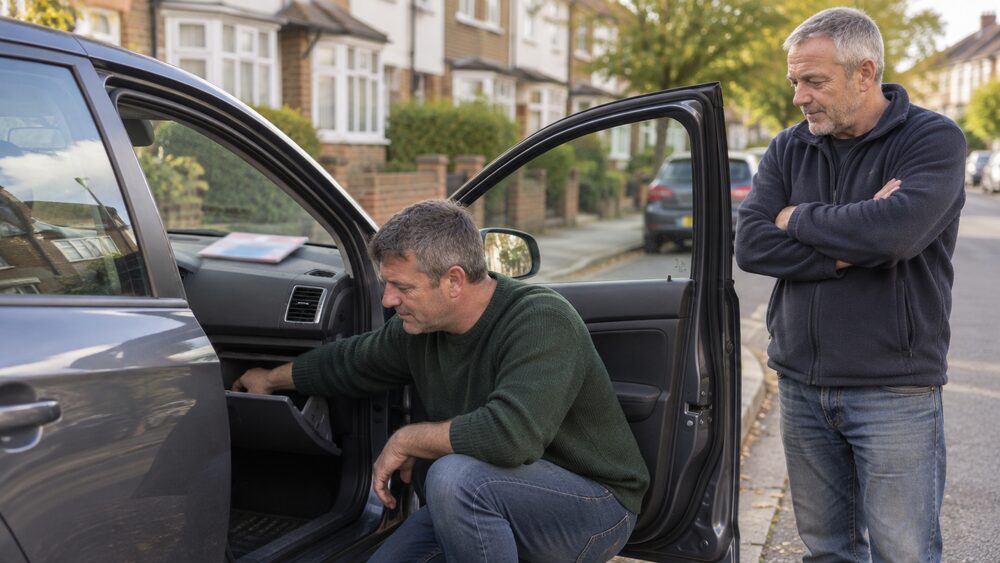
A logbook loan is borrowing secured on a vehicle, and the crucial feature for anyone buying a used car is that the lender takes ownership of that vehicle from the start of the loan until it is paid back1. The borrower keeps driving it, but the car is not theirs to sell. It is illegal to sell a vehicle before the logbook loan is paid off, and a logbook loan cannot be ended early, so a seller who still owes money on one cannot simply settle it to hand you a clean car2.
A logbook loan is borrowing secured on a vehicle, and the crucial feature for anyone buying a used car is that the lender takes ownership of that vehicle from the start of the loan until it is paid back1. The borrower keeps driving it, but the car is not theirs to sell. It is illegal to sell a vehicle before the logbook loan is paid off, and a logbook loan cannot be ended early, so a seller who still owes money on one cannot simply settle it to hand you a clean car2.
That is why a car with an outstanding logbook loan is a trap for a buyer rather than a bargain. The lender can take the car if payments are missed and arrears build up, and it does not need a court order to do so3. Buying in good faith does not defeat that claim: the seller had no ownership to pass on. Your remedy is against the seller, and you can take court action against someone who sells you a vehicle with an unpaid logbook loan2.
The sums involved are usually modest, which is part of what makes the risk easy to overlook. Logbook loans are typically £400 to £5,000, and borrowers often pay back more than double what they borrow2. The APR is very high for the repayments, sometimes over 200 per cent4.
A logbook loan means the lender owns the car until it is paid off
The Financial Ombudsman Service describes the arrangement plainly: you take out a loan and use your vehicle, normally a car, as security for the money you have borrowed1. You can still use your vehicle, but the lender takes ownership of it from the start of the loan until you have paid the money back, and can take and sell the vehicle if you do not repay1. Northern Ireland's official guidance puts the same point in terms of timing: you can still drive the vehicle while you repay the loan, and you only become the vehicle's legal owner again when you have settled the agreement in full4.
Two separate agreements are signed when a logbook loan is issued2. One is the credit agreement, regulated by the Consumer Credit Act2. The other is a bill of sale, which transfers the legal ownership of your vehicle to the creditor2. The Ombudsman describes the same document as transferring legal ownership of your vehicle to the lender until you have paid the loan in full1.
The amount you can borrow depends on the value of your vehicle, and you will usually need to show your vehicle logbook to the lender to prove that you are the registered keeper and show that you are insured to drive the vehicle1. Some lenders may give a logbook loan to someone with bad credit, but that is up to them2. StepChange, the debt charity, recommends avoiding logbook loans, describing them as an expensive way to borrow money3.
Why a car with a logbook loan cannot legally be sold
The restriction is not a technicality in the small print. It is illegal to sell a vehicle before the logbook loan is paid off, and you cannot legally sell it during the loan2. Because the borrower is not the owner, there is nothing for them to transfer to a buyer, however genuine the buyer's intentions.
The same logic runs through other forms of car finance, which is a useful comparison when you are trying to work out what you are looking at. On hire purchase and conditional sale agreements you cannot sell the car without the lender's written permission, as you do not own the car until you have paid off the agreement5. On a lease or hire agreement you cannot sell the car at all3. By contrast, when you buy a car with an unsecured personal loan, you own it3, and a bank loan for a car means your monthly payments go to the bank or lender rather than a car finance company, so your car is not at risk from missed payments6.
There is one further wrinkle that catches buyers out. A logbook loan cannot be ended early3. So even a seller acting in good faith cannot pay the loan off on the day of sale and release the car to you. The debt has to run its course, and the car stays tied to it until it does.
Checking a used car for a logbook loan before you buy
There is no single public register that a private buyer can search to see whether a particular car is security for a logbook loan. What exists instead is a set of checks that reduce the risk rather than eliminate it.
A vehicle history check is the starting point. The Finance and Leasing Association notes that some service providers have a facility for checking documents, which means you can check the logbook's issue date and serial number, and the number on the MOT7. A logbook that has been reissued recently, or a serial number that does not sit comfortably with the car's age, is a reason to ask more questions rather than to walk away immediately.
A buyer can ask the seller directly, in writing, whether there is any outstanding finance or logbook loan on the vehicle, and can ask to see evidence that any loan has been settled. A seller who is not the registered keeper, or who produces a V5C in someone else's name, is a warning sign. Some service providers have a facility for checking documents which means that the logbook's issue date and serial number, and the number on the MOT, can be checked8.
Repossession: the lender can take the car without a court order
This is the part that matters most to a buyer, and it is stark. The lender can take your car if you miss payments and build up arrears, and they do not need a court order to do this3. The bill of sale is what makes that possible: it allows the lender to seize your car without a court order4. Business Debtline states the same rule for goods held under a bill of sale: the lender does not have to go to court to repossess the goods9.
There are procedural steps before a lender acts. The borrower gets 14 days to bring the account up to date, and the lender must wait at least five days after the account defaults2. They do not need to take the borrower to court2. Extra charges will usually be added to the debt to cover the costs of removal2. If the car is sold and the sale price does not cover the debt, the borrower has to pay the shortfall2. If you do not keep up with your logbook loan payments, the lender may take away your car and sell it to get their money back10.
One limit is worth knowing because it affects who can take the car. Bailiffs cannot clamp or remove a vehicle that is used in a logbook loan where the last payment has not been made11. That protects the vehicle from enforcement for other debts, but it does nothing to protect a buyer from the logbook lender itself.
If the borrower becomes bankrupt, the picture changes again. The official receiver will check the logbook loan agreement to make sure it is valid, and if the agreement was not drawn up correctly the logbook loan company will not have security over the vehicle, so the official receiver will treat the vehicle as if the borrower owned it12. If the logbook loan ends before discharge, the official receiver may sell the vehicle or allow the borrower to keep it depending on the value12. Where the agreement includes a clause ending it on bankruptcy and the vehicle is sold, any money left from the sale is paid to the official receiver12.
If you have already bought a car with an unpaid logbook loan
Finding out after the sale that the car was still security for someone else's borrowing leaves you with two separate problems: the lender's claim to the car, and your claim against the seller.
On the first, the position is difficult. The lender's ownership runs from the start of the loan, so a buyer who paid good money for the car does not automatically take free of it. On the second, you do have a route. You can take court action against someone who sells you a vehicle with an unpaid logbook loan2. That is a claim for your loss against the person who sold it to you, and it is worth keeping every document: the advert, the messages, the receipt, the V5C and any written assurance about finance.
Free help is available. Citizens Advice gives guidance on buying a used car and on what to do when something goes wrong8. If you are struggling with the debt side of the situation, StepChange and National Debtline both provide free debt advice, and National Debtline publishes guidance on car repossession and what you can do about it5. If a lender or finance company has treated you unfairly, the Financial Ombudsman Service can look at complaints about logbook loans1, and there is separate guidance on complaining about a lender or finance company.
Logbook loans in Scotland: bills of sale are not valid
The legal mechanism behind a logbook loan does not exist in Scotland. Bills of sale are not valid under Scottish law, and logbook loans are not common in Scotland2. A similar arrangement there is likely to be a hire purchase agreement instead14. That matters for a buyer because the repossession rules that follow from a bill of sale, including the ability to seize a car without going to court, rest on a document Scottish law does not recognise.
Scotland also differs on how long a debt can be pursued. In Scotland, a statute barred debt ceases to exist and is no longer recoverable if a relevant claim on behalf of the lender or owner has not been made during the relevant limitation period, and the debt has not been acknowledged by, or on behalf of, the customer during that period15. There is more on how the rules differ across the UK on loans and car finance in Scotland and loans and car finance in Northern Ireland.
Where a logbook loan sits among your other options
A logbook loan is one way to borrow against a car, and it is the one that gives up ownership. The alternatives behave differently, and the differences are what a buyer or borrower is really choosing between.
| Way of borrowing | Who owns the car | Can it be sold? | Repossession without a court order |
|---|---|---|---|
| Logbook loan | The lender, from the start of the loan until it is paid back1 | No, it is illegal to sell before the loan is paid off2 | Yes3 |
| Hire purchase or conditional sale | The lender, until the agreement is paid off5 | Not without the lender's written permission5 | Yes, in some circumstances5 |
| Unsecured personal loan | You, when you buy the car3 | Yes | Not applicable, the car is not security6 |
The cost side is where logbook loans stand out most sharply. The APR is very high for the loan repayments, sometimes over 200 per cent4, and borrowers often pay back more than double what they borrow2. A logbook loan is regulated by the Consumer Credit Act2, which brings with it rights including the 14-day right to withdraw from a loan or finance agreement and the protections set out in your rights under the Consumer Credit Act. There is a fuller comparison of the two main routes on logbook loan or unsecured personal loan, and more on the product itself on logbook loans.
If you are the borrower rather than the buyer, and payments have become unmanageable, the options are set out in what to do if you can't repay a loan and can a logbook lender take your car. Free, impartial help is available from MoneyHelper, from StepChange and from National Debtline, and none of them charges for debt advice.
Sources15 cited
- Logbook loans Financial Ombudsman Service, 2026-09-26
- Logbook loan debt StepChange, 2026-09-25
- Car finance debt StepChange, 2026-09-25
- Loans nidirect, 2025-09-30
- Car repossession: what happens and what you can do about it National Debtline, 2026-09-25
- Car finance Advice NI, 2026-09-26
- Checking the history of a motor vehicle Finance and Leasing Association, 2026-09-25
- Buying a used car Citizens Advice, 2026-09-25
- Bills of sale Business Debtline, 2026-09-26
- Logbook loans Experian, 2026
- What can bailiffs take? StepChange, 2026-09-25
- Bankruptcy and my car StepChange, 2026-09-25
- Treasury consultation: Goods Mortgages Bill StepChange, 2026-09-26
- Logbook loans Creditfix, 2026
- Harassment by creditors National Debtline, 2026-09-25








 MoneyHelperFree, impartial money and pensions guidance, set up by government
 StepChangeFree debt advice and solutions from a charity
 National DebtlineFree debt advice by phone, webchat and online
 Financial Ombudsman ServiceFree, independent help when a complaint about a firm is not put right
 Citizens AdviceFree advice on money, consumer and legal problems in England and Wales