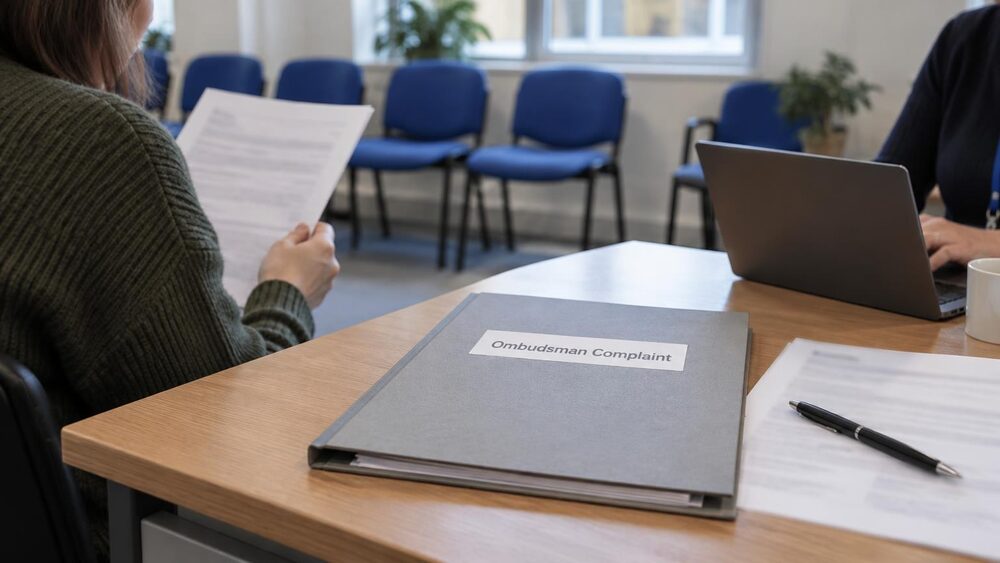
Buy now pay later, or BNPL, lets you take an item home or have it delivered straight away and pay for it in instalments afterwards, with no interest charged. It is a short-term form of credit: the Financial Ombudsman Service describes it as a way of spreading payments, interest free, over a short period of no more than 12 months1. The formal name for it in the rules is Deferred Payment Credit, or DPC2.
The names most UK shoppers meet at checkout are Klarna, Clearpay and PayPal, with Amazon also offering its own scheme3. Klarna, PayPal and Clearpay are the UK's main three BNPL firms4. Since 15 July 2026, most BNPL products have been regulated by the Financial Conduct Authority for the first time, bringing affordability checks, Section 75 protection on larger purchases and access to the Financial Ombudsman Service5.
How buy now pay later works: short instalments, no interest
BNPL is an online payment option that lets you buy an item straight away and delay paying until a later date12. In its most common form, the cost is split into instalments: the Consumer Council for Northern Ireland describes paying regular instalments over a period of weeks or months, or agreeing to pay by a fixed date and settling the balance in full no later than that date8. Some schemes simply delay the whole payment by 30 days, while others split it into fortnightly or monthly instalments, typically over 30 days to three months13.
The legal definition used by the regulators is narrower than the marketing. The legislation that brought BNPL under FCA control defines it as interest-free credit that lets borrowers split the cost of purchases into up to 12 regular repayments, within a period not exceeding 12 months7. Anything longer, or anything charging interest, is treated as ordinary credit and was already regulated.
Two structures cover most of what you will see at a UK checkout:
| Structure | How it works | Typical term |
|---|---|---|
| Pay in 30 days | The whole amount is paid in one go, a month later | 30 days13 |
| Instalments | The cost is split into equal payments | 30 days to three months for market leaders' products13; up to 12 instalments within 12 months by law7 |
PayPal Pay in 3, for example, splits the cost of a purchase over three interest-free instalments14. Clearpay's scheme works on four instalments, and Klarna and Clearpay are two of the main short-term BNPL providers offering payment after 30 days or over three or four months15.
The key point is that although no interest is charged, BNPL is still a loan. StepChange makes this plain: usually there is no interest to pay on BNPL, but it is still a loan6. Your credit agreement is with the BNPL provider, not the retailer8, which matters when things go wrong and when you want to complain. The wider guide to buy now pay later covers the mechanics in more depth.
Who the main BNPL providers are
The providers UK shoppers meet most often are Klarna, Clearpay, PayPal and Amazon3. The Consumer Council also names Laybuy among the examples, while noting there are many providers available8. Klarna, PayPal and Clearpay are described in the FCA's policy work as the UK's main three BNPL firms4.
The three are not identical in what they do. Klarna and PayPal offer both regulated lending products and unregulated BNPL products, while Clearpay focuses solely on BNPL16. Since 15 July 2026 that distinction matters less to shoppers, because BNPL itself is now regulated, but it explains why the same brand can appear both as a checkout option and as a longer-term credit provider.
BNPL is a large and growing market. UK Finance reports that BNPL was launched in the UK in 2014 and has become a major growth area, encompassing 8% of all online and physical point of sale payments17. Usage jumped in 2024, with 25% of UK adults using BNPL at least once, compared to 14% in 2023, and the share of frequent users, meaning monthly or more often, standing at 33%11.
Who uses it matters as much as how many. Research by the University of Bristol's Personal Finance Research Centre found that one in five, or 20%, of its low-income sample had used BNPL18. The FCA's own policy analysis found that 38% of BNPL users spent more than they planned to because BNPL options were available at checkout, and that 44% of frequent BNPL users are over-indebted16.
If you are comparing BNPL with a card, the dedicated comparisons cover Klarna vs Clearpay, Klarna vs PayPal Pay in 3 and buy now pay later or a credit card.
Fees and charges: no interest, but late fees can reach £24
The headline is that standard BNPL charges no interest. That is what separates it from a credit card or an overdraft, and it is why the legal definition describes it as interest-free instalment credit7. But no interest does not mean no cost.
Late fees are the main charge. Which? reported in December 2023 that you can incur late fees ranging from £10 to £24 if you miss a payment19. Clearpay's fees are set out in detail by National Debtline and Business Debtline: Clearpay adds a late repayment fee of £6 for each late instalment, and a further £6 if the payment is still outstanding seven days later, with charges capped based on how much you have borrowed9.
| Charge | Amount | When it applies |
|---|---|---|
| Interest | None | Standard BNPL agreements6 |
| Late fee, Clearpay | £6 per late instalment | Each missed instalment9 |
| Further late fee, Clearpay | £6 more | If still unpaid seven days later9 |
| Late fee cap, Clearpay | Capped based on how much you borrowed | All late charges9 |
| Late fees across schemes | £10 to £24 | If you miss a payment19 |
How common are these fees? A survey by the Money and Pensions Service found that 14% of BNPL users had paid a late fee, and the FCA's analysis found that 19% of users of fee-charging providers were unaware of the fees16. StepChange warns that you can also be charged high fees and interest if you fall behind, once arrears push an agreement outside its interest-free terms6.
From 15 July 2026, providers must give you clear information about your agreement, the payment amount and due date, and must explain what happens if you miss a payment, before you sign up8. The general guide to loan fees and charges covers how fees work across borrowing generally.
Who can use BNPL and how spending limits are set
BNPL is offered at checkout rather than applied for like a loan, but it is still credit, and the rules now treat it that way. From 15 July 2026, BNPL providers must run an affordability check for all purchases8, and the checks must be proportionate to the amount borrowed5. Before offering BNPL, providers have to carry out affordability checks to ensure shoppers can manage the debt they are taking on21.
Spending limits are set by each provider, not by you, and they are not fixed for life. A provider may raise or lower what it will lend you based on how you have managed previous instalments, and each new purchase can be assessed on its own. If a purchase is declined, that is the provider's affordability assessment at work rather than a fault with your account.
The date matters more than anything else in this section. The new rules apply only to purchases made using BNPL on or after 15 July 2026. If you made a purchase before that date, these rules do not apply to you2. Existing agreements continue under the existing rules, without the new protections such as Section 75 or access to the Financial Ombudsman Service5.
The government's stated aims for the regime are that people using BNPL receive clear information, avoid unaffordable borrowing, and have strong rights when issues arise22. How affordability checks work in practice is covered in the guide to loan affordability checks.
Credit checks and your credit file
When you choose BNPL at checkout, a lender carries out a credit check to make sure you can afford the repayments2. Some providers carry out a soft credit check, and some carry out a hard credit check8. A soft check does not affect your credit score; a hard check is recorded on your file and can have a short-term effect.
The bigger change is reporting. BNPL lenders are now sharing information with credit reference agencies, including details of purchases, late payments and unpaid purchases23. Most BNPL companies now report information to credit reference agencies24. This means BNPL is visible to any lender that later reviews your file, including mortgage lenders.
What that means in practice:
- Missed payments on a BNPL agreement will show on your credit score and can make it harder to get credit in the future2.
- Missed payments can be shared with credit reference agencies, and this affects your credit score8.
- A missed payment is typically added to your next scheduled payment on short-term BNPL, so the arrears grow before they are reported15.
- Even a fully repaid BNPL agreement leaves a record of the purchase and the repayments on your file23.
Which? published an investigation in November 2021 into whether shopping with BNPL schemes can impact your chance of getting a mortgage13. Since then, reporting to credit reference agencies has become standard, so the file a mortgage lender sees is fuller than it was. The guide to how loans affect your credit file covers the mechanics, and credit scores and credit reports covers checking your own file.
Paying, moving a payment date and paying early
BNPL payments are usually collected automatically from a debit card, or sometimes a credit card, under a continuous payment authority. This is the same mechanism payday lenders use: the provider takes the payment on the due date without you having to approve each one. It is convenient, but it means the money leaves your account on the provider's schedule, not one you choose each time.
Some providers allow flexibility. Research for the FCA found that users could snooze repayments for a short time and were not charged a late fee straight away if late, receiving a reminder instead13. Whether that applies to a particular purchase depends on the provider and the agreement, and from 15 July 2026 providers must tell you before sign-up about your rights to withdraw from or cancel the agreement and to pay it off early5.
Paying early is generally allowed, and the new rules require that information about your right to pay off early is provided or made available before you sign up5. Because there is no interest on standard BNPL, paying early saves you nothing in interest; its value is in closing the debt and keeping your file clean.
If you want to stop payments being taken from your card, you can cancel the continuous payment authority. You can cancel by contacting the company taking the payment, or directly with your card issuer, which must stop payments immediately once you have asked15. National Debtline provides a template letter for withdrawing a continuous payment authority from a buy now pay later company25. Cancelling the payment authority does not cancel the debt: you still owe the instalments, and cancelling without arranging another way to pay will lead to arrears. The narrow guide to stopping a continuous payment authority covers this step by step.
Returns, refunds and problems with an order
Because your credit agreement is with the BNPL provider, not the retailer8, problems with an order sit in an awkward place: the retailer has your goods or your money, but the provider has your debt. The rules now address this directly.
For a single item costing between £100 and £30,000 bought on or after 15 July 2026 using a BNPL provider, you are protected under Section 75 of the Consumer Credit Act 1974. Your BNPL provider is jointly liable in cases of faulty goods, non-delivery, or if the retailer goes out of business8. The legislation that created this put it in terms of strong rights under section 75 of the CCA, making it easier to obtain refunds for issues like faulty goods7. BNPL shoppers will also have fairer and faster access to refunds under the new regime21.
For purchases before 15 July 2026, the position is weaker. You cannot start a Section 75 claim if you paid using buy now, pay later for items bought before that date26. Instead, you can ask for chargeback from your bank or card provider if you paid with a credit card or a buy now, pay later agreement and cannot use Section 75, or if you paid with a debit or credit card through a buy now, pay later provider26. You can start a chargeback claim with the credit card provider you are using to make payments to your buy now, pay later account26.
If the retailer stops trading altogether, Citizens Advice sets out the options for consumers, including chargeback where the payment route allows it26. The guides to Section 75 on point-of-sale credit and your rights under the Consumer Credit Act cover the underlying law, and Klarna buyer protection covers that provider's own scheme.
FCA regulation of BNPL: what changed on 15 July 2026
For most of BNPL's life in the UK, it sat outside regulation. Many BNPL products were exempt from the requirements of the Consumer Credit Act and sat outside the FCA's regulatory remit, under an exemption in the Financial Services and Markets Act 2000 (Regulated Activities) Order 200113. As a result, lenders did not need to be authorised by the FCA27.
That changed in stages. The government consulted on draft legislation in October 202422, published its consultation response on 19 May 202522, and Parliament approved the regulation of buy-now-pay-later credit in July 202528. The rules came into force in July 202628, and the FCA started regulating Deferred Payment Credit, often known as Buy Now Pay Later, on 15 July 202610. The legislation classifies BNPL agreements as regulated credit agreements under article 60B(3) of the RAO7.
What the new regime gives shoppers, for agreements taken out on or after 15 July 2026:
- Affordability checks before BNPL is offered, proportionate to the amount borrowed5.
- Clear information before sign-up: how much you are borrowing, the total cost, how much and how often you will repay, what happens if you miss a payment, and whether your credit record may be checked5.
- Section 75 rights on single items costing £100 to £30,0008.
- Financial Ombudsman Service access if you are not satisfied with the provider's response to a complaint5.
- Support in difficulty: lenders must offer support to customers in financial difficulty and, where appropriate, direct them to free debt advice21.
Clearpay was added to the FCA's register of lenders under the temporary permission regime on 29 May 202610, which is the route firms used to continue lending while their full authorisation was processed. The narrow guide to whether BNPL is regulated by the FCA covers the detail.
Struggling to pay: hardship help and complaints
If you miss a payment, the rules now set out what must happen next. Your provider must contact you promptly, explain the consequences, and give you reasonable notice before taking further action, and must offer appropriate support and signpost free debt advice if you show signs of financial difficulty5. A missed payment is added to your next scheduled payment on short-term BNPL, and missed payments can be shared with credit reference agencies15.
The earlier position was harsher. Which?'s research recorded consumers being charged high fees and interest when they fell behind, and BNPL's unregulated status meant no ombudsman to appeal to13. From 15 July 2026, lenders must offer support to customers in financial difficulty and, where appropriate, direct them to free debt advice21.
Free, impartial help is available. National Debtline, StepChange and Business Debtline all publish BNPL guidance and give free debt advice3. Independent Age has a guide to different types of debt for people in later life12. The FCA's own consumer page on buy now pay later sets out what regulated providers must do10.
To complain, take the problem to the provider first. For most BNPL agreements taken out from 15 July 2026 onwards, you can escalate your complaint to the Financial Ombudsman Service if you are not satisfied with the response3. The ombudsman can look at a complaint if you took out the agreement on or after 15 July 20261, and it expects to receive around 2,000 BNPL complaints during this financial year5. The guide to complaining about a lender covers the process, and what to do if you can't repay a loan covers the wider options, including the debt guide.
Sources30 cited
- Buy now pay later (BNPL) complaints Financial Ombudsman Service, 2026
- Buy now pay later guide National Debtline, 2026
- Buy Now Pay Later explained StepChange, 2026
- Deferred Payment Credit regulation legislation.gov.uk, 2025
- 7 things you need to know about new buy now pay later rules Which?, 2026
- Credit confidence StepChange, 2026
- The Deferred Payment Credit (Exempt Information) Instrument 2025 legislation.gov.uk, 2025
- Buy now pay later Consumer Council for Northern Ireland, 2026
- Buy now pay later guide (England and Wales) National Debtline, 2026
- Buy now pay later Financial Conduct Authority, 2026
- Buy now pay later trends in the UK UK Finance, 2026
- Different types of debt Independent Age, 2026
- BNPL risks to consumers report Which?, 2021
- PayPal launches debit and credit card Which?, 2025
- Buy now pay later guide Business Debtline, 2026
- Regulation of Buy-Now, Pay-Later: impact assessment legislation.gov.uk, 2025
- Payment Markets Report 2026 summary UK Finance, 2026
- Poverty Premium 2026 University of Bristol Personal Finance Research Centre, 2026
- What's the best way to borrow money at Christmas? Which?, 2023
- Buy now pay later guide (England and Wales) Business Debtline, 2026
- New rules for buy now pay later schemes to protect shoppers from 2026 Which?, 2026
- Regulation of Buy-Now, Pay-Later: consultation on draft legislation HM Government, 2025
- Cost of living: making the most of your money National Debtline, 2026
- Costs of living: making the most of your money Business Debtline, 2026
- Withdraw your continuous payment authority: buy now pay later company National Debtline, 2026
- If a company stops trading or goes out of business Citizens Advice, 2026
- Review of the Consumer Credit Act consultation HM Government, 2022
- Regulation of buy-now-pay-later credit House of Commons Library, 2026
- Buy now pay later trends in the UK report UK Finance, 2026
- Complaining about your lender National Debtline, 2026





 MoneyHelperFree, impartial money and pensions guidance, set up by government
 StepChangeFree debt advice and solutions from a charity
 National DebtlineFree debt advice by phone, webchat and online
 Financial Ombudsman ServiceFree, independent help when a complaint about a firm is not put right
 Citizens AdviceFree advice on money, consumer and legal problems in England and Wales