PayPal is an online payments system used by many eCommerce websites as well as sellers operating on eBay, and it is one of the brands the Financial Ombudsman Service lists among electronic money services, alongside Revolut, Tide and Skrill1. It is not a bank in the everyday sense: it is an e-money platform, treated differently from a high street bank2. That single fact shapes most of what follows, because it decides what happens to money held in a PayPal balance if something goes wrong.
People use it heavily. In a survey for the Financial Conduct Authority's Consumer Panel, 50% of respondents had used PayPal in the last 12 months, and 62% had used a non-traditional payment method, driven mainly by PayPal and mobile payments2. PayPal is typically used by 14% of people for purchases online2.
What PayPal offers has widened well beyond sending money to a seller. It now includes credit, debit and credit cards, buy now pay later, a rewards scheme and business tools. Each of those carries its own rules, its own protections and its own gaps.
What PayPal is and what it offers
PayPal began as a way to pay online without handing card details to every shop, and that is still its core. A small payment is sometimes made to or from an account as part of the registration process, which is why a PayPal reference can appear on a bank statement the account holder does not recognise6. When a transaction is billed through PayPal, it may show on a statement as PP* followed by the retailer's name7.
The brand now spans several product types. It offers lending products and buy now pay later products, a combination it shares with Klarna8. It issues its own debit and credit cards, both Mastercard3. It runs a rewards scheme, PayPal+, which is free to join and can be activated in the app3. It owns Venmo, an e-wallet app available on iOS and Android that only allows US bank accounts to be linked9. Its UK register entry lists trading names including Zettle by PayPal, Xoom a PayPal Service, Hyperwallet a PayPal Service and Braintree a PayPal service10.
For a consumer, the practical split is between money sent, money borrowed, and money spent on a card. Each behaves differently when a purchase goes wrong.
Sending and receiving money
Sending an individual payment carries no fee11. That is the version most people meet first: splitting a bill, paying a friend, sending money to a seller who accepts PayPal.
The distinction that matters is between paying for goods and services and paying friends and family. Some sellers ask buyers to use PayPal and select friends and family to avoid PayPal charges, but there is no payment protection if that route is used12. The saving on the seller's side is bought with the buyer's protection, and once the payment is made on that basis there is no route back through PayPal's dispute process.
For purchases, PayPal has a buyer protection scheme if an item is not delivered or not as described4. That scheme is the main thing standing between a buyer and a seller who takes the money and disappears, and it is worth understanding its edges before relying on it.
PayPal Credit and buy now pay later
PayPal Credit is a borrowing product, and PayPal sits among the UK's main three buy now pay later firms alongside Klarna and Clearpay8. It offers both lending products and buy now pay later products8. New rules for buy now pay later schemes are due to protect shoppers from 2026, which will change how these products are regulated13.
On credit checks, most of the big providers, including Klarna, PayPal and Zilch, only run soft credit checks13. A soft check does not leave the mark on a file that a full application does. Missing a repayment is a different matter: PayPal says credit records may be affected5. PayPal reports to TransUnion only, not to Experian or Equifax14.
PayPal does not charge late fees on agreements made after 30 September 20215. That removes one cost that other lenders add, but it does not remove the credit record consequence of a missed payment.
If PayPal Credit is used, a virtual or physical card can be applied for that lets the credit be spent in-store rather than only online3. That card is issued by Mastercard3.
The PayPal debit and credit cards
PayPal issues both a debit card and a credit card, and both are Mastercard3. The credit card is available to PayPal Credit users, as a virtual or physical card for in-store spending3.
Payments made with the PayPal debit or credit card, online or in-store, are also covered by chargeback3. That is a meaningful difference from paying through PayPal with someone else's card, where the card issuer may step back. Where a Barclays debit card has been linked to PayPal to make a purchase, Barclays directs customers to contact PayPal directly for details of its support service15. Chase lists PayPal alongside Apple Pay and Google Pay as a way to make payments online16.
Eligible purchases made online using the PayPal debit card or credit card, bank account or PayPal balance are protected by Buyer Protection, but in-store purchases are not3. So the card gives chargeback in shops, while Buyer Protection covers the online side.
PayPal+ rewards
PayPal+ is free to join and can be activated in the app3. Points are earned on spending through PayPal using a balance, PayPal Credit, Pay in 3 or a linked card, and points convert to a cash value3.
There are three tiers based on points collected: Blue from 0 to 24,999 points, Gold from 25,000 to 49,999 points, and Black from 50,000 points and above3. The earning rate can rise on selected purchases at the Gold or Black tiers, so the value of a point depends on how much is put through PayPal and at which tier3. The current conversion rate and the current earning rate are set out on PayPal's own site.
A year is allowed to qualify for the next tier before points reset, and once a tier is reached, access to it lasts until the end of the next calendar year3.
How charges work
PayPal's charges fall into a few buckets, and the amounts change, so the figures to check are always the ones on PayPal's own site on the day.
For business sellers, PayPal charges a percentage of each transaction, and the rate depends on sales volume and on the type of transaction, which is why PayPal publishes a range rather than a single number17. For individuals, sending an individual payment carries no fee11. The fee structure for goods and services payments sits with the seller rather than the buyer, which is why some sellers push buyers towards friends and family.
On credit, PayPal does not charge late fees on agreements made after 30 September 20215. On rewards, joining PayPal+ costs nothing3.
How to contact PayPal and complain
PayPal has its own dispute resolution process, which may assist in getting a problem resolved18. For a purchase that did not arrive or was not as described, a dispute can be opened under its Buyer Protection scheme online or via its app19.
If the dispute process does not settle things, PayPal is covered by the Financial Ombudsman Service like any other financial organisation in the UK2. The ombudsman is free to use and looks at complaints about electronic money services including PayPal, Revolut, Tide and Skrill1.
For suspicious emails, forward them to phishing@paypal.com and report@phishing.gov.uk20. Requests can be viewed by logging into the account and selecting Activity, where a fraudulent request can be cancelled, and the password and security questions changed if the account is suspected of being compromised20.
How you are protected, and where that stops
This is the section that matters most, because PayPal's protection is real but narrower than a bank's.
No FSCS protection. PayPal has no FSCS protection2. Money sitting in a PayPal balance does not carry the safety net that applies to money in a bank or building society, and PayPal balances are counted alongside bank and building society money under the capital rules for means-tested benefits21. If PayPal failed, there is no deposit guarantee behind the balance.
Buyer Protection. It covers eligible purchases made online using the PayPal debit card or credit card, bank account or PayPal balance, and not in-store purchases3. If a scammer took payment for an item through PayPal but failed to send it, the purchase should be covered, though there are exceptions and time limits on lodging a claim22. Where payment was made via PayPal, Buyer's Protection allows a refund to be requested23.
Where Buyer Protection does not reach. If a scammer used fake PayPal payment pages to gather bank details, PayPal is not part of the transaction, so money cannot be claimed back via PayPal Buyer Protection11. Sellers who did not post an item to the account holder's registered address lose seller protection11. A transfer to another account that turns out to be a scam is not always covered by PayPal Buyer Protection2.
Section 75 and chargeback. Paying through intermediaries such as PayPal can break the chain for Section 75 purposes24. Section 75 protection often does not apply when a credit card is used via PayPal4. Where a debit or credit card was used to service an online payment method such as PayPal, it is unlikely the Consumer Credit Act 1974 or the chargeback scheme can be used to claim from the card provider18. PayPal's own Buyer Protection scheme can award refunds in similar circumstances, which is the trade-off25.
Hacked accounts. If a PayPal account is hacked and money is stolen, there is an entitlement to a full refund of any losses from the PayPal account, and customers are not liable for unauthorised purchases2.
The ombudsman. PayPal is covered by the Financial Ombudsman Service like any other financial organisation in the UK2. That is the backstop when a dispute is not resolved internally.
"PayPal has no FSCS protection"
Scams that use PayPal's name
PayPal's brand is heavily imitated, and the scams are specific enough to describe.
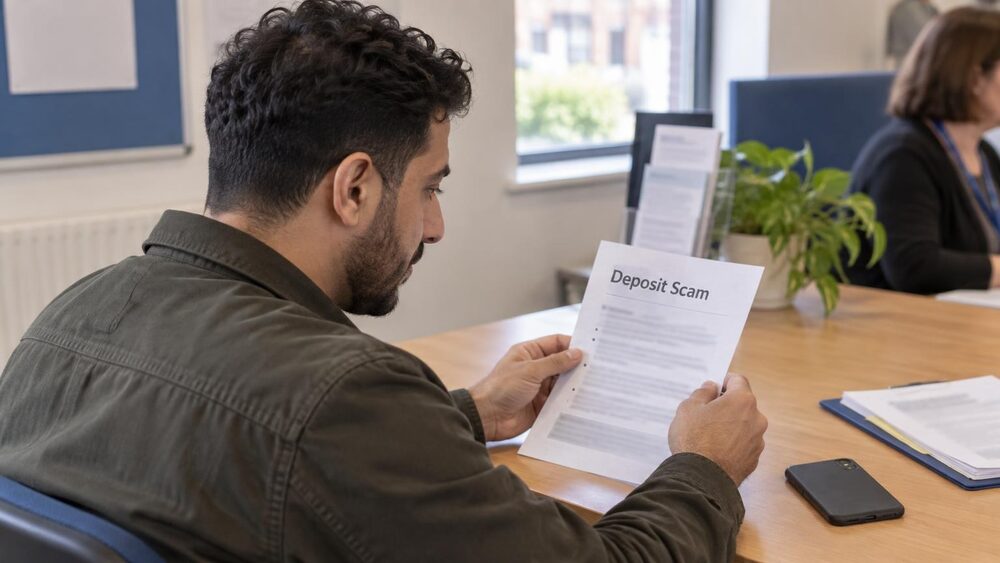
In the 1p deposit scam, the scammer deposits 1p into a PayPal account, which triggers a genuine email from PayPal about the deposit, followed by a scammer phone call9. Some recipients warned on social media that their PayPal accounts had been hacked after receiving emails like this, and others were asked to download remote software onto their device after calling the number9. PayPal said it is aware of the scam and that the phone number is not associated with PayPal9. The advice is not to call the number or reply to the email, but to log into the PayPal account and make sure the password is updated and two-factor authentication is enabled where possible9.
In the money request scam, scammers exploit PayPal's request money feature to scare people into calling a dodgy phone number and giving away personal details20. A fraudulent request can be cancelled from the Activity section of the account20.
More broadly, using a digital wallet such as Apple Pay, Google Pay, PayPal or Samsung Pay ensures card details stay private26. When paying online, using a debit or credit card, or a payment service that offers buyer protection such as PayPal Goods and Services, is the safer route27. Secure payment methods where possible, such as PayPal for buying goods, and debit and credit cards, can offer more protection than a bank transfer28. Paying by credit card above £100, debit card or PayPal gives more protection than a bank transfer29.
What happens to your account if you die
PayPal will only take instructions from the executor of the estate, and can send a cheque in the name of the deceased account holder or transfer to the linked bank account30. That is a narrower process than a bank's, and it means the executor needs to be identified before anything moves.
How it differs across the UK nations
PayPal's own terms do not vary by nation, but the wider payment landscape does, and that affects how people use it.
Cash is still the second most popular payment method in the UK, accounting for 12% of all payments in 202331. That share has fallen steadily: cash payments accounted for 15% of all payments by 2021, and 14% in 202232. In the person-to-person front, cash payments are being replaced by Faster Payments person-to-person payments34. PayPal sits inside that shift, as one of the ways people move money without cash.
On branch access, 4% of day-to-day account holders paid bills face to face in a branch in 2024, down 2 percentage points since 202235. That matters for anyone who relies on a branch rather than an app, and it is a reason some people end up using PayPal or a similar service instead.
The rules that differ between England, Scotland, Wales and Northern Ireland are mostly in benefits and public services rather than payments. Personal Independence Payment is only available in England, Wales and Northern Ireland, with Scotland running its own replacement36. For money held in a PayPal account, the capital rules for means-tested benefits count money in a bank, building society or PayPal account21. In Northern Ireland, the banking landscape and the departments people deal with differ, though the payment rules PayPal applies do not38.
Sources38 cited
- Electronic money Financial Ombudsman Service
- Consumer Panel summary report: payments and basic bank accounts FCA, 2024
- PayPal launches debit and credit card with up to 1.5% cashback Which?
- Shop safely online MoneyHelper
- Amazon and Barclays buy now pay later scheme explained Which?
- Identify a transaction: merchant names Halifax
- Unrecognised transactions: merchant names M&S Bank
- Buy now pay later: policy statement legislation.gov.uk, 2025
- Watch out for the PayPal deposit scam Which?
- PayPal UK Ltd register entry FCA Register
- How to get your money back after a scam Which?
- Ticket scams Bank of Scotland
- New rules for buy now pay later schemes to protect shoppers from 2026 Which?
- Buy now pay later MoneySavingExpert
- Purchase support Barclays
- Accessibility support Chase
- Banking and financial services landscape: Advice NI briefing Northern Ireland Assembly, 2025
- Other problems: consumer advice Isle of Anglesey County Council
- Your refund rights when companies go bust Which?
- How to spot a PayPal money request email scam Which?
- What counts as capital Turn2us
- Advance loan fee fraud and scams Which?
- Shopping scams: know how to spot a rogue retailer Which?
- Lynn's story Which? Legal Service
- Staying safe online: seven ways to spot a scam website Which?
- Scamwatch: has my Apple Pay been suspended? Which?
- Social media scams Bank of Scotland
- Purchase scams Cater Allen
- Types of scam MoneyHelper
- How to pass on digital assets in your will Which?
- Access to cash Payment Systems Regulator, 2023
- Cash and cash machines House of Commons Library, 2021
- Cash as a percentage of all payments FCA, 2022
- UK cash and cash machines 2025 UK Finance, 2026
- Financial Lives 2024: retail banking FCA, 2024
- Working and claiming disability benefits Sense
- Personal Independence Payment Advicenow
- First direct customers can send cash via Facebook and WhatsApp Which?



 MoneyHelperFree, impartial money and pensions guidance, set up by government
 Financial Ombudsman ServiceFree, independent help when a complaint about a firm is not put right
 FCA Warning ListCheck whether a firm is authorised before you deal with it
 Citizens AdviceFree advice on money, consumer and legal problems in England and Wales