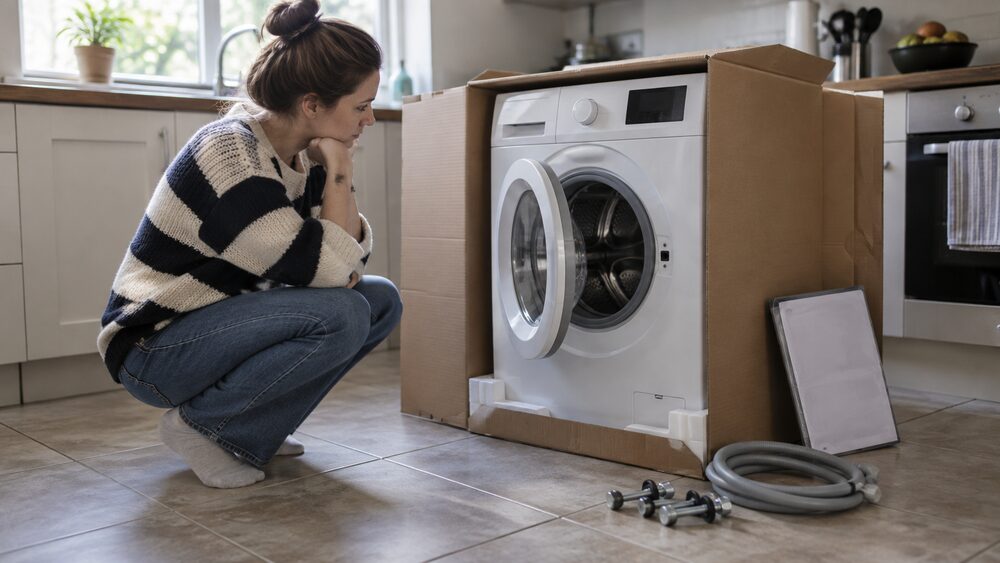
Section 75 of the Consumer Credit Act 1974 makes a lender as responsible as the seller when something goes wrong with what you bought on credit. If you have a claim against a supplier for breach of contract or misrepresentation, the law gives you "a like claim against the creditor, who, with the supplier, shall accordingly be jointly and severally liable"1. In plain terms: the finance company cannot point at the shop and walk away. You can pursue either of them, or both, for the same loss.
The rule is best known for credit cards, where it covers purchases over £100 and up to £30,0002. But it is not only a card rule. It also covers point-of-sale loans arranged by the retailer, store cards and other finance tied to a specific purchase3, and, since 15 July 2026, buy now pay later agreements4. What matters is whether the credit is "linked" to the purchase: whether the loan exists to finance that specific deal and whether the seller had a hand in arranging it.
What Section 75 does: the lender shares liability with the seller
Section 75 applies to what the Act calls a debtor-creditor-supplier agreement: credit where the lender and the seller are connected through the deal. Where the borrower "has, in relation to a transaction financed by the agreement, any claim against the supplier in respect of a misrepresentation or breach of contract", the law gives them the same claim against the creditor1. Trading standards guidance puts it simply: Section 75 "makes the finance / card provider as responsible as the trader for a breach of contract or misrepresentation"7.
Three features of the rule matter in practice.
First, the claim you bring against the lender must be a claim you could actually bring against the seller. If the goods were not of satisfactory quality, or the service was never delivered, or the seller misled you, that is your claim, and Section 75 lets you aim it at the deeper pocket. The ombudsman has confirmed the principle extends to hire purchase and other finance: "If you have a claim for breach of contract or misrepresentation against the supplier of the goods or services, Section 75 gives you the same claim against the creditor"8.
Second, the protection is not watered down by technicalities on your side. The Act states the section "applies notwithstanding that the debtor, in entering into the transaction, exceeded the credit limit or otherwise contravened any term of the agreement"1. Going over your card limit does not strip away the protection.
Third, the amount you can recover is not limited to the amount you borrowed. UK Finance, the banking industry body, notes that "if Section 75 applies, it doesn't matter that the transaction was only partly financed by credit and recovery is not limited to the deposit"9. Pay a deposit on a credit card for an item whose cash price falls within the range, and the whole claim can sit with the card provider, not just the part paid on the card.
The lender is not left carrying the loss alone. The Act gives the creditor a right to be indemnified by the supplier for what it pays out, and if the lender is sued, it can ask the court to have the supplier joined to the proceedings1. That is a matter between the businesses: from the buyer's point of view, the liability is joint, and either party can be pursued in full.
Point-of-sale loans: finance arranged by the retailer
A point-of-sale loan is credit arranged by the retailer to pay for its own goods: the sofa finance at the furniture store, the kitchen plan, the car finance signed at the dealership. The Financial Ombudsman Service describes Section 75 as covering purchases made by "a credit card, point-of-sale loan, a loan arranged by the retailer to pay for goods, or other finance"3. These loans are the classic case for the rule, because the link between lender and seller is built into the arrangement.
The Act defines the linked credit agreement precisely. It means a regulated consumer credit agreement which "serves exclusively to finance an agreement for the supply of specific goods or the provision of a specific service", and where either the creditor used the services of the supplier in preparing or making the credit agreement, or the specific goods or service are explicitly specified in the agreement10. Both halves matter. A loan that exists only to buy that car, arranged through the dealer, is linked. A loan you take out for general purposes and later spend at a shop is not.
Since 15 July 2026, firms offering regulated deferred payment credit must give customers an "explanation of the protections available to the customer under section 75 of the CCA (or, if relevant, under section 75A)" before the agreement is made11. So on newer point-of-sale and buy now pay later agreements, the protection should be spelled out to you at the time.
The quality claim itself comes from consumer law. For vehicles, government guidance states that any vehicle sold from a dealer must be "'as described', 'of satisfactory quality' and 'fit for purpose'"12. Section 75 does not create a separate standard; it gives you a second party to pursue when that standard is breached.
Car finance and Section 75: hire purchase, PCP and personal loans
Car finance is where most people meet linked credit, and the type of agreement changes who you complain to and what you own.
With hire purchase (HP) or a conditional sale, "the finance company owns the car until you have made the last payment"13. With personal contract purchase (PCP), "the finance provider still owns the car" throughout the agreement13. In both cases the finance company is already your counterparty: you do not need Section 75 to reach it, because you are its customer. If the car turns out to be faulty, the claim for breach of contract goes to the finance company directly, and the ombudsman can be asked to review it if the finance company refuses.
A personal loan is different. You borrow the money, buy the car outright and own it from day one: "You can sell the car at any time" and "the loan provider cannot take the car back if you miss payments"13. A bank loan arranged without the dealer's involvement is not linked credit, so Section 75 does not apply. But a loan arranged through the dealership, existing only to buy that specific car, can be a linked credit agreement, and then the lender is jointly liable with the dealer for the car's defects.
A credit card sits between the two. Pay for a car, or a deposit on one, on a credit card and the card provider is jointly liable with the dealer if the price is within the Section 75 range2. The ombudsman has also noted one trap: Section 75 "might not apply if the customer has used a credit card to put funds into a standard e-money account and then used that account to buy something"15. Loading a card or e-money wallet and then paying from it can break the direct link between card payment and seller.
On what counts as a faulty car, an ombudsman case study gives the working rule. A consumer complained that a used car failed after eight months and was not of satisfactory quality. The ombudsman said "the finance provider wouldn't be responsible for any wear and tear issues, but they would be responsible if the car was sold with defects you wouldn't expect on a car of that age, mileage and price"16. Where the credit was used directly to fund the car, the ombudsman's usual instruction is that "the credit provider to take back the car and cancel any further amounts due"17.
Separately from Section 75, the FCA has set up a compensation scheme for motor finance commission complaints, covering loans taken out between 6 April 2007 and 1 November 202418. That scheme is about undisclosed commission, not faulty cars, and parts of it have been suspended following a legal challenge19. The motor finance redress scheme page covers it in full.
Store cards and Section 75
A store card is a credit agreement with the retailer's own finance arm or a partner lender, usable at that shop. Because the credit exists to buy that retailer's goods, it falls squarely within Section 75: the ombudsman lists point-of-sale loans and other finance among the purchases the rule covers3. A faulty washing machine bought on a store card gives you a claim against the store card company as well as the store.
Two limits are worth knowing. The protection "does not apply to charge cards or debit cards"5: a charge card you settle in full each month is not a credit agreement in the relevant sense, and a debit card spends your own money. And on credit cards, the protection follows the primary cardholder. Which? notes that for additional or secondary cardholders, "unless the primary cardholder also benefits from the purchase (a family holiday, perhaps), you lose Section 75 protection"20. A supplementary cardholder buying something for themselves, where the main cardholder gets no benefit, cannot claim.
The price limits also work per item, not per basket. The ombudsman warns that "Section 75 only applies to the individual price of items, not the cumulative total"3. A £150 coat in a mixed order is covered; four £60 items in the same order are not, because each item's cash price is £30 or less1.
Where Section 75 does not apply
The Act sets out the boundaries, and they catch a surprising number of everyday purchases.
- Items priced £30 or less, or over £10,000. Subsection (1) does not apply to a claim "so far as the claim relates to any single item to which the supplier has attached a cash price not exceeding £30 or more than £10,000"1. The £100 to £30,000 range quoted in guidance is the practical application of these statutory limits to card purchases2.
- Debit and charge cards. The protection needs a credit agreement; "this does not apply to charge cards or debit cards"5.
- Unlinked personal loans. A general loan from your bank, spent wherever you choose, is not a linked credit agreement10.
- Agreements secured on land. Section 75A, the companion provision, "does not apply to an agreement secured on land"21.
- Large linked loans. Section 75A does not apply where "the linked credit agreement is for credit which exceeds £60,260 and is not a residential renovation agreement"21.
- Non-commercial agreements. Claims under non-commercial agreements, such as loans from family, are excluded1.
- E-money funded purchases. Paying from an e-money account loaded by card can break the link between the credit and the seller15.
- Payments through agents. UK Finance notes Section 75 "usually only applies when the payment is made directly to the merchant who is actually providing you with services", though a travel agent selling a package it assembled can be a party to the contract9.
One further exclusion concerns regulated deferred payment credit: the Act states that Section 76, a related provision, "does not apply to a regulated deferred payment credit agreement"21. Buy now pay later agreements are instead covered by Section 75 itself from regulation, as set out below.
When the seller or dealer has gone bust
The seller going out of business is the situation Section 75 was built for. Because the lender's liability is joint and several with the seller's1, the claim survives the seller's collapse. Trading standards guidance is direct: if you made the transaction using finance and the trader is in breach of contract or there has been a misrepresentation, you can pursue the claim against the finance provider22.
The ombudsman has applied this in practice. In one case study, a travel company stopped trading after a customer booked through it; the ombudsman explained that the customer "could contact her bank or credit card provider, to see if she could make a Section 75 claim"23. The same logic applies to a car dealer that closes its doors after selling a faulty car on arranged finance.
There is a companion provision, Section 75A, for linked agreements where Section 75 itself does not bite. It provides that a debtor with a claim against the supplier for breach of contract may pursue that claim against the creditor, provided certain conditions are met, including that the debtor has taken steps to resolve with the supplier first; the legislation notes those steps "need not include litigation"10. But it has its own bar: "if the seller offers you a replacement or compensation which you have accepted, you can't claim under Section 75A"8.
Buy now pay later: FCA regulation from 15 July 2026
Buy now pay later spent years outside the Consumer Credit Act. Under the old exemption, credit was unregulated if it was a borrower-lender-supplier agreement for fixed-sum credit, with no more than 12 payments required within 12 months or less, and provided without interest or other charges24. That is why Klarna-style instalment plans carried no Section 75 protection for so long.
That changed in two steps. In July 2025, "Parliament approved plans to regulate unregulated buy-now-pay-later credit"25, and the new regime took effect on 15 July 2026. The FCA states: "We started regulating Deferred Payment Credit, often known as Buy Now Pay Later, on 15 July 2026"4. The statutory instrument confirms that "from 15 July 2026, interest-free Buy-Now, Pay-Later (BNPL) products will be subject to a new regulatory regime"26.
With regulation comes the protection. The FCA explains that on regulated buy now pay later, "Section 75 of the Consumer Credit Act is available. This is the same protection you'd have if you used a" credit card4. Which? reported the same consequence for the major providers: buy now pay later products "will also be covered by Section 75 once they become fully regulated by the Financial Conduct Authority (FCA)"20. The FCA has also used its new powers early, having "banned interest charges on credit that customers had already paid off during interest-free loan periods"25.
The cut-off date matters. Agreements made before 15 July 2026 were made under the old exemption and do not carry Section 75 protection; only new agreements do. The buy now pay later page covers the products themselves, and is buy now pay later regulated by the FCA? covers the regime in detail.
No cancellation right on regulated buy now pay later
One thing regulation did not bring is a cooling-off period. FCA rules state that "there is no right to cancel under CONC 11.1.1R in respect of a regulated deferred payment credit agreement to which section 66A of the CCA applies"28. The FCA's handbook guidance repeats the point: because the distance marketing rules do not apply to these agreements, the standard cancellation right does not either29.
This is narrower than it sounds. Section 66A of the Consumer Credit Act gives a 14-day right to withdraw from most regulated credit agreements, and that right still exists on other regulated loans and car finance: see the 14-day right to withdraw from a loan or finance agreement. What the rules remove is the separate cancellation right under CONC 11.1.1R for regulated deferred payment credit agreements28. The practical position is that a buy now pay later purchase is a commitment from the moment it is made, which makes the arrival of Section 75 protection on the same date more important: it is the main route to a refund if the goods are faulty or never arrive.
How to make a Section 75 claim
A Section 75 claim is a complaint to the lender, and the process is the same whether the lender is a card provider, a store card company or a car finance firm.
- Identify the lender. For car finance, the FCA suggests you "check old bank statements. Contact the dealer where you got the car. Try checking your credit file as your lender may be" listed there19. The how to find out who your car finance was with page walks through this.
- Gather the evidence. The agreement, the receipt, photos or an engineer's report for a faulty car, and any correspondence with the seller. The claim must be one you could bring against the seller, so the evidence of the breach is the same evidence you would use against them.
- Write to the lender. Set out what was bought, what was paid, what went wrong and what you want: a repair, a replacement, cancellation of the balance, or a refund. For motor finance commission complaints, the FCA publishes a list of lenders with complaint forms and a template complaint letter19.
- Give the lender time to respond. The lender must handle the complaint under the normal complaints rules, and issue a final response. For the motor finance redress scheme, the FCA's advice is "please wait until you hear from your lender before bringing a complaint to us"6.
- Escalate to the ombudsman. If the lender rejects the claim or eight weeks pass, the Financial Ombudsman Service can review it free of charge.
If the lender says no, and where to get help
A rejection is not the end. The Financial Ombudsman Service is free and independent, and it can look at whether the agreement was linked, whether the goods or services breached the contract, and whether the lender handled the claim fairly. Its published approach to car finance shows it will instruct a credit provider to take back a faulty car and cancel the balance where the credit funded the purchase directly17. The complaining about a lender or finance company page covers the complaints process in full.
Two things can defeat a claim at the ombudsman stage. The first is the link itself: if the credit was not a linked agreement, there is no Section 75 claim to answer10. The second is acceptance of the seller's remedy: having taken a replacement or compensation from the seller, a Section 75A claim is barred8.
For car finance commission complaints specifically, the FCA's compensation scheme covers loans taken out between 6 April 2007 and 1 November 2024, and the FCA estimates that 75% of eligible consumers will make a claim18. Lenders should contact customers by 30 June 2026 for loans taken out from 1 April 2014, and by end February 2027 for agreements started between 6 April 2007 and 31 March 2014, where the customer has not complained18. Parts of the scheme have been suspended following a legal challenge19, so check the FCA's car finance complaints pages for the current position before acting.
If the underlying problem is debt rather than a faulty purchase, free help exists. StepChange, the debt charity, publishes guidance on car finance debt, including the repossession rules for HP, PCP and lease agreements13, and the what to do if you can't repay a loan page sets out the wider options.
Sources29 cited
- Section 75, Consumer Credit Act 1974 legislation.gov.uk
- Consumer advice: Section 75 protection Anglesey County Council
- Festival refunds not guaranteed: know your rights Financial Ombudsman Service
- Buy now pay later Financial Conduct Authority
- Consumer advice: charge and debit cards Anglesey County Council
- Complaints about commission in car finance Financial Ombudsman Service
- Remedies and redress: an overview of your key consumer rights Trading Standards Wales
- Consumer Credit Act explained Which?
- Chargeback rights and Section 75 UK Finance
- Section 75A, Consumer Credit Act 1974 legislation.gov.uk
- CONC 4: consumer credit sourcebook Financial Conduct Authority
- Buying repaired or written-off vehicles: a consumer guide GOV.UK
- Car finance debt StepChange
- How to complain about a car dealer Which?, 2026-03-10
- Electronic money services complaints Financial Ombudsman Service
- Consumer complains used car failed after eight months Financial Ombudsman Service
- Unaffordable lending complaints Financial Ombudsman Service
- Millions of car finance customers to get payouts as FCA goes ahead with compensation scheme Financial Conduct Authority
- Car finance complaints: list of lenders Financial Conduct Authority
- Are credit cards still the safest way to pay? Which?
- Part VI, Consumer Credit Act 1974 legislation.gov.uk
- Insolvency: your rights when a trader goes bust Trading Standards Wales
- Travel company used to book holiday stopped trading Financial Ombudsman Service
- Consumer Credit Act review: final report HM Treasury
- Buy now pay later regulation research briefing House of Commons Library
- The Buy Now Pay Later etc. Regulations 2025 explanatory memorandum legislation.gov.uk
- 7 things you need to know about new buy now pay later rules Which?, 2026-07-15
- CONC 11.1: cancellation rights Financial Conduct Authority
- CONC 11: cancellation and withdrawal Financial Conduct Authority




 MoneyHelperFree, impartial money and pensions guidance, set up by government
 StepChangeFree debt advice and solutions from a charity
 National DebtlineFree debt advice by phone, webchat and online
 Financial Ombudsman ServiceFree, independent help when a complaint about a firm is not put right
 Citizens AdviceFree advice on money, consumer and legal problems in England and Wales